This article was automatically translated from the original Turkish version.
+2 More
Registration Number | 294 | ||||||||
|---|---|---|---|---|---|---|---|---|---|
Registration Date | 25.12.2017 | ||||||||
Application Number | C2017/115 | ||||||||
Application Date | 05.09.2017 | ||||||||
Name of the Geographical Indication | Muş Çorti Turşusu | ||||||||
Product / Product Group(s) | Pickles / Processed and unprocessed fruits vegetables and mushrooms | ||||||||
Type of Geographical Indication | Geographical indication | ||||||||
Applicant/Registrant(s) | Industry and Technology Muş Provincial Directorate of Science | ||||||||
Address of the Registrant | Chamber of Commerce No: 025 Center / MUŞ | ||||||||
Geographical Boundary | Muş province | ||||||||
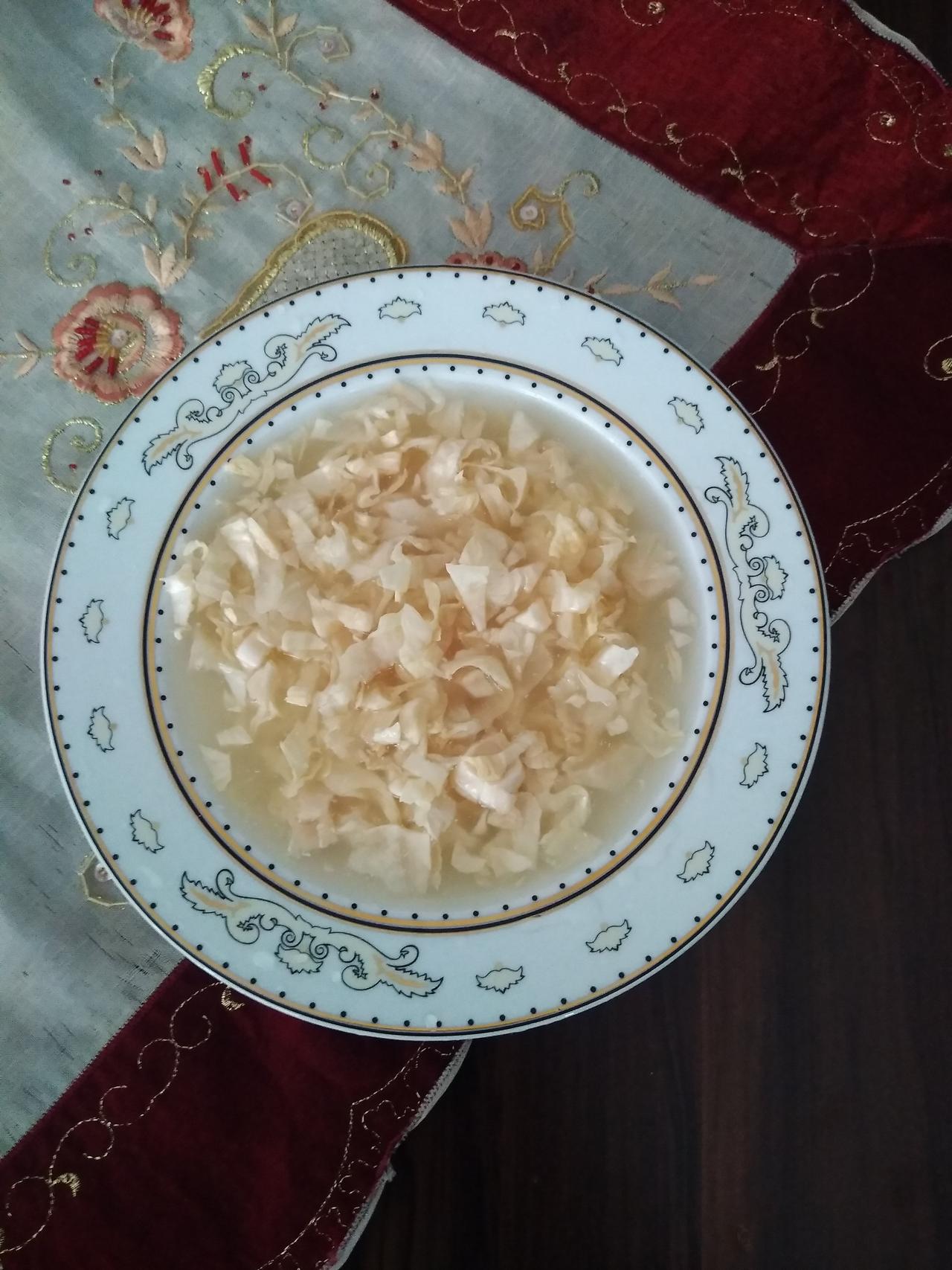
Muş çorti turşusu is a traditional pickled vegetable specialty from Muş Province in Türkiye, primarily made from white cabbage. The cabbage leaves are finely chopped and mixed with basil, red pepper flakes, lemon, rock salt, and cooled boiled water, then tightly packed into jars. Chickpeas or fermented dough are added to induce souring. Its defining characteristic, distinguishing it from other pickles, is the absence of vinegar. Çorti is commonly served alongside meals and is also prepared as a dish called “çorti yemeği” by adding cracked wheat and meat.
Muş is a region known for its rich culinary traditions. The area’s harsh winter conditions and prolonged cold season led the local population to develop traditional methods of food preservation. Livestock farming is a major economic activity in the region, and meat products form a fundamental part of the local diet. At the same time, vegetable-based foods also hold an important place in Muş cuisine.
In this context, cabbage—known locally as “kelem”—is a widely consumed vegetable deeply associated with the regional culture. A local legend attributes the origin of this dietary habit to the folk healer Lokman Hekim.【1】 According to the tale, during a visit to Muş, Lokman Hekim observed that the local population consumed large quantities of cabbage and feared it might cause health problems. However, he later noticed that in spring, after the snow melted, people began eating a plant called “uçkun,” which he determined had preventive properties against illnesses potentially caused by cabbage consumption. This story is commonly expressed in local proverbs: “God gave the illness, and He gave the remedy too.”
In Muş, cabbage is preserved in several ways for winter consumption, the most common of which is the pickle known as “çorti.” Muş çorti turşusu is prepared by finely chopping white cabbage leaves and mixing them with basil, red pepper flakes, lemon, rock salt, and cooled boiled water, then tightly packed into jars. Chickpeas or fermented dough are used to develop sourness.
Muş çorti turşusu is distinguished from other pickles by the absence of vinegar. It is not consumed merely as a side dish; in the region, it is also prepared as a full meal called “çorti yemeği” by adding cracked wheat and meat. In this way, it functions both as a direct pickle and as an ingredient in cooked dishes.
The production of Muş çorti turşusu relies on specific quantities of ingredients. According to the standard recipe, the following ingredients are used:
The production process follows these steps:
The production of Muş çorti turşusu is restricted exclusively to the boundaries of Muş Province. The primary justification for this geographical association lies in the region’s prolonged winter conditions and the transmission of production techniques across generations. This pickle is recognized as an integral part of the local culture and culinary heritage.
The production, processing, marketing, and use of the geographical indication for Muş çorti turşusu are regularly monitored. The Monitoring Commission operates under the coordination of the Muş Provincial Directorate of Culture and Tourism and consists of the following members:
Inspections are conducted once annually and reported accordingly. Additional inspections may be carried out upon complaint or when deemed necessary. The monitoring authority may utilize experts from public or private institutions or procure services from such experts. Furthermore, it is also the responsibility of the monitoring authority to initiate legal proceedings for the protection of geographical indication rights.
Thus, Muş çorti turşusu is closely associated with Muş Province both in terms of its production method and its regional identity.
Turk Patent and Trademark Office. "Muş Çorti Turşusu Coğrafi İşaret Tescil Belgesi." Accessed July 14, 2025. https://ci.turkpatent.gov.tr/Files/GeographicalSigns/294.pdf.
Turkish Patent and Trademark Office. "Muş Çorti Turşusu." Accessed July 14, 2025. https://ci.turkpatent.gov.tr/cografi-isaretler/detay/38344.
[1]
Türk Patent ve Marka Kurumu. Coğrafi İşaret Tescil Belgesi. Erişim 15 Temmuz 2025. https://ci.turkpatent.gov.tr/Files/GeographicalSigns/294.pdf.

Registration Number | 294 | ||||||||
|---|---|---|---|---|---|---|---|---|---|
Registration Date | 25.12.2017 | ||||||||
Application Number | C2017/115 | ||||||||
Application Date | 05.09.2017 | ||||||||
Name of the Geographical Indication | Muş Çorti Turşusu | ||||||||
Product / Product Group(s) | Pickles / Processed and unprocessed fruits vegetables and mushrooms | ||||||||
Type of Geographical Indication | Geographical indication | ||||||||
Applicant/Registrant(s) | Industry and Technology Muş Provincial Directorate of Science | ||||||||
Address of the Registrant | Chamber of Commerce No: 025 Center / MUŞ | ||||||||
Geographical Boundary | Muş province | ||||||||
Cultural and Historical Background
Distinctive Features
Recipe and Production Method
Geographical Boundaries and Production Conditions
Monitoring and Control