


This article was automatically translated from the original Turkish version.
+2 More
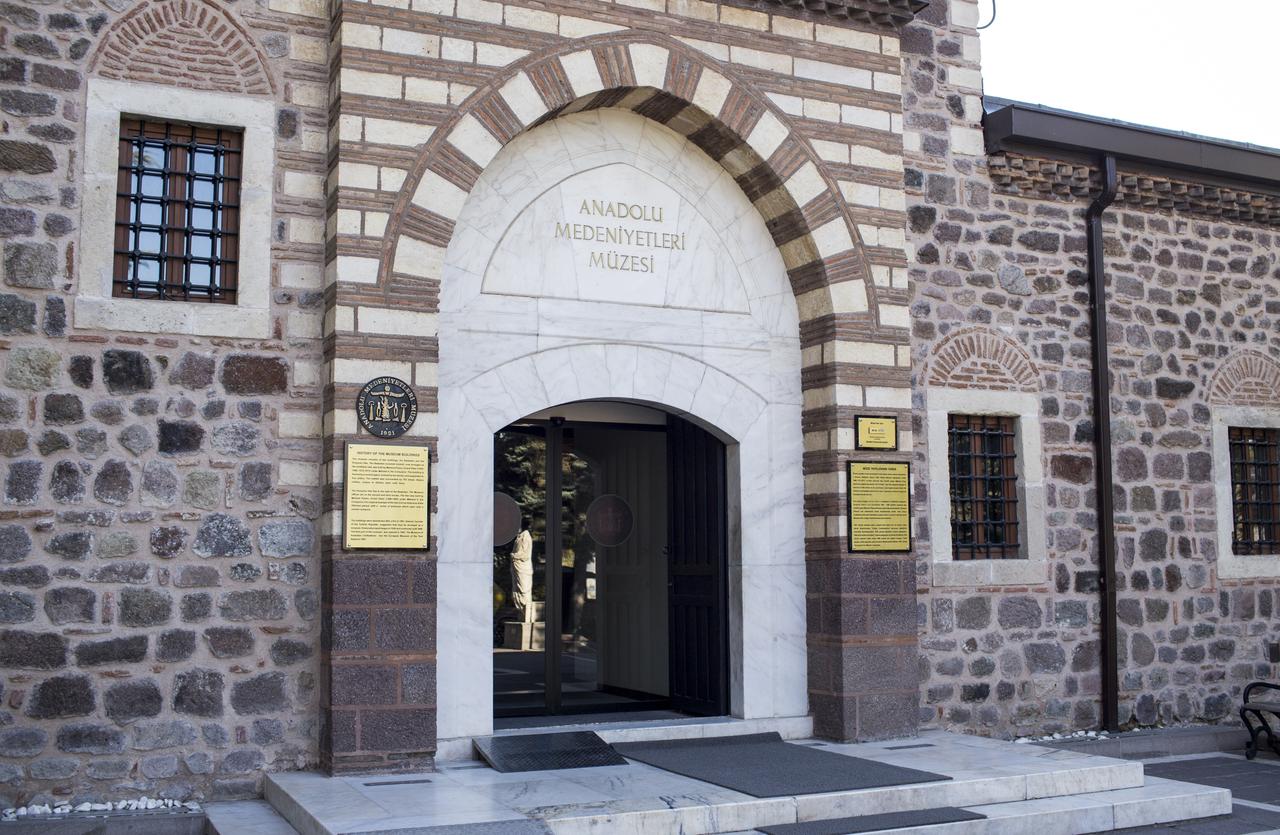
Museum of Anatolian Civilizations
Location | Atpazarı Neighborhood Türkiye Ankara Ulus | ||||||||
|---|---|---|---|---|---|---|---|---|---|
Award(s) | Museum of the Year in Europe (19 April 1997) | ||||||||
Main Structures | Mahmut Paşa Bedesteni, Kurşunlu Han | ||||||||
Founding | 1 October 1921 | ||||||||
Adoption of Current Name | 1968 | ||||||||
Notable Collections | Artifacts belonging to the Hittite, Phrygian, Urartian, Lydian, Roman, Byzantine and Turkish civilizations | ||||||||
Founder(s) | Hamdullah Suphi Tanrıöver Mübarek Galip Bey | ||||||||
First Director | Halil Nuri Yurdakul | ||||||||
Museum of Anatolian Civilizations is an archaeology museum located in the Ankara district of Ulus, in the Atpazarı neighborhood, along the southeast wall of Ankara Castle. The museum was created through the restoration of two historic buildings from the Ottoman period: the Mahmut Paşa Bedesteni and the Kurşunlu Han. Today, the museum displays archaeological artifacts from the Paleolithic Age to the present day in chronological order and holds a unique collection that places it among the world’s leading museums. In this context, on 19 April 1997, it was selected first among 68 museums in Lausanne, Switzerland, and awarded the title “Museum of the Year in Europe”.

Museum of Anatolian Civilizations (Kültür Portalı)
The main building, the Mahmut Paşa Bedesteni, is believed to have been constructed between 1464 and 1471 by Mahmut Paşa, a grand vizier during the reign of Fatih Sultan Mehmed. Although no inscription has been found, the structure follows the classical Ottoman bedesten plan. It consists of a rectangular enclosed space covered by ten domes and 102 shops with barrel vaults surrounding it. According to historical sources, the distribution of Ankara’s sof fabric took place through this bedesten.
Kurşunlu Han was built as a vakıf by another grand vizier of the Fatih period, Mehmet Paşa, for his imaret in the Üsküdar district of Istanbul. Although the han lacks an inscription, its existence in the first half of the 15th century is supported by coins from the reign of II. Murat discovered during repairs in 1946. The structure is a typical Ottoman city han, featuring a central courtyard surrounded by arcades and two-story rooms. Both buildings were abandoned after the fire of 1881 and later restored for use as a museum.

Museum of Anatolian Civilizations (Kültür Portalı)
The first idea for a museum in Ankara was proposed in 1921 by Mübarek Galip Bey, Director of Culture, who intended to establish it in the Akkale Tower of Ankara Castle. However, due to the limited capacity of this site and the desire of Mustafa Kemal Atatürk to create a central “Eti Museum,” a larger space was needed. With the concentration of Hittite artifacts in Ankara, the restoration of the Mahmut Paşa Bedesteni and the Kurşunlu Han was proposed in 1936 by Hamit Zübeyr Koşay, Director of Hars, and work began in 1938, concluding in 1968.
The restoration of the domed central space of the bedesten was completed in 1940, and artifacts were first placed under the leadership of German archaeologist H. Guterbock. This section opened to the public in 1943. The museum assumed its final form in 1968: the Mahmut Paşa Bedesteni became the exhibition hall and the Kurşunlu Han was converted into the administrative building.
The Museum of Anatolian Civilizations presents the archaeological heritage of Anatolia in chronological order:
The Museum of Anatolian Civilizations offers a historical journey through modern exhibition methods such as virtual tours, updated in 2014, and replicas of Göbeklitepe. Its garden contains funerary stelae and statues from the Roman, Byzantine, Seljuk, and Ottoman periods. With its rich collection encompassing the history of Anatolia, the museum is a preferred destination for both scholarly researchers and visitors.
Ankara İl Kültür ve Turizm Müdürlüğü. “Anadolu Medeniyetleri Müzesi.” T.C. Kültür ve Turizm Bakanlığı. Accessed April 4, 2025. https://ankara.ktb.gov.tr/TR-259775/anadolu-medeniyetleri-muzesi.html.
Kültür Portalı. "Anadolu Medeniyetler Müzesi." Türkiye Kültür Portalı. Accessed April 4, 2025. https://www.kulturportali.gov.tr/turkiye/ankara/gezilecekyer/anadolu-medenyetler-muzes
Kültür Varlıkları ve Müzeler Genel Müdürlüğü. “Ankara Anadolu Medeniyetleri Müze Müdürlüğü.” T.C. Kültür ve Turizm Bakanlığı. Accessed April 4, 2025. https://kvmgm.ktb.gov.tr/TR-44060/ankara-anadolu-medeniyetleri-muze-mudurlugu.html.
T.C. Kültür ve Turizm Bakanlığı Müzeler Genel Müdürlüğü. "Anadolu Medeniyetleri Müzesi." muze.gov.tr. Accessed April 4, 2025. https://muze.gov.tr/muze-detay?SectionId=AMM01&DistId=AMM.
Yasa Aktaş, Azize. “Anadolu Medeniyetleri Müzesi” Atatürk Ansiklopedisi. Accessed April 4, 2025. https://ataturkansiklopedisi.gov.tr/detay/567/Anadolu-Medeniyetleri-M%C3%BCzesi

Museum of Anatolian Civilizations
Location | Atpazarı Neighborhood Türkiye Ankara Ulus | ||||||||
|---|---|---|---|---|---|---|---|---|---|
Award(s) | Museum of the Year in Europe (19 April 1997) | ||||||||
Main Structures | Mahmut Paşa Bedesteni, Kurşunlu Han | ||||||||
Founding | 1 October 1921 | ||||||||
Adoption of Current Name | 1968 | ||||||||
Notable Collections | Artifacts belonging to the Hittite, Phrygian, Urartian, Lydian, Roman, Byzantine and Turkish civilizations | ||||||||
Founder(s) | Hamdullah Suphi Tanrıöver Mübarek Galip Bey | ||||||||
First Director | Halil Nuri Yurdakul | ||||||||
No Discussion Added Yet
Start discussion for "Museum of Anatolian Civilizations" article
Historical Background of the Buildings
Foundation and Development of the Museum
Collections and Sections
Significance of the Museum