This article was automatically translated from the original Turkish version.
+1 More
Location | Nevşehir | ||||||||
|---|---|---|---|---|---|---|---|---|---|
History | From Antiquity to the Present | ||||||||
Prominent Periods | and Early Republican Periods Ottoman Byzantine | ||||||||
Cultural Assets | Fountains Stone Mansion Chapel Church | ||||||||
Economic Activities | Stonemasonry Winemaking Viticulture Trade | ||||||||
Tourism Status | Opened to tourism in 1981 | ||||||||
Mustafapaşa Village is a settlement located approximately five kilometers south of the district center of Ürgüp in Nevşehir Province. Known in antiquity as “Sinasos,” the village is one of the prominent rural settlements in the Cappadocia Region due to its historical structures, cultural fabric, and natural environment. In 2021, it was designated by the United Nations World Tourism Organization as the “Best Tourism Village.”
%2520kopya.jpg&w=1280&q=75)
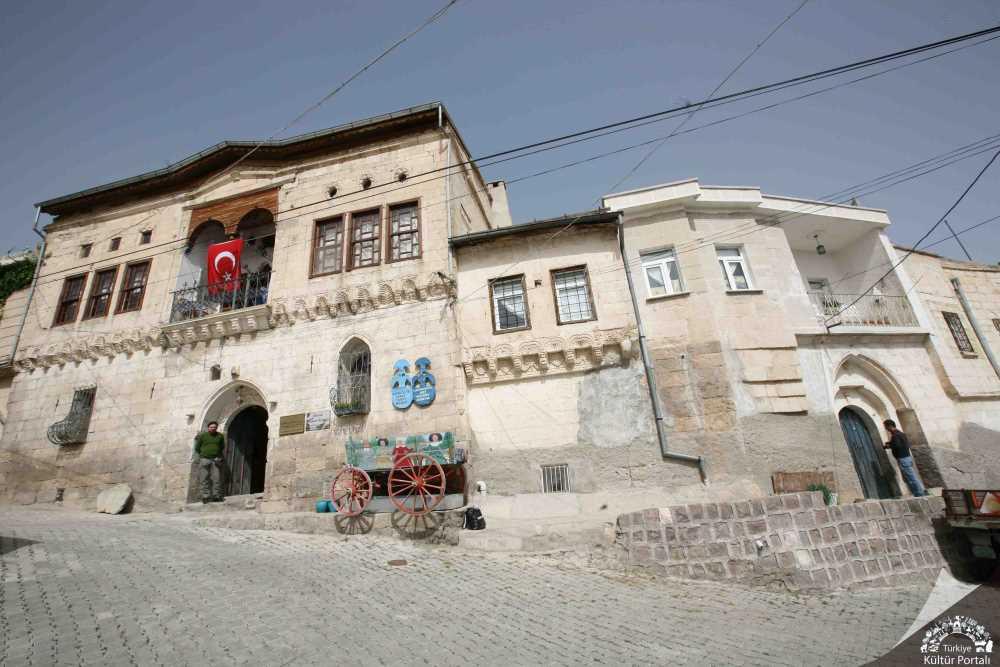
Mustafapaşa Village (Türkiye Culture Portal)
The earliest known name of Mustafapaşa is “Sinasos,” and its history is believed to extend back to the Byzantine period. During the 19th and early 20th centuries, the majority of its population consisted of Orthodox Greeks. At that time, the town housed around 700 stone mansions. The local economy was dominated by Greek merchants engaged in wine production and the trade of medicinal products. Sinasos was also a center of intense educational activity, with schools for boys and girls, a library, and a college offering religious instruction.
Under the 1923 population exchange agreement between Turkey and Greece, the Greek population of Sinasos was relocated to Greece; some of these people later established a new settlement called “Nea Sinasos” (New Sinasos). Turkish immigrants brought from Greece were settled in Mustafapaşa. The majority of these immigrants originated from the villages of Jerveni and Kastoria, which were then part of Thessaloniki. The demographic shift following the exchange is reflected in official statistics: the Greek population, which numbered approximately 4,500 in 1890, declined to 878 by 1924; the Turkish population, which was 600 in 1890, increased to 1,000 by 1925.
The village derives its name from Seyyid Mustafa Paşa, an Ottoman state official who is estimated to have died in 1803 and is remembered for constructing fountains to address water shortages. It is known that Paşa commissioned two fountains in the village, and his name appears on inscriptions above them. The name “Mustafapaşa” was officially adopted in 1966 with the establishment of the municipal organization.
Mustafapaşa features buildings distinguished by their stone architecture. The town contains 93 registered historical houses and nearly 30 churches and chapels. To the west of the village lies the Gomeda Valley, resembling the Ihlara Valley, while the Damsa Dam Lake is situated nearby. Structures such as the Eleni and Vaslios churches and the Cappadocia Art and History Museum (Bebek Museum) are among the cultural heritage elements. All cultural and natural assets within the village are protected under the “Mustafapaşa Conservation-Oriented Urban Plan.” New construction and settlement activities are restricted, and the village remains under the supervision of the Cappadocia Tourism Region Directorate.
Throughout its historical development, viticulture, wine production, animal husbandry, and stonemasonry have served as the primary sources of livelihood in Mustafapaşa. During the Greek population period, trade was highly active; the presence of hotels, pharmacies, baths, and doctors in the town indicates that Sinasos was once a significant settlement. Today, tourism is the dominant economic activity in the village.
In 2005, Cappadocia University was established in Mustafapaşa. As the only higher education institution in Türkiye founded in a village center, the university undertakes various social, cultural, and environmental projects aimed at promoting sustainable development in the region. The university engages in activities related to the restoration of cultural heritage, promotion of historic structures, energy efficiency, waste management, prevention of water and food waste, and enhancement of local employment. The institution is a member of the Global Sustainable Tourism Council (GSTC) and collaborates with the Republic of Türkiye Ministry of Culture and Tourism.
In 2021, Mustafapaşa was awarded the title of “Best Tourism Village” by the United Nations World Tourism Organization. This recognition resulted from the village’s efforts to preserve its local culture, sustain biological and cultural diversity, and promote its way of life and local gastronomy within the framework of sustainable tourism. The village’s cultural structure is being preserved through various conservation and development projects supported by the Cappadocia Tourism Region Infrastructure Services Union and the Ahiler Development Agency.
Kapadokya Üniversitesi. “Üniversitemizin Merkezi Mustafapaşa Köyü ‘En İyi Turizm Köyü’ Oldu.” Accessed July 9, 2025. https://kapadokya.edu.tr/haberler/universitemizin-merkezi-mustafapasa-koyu--en-iyi-turizm-koyu-oldu.
Ministry of Culture and Tourism. "Mustafapaşa Köyü - Nevşehir." *Culture Portal*. Accessed July 9, 2025. https://www.kulturportali.gov.tr/turkiye/nevsehir/gezilecekyer/mustafapasa-koyu-.
Mustafapaşa Kültür, Turizm ve Tanıtma Derneği. “Hakkımızda.” Mustafapasa.net. Accessed July 9, 2025. https://www.mustafapasa.net/hakkimizda/.

Location | Nevşehir | ||||||||
|---|---|---|---|---|---|---|---|---|---|
History | From Antiquity to the Present | ||||||||
Prominent Periods | and Early Republican Periods Ottoman Byzantine | ||||||||
Cultural Assets | Fountains Stone Mansion Chapel Church | ||||||||
Economic Activities | Stonemasonry Winemaking Viticulture Trade | ||||||||
Tourism Status | Opened to tourism in 1981 | ||||||||
No Discussion Added Yet
Start discussion for "Mustafapaşa Village – Nevşehir" article
History
Physical Structure and Cultural Heritage
Economy
Education and Institutional Structure
International Recognition and Protection