


This article was automatically translated from the original Turkish version.
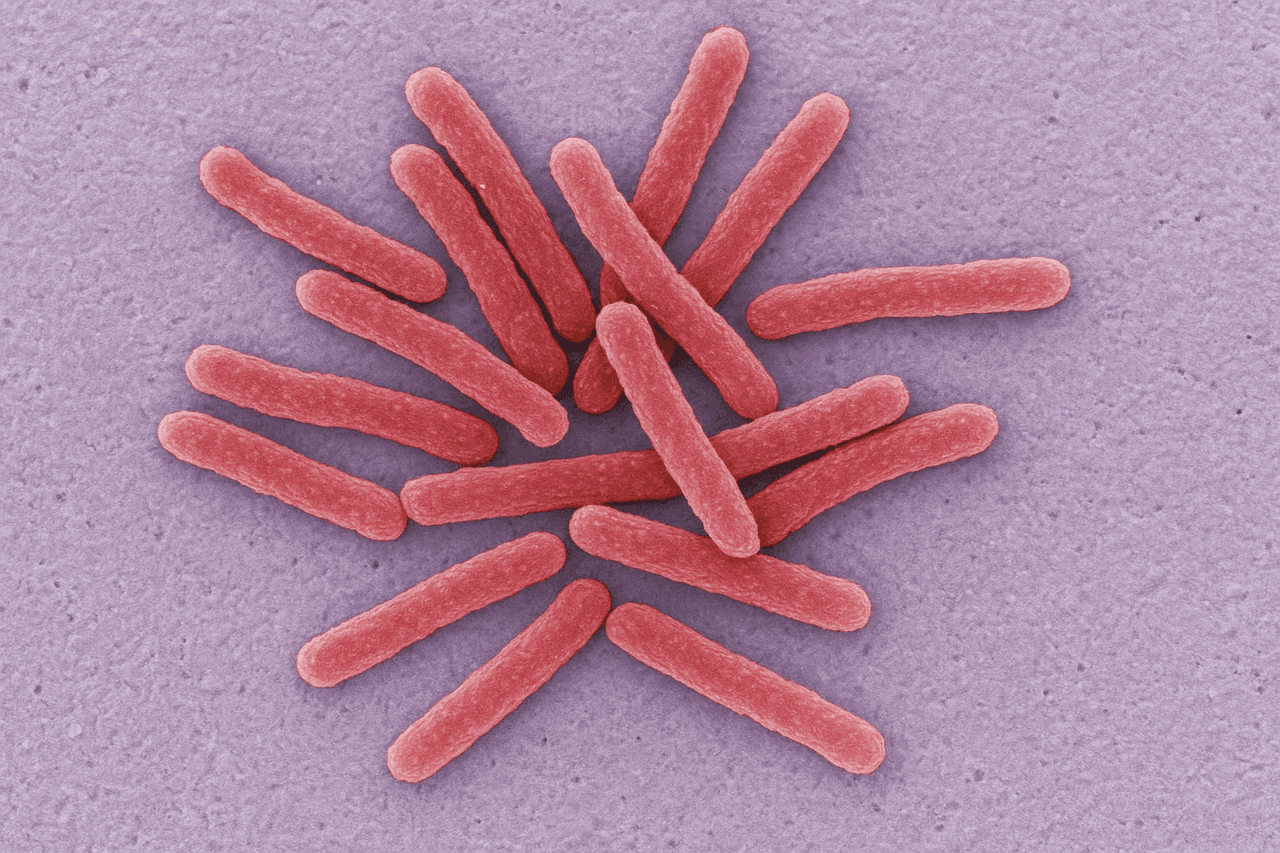
Mycobacterium Tuberculosis (generated by artificial intelligence)
Class | Actinomycetia | ||||||||
|---|---|---|---|---|---|---|---|---|---|
Team(s) | Mycobacteriales | ||||||||
Family | Mycobacteriaceae | ||||||||
Genus | Mycobacterium | ||||||||
Diagnostic Methods | Microscopic examination (acid-fast staining). Culture (gold standard). Molecular tests (PCR, GeneXpert). | ||||||||
Prevention | BCG vaccination, early diagnosis, isolation and treatment adherence | ||||||||
Mycobacterium tuberculosis is one of the oldest and most significant pathogens in human history and the causative agent of tuberculosis. The bacterium was first identified in 1882 by German physician Robert Koch, a discovery regarded as one of the most critical breakthroughs in microbiology. Koch’s achievement was awarded the Nobel Prize in Physiology or Medicine in 1905. Today, despite advances in diagnostic and therapeutic methods, M. tuberculosis remains a major public health concern, particularly in developing countries.
M. tuberculosis is a species belonging to the kingdom Bacteria, the phylum Actinomycetota (Actinobacteria), and the family Mycobacteriaceae. The genus Mycobacterium includes numerous species capable of causing disease in humans and animals. Among these, M. tuberculosis is the most important, with close relatives including M. bovis, M. africanum, and M. microti. These species together form the M. tuberculosis complex (MTBC) and share highly similar pathogenic properties.
M. tuberculosis appears under the microscope as thin, elongated rods. They are approximately 2–4 micrometers in length and 0.2–0.5 micrometers in diameter. They cannot be stained effectively by Gram staining and therefore do not conform to the classical classification as Gram-positive or Gram-negative. This is due to the high concentration of mycolic acids in their cell walls. These fatty acids confer resistance to environmental factors and chemical agents, leading to the bacterium being described as “acid-fast.” When examined using Ziehl–Neelsen staining or fluorescent dyes, the bacteria appear bright red or yellow-green. The bacterium is an obligate aerobe, requiring oxygen for growth and replication. Its optimal growth temperature is 37 °C, which corresponds to the human body temperature. However, it grows very slowly in culture; colony formation typically takes 3 to 6 weeks. This slow replication rate complicates both diagnosis and treatment.
The genome of M. tuberculosis is approximately 4.4 million base pairs in length and contains a high proportion of guanine-cytosine (65%). Various genes within the genome play roles in virulence factors, immune evasion mechanisms, and drug resistance. The cell wall is the bacterium’s most distinctive feature; composed of mycolic acids, arabinogalactan, and peptidoglycan layers, it provides both mechanical and chemical protection. This structure also impedes the penetration of many antibiotics, making treatment more difficult.
M. tuberculosis is typically transmitted through inhalation of airborne droplets released by infected individuals during coughing or sneezing. Once the bacteria reach the lung alveoli, they are phagocytosed by immune cells called macrophages. However, the bacterium prevents fusion of the phagosome with the lysosome, allowing it to survive and multiply within the macrophage. This process triggers the immune system to form granulomas, which are structures designed to contain the infection. Granulomas form the basis of latent tuberculosis, a condition that can remain asymptomatic for years but may reactivate into active tuberculosis when the immune system becomes compromised.
M. tuberculosis primarily causes pulmonary tuberculosis in humans. The disease is characterized by chronic cough, blood-tinged sputum, chest pain, fever, night sweats, and weight loss. In addition, the bacterium can spread to extrapulmonary organs. Extrapulmonary tuberculosis can affect lymph nodes, kidneys, bones, the meninges, and other tissues, leading to serious conditions such as meningitis, spondylitis, or urinary tract infections.
In recent years, multidrug-resistant tuberculosis (MDR-TB) and extensively drug-resistant tuberculosis (XDR-TB) have become significant global health threats. These resistant forms do not respond to standard treatment regimens and prolong the duration of therapy.
One of the classical diagnostic methods for tuberculosis is the microscopic detection of acid-fast bacilli in sputum samples. Culture methods remain the gold standard for isolating the bacterium and determining drug susceptibility. Molecular techniques, particularly PCR-based tests and rapid diagnostic systems such as GeneXpert, have improved sensitivity and enabled early detection of drug resistance.
The most commonly used drugs in treatment are isoniazid, rifampicin, ethambutol, and pyrazinamide. Treatment typically lasts at least six months, and the use of drug combinations is essential to prevent the development of resistance. However, poor adherence to treatment has contributed to the emergence of resistant strains worldwide.
According to data from the World Health Organization (WHO), tuberculosis infects millions of people annually and causes approximately 1.5 million deaths each year. Risk factors for developing tuberculosis include HIV infection, malnutrition, diabetes, smoking, and poor living conditions. Africa and Asia are the regions with the highest disease burden.
The most widely used preventive measure against tuberculosis is the BCG (Bacille Calmette–Guérin) vaccine. This vaccine provides protection against severe forms of tuberculosis in children. However, its efficacy in adults is limited. Effective control of the disease requires early diagnosis, isolation of patients, adherence to drug therapy, and strengthened public health measures.
Rohde, K., Yates, R. M., Purdy, G. E., and Russell, D. G. "Mycobacterium tuberculosis and the environment within the phagosome." *Immunol Rev.* 2007;219(1):37-54.
Vergne I, Chua J, Singh SB, Deretic V, "Cell biology of Mycobacterium tuberculosis phagosome". Annu Rev Cell Dev Biol. 2004;20(1):367-94.

Mycobacterium Tuberculosis (generated by artificial intelligence)
Class | Actinomycetia | ||||||||
|---|---|---|---|---|---|---|---|---|---|
Team(s) | Mycobacteriales | ||||||||
Family | Mycobacteriaceae | ||||||||
Genus | Mycobacterium | ||||||||
Diagnostic Methods | Microscopic examination (acid-fast staining). Culture (gold standard). Molecular tests (PCR, GeneXpert). | ||||||||
Prevention | BCG vaccination, early diagnosis, isolation and treatment adherence | ||||||||
No Discussion Added Yet
Start discussion for "Mycobacterium tuberculosis" article
Taxonomy
Morphology and Characteristics
Genome and Physiology
Pathogenesis
Clinical Significance
Diagnosis and Treatment
Epidemiology
Prevention