This article was automatically translated from the original Turkish version.
Type of Geographical İndication | Direction Sign | ||||||||
|---|---|---|---|---|---|---|---|---|---|
Application Date | 06.11.2015 | ||||||||
Registration Number | 325 | ||||||||
Registration Date | 15.02.2018 | ||||||||
Product / Product Group(s) | Handicraft products other than carpets kilims and textiles | ||||||||
Province(s) | Ankara | ||||||||
Applicant/Registrant(s) | Nallıhan Development Foundation | ||||||||
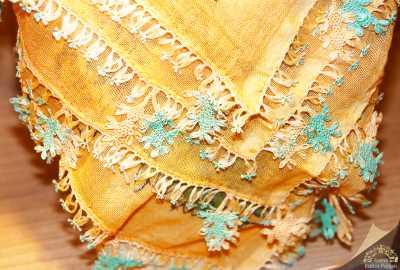
Nallıhan Needle Lace is a three-dimensional handcraft unique to the Nallıhan district of Ankara, created using a needle. Made from silk or synthetic thread, this lace is typically used for jewelry and decorative purposes and is produced by women through a lengthy, labor-intensive process. Over time, in addition to silk thread, various other types of thread have been incorporated, yet the region-specific techniques have been preserved and passed down to the present day. Nallıhan Needle Lace was registered as a “Geographical Indication” on 15 February 2018 under Law No. 6769 on Industrial Property and is protected by the Nallıhan Development Foundation.
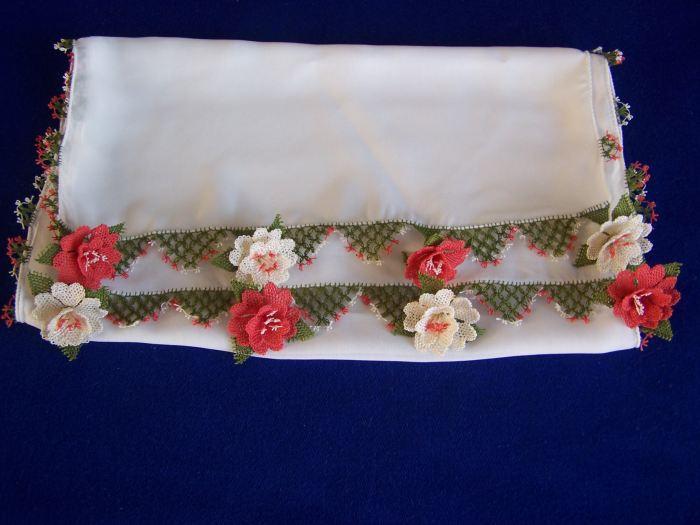
Nallıhan Needle Lace (Turkish Patent)
Nallıhan Needle Lace is distinguished by its unique “thread twisting” technique. This method gives the thread a rigid structure, enhancing the durability of the lace. The technique imparts a stiff, structured appearance to the lace without the use of any chemical hardeners or materials such as wire or fishing line. The lace is not directly embroidered onto fabric or linen; instead, motifs are first crafted on a separate base called a “root” and later attached to the final textile. This allows the lace to be easily transferred to another fabric if the original becomes worn. Additionally, Nallıhan Needle Lace can be used independently, without being attached to any fabric.
The motifs are predominantly plant-based, featuring common designs of fruits, leaves, and special floral patterns. In addition, figurative motifs such as butterflies, symbolic patterns like “wild mustache” or “palace broom,” object-based motifs such as baskets and bags, and various geometric designs are also found. Different patterns may emerge depending on the artisan’s creativity.
The production of Nallıhan Needle Lace consists of three main stages: “thread twisting,” “root formation,” and “motif creation.”
Thread twisting is the fundamental technique that gives the lace its rigid and durable structure. Silk or synthetic thread is twisted using either machine or traditional methods. In the machine method, the thread is attached to a hook and twisted left then right to create a coiled effect. In the traditional method, the thread is wound around a needle fixed to a sock or a toe, and a similar twisting motion is applied. This process prepares the thread for motif creation.
Nallıhan Needle Lace is built on an independent base called a “root,” created using a chain stitch technique. The root is typically 3.5 to 4 meters long. Using a crochet hook and an 18-gauge steel needle, a triple-strand thread is crocheted into a chain and prepared using a technique known as “crow’s intestine.” The chains are extended and attached to the hook, forming sections called “legs.” These legs serve as the foundational structure for the motifs.
Motifs begin by hardening the twisted threads with beeswax and threading them onto a needle. The needle is inserted into the legs to form loops, and the motifs are gradually shaped. By increasing or decreasing the number of loops, the desired pattern is achieved. Motifs can be plant-based, figurative, symbolic, object-based, or geometric and vary according to the artisan’s creativity.
Nallıhan Needle Lace is an integral part of the cultural and economic heritage of the Nallıhan district. This art, passed down through generations, has developed a unique identity through techniques refined locally. All stages of production must take place within the Nallıhan district, although the raw materials do not need to be sourced locally.
Compliance with the geographical indication registration is monitored at least twice a year by an oversight committee coordinated by the Nallıhan Development Foundation. The committee includes representatives from the Nallıhan Community Education Center, the Nallıhan Tourism Volunteers Association, the Nal-ETİK Cooperative, and the Han-İpek Cooperative. During inspections, key features such as the independence of the root from fabric, the proper twisting of the thread, and the absence of chemical hardeners are verified. Additional inspections may be conducted in response to consumer complaints, and inspection reports are prepared.
Kültür ve Turizm Bakanlığı. "Nallıhan İğne Oyası." Accessed August 16, 2025. https://www.kulturportali.gov.tr/portal/nallihanigneoyasi.
Turk Patent and Trademark Office. "Nallıhan İğne Oyası – Coğrafi İşaret Tescil Belgesi." Accessed August 16, 2025. https://ci.turkpatent.gov.tr/Files/GeographicalSigns/97ab0864-78f2-4400-a3c3-3c6d08cd70d6.pdf.
Turk Patent and Trademark Office. "Nallıhan İğne Oyası – Coğrafi İşaret Tescil Belgesi." Accessed August 16, 2025. https://ci.turkpatent.gov.tr/cografi-isaretler/detay/38171.

Type of Geographical İndication | Direction Sign | ||||||||
|---|---|---|---|---|---|---|---|---|---|
Application Date | 06.11.2015 | ||||||||
Registration Number | 325 | ||||||||
Registration Date | 15.02.2018 | ||||||||
Product / Product Group(s) | Handicraft products other than carpets kilims and textiles | ||||||||
Province(s) | Ankara | ||||||||
Applicant/Registrant(s) | Nallıhan Development Foundation | ||||||||
No Discussion Added Yet
Start discussion for "Nallıhan Needle Lace" article
Distinctive Features
Production Process
Thread Twisting
Root Formation
Motif Creation
Geographical Connection and Oversight