

This article was automatically translated from the original Turkish version.
+2 More
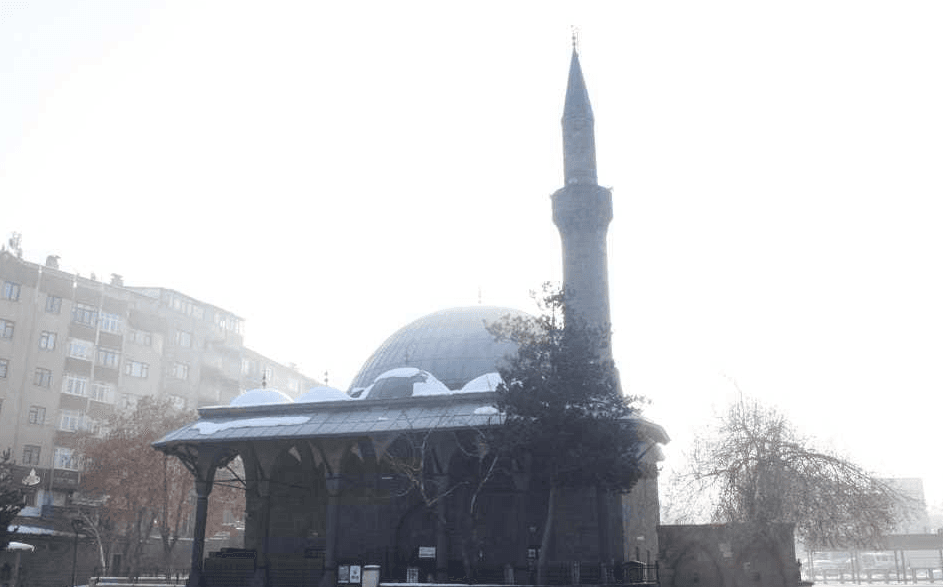
The Narmanlı Mosque, located in the Tebrizkapı neighborhood of Yakutiye district in Erzurum, east of the Çifte Minareli Medrese, is a historical place of worship reflecting 18th-century Ottoman architectural characteristics. As one of the city’s most important religious centers, it is renowned for its spacious courtyard and architectural coherence.
According to a four-line marble inscription above the mosque’s entrance, the structure was commissioned in 1738 (Hijri 1151) during the reign of Sultan Mahmud I by Hacı Yusuf Efendi of Narman. The inscription’s text was prepared by Veysi Efendi. The mosque’s endowment deed was registered in 1775, several years after its construction, in the name of Hacı Yusuf Efendi’s father, Salih. Due to its large courtyard, which was frequently used for funeral prayers, the mosque is locally known as the “Hüzünlü Mosque.”
The Narmanlı Mosque is designed on a square plan and constructed using finely cut stone. Its interior is covered by a single main dome resting on corner pendentives, which externally appears as a sixteen-sided drum. Compared to other single-domed mosques in Erzurum, the dome of the Narmanlı Mosque has a larger diameter.
On the northern façade, a five-sectioned rear prayer area is supported by six independent stone columns. This section is covered by five small domes, with the central dome above the main entrance being higher and wider than the others. The minaret rises from the northwest corner of the building, featuring a square base, cylindrical shaft, and single balcony. The windows on all facades are rectangular with plain lintels; however, those on the northern façade are set within pointed-arched hoods.
Access to the harem section is through a recessed archway framed within a rectangular border created by plasterwork. At the center of the qibla wall stands a simple stone mihrab in a pentagonal niche form with muqarnas corbelling. The wooden minbar beside the mihrab exhibits simpler craftsmanship, painted with oil paint, and is considered a later addition of lower artistic value compared to other elements of the structure.
On the northern side of the interior space, a women’s gallery rests on eight wooden supports. During restoration works carried out by the Directorate of Foundations between 2015 and 2016, the white oil paint covering the wooden gallery was removed, revealing original 18th-century penwork decorations beneath. The revealed ornamentation predominantly features black, red, and cream colors, with motifs of tulips, carnations, hyacinths, roses (or anemones), and cypress trees. These floral compositions reflect not only the classical Ottoman artistic style but also the naturalistic style (Edirnekâri) seen in Istanbul works of the period, as well as influences from Eastern (Indian-Iranian/Mughal) art.
A walled burial ground surrounds the mosque. During restoration works, graves previously buried due to landslides and other causes were uncovered, increasing the recorded number of graves from 23 to 52. This area contains the tombs of the mosque’s founder, Narmanlı Hacı Yusuf and his family, as well as those of former governors of Erzurum—Siyavuş Paşa and Musa Paşa—Hasbulat Bey, the arms-bearer of Sheikh Şamil, and other prominent figures of the city.
A popular local legend surrounds the mosque’s construction. According to the tale, Hacı Yusuf of Narman once stumbled in the dark while walking with a servant holding a lamp. The servant remarked, “Everyone carries their own light,” in a veiled rebuke. Deeply affected by this remark, Yusuf Efendi resolved to dedicate his wealth to charitable works and commissioned the mosque. Another version states that when the governor of the time criticized the building as resembling a caravanserai and noted its difficulty to heat, Hacı Yusuf Efendi increased the expenditure to elevate the mosque to its current quality.

History
Architectural Features
Interior Space and Decorations
Hazire (Burial Ground)ı
Construction Legend