


This article was automatically translated from the original Turkish version.
+1 More
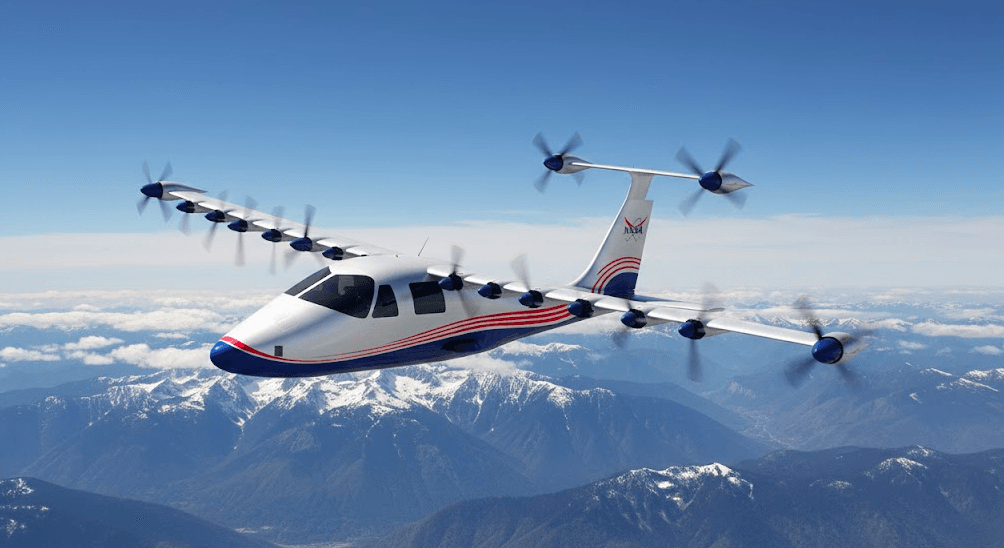
Generated with artificial intelligence
NASA X-57 Maxwell
Length(s) | 8.7 meters (28.5 ft) | ||||||||
|---|---|---|---|---|---|---|---|---|---|
Status | Completed (Project Closed - 2023) | ||||||||
Type(s) | Experimental All-Electric Aircraft (X-Plane) | ||||||||
Producer(s) | NASA (Prime Contractor: ESAero) | ||||||||
System Voltage | 460 V DC | ||||||||
Gross Energy Capacity | 147 kWh | ||||||||
Battery Type | Lithium-Ion (Li-ion) | ||||||||
Propeller Type | 5-blade (Cruise), 2-blade Foldable (Lift) | ||||||||
Total Number of Engines | 14 Electric Motors | ||||||||
Maximum Speed | 172 mph (276 km/h) | ||||||||
Max Takeoff Weight | 1,361 kg (3,000 lb) | ||||||||
Wingspan | 9.8 meters (32.1 ft) | ||||||||
Crew | 1 (Pilot) | ||||||||
Base Platform | Tecnam P2006T | ||||||||
NASA X-57 Maxwell is an experimental aircraft (X-plane) developed by the United States National Aeronautics and Space Administration (NASA) to test the feasibility of fully electric propulsion systems and the Distributed Electric Propulsion (DEP) architecture in general aviation aircraft. The project was conceived as a technology testbed under NASA’s “Sustainable Flight Demonstrators” portfolio, aligned with goals to reduce carbon emissions and improve energy efficiency in aviation.【1】

NASA X-57 Maxwell (Generated by AI)
X-57 was divided into four main modification phases to progressively validate the technology.
In this phase, baseline performance data were collected using the standard Tecnam P2006T aircraft. Fuel consumption, climb rates, and noise emissions of the internal combustion engines were recorded for comparison with data from subsequent phases.
The original internal combustion engines were removed and replaced with two electric cruise motors each generating approximately 60 kW of power.
The original wings from Mod II were replaced with a new composite wing design, reduced in area by 40 percent, thinner, and featuring a high aspect ratio.
Mod IV is the most complex phase of the project and consists of a total of 14 electric motors.
Inverters operating at high switching frequencies generated Electromagnetic Interference (EMI) in the aircraft’s communication and navigation systems. NASA addressed this issue by developing cable shielding, toroidal filters, and chassis isolation protocols.【2】

NASA X-57 Maxwell Technical Subsystems (Generated by AI)
NASA’s Ames and Langley research centers used LAVA and Star-CCM+ software to build the aircraft’s aerodynamic database. The effect of propellers on the wing was simulated using “actuator disk” models, and these results were validated with wind tunnel tests.
NASA X-57 Maxwell Flight Simulation (NASA)
As of June 2023, NASA terminated the X-57 project before completing flight tests. The project’s primary output was not a flight demonstration but a comprehensive technical documentation set on the integration of electric propulsion systems, high-voltage safety, and EMI management. The data collected are being used as a reference for establishing industry standards (ASTM, FAA).
Borer, Nicholas K., et al. "Flight Performance Maneuver Planning for NASA’s X-57 ‘Maxwell’ Flight Demonstrator - Part 1: Power-Off Glides." AIAA Aviation 2019 Forum, Dallas, Texas, 2019. Accessed January 23, 2026. https://doi.org/10.2514/6.2019-2855.
Deere, Karen A., et al. "Computational Component Build-up for the X-57 Maxwell Distributed Electric Propulsion Aircraft." 2018 AIAA Aerospace Sciences Meeting, Kissimmee, Florida, 2018. Accessed January 23, 2026. https://doi.org/10.2514/6.2018-1275.
Duensing, Jared C., et al. "Establishing Best Practices for X-57 Maxwell CFD Database Generation." AIAA Scitech 2019 Forum, San Diego, California, 2019. Accessed January 23, 2026. https://doi.org/10.2514/6.2019-0274.
Heeg, Jennifer, et al. "Whirl Flutter and the Development of the NASA X-57 Maxwell." International Forum on Aeroelasticity and Structural Dynamics (IFASD 2019), 2019. Accessed January 23, 2026. https://ntrs.nasa.gov/citations/20200002633.
Hernandez Lugo, Dionne, et al. "X-57 Maxwell Battery from Cell Level to System Level Design and Testing." Beyond Lithium Ion XI, 2018. Accessed January 23, 2026. https://ntrs.nasa.gov/citations/20180005737.
Hoover, Christian B., and Jinwei Shen. "Parametric Study of Propeller Whirl Flutter Stability with Full-Span Model of X-57 Maxwell Aircraft." *Journal of Aircraft*, Volume 55, no. 6, November 2018, pp. 2530–37. Accessed January 23, 2026. https://doi.org/10.2514/1.C035081.
Litherland, Brandon L., et al. "X-57 Maxwell High-Lift Propeller Testing and Model Development." AIAA Aviation 2021 Forum, 2021. Accessed January 23, 2026. https://doi.org/10.2514/6.2021-3193.
Maliska, Heather, et al. *X-57 Maxwell Lessons Learned Report*. NASA, December 2024. Accessed January 23, 2026. https://ntrs.nasa.gov/citations/20250001718.
Nautiyal, Bhumika. "Thermal and Stress Analysis of NASA X-57 Maxwell Battery Pack." All Graduate Plan B and Other Reports, 2018. Accessed January 23, 2026. https://doi.org/10.26076/1bab-4d52.
Papathakis, Kurt V., et al. "Integration Concept for a Hybrid-Electric Solid-Oxide Fuel Cell Power System into the X-57 ‘Maxwell’." 2018 Aviation Technology, Integration, and Operations Conference, Atlanta, Georgia, 2018. Accessed January 23, 2026. https://doi.org/10.2514/6.2018-3359.
Schnulo, Sydney L., et al. "Further Development of the NASA X-57 Maxwell Mission Planning Tool for Mods II, III, and IV." 2019 AIAA/IEEE Electric Aircraft Technologies Symposium (EATS), 2019, pp. 1–14. Accessed January 23, 2026. https://doi.org/10.2514/6.2019-4491.
Viken, Jeffrey K., et al. "Design of the Cruise and Flap Airfoil for the X-57 Maxwell Distributed Electric Propulsion Aircraft." 35th AIAA Applied Aerodynamics Conference, Denver, Colorado, 2017. Accessed January 23, 2026. https://doi.org/10.2514/6.2017-3922.
[1]
Hernandez Lugo, Dionne, et al. "X-57 Maxwell Battery from Cell Level to System Level Design and Testing." Beyond Lithium Ion XI, 2018. https://ntrs.nasa.gov/citations/20180005737. Access Date: 23 January 2026.
[2]
Maliska, Heather, et al. X-57 Maxwell Lessons Learned Report. NASA, December 2024. https://ntrs.nasa.gov/citations/20250001718. Access Date: 23 January 2026.
[3]
Heeg, Jennifer, et al. "Whirl Flutter and the Development of the NASA X-57 Maxwell." International Forum on Aeroelasticity and Structural Dynamics (IFASD 2019), 2019. https://ntrs.nasa.gov/citations/20200002633. Access Date: 23 January 2026.

Generated with artificial intelligence
NASA X-57 Maxwell
Length(s) | 8.7 meters (28.5 ft) | ||||||||
|---|---|---|---|---|---|---|---|---|---|
Status | Completed (Project Closed - 2023) | ||||||||
Type(s) | Experimental All-Electric Aircraft (X-Plane) | ||||||||
Producer(s) | NASA (Prime Contractor: ESAero) | ||||||||
System Voltage | 460 V DC | ||||||||
Gross Energy Capacity | 147 kWh | ||||||||
Battery Type | Lithium-Ion (Li-ion) | ||||||||
Propeller Type | 5-blade (Cruise), 2-blade Foldable (Lift) | ||||||||
Total Number of Engines | 14 Electric Motors | ||||||||
Maximum Speed | 172 mph (276 km/h) | ||||||||
Max Takeoff Weight | 1,361 kg (3,000 lb) | ||||||||
Wingspan | 9.8 meters (32.1 ft) | ||||||||
Crew | 1 (Pilot) | ||||||||
Base Platform | Tecnam P2006T | ||||||||
Project Definition and Technical Objectives
Operational Objectives
Design Phases and Modifications
Mod I: Baseline Data Collection
Mod II: Electric Conversion (Pathfinder)
Mod III: High Aspect Ratio Wing
Mod IV: Distributed Electric Propulsion (Final Configuration)
Technical Subsystems and Components
Propulsion and Power Electronics
Battery System
Avionics and EMI Management
Engineering Analyses and Test Methodology
Computational Fluid Dynamics (CFD)
Thermal and Structural Analyses
Project Completion and Legacy