


This article was automatically translated from the original Turkish version.
+1 More

Nasir al-Mulk Mosque (Persian: مسجد نصیرالملک) was constructed in the 19th century during the Qajar period in Iran, in the God-e-Car neighborhood of Shiraz. Construction began in 1876 under the patronage of Hasan Ali Nasir al-Mulk, son of Mirza Ali Akbar Qavam al-Mulk, the governor of Shiraz at the time, and was completed after a 12-year process in 1888.
The architectural design of the mosque is attributed to the master craftsmen Hasan and Mirza Riza Kashi. Originally, it formed part of a larger complex comprising a house, bathhouse, warehouse, and mosque. However, due to subsequent urban development, only the mosque portion of the complex has survived to the present day.
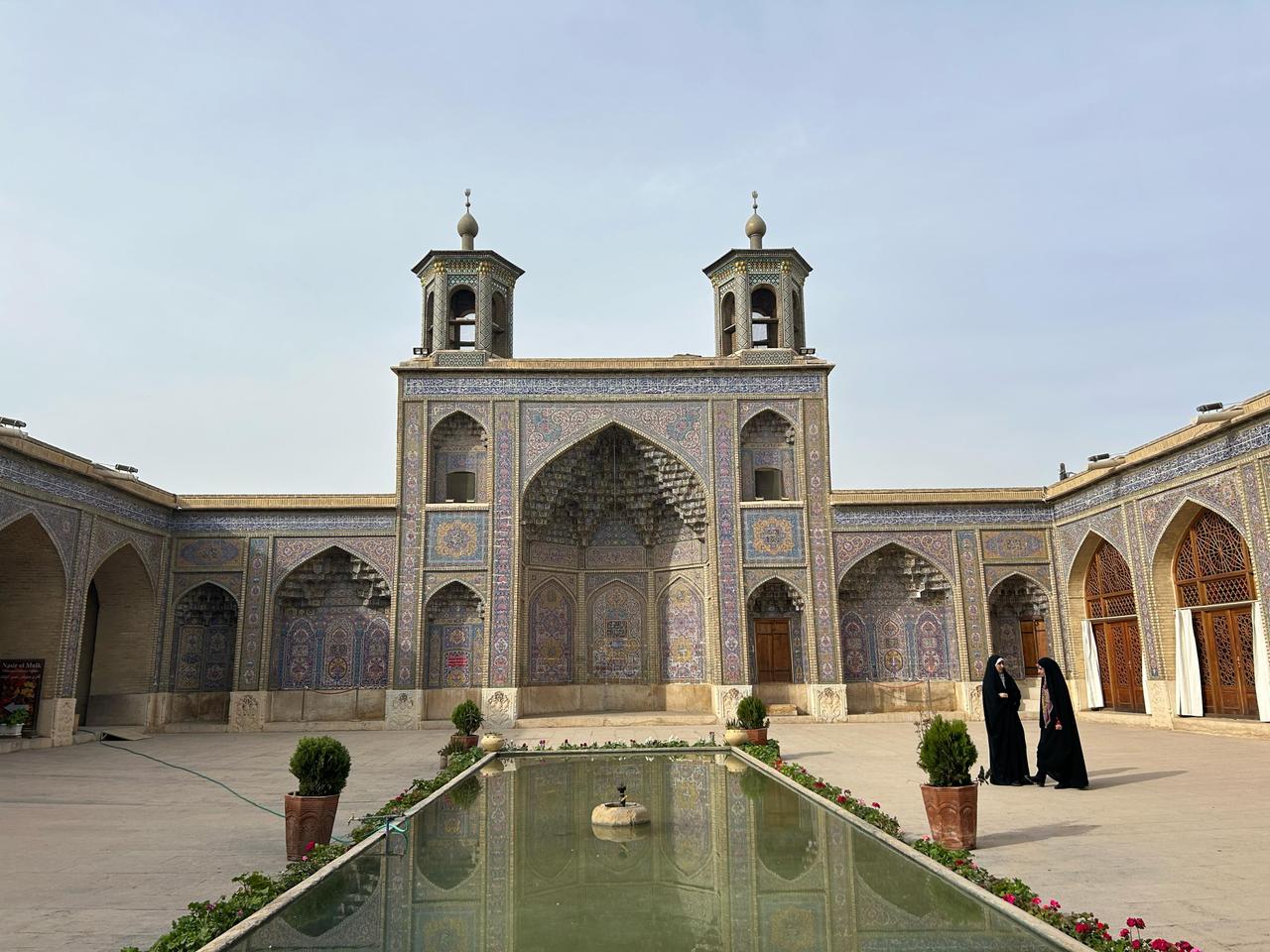
The Mosque Courtyard (Photograph: Duygu Şahinler)
The Qajar period (1794–1925), to which the Nasir al-Mulk Mosque belongs, can be defined as a transitional phase in Iranian architecture, retaining traditional forms—particularly the Safavid legacy—while showing increasing Europe influences. During this era, mosque architecture continued the traditional four-iwan plan but introduced formal and decorative innovations through the incorporation of together shabistan, courtyard, and stained glass elements.

Stained Glass Windows Inside the Mosque (Photograph: Duygu Şahinler)
The mosque is a hierarchical arrangement of open, semi-open, and enclosed spaces characteristic of Iranian architecture, featuring a tripartite entrance plan. The central courtyard, which houses a place pool, is surrounded by north and south iwans and western and eastern shabistans. These shabistans are semi-covered prayer spaces, with the western shabistan standing out in terms of ornamentation and functionality.
The Dome element, which in Shiraz’s cultural perception was traditionally reserved only for sacred tombs, was not used in this mosque. Instead, spiral columns, muqarnas ceilings, and colorful stained glass windows were employed.

Interior View of the Mosque (Photograph: Duygu Şahinler)
The Nasir al-Mulk Mosque is renowned for its pink-hued tiles and colorful stained glass windows (orsi), added in 1969, which earned it the nickname “Pink Mosque.” Its decorative program features mosaics produced using seven color techniques, plaster reliefs, floral arabesques, writing borders, and intricate naturalistic motifs.
The motifs are predominantly drawn from vegetal forms (lily, rose, flower-vase compositions) and calligraphic inscriptions from the Law'a-i Kerim. The absence of human and animal figures aligns with the mosque’s religious character. The spiral columns represent long trees, the light reflected on the floor symbolizes the glass divine light of Allah, and the ceiling decorations signify the seven heavens. These symbols indicate that the mosque was conceived not merely as a place of worship but as a metaphysical representation of the divine.
One of the most striking features of the mosque’s architecture is the artistic use of light. In the morning hours, the stained glass windows filter sunlight into the interior, and the colored patterns cast dynamic shadows on the floor and walls, creating living paintings. This situation alludes to the Islamic artistic tradition in which light symbolizes “divine truth.”

Morning Light Reflected Through Stained Glass (Photograph: Duygu Şahinler)
The Nasir al-Mulk Mosque holds a significant place in the visual and cultural memory of Iranian architecture. It synthesizes the aesthetic sensibilities of the Qajar period with Western influences. The mosque’s architectural form and ornamental richness reveal the evolution of architecture over time and how cultural values have been expressed through art.
Allahyari, Nejla. "Kaçar Dönemi Dini Mimarisinde İç Mekân Tasarımı ve Geleneksel Motifler: Nasır El-Mülk Camii Örneği." Master's thesis, Ankara Üniversitesi, 2020.

No Discussion Added Yet
Start discussion for "Nasir al-Mulk Mosque" article
Transformation in Qajar Architecture
Architectural Features and Structural Composition
Interior Space, Decorative Art, and Symbolism
Decorative Techniques
Meanings of the Motifs
Use of Light and Color