
+2 More

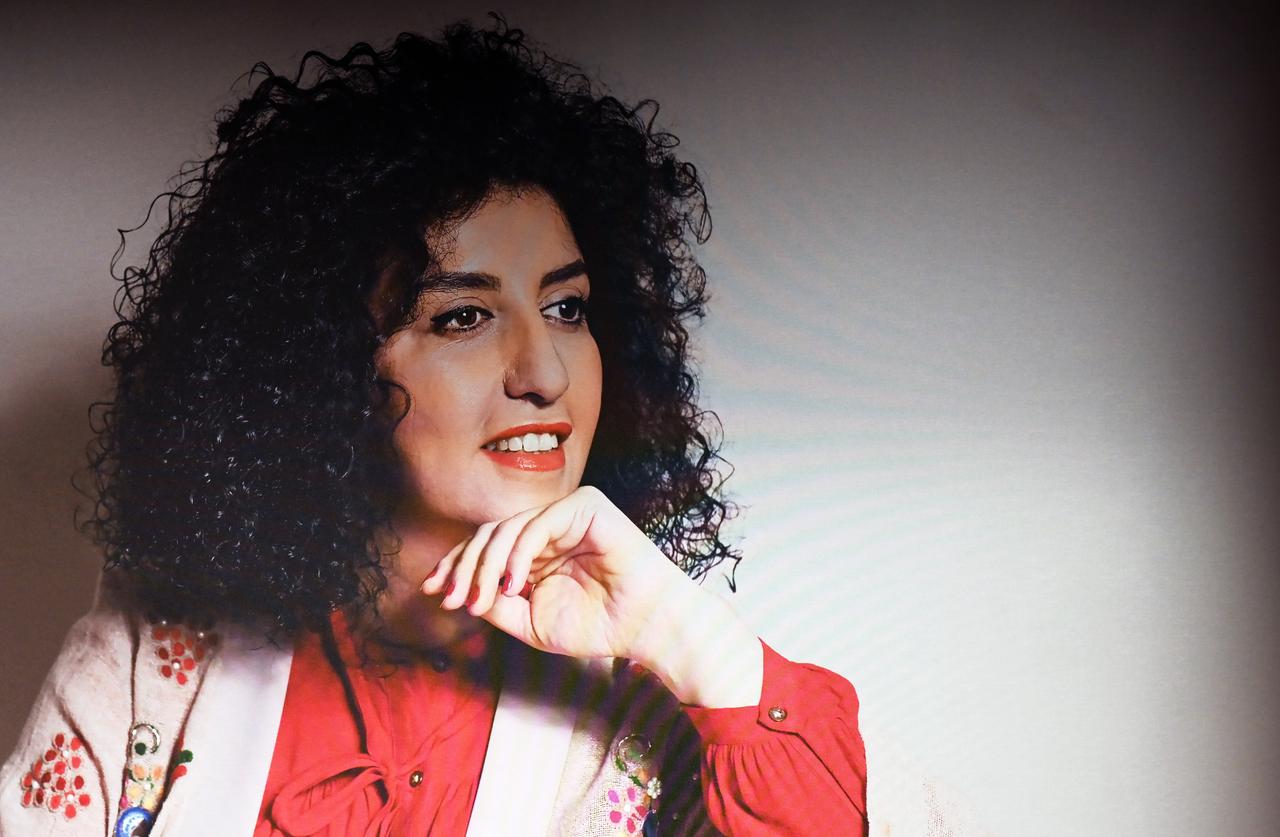
Narges Mohammadi is an Iranian journalist and writer born on 21 April 1972 in Zanjan, Iran. She has been detained and sentenced to prison terms on multiple occasions due to her activities in the field of human rights. In 2023 she was awarded the Nobel Peace Prize.
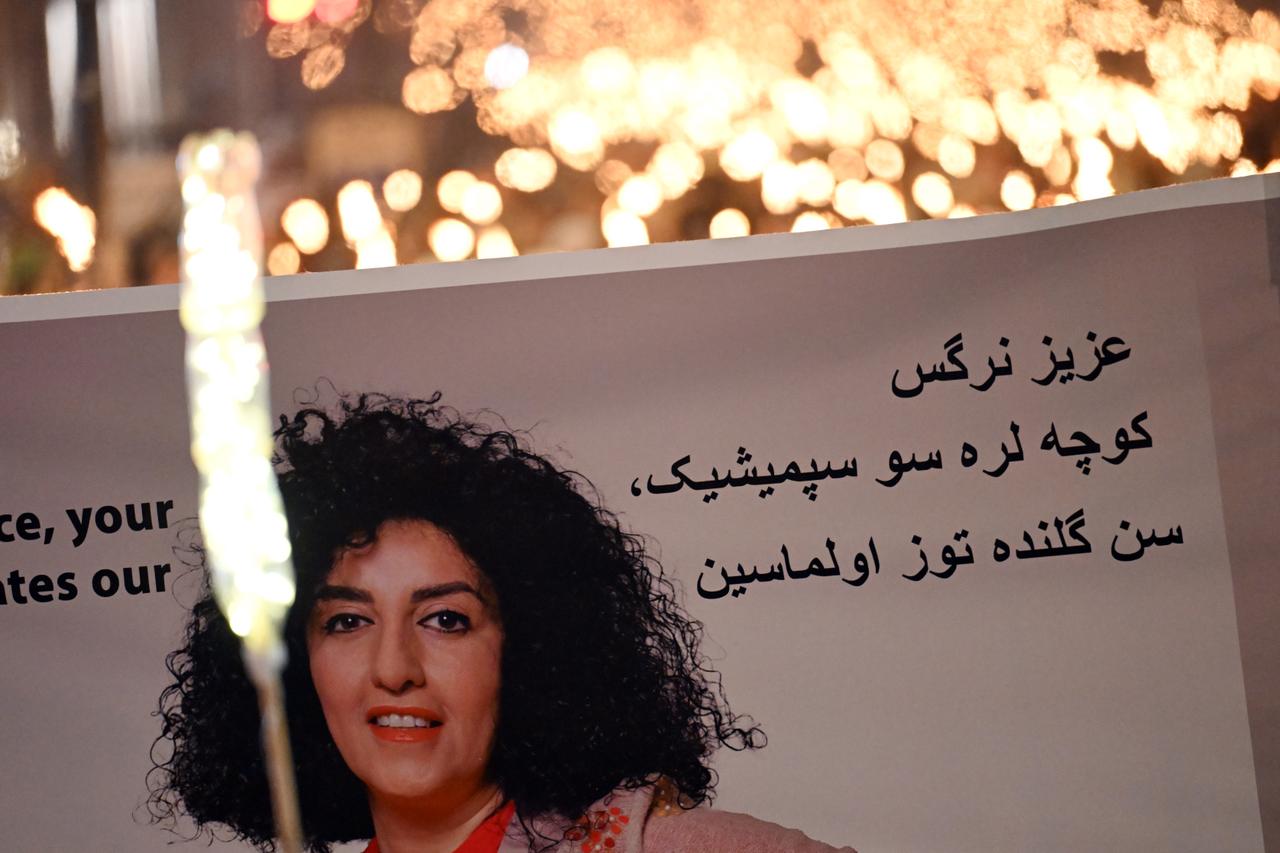
A poster featuring a photograph of Narges Mohammadi with a Persian message, 10 December 2023 – (Anadolu Agency)
Narges Mohammadi was born on 21 April 1972 in Zanjan, Iran. She is an Iranian citizen. In 2023 she was awarded the Nobel Peace Prize. She is a human rights defender journalist and writer. She is also the founder and director of the Narges Mohammadi Human Rights Foundation and has served as deputy chair and spokesperson for the Defenders of Human Rights Centre (DHRC).
Narges Mohammadi pursued her higher education in Iran. She studied physics at Qazvin International University. During her university years she participated in student activism and began working on issues related to women’s rights and student movements. She was arrested for the first time while still in school.
Narges Mohammadi began her journalistic activities in 1996. She wrote on topics related to student movements and women’s rights. Her articles were published in the Iranian magazine Payam-e Hajar, where she also served on the editorial board. Later she became a member of the Iranian Journalists’ Union due to her writings in various newspapers.
In 1999, during a period when many newspapers were shut down in Iran, she was dismissed from her newspaper due to her journalistic activities. She subsequently completed the qualification exams in engineering and began working as an engineering inspector at the Iran Engineering Inspection Company. In this role she participated in several large-scale industrial projects including the Petropars Project. Her tenure in this position ended in accordance with official directives due to her activities at the Defenders of Human Rights Centre.
In 2003 Narges Mohammadi joined the Defenders of Human Rights Centre (DHRC), established by Shirin Ebadi. She served as deputy chair and spokesperson for the centre and worked on legal cases involving political and conscience prisoners.
She participated in campaigns against the death penalty in Iran and was associated with the initiative “Step by Step to Stop the Death Penalty” (Legam). She faced various charges due to her work advocating for the abolition of capital punishment.
Within the scope of her human rights work she conducted research on prison conditions solitary confinement and the treatment of detainees. During these activities she was arrested multiple times.
Narges Mohammadi was arrested in 2001 due to her human rights activities. During this arrest she was held in solitary confinement for the first time. She was detained in isolation cells at the Ishrat Abad barracks under the command of the Islamic Revolutionary Guard Corps. Following her trial she was sentenced to one year in prison.
She was arrested again in 2010. After this arrest she spent several weeks in solitary confinement. She was sentenced to 11 years in prison by the first-instance court. On appeal this sentence was reduced to six years. In 2012 she entered prison to serve her sentence.
In 2014 new charges were brought against her following the circulation on social media of a speech in which she criticized the treatment of detainees at Evin Prison. These charges included “propaganda against the system” “conspiracy and collusion to commit crimes against national security” and “membership in an illegal organization with the aim of harming national security”.
She was arrested again in 2015 and in 2016 was sentenced to a total of 16 years in prison. This sentence comprised five years for “conspiracy and collusion to commit crimes against national security” one year for “propaganda against the system” and ten years for “membership in an illegal organization”. Under Iranian law when multiple prison sentences are imposed only the most severe is enforced.
After receiving the 16-year sentence in 2016 Narges Mohammadi continued serving her time in prison. The sentence was upheld on appeal. During this period she was held in Evin Prison. After being temporarily released in October 2020 she was retried within less than six months. As a result of this trial she was sentenced to 30 months in prison 80 lashes and a fine on charges of “propaganda” “slander” and “incitement to rebellion”. This ruling was based on her statements against the death penalty her testimony regarding torture and ill-treatment during her previous detention and her participation in sit-in protests.
She was arrested again in November 2021. Following this arrest she was transferred to Karaj Prison in Varamin where she was reportedly held in solitary confinement. In January 2022 she was sentenced to an additional eight years in prison and 70 lashes based on her activities concerning prison conditions the treatment of detainees and her work titled White Torture.
In October 2022 she received an additional 15 months in prison on charges of “propaganda against the system”. As part of this ruling she was also ordered to sign a monthly pledge to the security authorities for two years after release banned from traveling abroad for two years and prohibited from joining any political party or group.
As of 2023 additional investigations were opened against her due to her written and oral activities conducted from prison. She refused to attend the hearings related to these investigations and remained detained in Evin Prison throughout the year.
Narges Mohammadi was awarded the Nobel Peace Prize in 2023. The prize was granted in recognition of her activities in the field of women’s rights in Iran and her broader human rights work. As she was imprisoned at the time of the announcement she was unable to receive the award in person.
On 10 December 2023 at the Nobel Peace Prize ceremony held at Oslo City Hall in Norway’s capital Oslo the prize was accepted on her behalf by her children. The award was presented to her 17-year-old twin children Ali Rahmani and Kiana Rahmani who were living in exile in Paris.
Following the ceremony at a press conference Kiana Rahmani read aloud a letter written by her mother Narges Mohammadi. In the letter Mohammadi offered assessments of developments in Iran.
On 12 December 2025 Narges Mohammadi was arrested in Mashhad Iran while attending a memorial ceremony for lawyer Houshang Alikordi at Gadir Mosque. The arrest was carried out alongside other activists and citizens present at the ceremony.
Following a trial conducted by the Mashhad Revolutionary Court she was sentenced to six years in prison for “conspiracy and collusion to commit crimes against state security” and one and a half years for “propaganda activities”. Combined the total prison term was set at seven and a half years. In addition she was sentenced to two years of travel ban and two years of internal exile. The internal exile was ordered to be served in the town of Housf in South Khorasan Province.
It was stated that the ruling in this judicial process was not final and could be appealed.
It has been reported that Narges Mohammadi suffers from a neurological condition that can lead to seizures temporary partial paralysis and pulmonary embolism. She experienced multiple seizures in August and October 2015 and was hospitalized each time. At least once she was returned to prison despite medical recommendations to the contrary.
In November 2023 she began a hunger strike due to the denial of necessary medical treatment. The strike lasted three days and ended after authorities permitted her hospitalization without being forced to wear a headscarf. In the same month she was admitted to hospital for an angiography procedure.
At the beginning of February 2026 she began another hunger strike in protest against prison conditions her inability to speak by phone with her lawyers and family and concerns about her health. It was reported that on the sixth day of the strike her physical condition had deteriorated severely.
Narges Mohammadi is the author of a two-volume book titled White Torture based on her research and experiences regarding prison conditions and the treatment of detainees. The work draws on her own observations and testimonies collected during her periods of imprisonment in Iranian prisons.
Narges Mohammadi has received numerous international awards for her human rights work. In 2009 she was awarded the Alexander Langer Prize. In 2011 she received the Per Anger Prize from the Swedish government. In 2013 she was awarded the PEN/Oxfam Novib Freedom of Expression Prize. In 2022 she received the Courage Award from Reporters Without Borders. In 2023 she was awarded the Swedish Olof Palme Human Rights Prize the UNESCO/Guillermo Cano World Press Freedom Prize and the PEN/Barbey Freedom to Write Award.

Early Life and Education
Journalism and Professional Activities
Human Rights Activities
Arrests and Judicial Proceedings (2001–2016)
Imprisonment Sentences and Prison Conditions After 2016
Nobel Peace Prize (2023)
Arrests and New Sentences (2025–2026)
Health Condition and Hunger Strikes
Literary Works
International Recognition and Other Awards