


This article was automatically translated from the original Turkish version.
+2 More
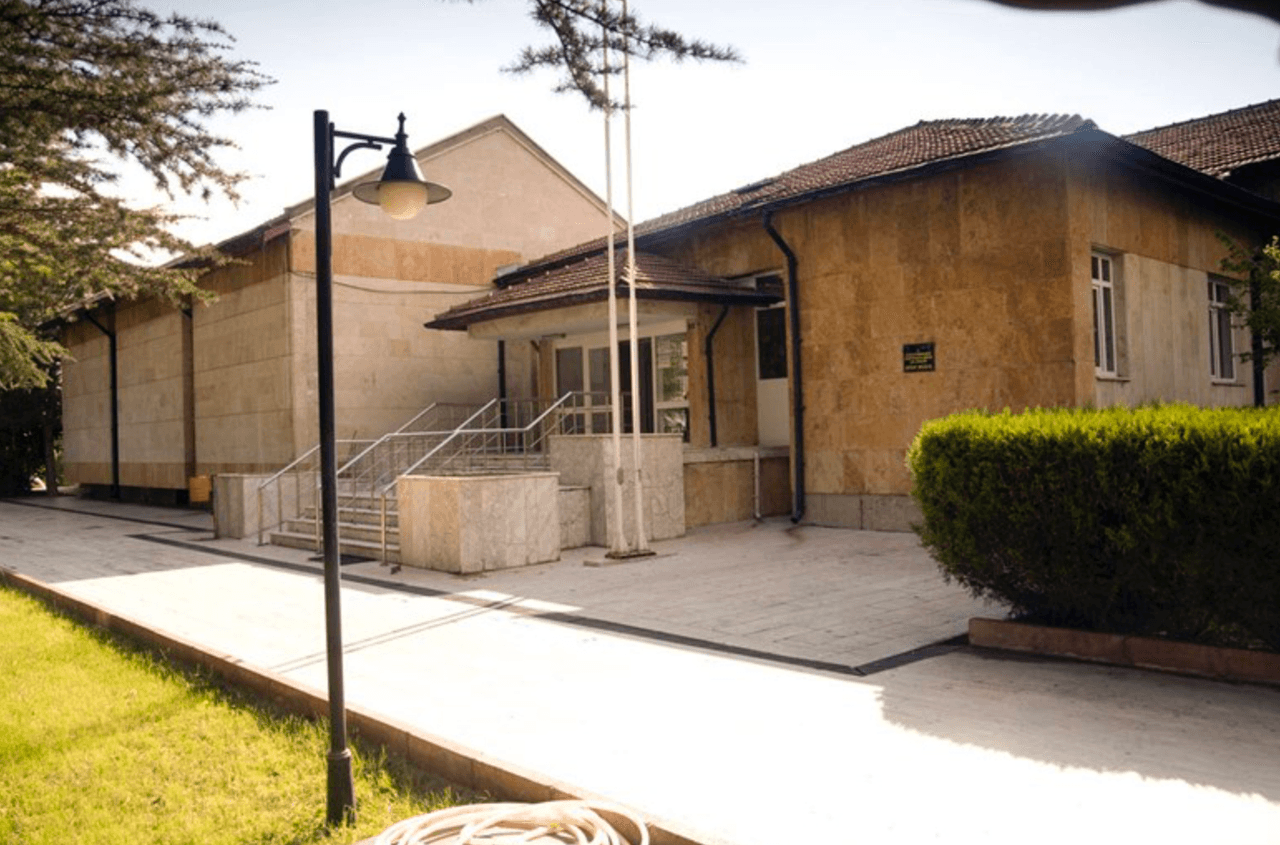
Niğde Museum
Location | Niğde Türkiye Central Anatolia Region | ||||||||
|---|---|---|---|---|---|---|---|---|---|
Establishment | 1957 (Museum activities began in 1939 at Akmedrese) | ||||||||
Exhibition | Central Anatolian archaeology, chronological arrangement, 6 exhibition halls | ||||||||
Awards and Projects | 2003 European Museum of the Year nomination, selected as a pilot museum and digitalization project by the U.S. World Heritage Conservation Fund | ||||||||
Niğde Museum is one of the institutions that preserve, display, and study the historical and cultural heritage of the Central Anatolia Region. Niğde Province has witnessed continuous settlement from the Paleolithic Age to the present and bears traces of many civilizations. Museum activities are essential for protecting, promoting, and transmitting the rich cultural heritage formed over this long historical process to future generations. Within this context, Niğde Museum has become one of the institutions representing Anatolian archaeology with its rich and unique collections.

Niğde Museum (Niğde Provincial Directorate of Culture and Tourism)
Museum activities in Niğde first emerged in 1939 during World War II, when the Akmedrese building was used as a storage facility affiliated with the Istanbul Archaeological Museums. This structure was restored in 1957 upon the official establishment of Niğde Museum and opened to the public for the first time with exhibitions and arrangements. In 1977, the museum moved to a new building, and its first modern exhibition and arrangement system was implemented on 20 November 1982. This system remained in service until 16 February 1999.
However, due to the increasing number of artifacts from archaeological excavations and the need for a new presentation method aligned with contemporary museum practices, the museum was reorganized in 2001 and reopened in its modernized form on 20 November 2001. In this new configuration, Niğde Museum was nominated in 2003 by the Ministry of Culture and Tourism as “Museum of the Year in Europe.” Although it was shortlisted after evaluation by jury members from Germany and France, it did not win the award. In the same year, it was selected as a pilot museum by the U.S. World Monuments Fund. Under this project, all artifacts in the museum were digitized and restructured, making Niğde Museum a pioneering example for museums in Türkiye.
Niğde Museum features six exhibition halls presenting the archaeology of Central Anatolia in chronological order. The majority of the artifacts displayed in these halls are original finds uncovered through archaeological excavations in the region.
This hall displays artifacts from the Neolithic and Chalcolithic periods. Notably, obsidian tools, burial finds, deity and goddess figurines, anthropomorphic vases, and a life-size reconstruction of a Chalcolithic house dated to 4883 BCE from Köşk Höyük are exhibited. These items were primarily obtained from excavations at Pınarbaşı Höyük, Köşk Höyük, Tepecik Höyük, and the Kaletepe Obsidian Workshop. The hall is named the “Köşk Höyük Hall” for its focus on illuminating the early settlement culture of the region.

Artifacts from Köşk Höyük excavations (Niğde Museum (Niğde Provincial Directorate of Culture and Tourism)
This hall presents finds from the Early Bronze Age (3rd millennium BCE). Visitors are shown tools related to mining from the Göltepe Höyük excavations in Celaller Village, Çamardı District, along with a reconstructed entrance to the ancient tin mine at Kestel. In addition, palace artifacts from the Assyrian Trade Colonies period are displayed, including items brought from the Acemhöyük excavations and from Darboğaz Town in Ulukışla.

Artifacts related to mining from Göltepe Höyük excavations (Niğde Provincial Directorate of Culture and Tourism
This hall is dedicated to the Late Hittite city-states and Phrygian culture of the 1st millennium BCE. Exhibits include stelae depicting the storm and fertility gods from the Nahita and Tuvanuva kingdoms established after the fall of the Hittite Empire, Hittite hieroglyphic inscriptions, finds from the Kaynarca Tumulus, Phrygian ceramics, and the Lion of Göllüdağ.

Phrygian ceramics and the “Lion of Göllüdağ” are displayed (Niğde Provincial Directorate of Culture and Tourism
This hall displays artifacts from the Hellenistic, Roman, and Byzantine periods. One section presents finds from the Tepebağları, Porsuk Höyük, and Acemhöyük excavations, as well as ceramic and glass objects, seal impressions, and Byzantine items acquired through purchase or forced acquisition. The other section exhibits statues and funerary stelae uncovered at the ancient city of Tyana, dating to the Roman Imperial period (2nd century CE).

Statuary and funerary stelae from the Roman Imperial period are displayed. (Niğde Provincial Directorate of Culture and Tourism)
This hall is divided into two main sections:

Islamic-Ottoman period coins, a Seljuk silver treasure, and the Tepebağları treasure from the Kingdom of Cappadocia are exhibited. (Niğde Provincial Directorate of Culture and Tourism
This hall is dedicated to traditional cultural elements of the region that are at risk of disappearing. Weapons, manuscripts, writing sets, lighting instruments, carpets, kilims, celestial globes, jewelry, various artifacts from the Ilkhanid period, and a sini belonging to the Kaçar Turks are displayed here. Additionally, a recreated traditional Niğde household corner reflecting recent domestic life is also featured in this section.

Niğde Museum (Niğde Provincial Directorate of Culture and Tourism)
Niğde Museum systematically presents the cultural depth and archaeological richness of Central Anatolia, not only documenting the past but also contributing to the digitization and revitalization of cultural heritage through contemporary museum practices. It serves as a center where both local and international visitors can trace the region’s development from prehistory to the present day.
T.C. Kültür ve Turizm Bakanlığı. "Niğde Müzesi." Müze.gov.tr. Accessed May 21, 2025.
T.C. Kültür ve Turizm Bakanlığı. "Niğde Müzesi." Türkiye Kültür Portalı. Accessed May 21, 2025.
T.C.Niğde İl Directorate of Culture and Tourism. "Müzeler." nigde.ktb.gov.tr. Accessed May 21, 2025.
Turkish Museums. "Niğde Müzesi." TurkishMuseums.com. Accessed May 21, 2025.

Niğde Museum
Location | Niğde Türkiye Central Anatolia Region | ||||||||
|---|---|---|---|---|---|---|---|---|---|
Establishment | 1957 (Museum activities began in 1939 at Akmedrese) | ||||||||
Exhibition | Central Anatolian archaeology, chronological arrangement, 6 exhibition halls | ||||||||
Awards and Projects | 2003 European Museum of the Year nomination, selected as a pilot museum and digitalization project by the U.S. World Heritage Conservation Fund | ||||||||
Foundation and Development
Exhibition Halls
I. Hall – Köşk Höyük Hall
II. Hall – Bronze Age and Assyrian Trade Colonies Hall
III. Hall – Late Hittite and Phrygian Hall
IV. Hall – Hellenistic, Roman and Byzantine Hall
V. Hall – Coins and Mummy Hall
VI. Hall – Ethnographic Artifacts Hall