

+1 More

Nilgün Marmara
Doğum tarihi | 1958-02-13 | ||||||||
|---|---|---|---|---|---|---|---|---|---|
Place of Birth | Kadıköy, Istanbul, Türkiye | ||||||||
Ölüm tarihi | 1987-10-13 | ||||||||
Place of Death | Kızıltoprak, Istanbul, Türkiye | ||||||||
Profession(s) | Poet Writer | ||||||||
Education | Department of English Language and Literature (1985) Boğaziçi University Kadıköy Maarif College | ||||||||
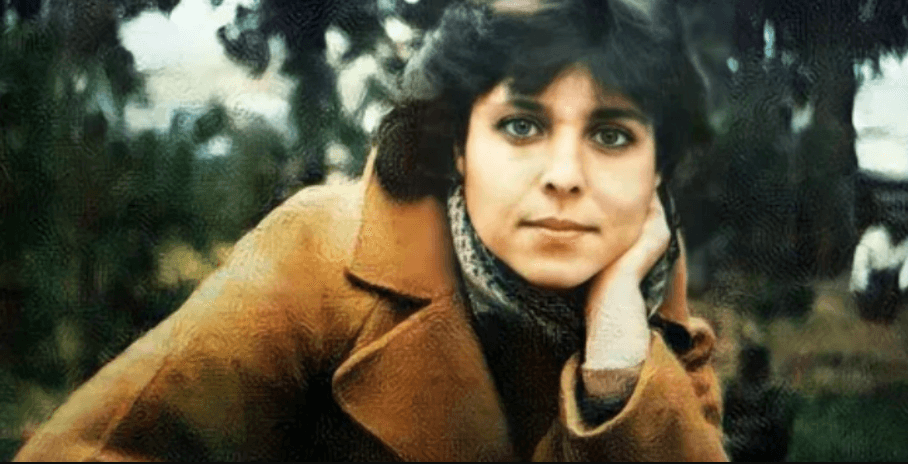
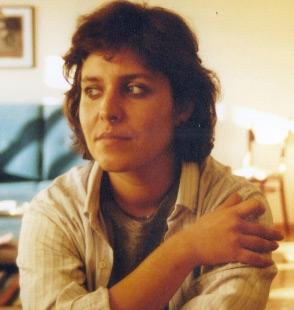
Nilgün Marmara was born on 13 February 1958 in the Kadıköy district of Istanbul. Her full name is Zelda Nilgün Marmara. Her mother is Vidinli Perihan Hanım and her father is Plevneli Fikri Bey. Her family is of Bulgarian origin.
She completed her primary education at Kadıköy Gazi Mustafa Kemal Paşa Primary School and her secondary education at Kadıköy Maarif College and Anadolu High School. During high school she focused on foreign language education and developed a strong reading background by using her family’s library. She began her university studies at Istanbul University in the Department of Turkish Language and Literature but left the program due to the political atmosphere. Later she was admitted to Boğaziçi University’s Department of English Language and Literature and graduated in 1985 with a thesis titled An Analysis of Sylvia Plath’s Poetry in the Context of Suicide.
During and after her university education she held various jobs including administrative assistant roles in holding companies and civil service at the Egyptian Consulate. In 1982 she married Kağan Önal an industrial engineer whom she met that year. In late 1985 she moved to Libya due to her husband’s assignment. During the approximately 16 months she spent there she wrote poems and read books on philosophy and art. The living conditions in Libya negatively affected her psychological state. She returned to Türkiye in 1986 but her health condition prevented her from working regularly in any job.
Nilgün Marmara struggled with depression and bipolar disorder throughout her life. Over time she developed paranoid delusions and her relationships with her family and surroundings weakened. On 13 October 1987 she committed suicide by jumping from the window of her home in Kızıltoprak Istanbul. It is known that she wrote a letter of apology to her close ones before her death and had attempted to take medication. Marmara who died at the age of only 29 was buried at Karacaahmet Cemetery.
Nilgün Marmara developed an imagistic individual and experimental poetic language in 1980s Turkish poetry. In her poems the loneliness of the individual existential suffering alienation and the thought of death are central themes. Her poetic language departs from classical formal rules and features new words and linguistic play. She created terms such as “karaduygulu” “meleksi” “çığlık-söz” “yıldızkopum” and “susmaklı” which do not exist or are extremely rare in Turkish. Linguistically her poems contain intensive phonological lexical orthographic and semantic deviations.
Nilgün Marmara Poetry ( YouTube / Istanbul Culture Foundation)
In her poems motifs such as “pain” “death” “alienation” “rootlessness” “loneliness” and “nothingness” are frequently explored. These themes are primarily reflected through the dissonance between an individual self and the universe. Pain is not merely psychological but structural and thematic core of her poetry. In some texts pain is interpreted as a consequence of a society that otherizes. Loneliness and invisibility are presented as intertwined with existential questioning.
Marmara’s poetry has also been examined within the context of feminist poetry. The expression of female identity in her poems reflects a critical perspective against patriarchal structures and sensitivity toward social gender roles. Social pressures female roles and individual alienation are among the key dynamics in her poetry.
It is notable that Nilgün Marmara did not publish a book during her lifetime. The majority of her writings were published posthumously. Her main works include:
After her death Marmara attracted significant attention in literary circles and occupies a distinctive place among women poets of the post-1980 era. She is mentioned alongside contemporary female poets such as Lale Müldür and Gülseli İnal. Figures such as Ece Ayhan Haydar Ergülen Cemal Süreya and Cezmi Ersöz have offered evaluations of her poetry and life. Over time various speculations emerged around her life and death which were largely resolved with the publication of the book Defterler.
Anıl, Çelik. “Nilgün Marmara’nın Şiirlerinde Dil Sapmaları.” *Uluslararası Türk Dünyası Kültür Araştırmaları Dergisi* 1, no. 1 (2015): 76–90. Accessed May 10, 2025. https://acikerisim.bartin.edu.tr/bitstream/handle/11772/2260/NILGUN_MARMARANIN_SIIRLERINDE_DIL_SAPMAL.pdf?sequence=1&isAllowed=y.
Biography. "Nilgün Marmara." Accessed May 10, 2025. https://www.biyografya.com/tr/biographies/nilgun-marmara-856a9265.
DR. "Nilgün Marmara." Accessed May 10, 2025. https://www.dr.com.tr/yazar/nilgun-marmara/s=249266?srsltid=AfmBOoqD9BaV2G7Icpt4QrQzNNXLszOcsdH4A8UBunyg95K-y_OnfAX-.
TEİS – Türk Edebiyatı İsimler Sözlüğü. "Marmara, Nilgün." Accessed May 10, 2025. https://teis.yesevi.edu.tr/madde-detay/marmara-nilgun.
TGRT Haber. “Nilgün Marmara Kimdir, Neden Öldü? Nilgün Marmara Şiirleri ve Hayatı.” Accessed May 10, 2025. https://www.tgrthaber.com/kultur-sanat/nilgun-marmara-kimdir-neden-oldu-nilgun-marmara-siirleri-ve-hayati-2803106?s=1.
YouTube. "Nilgün Marmara Belgeseli." Accessed May 10, 2025. https://www.youtube.com/watch?v=Vmh_w4nrJXk.
Şen Sönmez, Ürün. “Nilgün Marmara’nın Şiirinde Acının Kronolojisi.” *ViraVerita E-Journal: Interdisciplinary Encounters* 17 (May 2023): 99–132. Accessed May 10, 2025. https://dergipark.org.tr/en/download/article-file/3013165.

Nilgün Marmara
Doğum tarihi | 1958-02-13 | ||||||||
|---|---|---|---|---|---|---|---|---|---|
Place of Birth | Kadıköy, Istanbul, Türkiye | ||||||||
Ölüm tarihi | 1987-10-13 | ||||||||
Place of Death | Kızıltoprak, Istanbul, Türkiye | ||||||||
Profession(s) | Poet Writer | ||||||||
Education | Department of English Language and Literature (1985) Boğaziçi University Kadıköy Maarif College | ||||||||
Educational Life
Professional and Personal Life
Mental Health and Death
Literary Identity and Poetic Language
Themes and Motifs
Feminist Approaches in Her Poetry
Published Works
Literary Influence and Posthumous Reception