This article was automatically translated from the original Turkish version.
+1 More
Type of Geographical İndication | Origin Name | ||||||||
|---|---|---|---|---|---|---|---|---|---|
Registration Number | 491 | ||||||||
Registration Date | 12.03.2020 | ||||||||
Product / Product Group(s) | Spices sauces and salt for food flavorings | ||||||||
Province(s) | Gaziantep | ||||||||
Applicant/Registrant(s) | Nizip Chamber of Commerce | ||||||||
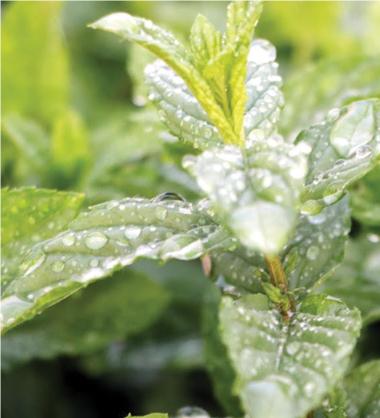
Nizip mint (Mentha spicata L.) is an aromatic herb distinguished by its unique aroma and green color, closely associated with the Nizip district of Gaziantep Province. It was officially registered as a geographical indication on 12 March 2020 under Law No. 6769 on Industrial Property and has been protected under geographical indication status since that date. The registration process was carried out by the Nizip Chamber of Commerce.
Nizip mint is marketed both fresh and dried. Its characteristic aroma originates primarily from volatile oil components, especially carvone (40–70%) and limonene (20%). Additional monoterpenes such as carveol, menthol, borneol, linalool, and menthone, along with sesquiterpenes, further enrich the aroma profile. These compounds constitute the key chemical features that distinguish Nizip mint from other mint varieties.
The primary environmental factors determining product quality are Nizip’s continental climate, the day-night temperature difference (averaging 24 °C during harvest), duration of sunlight exposure, low relative humidity, and the region’s elevation. When combined with traditional shade-drying methods, these conditions minimize aroma loss and preserve the product’s distinctive green color.
Cultivation of Nizip mint began in the 1960s. Production is carried out using a propagation method known locally as “şitilleme.” This involves cutting fresh stems during the flowering period and planting them in holes dug to finger depth. This process typically occurs between 15 April and 15 May.
Fertilization, locally termed “zibilleme,” is applied in two stages using sheep and goat manure: the first in February and the second approximately 45 days later. Irrigation is performed every 6 to 10 days using groundwater, with frequency adjusted according to plant height and ambient temperature.
The harvesting process, called “kırım,” is done manually. From the same rootstock, the crop can be harvested three to four times annually, yielding for a total of two to three years. Harvesting takes place when the plant reaches a height of 40–50 cm and the lower leaves begin to fall off.
Drying is carried out on linen cloths in shaded areas. After being exposed to night moisture, the mint is moved in the early morning to larger shaded areas and stirred throughout the day with a rake. In the evening, leaves are separated from stems using rotating rubber rollers, then aerated with a rake to remove stems and sieved to eliminate foreign matter.
Nizip mint is cultivated in clay-loam soils rich in phosphorus, manganese, potassium, and lime, with a slightly alkaline pH, low salinity, and moderate organic matter content. Irrigation water is sourced from underground aquifers and has medium hardness, slight alkalinity, and low electrical conductivity.
The production and processing of the product are inspected at least once annually under the coordination of the Nizip Chamber of Commerce. The inspection body comprises representatives from the Nizip District Directorate of Agriculture and Forestry, Nizip Municipality, Gaziantep University Nizip Vocational School Department of Food Technology, Nizip Chamber of Industry and Commerce, and Nizip Chamber of Tradesmen and Craftsmen. Physical and chemical analyses are conducted as needed. Additionally, the labeling requirements—including the term “Nizip Nanesi” and the geographical indication emblem on product packaging—are subject to inspection.
Gaziantep Metropolitan Municipality. "Nizip Nanesi." Gaziantep Metropolitan Municipality. Accessed October 19, 2025. https://ci.gaziantep.bel.tr/Urunler/nizip-nanesi-1015.
Turkish Patent and Trademark Office. "Nizip Nanesi Menşe Tescil Belgesi." Turkish Patent and Trademark Office. Accessed October 19, 2025. https://ci.turkpatent.gov.tr/Files/GeographicalSigns/816bd55b-42e3-4af3-86e2-f5dfe42d3a9d.pdf.
Turkish Patent and Trademark Office. "Nizip Nanesi." Geographical Indications Portal. Accessed October 19, 2025. https://ci.turkpatent.gov.tr/cografi-isaretler/detay/38458.

Type of Geographical İndication | Origin Name | ||||||||
|---|---|---|---|---|---|---|---|---|---|
Registration Number | 491 | ||||||||
Registration Date | 12.03.2020 | ||||||||
Product / Product Group(s) | Spices sauces and salt for food flavorings | ||||||||
Province(s) | Gaziantep | ||||||||
Applicant/Registrant(s) | Nizip Chamber of Commerce | ||||||||
Distinguishing Characteristics
Agricultural Production Process
Drying and Processing
Soil and Water Properties
Monitoring Mechanism