


This article was automatically translated from the original Turkish version.
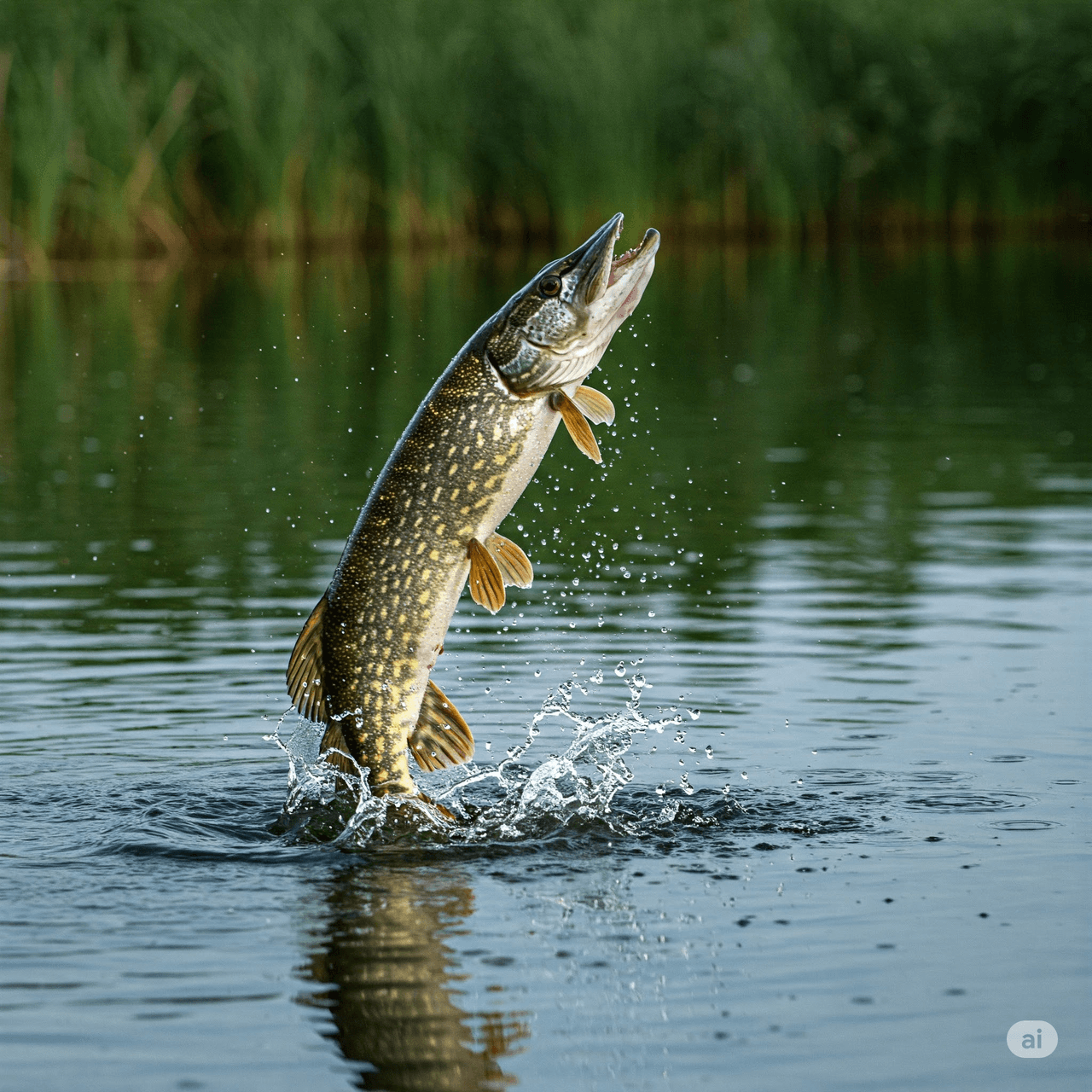
Crane Fish
Scientific Name(s) | Esox lucius | ||||||||
|---|---|---|---|---|---|---|---|---|---|
Turkish Name | Pike | ||||||||
Family | Esocidae | ||||||||
Distribution(s) | Asia and North America Freshwater systems of Europe | ||||||||
Habitat | areas rich in aquatic plants swamps rivers Lakes | ||||||||
Body Length | maximum 150 cm Average 40–55 cm | ||||||||
Weight(s) | maximum 25 kg Average 2–7 kg | ||||||||
Diet(s) | water birds amphibians Fish | ||||||||
Breeding Season | Spring months (March–April) | ||||||||
Sexual Maturity | 3 years | ||||||||
Lifespan | 10–15 years | ||||||||
Pike (Esox lucius) is a predatory fish species belonging to the family Esocidae, widely distributed in freshwater ecosystems of the Northern Hemisphere. Naturally found across large parts of Europe, Asia, and North America, this species plays a significant role in ecosystem dynamics as an apex predator in lakes and river systems. The pike is a species notable for both its morphological characteristics and ecological adaptations.
The pike is distinguished by its elongated, torpedo-shaped body, which is adapted for rapid swimming and sudden attacks. The dorsal and anal fins are positioned toward the posterior part of the body, enabling quick acceleration and agile maneuvering. The lateral line system contains between 105 and 148 scales. The mouth is broad and armed with sharp teeth that are highly effective in capturing and holding prey. Both the premaxilla and dentary bones bear a combination of small and large teeth, preventing escaped prey.
The pike’s tongue serves both mechanical and sensory functions. Its surface is covered with taste buds and mucosal structures that aid in recognizing and swallowing prey. Additionally, tooth-like structures are present on the gill arches, facilitating the swallowing of prey.

Internal Anatomical Features of the Pike (Generated by Artificial Intelligence)
The pike has a broad geographic distribution across Europe, Asia, and North America. It inhabits a variety of freshwater environments including lakes, rivers, and marshes. It particularly favors areas rich in aquatic vegetation, as these provide both shelter and optimal hunting grounds. Habitat selection is influenced by factors such as water temperature, oxygen levels, and prey abundance.
As an apex predator, the pike plays a crucial role in ecosystem regulation. Occupying the upper trophic levels, it helps maintain population control of other species. Its diet primarily consists of other fish, but amphibians and the young of water birds may also be consumed. This predatory behavior contributes to balancing prey populations.
The pike typically reaches sexual maturity at around three years of age. Spawning occurs during spring months and is influenced by water temperature. Females deposit their eggs in shallow areas with dense vegetation. The eggs are adhesive and attach to aquatic plants. Incubation duration varies with water temperature but generally lasts between 10 and 15 days before hatching.
The growth rate of the pike depends on environmental conditions and food availability. Juveniles initially feed on plankton and later diversify their diet to include small fish and invertebrates. As they grow, their hunting abilities and predatory behaviors develop. Under favorable conditions, adult pike can live for 10 to 15 years.

Lifecycle of the Pike (Generated by Artificial Intelligence)
The pike is an opportunistic predator with a varied diet. Juveniles feed on plankton and small invertebrates, while adults primarily consume fish. Prey selection is influenced by the structure of the aquatic habitat, prey availability, and seasonal changes. The pike ambushes its prey, lying in wait before launching a rapid strike to incapacitate it.
Alp, A., V. Yeğen, M. A. Yağci, R. Uysal, E. Biçen, and A. Yağci. 2008. “Diet Composition and Prey Selection of the Pike, *Esox lucius*, in Çivril Lake, Turkey.” *Journal of Applied Ichthyology*. Accessed May 24, 2025. https://doi.org/10.1111/j.1439-0426.2008.01119.x.
Benzer, S., A. Gül, and M. Yilmaz. 2010. “Breeding Properties of Esox lucius (L., 1758) Living in Kapulukaya Dam Lake (Kırıkkale, Türkiye).” African Journal of Biotechnology 9, no. 34: 5560–5565. Accessed May 24, 2025. https://www.researchgate.net/publication/267233370_Breeding_properties_of_Esox_lucius_L_1758_living_in_Kapulukaya_Dam_Lake_Kirikkale_Turkey
Craig, J. F. 2008. “A Short Review of Pike Ecology.” *Hydrobiologia* 601, no. 1: 5–16. Accessed May 24, 2025. https://doi.org/10.1007/s10750-007-9262-3.
Franklin, D. R., and L. L. Smith. 1963. “Early Life History of the Northern Pike, *Esox lucius* L., with Special Reference to the Factors Influencing the Numerical Strength of Year Classes.” *Transactions of the American Fisheries Society* 92, no. 2: 91–110. Accessed May 24, 2025. https://fishbase.se/References/FBRefSummary.php?ID=3837&database=FB
Sadeghinezhad, J., H. Rahmati-Holasoo, S. Fayyaz, and A. Zargar. 2014. “Morphological Study of the Northern Pike (Esox lucius) Tongue.” Anatomical Science International 90, no. 4: 235–239. Accessed May 24, 2025. https://doi.org/10.1007/s12565-014-0254-x.

Crane Fish
Scientific Name(s) | Esox lucius | ||||||||
|---|---|---|---|---|---|---|---|---|---|
Turkish Name | Pike | ||||||||
Family | Esocidae | ||||||||
Distribution(s) | Asia and North America Freshwater systems of Europe | ||||||||
Habitat | areas rich in aquatic plants swamps rivers Lakes | ||||||||
Body Length | maximum 150 cm Average 40–55 cm | ||||||||
Weight(s) | maximum 25 kg Average 2–7 kg | ||||||||
Diet(s) | water birds amphibians Fish | ||||||||
Breeding Season | Spring months (March–April) | ||||||||
Sexual Maturity | 3 years | ||||||||
Lifespan | 10–15 years | ||||||||
No Discussion Added Yet
Start discussion for "Northern Pike (Esox lucius)" article
Morphological Features and Anatomical Structure
Habitat, Distribution and Ecological Role
Reproduction, Growth and Feeding Dynamics