

This article was automatically translated from the original Turkish version.
+1 More
Closure | 17 November 1962 | ||||||||
|---|---|---|---|---|---|---|---|---|---|
Establishment(Text) | 26 August 1960 | ||||||||
Owner | Ziya Tansu | ||||||||
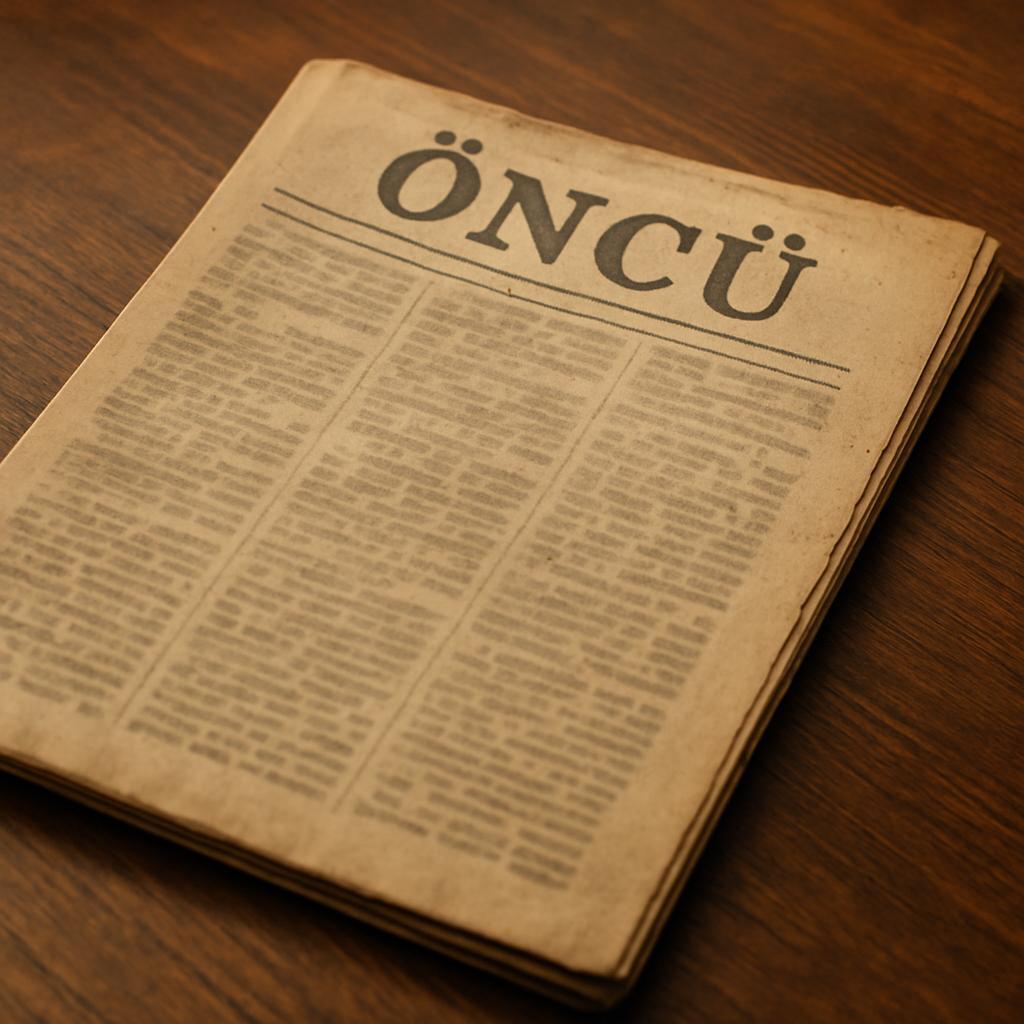
Öncü is a newspaper that began publication following the 27 May 1960 military coup, aiming to disseminate the ideas of the coup regime and legitimize the coup itself. Öncü published its first issue on 26 August 1960, approximately three months after the 27 May 1960 coup. Its publication continued until 17 November 1962. The newspaper’s primary objective was to secure public support for the new military regime and confer legitimacy on its political authority.
The owner of the newspaper is Ziya Tansu, brother of İsmail Tansu, a former arms companion of Türkeş. Ziya Tansu was among the pioneers of the “Özel Harp” cadre established within the military under NATO auspices and one of the founders of the Turkish Resistance Organization (TMT) in Cyprus. It has been stated that the newspaper’s financial support was provided by banker Kazım Taşkent. In the early stages of Öncü’s emergence, there were developments in which the publishing rights for a newspaper initially planned under the name Yeni Işık were acquired in the name of Alparslan Türkeş’s wife, Muzaffer Türkeş, before it was later transformed into Öncü.
The most notable feature of Öncü during its publication period was the evolution of its political line and content, influenced by changes in its management.
In its initial phase, the newspaper’s stance was distinct. Its first chief editor was Aydın Yalçın, who was among the founders of the New Turkey Party (YTP) established after the 27 May coup.
Although Öncü initially denied claims that it was the official organ of the YTP, after Yalçın joined the party, news related to the YTP became dominant in the newspaper. The YTP’s program was liberal in both political and economic terms. The newspaper advocated a liberal economy in alignment with YTP policies and criticized the statist economic policies of the Republican People’s Party (CHP). In his column, Aydın Yalçın frequently expressed the views of the YTP, emphasized that doors remained open to former members of the Democrat Party (DP), and adopted a critical stance toward other parties such as the CHP and the Justice Party (AP).
During this period, some journalists working at Öncü criticized its transformation into a party organ and were dismissed.
The Second Phase of the newspaper began on 18 February 1962, when control passed to Kuvvet Başarır and Müşerref Hekimoğlu. Müşerref Hekimoğlu stated that he took over the newspaper with the financial backing of Cemal Gürsel’s salary and material support from some members of the National Unity Committee (MBK). During this period, Öncü demonstrated proximity to the Turkish Workers’ Party (TİP). Müşerref Hekimoğlu’s own writings showed a critical attitude toward the YTP and a supportive stance toward the TİP. Content increasingly featured social issues such as unions, labor news, labor relations, and women in the workforce. Figures such as Mehmet Ali Aybar and Behice Boran contributed articles during this phase. The newspaper’s economic perspective also shifted: it abandoned liberal economic thought, arguing that it was incompatible with the country’s realities and failed to ensure social justice.
Throughout its publication life, Öncü consistently emphasized its loyalty to the National Unity Committee (MBK) and its belief in the 27 May coup. It described the coup as the “Clean Revolution” and maintained a line of glorification of 27 May. The newspaper fulfilled the need to serve as the voice of the military administration that came to power with the coup. The Yassıada trials and the situation of Democrat Party members became major agenda items. Extensive coverage was given to corruption reports and legal cases involving DP officials referred to at the time as the “low elements.” The newspaper also addressed controversial issues of the period such as university purges. Coverage of women also changed with the shift in political orientation. In the early phase, it focused on topics such as fashion and beauty; in the later phase, issues such as gender relations, sexuality, social equality, and women’s participation in the workforce entered the public agenda.

Closure | 17 November 1962 | ||||||||
|---|---|---|---|---|---|---|---|---|---|
Establishment(Text) | 26 August 1960 | ||||||||
Owner | Ziya Tansu | ||||||||
Editorial Policy
Öncü’s Approach to Other Issues