


This article was automatically translated from the original Turkish version.
+2 More
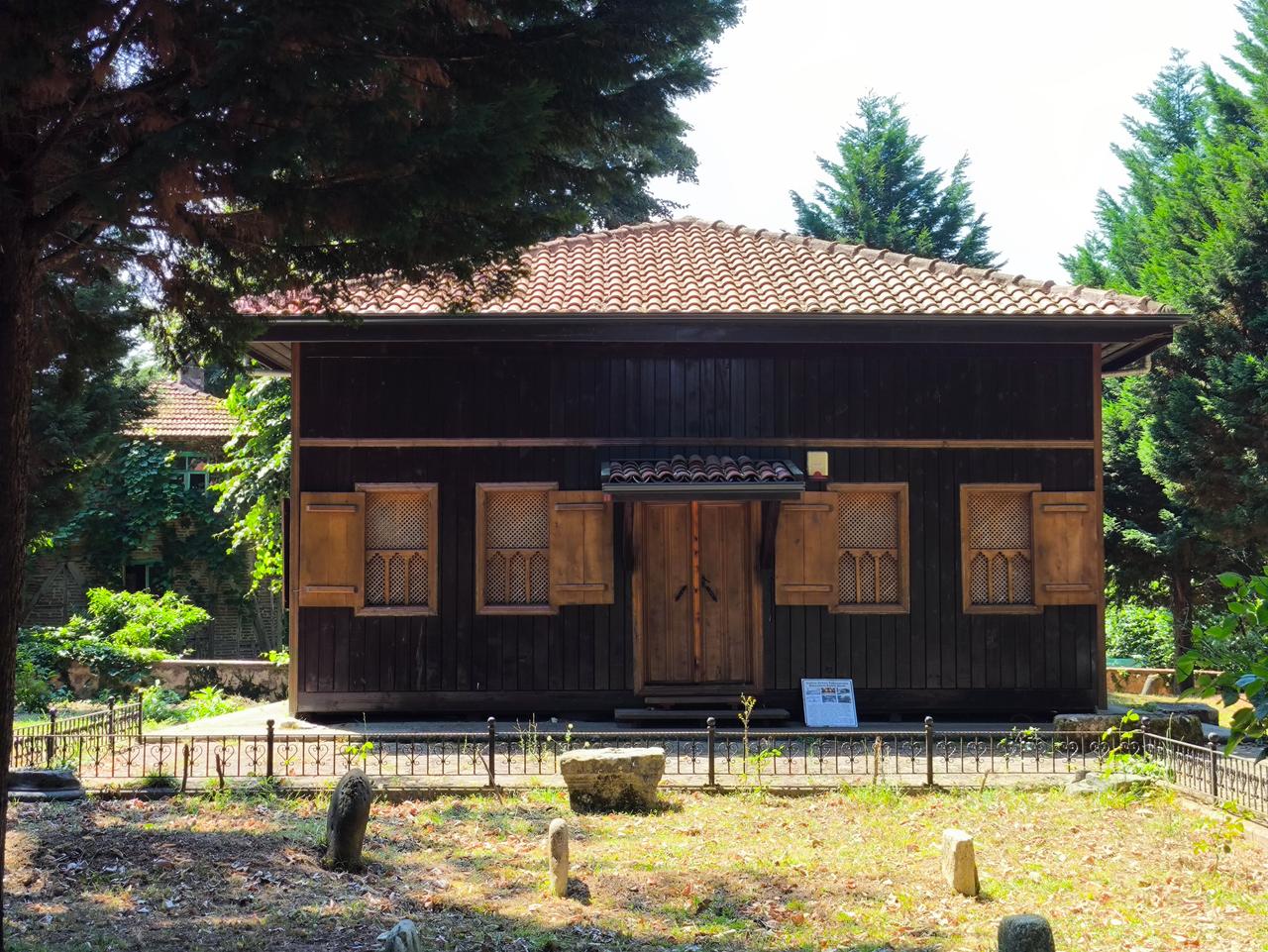
Orhan Gazi Camii
Location | Türkiye Düzce Akçakoca Çayağzı Village | ||||||||
|---|---|---|---|---|---|---|---|---|---|
Year of Construction | 1323 | ||||||||
Founder(s) | Orhan Gazi | ||||||||
Architectural Type | Bag-type wooden mosque | ||||||||
Plan | Rectangle (8.40 × 11.50 m) | ||||||||
Roof | Turkish-style tiled hipped roof | ||||||||
Minaret | None | ||||||||
Protection | restored in 2007 by the General Directorate of Foundations Registered on 16.10.1995 | ||||||||
Area(s) | 201.72 square meters | ||||||||
Owner | Orhan Gazi Camii Şerifi Vakfı | ||||||||
Orhan Gazi Camii is a significant wooden place of worship from the Ottoman period, located in Çayağzı Village, Akçakoca District of Düzce Province. It is believed to have been commissioned by Orhan Gazi, one of the founders of the Ottoman State, upon his arrival in the region in 1323. The structure is recognized as one of the most notable examples of the “bag-type” mosques in the area.

Exterior View of Orhan Gazi Camii (Source: Yusuf Bilal Akkaya)
In 1323, during a campaign to incorporate Skopje into Ottoman territory, Orhan Gazi and his army, due to the harsh winter conditions, arrived at and stayed in Çayağzı Village (then known as Aftun-i Rüfta). During this period, a mosque was constructed on a site beside a stream, using six large stones as supports for long tree trunks that were notched and joined together. In Ottoman archival records, the structure is referred to as “Sultan Orhan Camii Şerifi.”
The mosque was built using the “bag technique” common in Anatolia during the Ottoman period. In this method, deep notches are carved into the interior of logs or planks, allowing them to be interlocked to form rectangular frames. The structure rests on large stone blocks instead of a conventional foundation and was constructed without the use of nails. This technique was chosen to enhance the durability of the wood and ensure the longevity of the building.
The building has a rectangular plan measuring 8.40 × 11.50 metres. Its foundation consists of logs placed atop ancient stone blocks. It features a gabled roof covered with traditional Turkish tiles and does not have a minaret.

Interior View of Orhan Gazi Camii (Source: Yusuf Bilal Akkaya)
The mosque was registered by the Ankara Council for the Protection of Cultural and Natural Heritage on 16 October 1995 under decision number 4221. In 2007, it was restored by the General Directorate of Foundations. The restoration included renewal of the walls, floor, ceiling, the last prayer area, and the pulpit.
The area surrounding the mosque contains gravestones dating from the early Ottoman period to the late Ottoman period. Particularly notable are stones featuring a sarık motif. This cemetery underscores that the structure holds not only religious but also historical significance.
The historical Orhan Gazi Camii holds cultural heritage status as one of the rare surviving examples of Ottoman wooden architecture. Its construction using the bag technique offers an authentic representation of traditional Anatolian wooden building methods that have endured to the present day.
Afyon Postası. "Bu Camiyi Orhangazi Yaptırdı: Ne Temel Ne Çivi Var, Asırlardır Ayakta Olan Caminin Esrarengiz Hikayesi." Accessed August 5, 2025. https://www.afyonpostasi.com.tr/bu-camiyi-orhangazi-yaptirdi-ne-temel-ne-civi-var-asirlardir-ayakta-olan-caminin-esrarengiz-hikayesi
Culture Inventory. "Çayağzı Köyü Orhan Gazi Camii." Culture Inventory. Accessed August 5, 2025. https://kulturenvanteri.com/yer/cayagzi-koyu-orhan-gazi-camii/#17.1/41.08617/31.228758
Culture Portal. "Orhan Gazi Camii ve Haziresi." Accessed August 5, 2025. https://www.kulturportali.gov.tr/turkiye/duzce/kulturenvanteri/orhangaz-cam-ve-hazres
Düzce İl Kültür ve Turizm Müdürlüğü. "Orhan Gazi Camii." T.C. Kültür ve Turizm Bakanlığı. Accessed August 5, 2025. https://duzce.ktb.gov.tr/TR-208229/orhan-gazi-camii.html
Kültür Portalı. "Tarihi Orhan Gazi Camii." Accessed August 5, 2025. https://www.kulturportali.gov.tr/turkiye/duzce/gezilecekyer/tarh-orhangaz-cam
T.C. Düzce Valiliği İl Kültür ve Turizm Müdürlüğü. *Düzce Taşınmaz Kültür Varlıkları Envanteri*. Düzce: T.C. Düzce Valiliği, 2014. Accessed August 5, 2025. https://www.kulturportali.gov.tr/medya/dokuman/dokumandetay/6193

Orhan Gazi Camii
Location | Türkiye Düzce Akçakoca Çayağzı Village | ||||||||
|---|---|---|---|---|---|---|---|---|---|
Year of Construction | 1323 | ||||||||
Founder(s) | Orhan Gazi | ||||||||
Architectural Type | Bag-type wooden mosque | ||||||||
Plan | Rectangle (8.40 × 11.50 m) | ||||||||
Roof | Turkish-style tiled hipped roof | ||||||||
Minaret | None | ||||||||
Protection | restored in 2007 by the General Directorate of Foundations Registered on 16.10.1995 | ||||||||
Area(s) | 201.72 square meters | ||||||||
Owner | Orhan Gazi Camii Şerifi Vakfı | ||||||||
History
Architectural Features
Restoration and Conservation
Gravestones and Cemetery
Significance