
+2 More


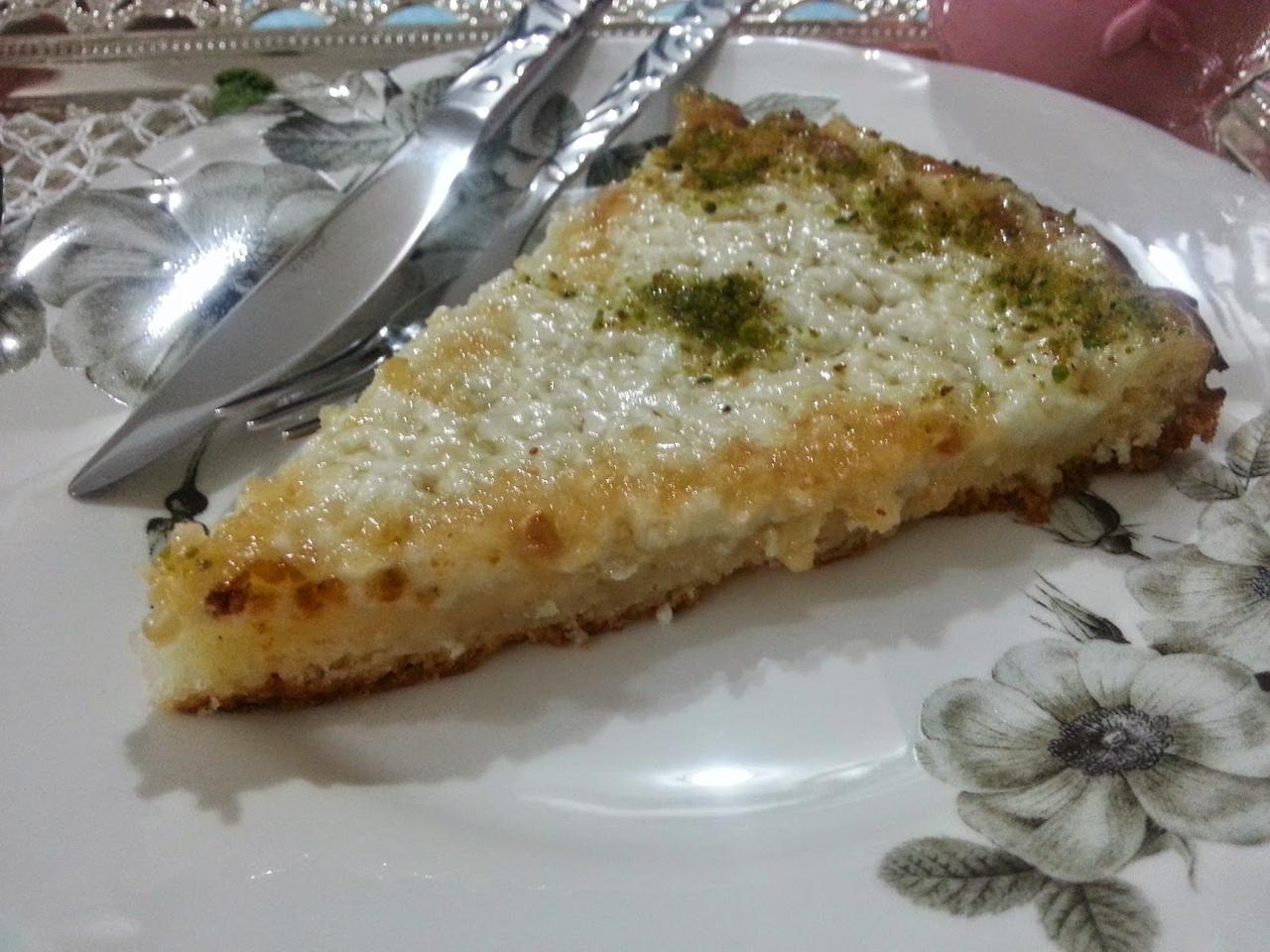
Osmaniye yoğurtlu kömbesi is a special pastry enriched with a mixture of yogurt and spices, holding a deep-rooted place in the traditional culinary culture of Osmaniye province. Frequently prepared for social events such as religious holidays, special occasions, and hosting guests, this product is distinguished both by its ingredients and its method of preparation. The use of kömbes in the region continues not only as a gastronomic tradition but also as a social custom. This traditional product was registered as a geographical indication with an origin mark on September 13, 2022.
Osmaniye yoğurtlu kömbesi is made by adding a filling, prepared with similar ingredients, onto dough made from specially intended wheat flour, grape molasses (or white sugar), strained yogurt, vegetable oil, baking powder, and a spice mixture. The product is optionally sprinkled with black cumin and sesame and baked on a griddle, in a stone oven, or in a stove oven. The spice mixture includes cinnamon, clove, ginger, turmeric, nutmeg, mahleb, and mastic.
In terms of structure, the outer edges are thin and crispy, while the center is soft and cake-like due to the filling. In the region, Osmaniye yoğurt kömbesi is also referred to as “yaş kömbe” (wet kömbe) and is traditionally prepared in a round shape and served in triangular or square slices. Eggs may be optionally used in the dough. The yogurt-based mixture in the filling gives the product a slightly sweet flavor profile.
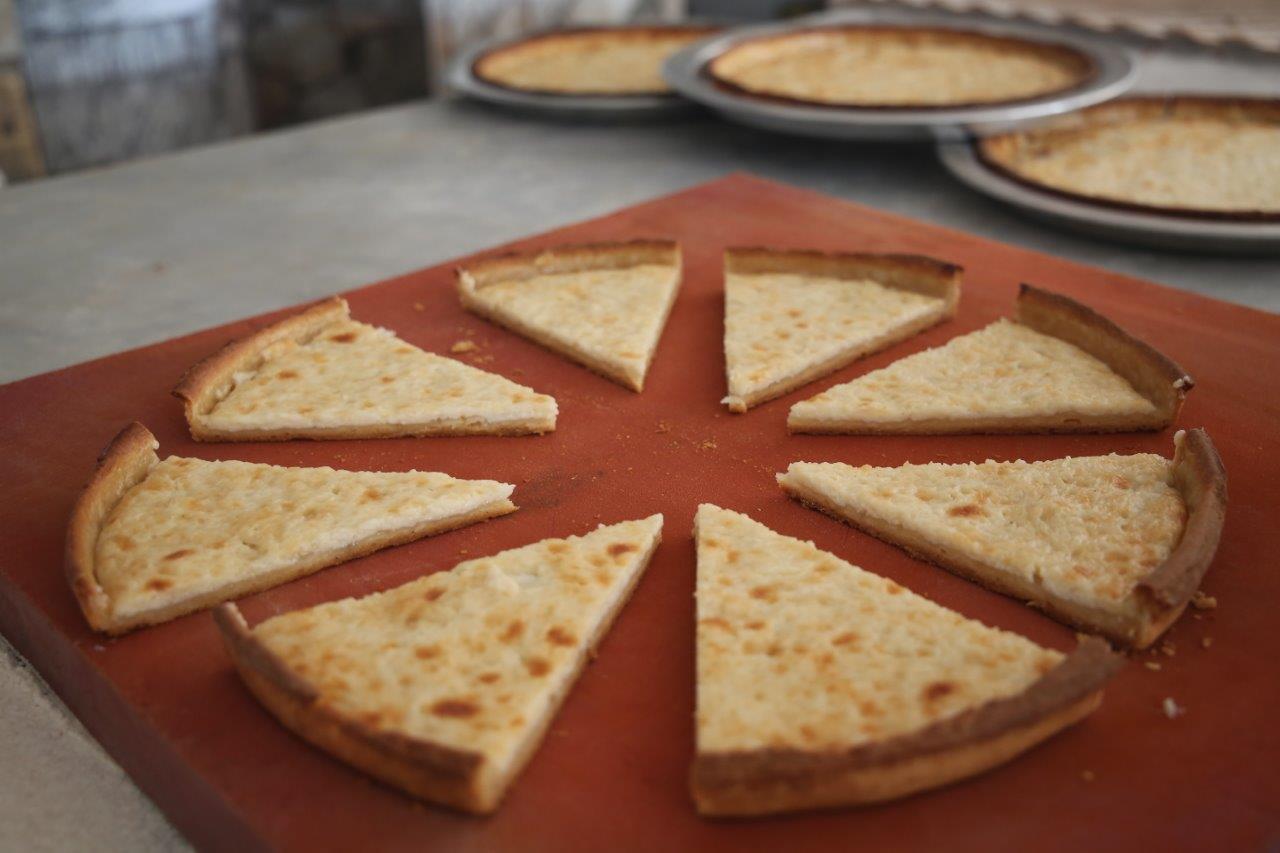
Osmaniye Yoğurtlu Kömbesi (Türk Patent ve Marka Kurumu)
First, 1 kg of specially intended wheat flour is sifted. In a separate bowl, 70 g white sugar (or 50 ml grape molasses), 200 g strained yogurt, 200 ml oil, 10 g baking powder, and 10 g spice mixture (cinnamon, clove, ginger, turmeric, nutmeg, mahleb, and mastic) are mixed. This mixture is added to the flour and kneaded until a medium-firm dough is obtained. The prepared dough is divided into portions and rested for approximately 10 minutes.
For the filling, 80 g specially intended wheat flour, 1000 g strained yogurt, 500 g white sugar (or 350 ml grape molasses), 100 g butter, and 20 g starch are combined in a bowl. The butter is pre-melted and added in liquid form to the other ingredients. The filling is mixed until it reaches a homogeneous consistency.
The rested dough is rolled out by hand into a single layer and spread over a greased round tray. The dough is placed so that the center remains slightly hollow and the edges are slightly raised. The prepared filling is poured into the center of the dough and spread evenly across the tray. Optionally, up to 20 g of sesame and black cumin seeds can be sprinkled on top.
Traditionally, kömbes are baked on a griddle heated with a wood fire. Alternatively, a stone oven or a stove oven may be used. When using a conventional oven, the product is baked at 180°C for approximately 40 minutes. After baking, the kömbe is rested for 10–15 minutes, then cut into triangular or square slices and served cold.
Osmaniye yoğurtlu kömbesi was registered as a geographical indication with an origin mark by the Türk Patent ve Marka Kurumu on September 13, 2022. The registration number is 1221. The product’s fame and traditional preparation method are directly linked to the geographical region. All stages of production take place within the boundaries of Osmaniye province.
The production processes and compliance with the geographical indication are supervised by a three-person commission coordinated by the Osmaniye Chamber of Commerce and Industry, consisting of one representative each from the Osmaniye Food Products Tradesmen Association and the Osmaniye Provincial Directorate of Agriculture and Forestry. Inspections are conducted once a year regularly and additionally in case of complaints. Compliance with the production method, ingredients, and label usage is monitored by this commission.

No Discussion Added Yet
Start discussion for "Osmaniye Yoğurtlu Kömbesi" article
Product Description and Distinctive Features
Production Method
Dough Ingredients
Filling Ingredients
Preparation
Preparing the Dough
Preparing the Filling
Shaping and Baking
Geographical Indication Information
Inspection
This article was created with the support of artificial intelligence.