

This article was automatically translated from the original Turkish version.
+2 More
Othello Castle is a historical defensive structure located in the city of Famagusta in the Turkish Republic of Northern Cyprus, built to protect the harbor. It is situated on the eastern coast of the island of Cyprus, at a key commercial and military point facing the Mediterranean Sea. The castle was tasked with safeguarding the “Sea Gate” (Porta del Mare), the entrance to the walled city of Famagusta that opened toward the sea.
The origins of the castle date back to the 11th century, when the Prince of Tyre first constructed a tower and ramparts in the region. The foundational form of the present structure was built in the 14th century during the rule of the Lusignans, under the name “Harbor Castle.” During this period, the castle served not only as a military defense point but also as a residential settlement for members of the royal family and their servants.
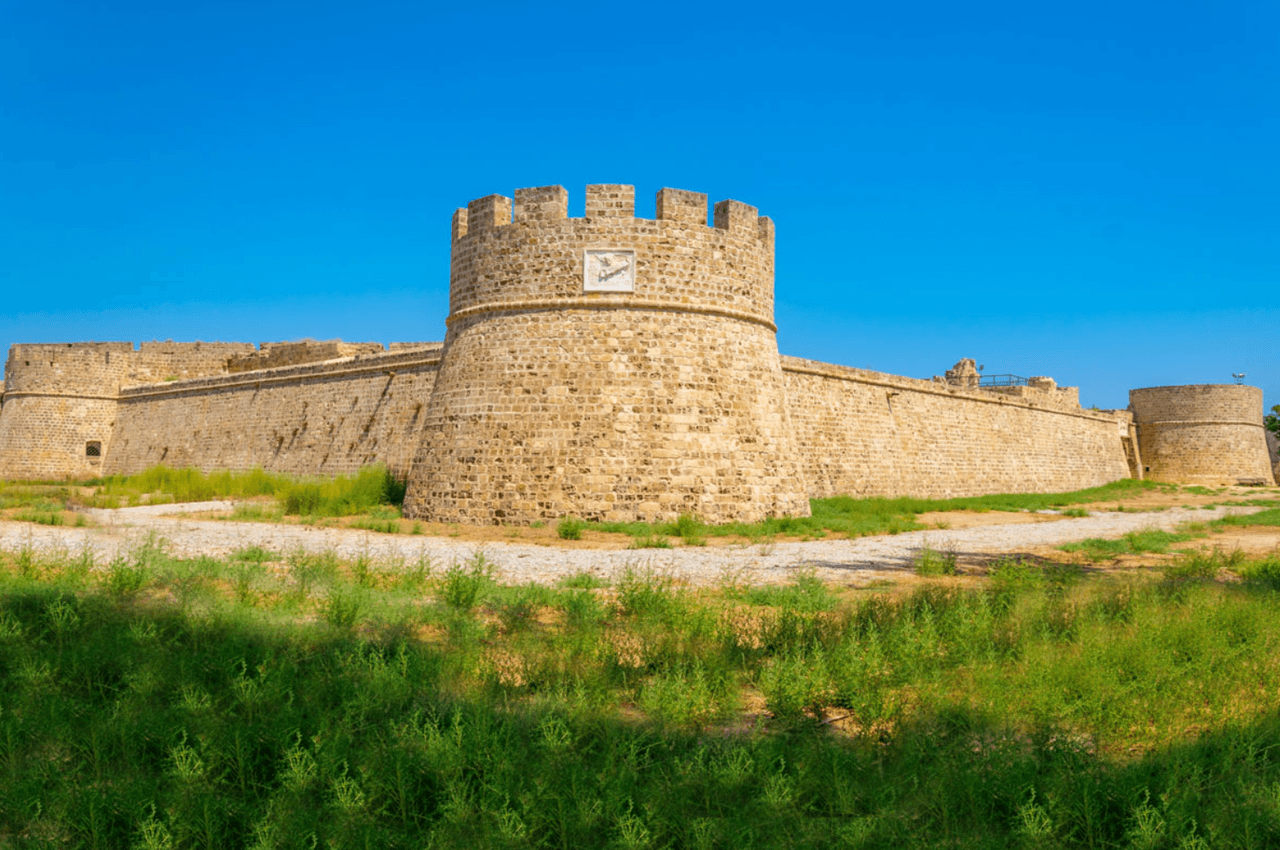
Following the Venetians’ capture of the island in 1489, the castle was substantially restructured to adapt to contemporary military technology. The rectangular towers left by the Lusignans were replaced with circular towers better suited for cannon and gunpowder use, the walls were thickened, and the fortress was transformed into an artillery platform. During this era, the castle became one of the primary defensive elements of the city, surrounded by deep moats.
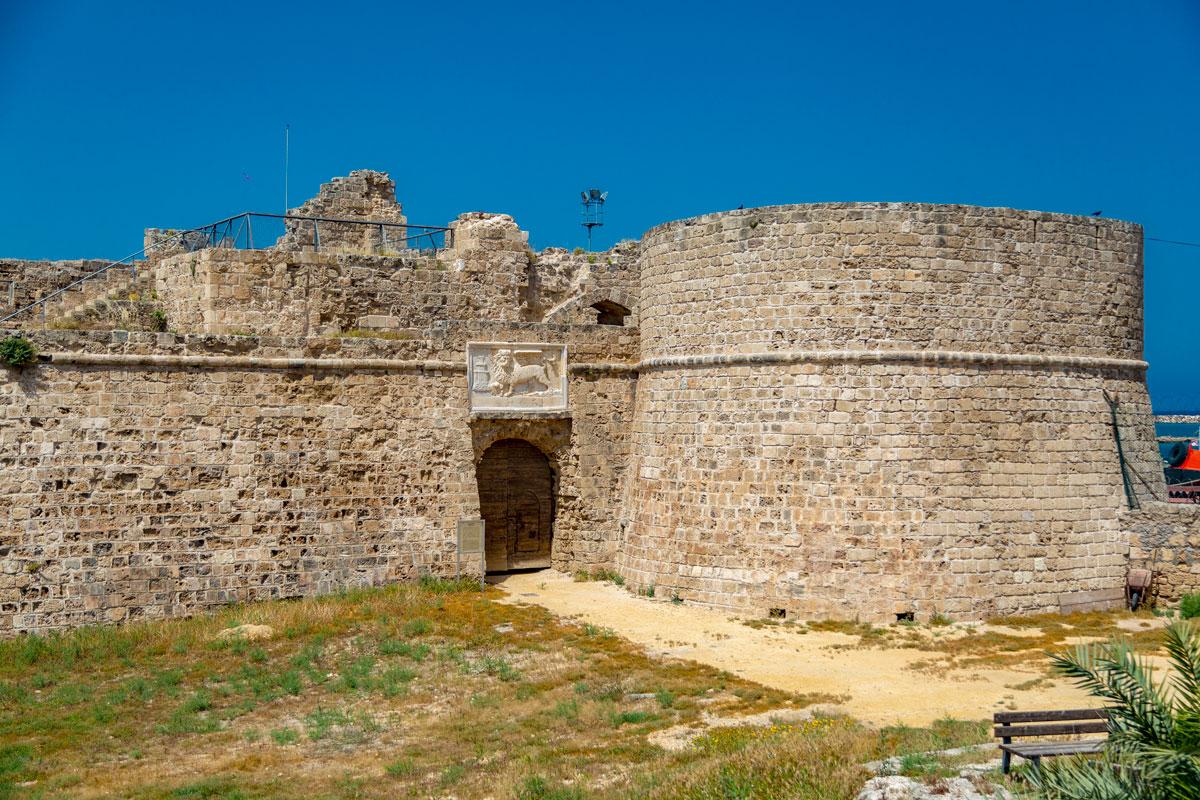
In 1492, the winged lion emblem of St. Mark, the patron saint of Venice, was placed above the main entrance gate of the castle. Beneath the relief, the name of the Venetian captain Nicolo Foscarini, who oversaw the castle’s reconstruction in this form, is inscribed. Another significant figure associated with the castle is the construction engineer Giovanni San Michele, who played a key role in the restoration of Famagusta’s walls and the new urban planning of the city.
Othello Castle (Northern Cyprus)
Othello Castle is characterized by its circular towers, artillery batteries, covered parapets, and a large courtyard. Inside the castle, five separate vaulted rooms, originally built during the Lusignan period, served as a hall, dormitory, and dining area. The Gothic beams and wooden nails fixed into the walls reflect the architectural aesthetics of the era. Internal corridors within the castle were designed to allow soldiers to move swiftly during combat.
A particularly notable feature is the entrance gate, considered one of the oldest wooden doors in Cyprus. In the castle courtyard, antique cannons dating back over 400 years, bronze weapons of Ottoman and Spanish origin, and various iron cannonballs are on display. These cannonballs are tangible remnants of the castle’s military history.
The castle is frequently depicted in engravings made by 16th-century cartographers. In the 1597 engraving by Guiseppe Rosaccio, the Church of St. Dominic, located between the castle and the Karpaz Battery, is prominently featured. In S. Gibellino’s 1571 drawing, the same church is marked with the number 5, and its position relative to Othello Castle is clearly indicated. Both engravings demonstrate that the castle and nearby churches were recorded according to the convention of the time, which only represented structures of significant importance.
Othello Castle (YouTube /Ada Kıbrıs)
The castle derives its name from the tragedy “Othello,” written by the English playwright William Shakespeare in 1603. The play is set in a port city on Cyprus, and the protagonist Othello is introduced as a Venetian commander. Some historians suggest that Shakespeare’s inspiration may have been the Venetian governor Christophoro Moro, and that the writer confused the name with “Moor,” leading him to construct the story around a character from Morocco.
In 1571, during the Ottoman Empire’s campaign for Cyprus, the castle fell into Ottoman hands. Even after the Ottoman period, the castle retained its military and strategic importance and became known in local memory as the “impregnable castle.” It was also used for a time as a prison in 1566.
After restoration in 2014, the castle reopened to the public on 3 July 2015. Today, it is regarded as one of Famagusta’s most important cultural and tourist landmarks. From the castle’s elevated points, visitors can view the Lala Mustafa Pasha Mosque and the panoramic cityscape of Famagusta.
The castle courtyard and vaulted halls occasionally host cultural events such as concerts, exhibitions, and theater performances. This has transformed Othello Castle from merely a historical monument into a living cultural center.

Historical Development
Architectural Features
Its Position and Significance in Historical Maps
Connection to Shakespeare
Ottoman Period and Beyond
Modern Era and Tourist Use