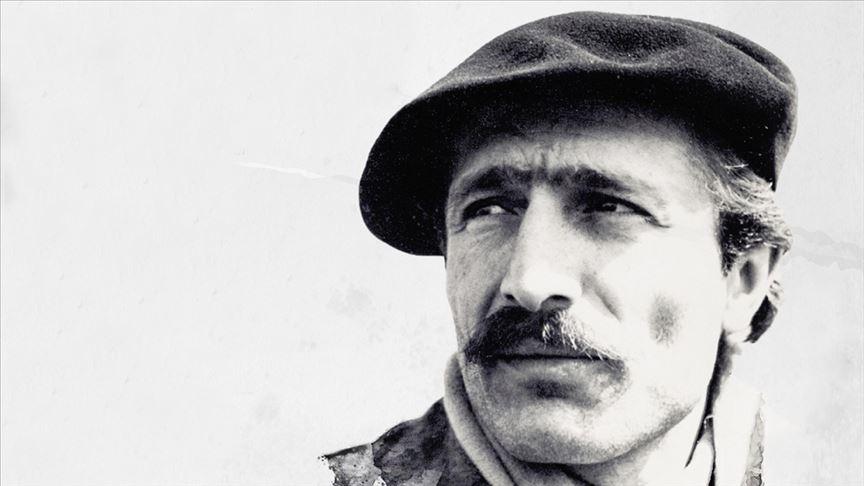

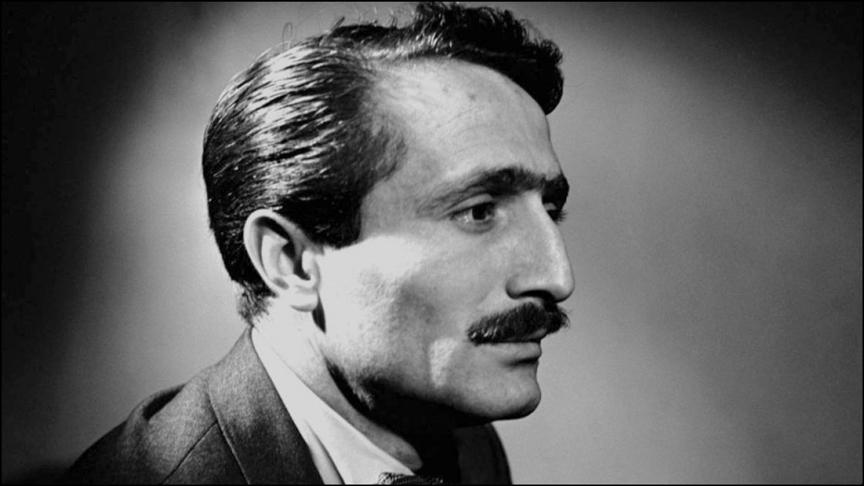

The real name of Özdemir Asaf is Halit Özdemir Arun. He was born in Ankara on 11 June 1923. His father Mehmet Asaf Bey was a member of the Şûra-yı Devlet during the Ottoman period. His mother Hamdiye Hanım adopted the surname “Arun” after the implementation of the Surname Law. Asaf lived in Ankara until the age of seven and moved to Istanbul with his family after losing his father in 1930.
He began his primary education at the elementary school of Galatasaray High School and completed his secondary education there as well. Due to the recurrence of an illness he suffered during childhood he was unable to attend school for a year and lost his right to free education. He graduated from Kabataş Boys High School in 1942 where he had enrolled in his final year of high school. He began his higher education at the Faculty of Law of Istanbul University and later continued until his third year at the Faculty of Economics. He also spent a year at the Institute of Journalism.

Asaf’s literary journey began during his high school years. His first article was published in 1939 in the journal Servet-i Fünun-Uyanış. In 1943 he used a different pseudonym for his first poem “Hediyem”. Over time he adopted the name “Özdemir Asaf”. He worked as a journalist translator and insurance producer. In 1951 he founded Sanat Basımevi and in 1955 he established Yuvarlak Masa Yayınları thereby becoming active in publishing. This publishing house operated until 1970. In 1971 he opened a bibliotheca bar and restaurant named Şimdi in Bebek Istanbul.
Özdemir Asaf (1979) (TRT Archive)
Özdemir Asaf married Sabahat Selma Tezakın whom he met at school on 14 September 1946. Their daughter Seda was born in 1948. The couple divorced in 1961. He married Yıldız Moran one of Türkiye’s first female photography artists in 1962. From this marriage he had three children whom he named Gün Olgun and Etkin. In 1954 he traveled to Atlantic coast cities and cities along the eastern coast of America. In 1959 he was invited as a representative of the Turkish Writers Union to the International Poetry Biennial in Belgium. Beginning in 1959 he traveled nearly throughout all of Europe. In 1966 he attended the Poetry Congress in Yugoslavia as a guest of the Macedonian Writers Union.
Özdemir Asaf’s poetry became distinctive from the 1950s onward. He embraced the principle of “expressing much with little” using a concise intense and simple language. His poems highlight wordplay irony paradox and satire. He remained unaffiliated with any literary movement and adopted an independent poetic vision free from ideologies philosophical systems and group influences. His central themes include love solitude time death deception longing and human relationships. He limited punctuation and capitalization to encourage reader interpretation and participation.
His first poetry collection “Dünya Kaçtı Gözüme” was published in 1955. This was followed by Sen Sen Sen (1956) Bir Kapı Önünde (1957) Yumuşaklıklar Değil (1962) Nasılsın (1970) Çiçekleri Yemeyin (1975) Ben Değildim (1978) and Yalnızlık Paylaşılmaz (1978). His literary legacy expanded with essay and aphorism collections such as Yuvarlağın Köşeleri (1961) and posthumously published poems including Bugün ve Bugün Çiçek Senfonisi and Benden Sonra Mutluluk. He translated works such as Oscar Wilde’s “The Ballad of Reading Gaol” and Pitigrilli’s “Nessuna Donna Mi Disse No” into Turkish. Some of his works have been translated into English and published under the title “To Go To”.
In 1979 his health deteriorated and he was hospitalized. In 1980 he was diagnosed with lung cancer and a brain tumor. He died in Istanbul on 28 January 1981. His funeral was held at Bebek Camii and he was buried at Aşiyan Mezarlığı.
Anadolu Ajansı. “Hayata Şiirin Gözlüğüyle Bakan Şair: Özdemir Asaf.” *aa.com.tr.* Accessed May 23, 2025. ://www.aa.com.tr/tr/portre/hayata-siirin-gozluguyle-bakan-sair-ozdemir-asaf/3120645
Anadolu Ajansı. “Türk şiirinin nahif ve duygu dolu şairi: Özdemir Asaf.” aa.com.tr. Accessed May 23, 2025. https://www.aa.com.tr/tr/kultur/hayata-her-zaman-duygu-dolu-gozlerle-bakan-sair-ozdemir-asaf/2798875.
Asiltürk, Bâki Ayhan. “Özdemir Asaf (1923–2023).” *Türk Dili Dergisi*, no. 860, August 2023. https://tdk.gov.tr/wp-content/uploads/2023/08/Baki-Ayhan-Asilturk-_E_-OZDEMIR-ASAF-1923-2023-_-5.pdf
Turk Edebiyatı İsimler Sözlüğü. "Özdemir Asaf." teis.yesevi.edu.tr. Accessed May 23, 2025.

Childhood and Education
Professional Career and Publishing Activities
Personal Life and Travels
Literary Style and Poetic Vision
Works and Publications
Final Years and Death