

+2 More

Doğum tarihi | 1953-10-17 | ||||||||
|---|---|---|---|---|---|---|---|---|---|
Eş | Aysun Aslan | ||||||||
Annesi | Nahide Hanım | ||||||||
Babası | Hurşit Bey | ||||||||
Ölüm tarihi | 2023-07-08 | ||||||||
Çocuk | Alişan Uğur | ||||||||
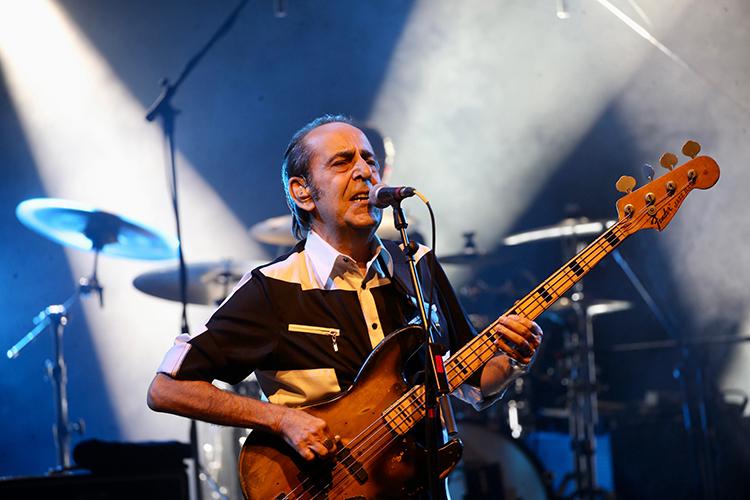
Özkan Uğur, whose full name is Raif Özkan Uğur, was born on 17 October 1953 in Istanbul. He is a versatile artist known in the Turkish art world both as a musician and an actor, and one of the founding members of the legendary Turkish pop and rock band MFÖ. Uğur achieved success in fields such as bass guitar, vocals, songwriting, and production, and gained recognition among cinema and television audiences for the characters he portrayed in productions such as “G.O.R.A.,” “Eşkıya,” and “İkinci Bahar.” He represented Türkiye twice at the Eurovision Song Contest and remained widely known both within the artistic community and among the public throughout his long career.
Özkan Uğur - Olduramadım. (Mikra Production YouTube Channel)
Uğur was the youngest of five children. His father, Osman Hurşit Uğur, worked for Şehir Hatları, while his mother, Nahide Hanım, was a homemaker. From an early age, Uğur showed an interest in music and began playing the mandolin at Reşat Nuri Güntekin Primary School, marking his first encounter with the arts. He completed his secondary education at Fenerbahçe High School, where he formed an amateur music group called “Atomikler” with friends, gaining his first stage experience.
Özkan Uğur began his professional music career in 1970 as a bass guitarist with the Şerif Yüzbaşıoğlu Orchestra. In 1971, he met Mazhar Alanson and Fuat Güner and joined the group “Kaygısızlar.” During this period, he was also a member of the original lineup of Barış Manço’s “Kurtalan Ekspres.” He collaborated on various projects with the group “Ter” and with Erkin Koray. In 1974, he played bass guitar for Edip Akbayram ve Dostlar, one of the important groups of Anatolian rock, followed by stints with Ersen ve Dadaşlar. In 1976, he co-founded the group “İpucu Beşlisi” with Mazhar Alanson and Fuat Güner, which laid the musical foundation for what would later become MFÖ.
In the early 1980s, Özkan Uğur, together with Mazhar Alanson and Fuat Güner, founded the band Mazhar-Fuat-Özkan (MFÖ), securing a significant place in Turkish music history. The group achieved major success with their first album, “Ele Güne Karşı Yapayalnız,” released in 1984. MFÖ represented Türkiye at the Eurovision Song Contest twice: in 1985 with the song “Diday Diday Day” and in 1988 with “Sufi.”
MFÖ - Didai Didai Dai. (Eurovision Song Contest YouTube Channel)
From the 1980s onward, MFÖ became one of the few groups that shaped Turkish pop and rock music. Uğur served as both vocalist and bass guitarist in the band. His tenor voice, humorous stage presence, and sincerity earned him widespread public affection.
Uğur’s contributions to music extended beyond live performances; he also signed as a songwriter, arranger, and producer on numerous works. He played a key role in the musical arrangements and vocal harmonies of MFÖ’s albums. Described within the group as the “silent force,” Uğur was recognized as an artist who combined humor, emotion, and depth throughout his career.
In addition to his music career, Özkan Uğur built a significant career as an actor. He entered the world of cinema in 1988 with the film “Arkadaşım Şeytan,” directed by Atıf Yılmaz. His role in the 1996 film “Eşkıya” is regarded as one of the turning points in Turkish cinema. Uğur won the affection of television audiences for his portrayal of the character Şecahattin in the 1999 series “İkinci Bahar,” which attracted widespread attention. In subsequent years, he appeared in series such as “Yeter Anne,” “Asmalı Konak,” “Cennet Mahallesi,” “Türk Malı,” and “Poyraz Karayel.” He reached a broad audience through characters he portrayed in Cem Yılmaz’s productions including “G.O.R.A.,” “A.R.O.G.,” “Yahşi Batı,” “Arif v 216,” and “Pek Yakında.”
Uğur’s acting career was not limited to screen performances. He also appeared on stage with Ferhan Şensoy’s Ortaoyuncular theater group, taking roles in plays such as “Şahları da Vururlar.” Additionally, he worked extensively as a voice actor, lending his voice to numerous characters in films and series aimed at both children and adults.
Özkan Uğur married dance instructor Aysun Aslan in 1989, and they had a son named Alişan. Active in music, theater, and cinema, Uğur was known in his private life as a quiet and devoted family man.
Özkan Uğur was diagnosed with lymphoma in 2013 and recovered after a successful treatment. However, the illness recurred in 2022. In the summer of 2023, his condition worsened, and he passed away on 8 July 2023 in Istanbul. Following a funeral ceremony held at Taksim Mosque, he was buried at Karacaahmet Cemetery. His death caused deep sorrow across Türkiye’s artistic community.
Anadolu Ajansı. “Kendine Has Kişiliğiyle Hatırlanan MFÖ’nün Sevilen İsmi Özkan Uğur.” May 5, 2024. Accessed July 8, 2025. https://www.aa.com.tr/tr/kultur/kendine-has-kisiligiyle-hatirlanan-mfonun-sevilen-ismi-ozkan-ugur/3268509.
Beyazperde.com. "Özkan Uğur – Biyografi." Accessed July 8, 2025. https://www.beyazperde.com/sanatcilar/sanatci-440417/biyografi/.
Biyografya.com. "Özkan Uğur Biyografisi." Accessed July 8, 2025. https://www.biyografya.com/tr/biographies/ozkan-ugur-54766465.
Eurovision Song Contest YouTube Channel. “MFÖ - Didai Didai Dai - Türkiye 🇹🇷 - Grand Final - Eurovision 1985.” YouTube. February 23, 2019. Accessed July 8, 2025. https://www.youtube.com/watch?v=6tlDYMZWSzU.
IMDb. "Özkan Uğur." Accessed July 8, 2025. https://www.imdb.com/name/nm0880126/.
Mikra Production YouTube Kanalı. “Özkan Uğur - Olduramadım.” March 16, 2021. Accessed July 8, 2025. https://www.youtube.com/watch?v=SCR9sXDssmk.
Sinemalar.com. "Özkan Uğur." Accessed July 8, 2025. https://www.sinemalar.com/sanatci/29581/ozkan-ugur.
Doğum tarihi | 1953-10-17 | ||||||||
|---|---|---|---|---|---|---|---|---|---|
Eş | Aysun Aslan | ||||||||
Annesi | Nahide Hanım | ||||||||
Babası | Hurşit Bey | ||||||||
Ölüm tarihi | 2023-07-08 | ||||||||
Çocuk | Alişan Uğur | ||||||||
Early Life
Musical Career
Acting Career
Personal Life
Death and Legacy