

 Recently Added:
This article was automatically translated from the original Turkish version.
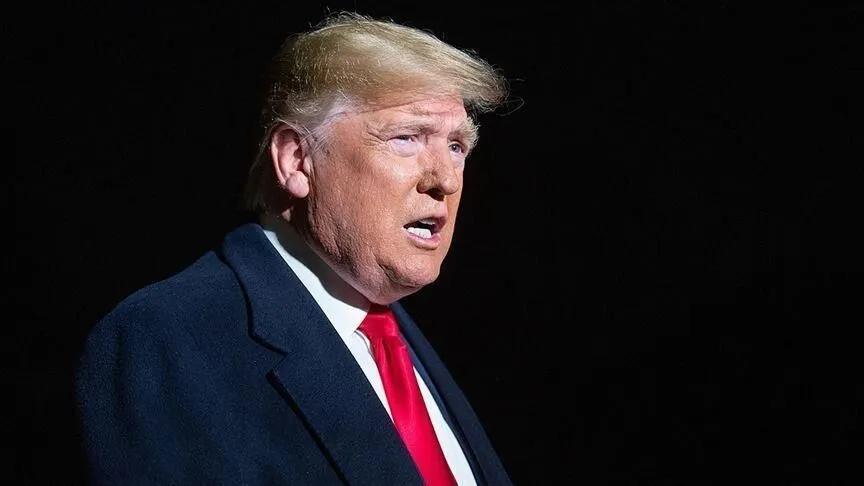
U.S. President Donald Trump announced on 31 July 2026 that, as part of a diplomatic process aimed at ending the fighting in Gaza, the Board of Peace had reached a so-called "historic" agreement on the disarmament of Hamas and other armed Palestinian groups operating in Gaza. In a statement posted on the social media platform Truth Social, Trump described the agreement as a pivotal milestone toward ensuring long-term security and political stability in Gaza, and stated that the disarmament process would be implemented in phases. The statement emphasized that the political transition toward future governance of Gaza by a new Palestinian administration is one of the core elements of this agreement.
In Trump’s announcement, it was stated that the disarmament of Hamas and other armed groups is not only a security imperative but also critical for the restructuring of Gaza and the transfer of authority to civilian governance. The U.S. administration assessed the agreement as a new phase in a broader diplomatic initiative aimed at establishing a lasting peace between Israel and Palestine. The statement further underscored the goal of transforming Gaza into a structure governed exclusively by civilian authorities, no longer serving as an operational base for armed groups.
The agreement announced by Trump envisions the disarmament process in Gaza being carried out not in a single step but in sequential phases. According to the disclosed plan, in the first phase a National Committee will be established in Gaza and an International Stability Force will be deployed to the region; this will be followed by the registration, inventorying, and secure storage of weapons. This process is planned to be monitored by an international verification mechanism.
In the initial stage of disarmament, weapons belonging to the Gaza Police Organization are to be transferred to the newly established technocratic Palestinian administration. Subsequent phases include the decommissioning of heavy weapons held by Hamas and other armed groups, the closure of tunnel networks, the dismantling of weapons stockpiles, and the elimination of weapons production infrastructure. The overall objective is the gradual dismantling of all military infrastructure in Gaza.
Officials involved in the negotiations indicated that the process could take considerable time. Representatives of the Board of Peace estimated that disarmament could last between 200 and 350 days, while U.S. officials avoided providing a fixed timeline, stating that progress would depend on the speed with which the parties fulfill their obligations. Consequently, the agreement is assessed as being based on a "conditional implementation" model tied to developments on the ground rather than specific calendar dates.
One of the core elements of the agreement is the phased withdrawal of the Israeli military from the Gaza Strip. Trump stated that Israeli forces would withdraw from Gaza in parallel with the progress of disarmament by Hamas and other armed groups. In the areas vacated by Israel, security is planned to be maintained by the newly established International Stability Force, thereby preventing any security vacuum.
The International Stability Force is expected to operate in coordination with the newly established Palestinian Police Organization. Its primary mission is defined as monitoring the disarmament process, maintaining public order, and supporting the reestablishment of civilian governance in Gaza. However, no official list has been published regarding which countries will contribute to this force. Media reports have suggested that Indonesia and Türkiye may be among the potential contributors, but no definitive international decision has yet been reached on this matter.
The plan anticipates that the withdrawal of Israeli forces and the disarmament of Hamas will proceed in tandem.
Regional mediator countries played a significant role in shaping the agreement. U.S. President Donald Trump, in his announcement, specifically thanked Türkiye, Qatar, and Egypt for their contributions to the negotiation process, stating that these countries played a decisive role in maintaining communication channels between the parties and sustaining the prolonged talks. Trump described the achieved agreement as a "historic advance" while emphasizing that it remains incomplete and requires the implementation of numerous further steps.
The majority of negotiations were held in Cairo, the capital of Egypt. Delegations from Hamas, Egypt, Qatar, Türkiye, and the United States participated in the talks, with particular focus on the second phase of the ceasefire, the future governance of Gaza, the disarmament mechanism, and the reconstruction process. According to Egyptian media reports, the parties plan to reconvene in Cairo to clarify the details of implementing the agreement.
U.S. officials noted that Türkiye and Qatar’s inclusion in the work of the Board of Peace was initially criticized by Israel, but ultimately their contributions proved instrumental in facilitating the达成 of the compromise. These assessments highlight that regional actors are viewed not merely as facilitators but as essential diplomatic elements sustaining the continuity of negotiations.
Following Trump’s announcement, the Hamas leadership acknowledged progress in the negotiations but clarified that disarmament is conditional. Hamas negotiator Gazi Hamad stated that the organization remains committed to the national objectives of the Palestinian people and declared that no step toward disarmament would be taken unless Israel fully fulfills its obligations under the agreement. This statement underscores that Hamas does not view disarmament as a unilateral commitment.
Hamas emphasized that the issue of disarmament is directly linked to the withdrawal of the Israeli military from Gaza, the commencement of reconstruction efforts, and the implementation of ceasefire provisions. According to Hamas, decisions regarding the future of weapons must be evaluated not solely under the security umbrella but within the broader context of the political and humanitarian process. Therefore, it was stated that if Israel fails to meet its obligations, Hamas will not implement the relevant provisions of the agreement.
Sources close to Hamas indicated that the draft text constitutes not a final agreement but a "draft understanding." According to these same sources, heavy weapons are not intended to be handed over to Israel but rather retained under the control of a Palestinian civilian authority. Thus, the goal is to keep weapons under the authority of the Palestinian administration rather than transferring them to a foreign entity.
Following Trump’s announcement, the Palestinian Islamic Jihad Movement issued a cautious statement regarding media reports of the agreement. In a written statement by its spokesperson, it was stated that claims of a definitive agreement between Palestinian groups and Israel are not accurate at this stage and that public information should be evaluated with caution.
The statement highlighted reservations about the circulated texts and asserted that the announced understanding should not be regarded as a finalized document by any party. Thus, the Palestinian Islamic Jihad Movement made clear that negotiations are ongoing and that a final consensus has not yet been reached.
Although the U.S. presented the agreement, announced through the Board of Peace, as a major diplomatic breakthrough, Israel adopted a cautious stance. An Israeli official, speaking to Reuters on condition of anonymity, stated that the Tel Aviv administration found the draft text under negotiation insufficient, emphasizing that Israel’s core demand is the complete disarmament of Hamas and the total demilitarization of the entire Gaza Strip. According to the official, Israel does not consider mere storage of weapons or their transfer to another Palestinian authority to be adequate.
One of Israel’s primary concerns is the possibility that Hamas could rebuild its military capacity in the future. Therefore, the Tel Aviv administration views not only the inventorying of weapons but also the complete destruction of heavy weapons, the elimination of tunnel networks, and the permanent dismantling of weapons production infrastructure as preconditions. Israel argues that withdrawing its military presence from Gaza before these conditions are met could pose long-term security risks.
U.S. officials stated that Israel has been kept fully informed throughout the process and regularly updated during negotiations. The Washington administration emphasized that no new concessions were requested from Israel, only that it fulfill obligations it had previously accepted in principle under its peace plan. However, no direct official statement from Israeli authorities has confirmed acceptance of the agreement, leaving Israel’s final position uncertain.
Following the announcement of the agreement, Nickolay Mladenov, High Representative of the Gaza Board of Peace, declared that the parties had reached consensus on disarmament and the transition to civilian governance. In a social media post, Mladenov noted that this outcome resulted from months of intense diplomatic engagement, admitting that at certain stages he had lost hope that an agreement would be reached, but that progress was ultimately achieved because the parties remained at the negotiating table.
Mladenov emphasized that the implementation phase is at least as important as the signing of the agreement and stressed the need for the full and effective functioning of the international verification mechanism. He stated that the withdrawal of Israeli forces from Gaza and the disarmament process must proceed in parallel, and that progress by only one side would be insufficient. Thus, he highlighted the necessity of synchronizing security arrangements with the political transition process.
Mladenov also noted that the long-term objectives of the agreement include the reconstruction of Gaza, the establishment of a new administration under Palestinian leadership, and the creation of a sustainable political solution between Israel and Palestine. He thanked Türkiye, the United States, Egypt, Qatar, and the United Arab Emirates for their contributions to the process and stated that the implementation of relevant United Nations Security Council resolutions will also play a critical role in this endeavor.
One of the most significant political aspects of the agreement concerns the future governance of Gaza. According to Trump’s announcement, as the disarmament process advances, governance of Gaza will be transferred to a newly established technocratic Palestinian government. This administration is planned to work in close cooperation with the Board of Peace and coordinate reconstruction efforts. The goal is to transition Gaza from years of ongoing military and political crisis to a model of civilian governance.
Under the plan, the newly established Palestinian Police Organization will be responsible for security, while the International Stability Force will support this structure during the transition period. The new administration’s core responsibilities include reestablishing public services, coordinating humanitarian aid, repairing infrastructure, and managing international funding sources. The plan identifies the simultaneous implementation of reconstruction and political transition as one of its fundamental elements.
This governance model is envisioned as a temporary administration composed of technocrats and politically independent figures, replacing both Hamas and the Palestinian Authority. However, details regarding how this structure will be formed, which Palestinian groups will participate in governance, and how international recognition will be secured have not yet been disclosed to the public.
The draft agreement prepared by the Board of Peace envisions the disarmament of Hamas and other Palestinian armed groups not as a single step but as a process implemented according to a defined timeline. The draft stipulates that within 14 days a detailed roadmap for disarmament will be prepared. During this period, the establishment of the National Committee, activation of the international verification mechanism, and consensus among the parties on implementation principles are targeted. It is noted that this timeframe may be extended upon approval by the international verification body and mutual agreement of the parties.
According to the plan, the first implementation step will be the deployment of the National Committee and the International Stability Force to Gaza. This will be followed by the registration, inventorying, and secure storage of weapons. In the initial phase, weapons belonging to the Gaza Police Organization will be transferred to the new civilian Palestinian administration; in subsequent phases, heavy weapons will be decommissioned and military infrastructure dismantled. Thus, the implementation is planned to proceed in parallel with security, administrative transition, and reconstruction efforts.
Board of Peace officials stated that completing the agreement within a short timeframe is not feasible and that disarmament could span between 200 and 350 days depending on its scope. U.S. officials avoided specifying exact dates, stating that progress will depend on developments on the ground. Consequently, the agreement is assessed as being built on a "conditional implementation" model tied to the extent to which the parties fulfill their obligations.
One of the most notable aspects of the agreement is the mechanism for implementing disarmament. The draft text does not envision direct handover of weapons held by Hamas and other Palestinian groups to Israel. Instead, weapons are to be registered by the National Committee, stored securely, and the entire process monitored by an international verification commission. This aims to ensure that the disarmament process is conducted under independent international oversight.
In the first phase, weapons belonging to the police force will be transferred; in the second phase, heavy weapons will be decommissioned; and in the final phase, tunnels, weapons depots, and production facilities will be completely eliminated. Diplomatic sources involved in the negotiations stated that the ultimate goal is the complete absence of any organized military infrastructure belonging to armed groups in Gaza. Therefore, the agreement is defined as a comprehensive security transformation encompassing not merely the surrender of individual weapons but the total dismantling of armed capacity.
Military analysts have pointed out that the terms "inventorying and storage" used in the agreement carry a different meaning than "complete disarmament." Some experts argue that retaining weapons under the control of a third Palestinian authority does not equate to the traditional concept of disarmament. Consequently, how the parties interpret the term "disarmament" during implementation is expected to become one of the most critical points of contention in the process.
On the day the agreement was announced, fighting in Gaza had not fully ceased. Palestinian civilians, including children, were killed in Israeli airstrikes, with the Israeli military stating that the targeted locations contained Hamas elements. Even after the ceasefire came into effect, numerous violations were reported between the parties, indicating that security conditions on the ground remain a primary obstacle to the diplomatic process.
Given the extensive destruction in Gaza and the urgent humanitarian needs of millions of people, reconstruction has emerged as a core element of the agreement. Under the plan, the new Palestinian administration is expected to undertake the rebuilding of infrastructure with international support, coordinate humanitarian aid, and restore essential public services. Board of Peace officials stated that security measures and reconstruction efforts cannot be separated and must proceed simultaneously.
However, the continued presence of Israeli military forces in a significant portion of Gaza and the ongoing security operations create major uncertainties regarding the practical implementation of the agreement. Therefore, despite diplomatic progress, it is assessed that changes in actual security conditions will take time and that the success of the process hinges on the synchronized fulfillment of obligations by all parties.
Various uncertainties surround the implementation of the agreement, which the Trump administration has labeled a "historic deal." The Israeli government has not formally endorsed the agreement, while Hamas has conditioned disarmament on Israel’s withdrawal from Gaza and fulfillment of its obligations. The Palestinian Islamic Jihad Movement has expressed reservations, stating that the circulated information does not reflect a finalized agreement. The divergent assessments by the parties indicate that the diplomatic consensus may face significant challenges during implementation.
U.S. officials stated they expect Israel to adhere to the peace plan it previously accepted in principle, warning that President Trump would experience "great disappointment" if Israel fails to meet its obligations. Conversely, Hamas has declared that it will take no steps toward disarmament if Israel violates the agreement.
This mutual conditional approach demonstrates that the success of the agreement largely depends on the parties taking synchronized and verifiable steps. International assessments acknowledge that this agreement represents one of the most comprehensive political initiatives since the outbreak of fighting in Gaza over two years ago. However, its true success will be measured by implementation on the ground. Because disarmament, Israeli withdrawal, establishment of an international security mechanism, creation of a new Palestinian administration, and reconstruction efforts are interdependent, the process is viewed as a long-term, multi-phase diplomatic transition.
Al Jazeera. “Gaza live: Hamas agree draft peace plan, as Israeli settlers raid West Bank.” Accessed July 31, 2026.https://www.aljazeera.com/news/liveblog/2026/7/31/iran-war-live-trump-says-hamas-to-disarm-israel-to-leave-gaza-gradually
Associated Press (AP). “Trump announces a deal for Hamas to disarm in Gaza, but many hurdles and uncertainty remain” July 31, 2026. Accessed July 31, 2026.https://apnews.com/article/hamas-disarming-gaza-israel-trump-00bb7097ed6062b5a706471444709991
Axios. "Trump touts 'historic' agreement to disarm Hamas, rebuild Gaza." July 30, 2026. Accessed July 31, 2026.https://www.axios.com/2026/07/30/hamas-weapons-gaza-deal-israel-board-peace
BBC Türkçe. “Hamas, Gazze'de Barış Kurulu ile silah bırakma konusunda anlaştı, planın detayları neler?” July 31, 2026. Accessed July 31, 2026.https://www.bbc.com/turkce/articles/c70gx2gke5ro
Deutsche Welle (DW). "Trump says Board of Peace agrees on Hamas disarmament" July 31, 2026. Accessed July 31, 2026.https://www.dw.com/en/middle-east-trump-says-board-of-peace-agrees-with-hamas-palestinian-groups-to-disarm/live-78183794
Euronews Türkçe. "Trump, Hamas'ın silahsızlandırılması ve İsrail'in Gazze'den çekilmesini öngören anlaşmayı duyurdu." July 31, 2026. Accessed July 31, 2026.https://tr.euronews.com/2026/07/31/trump-hamasin-silahsizlandirilmasi-ve-israilin-gazzeden-cekilmesini-ongoren-anlasmayi-duyu
Reuters. “Trump says deal reached to disarm Hamas, Israeli support for plan remains uncertain.” July 30, 2026. Accessed July 31, 2026.https://www.reuters.com/world/middle-east/israeli-strikes-kill-three-gaza-including-two-children-amid-new-ceasefire-push-2026-07-30/
The Independent. "What we know as Hamas agrees to disarm in Gaza after Trump’s announcement." July 31, 2026. Accessed July 31, 2026.https://www.independent.co.uk/bulletin/news/trump-hamas-gaza-disarm-israel-b3025145
Following U.S. President Donald Trump’s announcement on 31 July 2026 of an agreement on Hamas’s disarmament through the Gaza Peace Council, the Peace Council released the details of its 15-point roadmap, Hamas declared its acceptance of the agreement, while the Israeli government initially objected to several provisions of the roadmap and subsequently formally rejected the plan. During this period, Israeli attacks in Gaza continued.
On 31 July 2026, the Gaza Peace Council disclosed the details of the roadmap for the second phase of the ceasefire, stating that Hamas’s disarmament and the Israeli military’s withdrawal from the Gaza Strip would be conducted in a synchronized manner. The Council’s official statement on its U.S.-based social media platform confirmed that the roadmap consists of 15 points.
According to the announced draft, the first phase requires Israel to halt its attacks on Gaza and ensure the delivery of humanitarian aid, while Hamas and other Palestinian groups in the area must cease all military activities. The process will be monitored by the International Verification Committee (IVC) established by the Peace Council, with progress contingent not on a fixed schedule but on mutual, verified steps: each stage will proceed only after reciprocal actions are confirmed.
The roadmap stipulates that all civil and security authority in the Gaza Strip will be transferred to the Gaza Administration National Committee (NCAG), with Hamas and other Palestinian groups barred from participating in either military or civil governance. All collected weapons will not be handed over to Israel or any other party; the entire inventory will remain under NCAG control. Heavy weapons, military production facilities, ammunition depots, and tunnels will be progressively destroyed. The Israeli military’s withdrawal from occupied areas will not be tied to a fixed date but will depend on progress in disarmament as verified by the IVC. The International Stabilization Force (ISF), to be deployed in the region, will establish a demarcation line between Israeli forces and NCAG-controlled areas, ensure the security of humanitarian aid, and support the training of the NCAG’s police unit. Financial resources required for Gaza’s reconstruction will be mobilized in accordance with international standards, as outlined in a joint plan and timeline developed by the Peace Council and the NCAG.
Hamas Political Bureau member Ghazi Hamad, in a statement on 31 July 2026, affirmed that Hamas had accepted a comprehensive package agreement including Israeli withdrawal from Gaza, reconstruction, deployment of an international force, and transfer of responsibilities to the National Committee. Hamad noted that the agreement encompasses general principles and that a new round of talks will be held to define implementation mechanisms and timelines. He stated, “If Israel fails to fulfill its obligations under the Gaza agreement, we will not fulfill ours. We will not proceed to the next stage until the implementation of the previous stage is fully completed.”
Hamas stated that the issue of heavy weapons is conditional upon Israel halting its attacks, fully withdrawing from the Gaza Strip, initiating an early recovery process, the National Committee assuming its duties, and the deployment of international protection forces. Hamas also demanded the demobilization of armed militias, the commencement of reconstruction efforts, and the guarantee of the Palestinian people’s right to self-determination and the establishment of an independent Palestinian state. The Gaza Administration National Committee, in its own statement, welcomed progress under the roadmap and declared its readiness to assume responsibilities in the Gaza Strip.
Displaced Palestinians in Gaza, in statements to an AA correspondent on 1 August 2026, expressed their expectation that the new process would produce concrete outcomes: an end to Israeli attacks, a lasting ceasefire, the return of displaced persons to their homes, uninterrupted delivery of humanitarian aid, and the reconstruction of Gaza. Displaced person Fahd Abu Jodeyan expressed hope that these promises would translate into tangible steps on the ground; Muhammed Abu Jodeyan, displaced from Jabaliya Refugee Camp, stated that tents were no longer habitable and demanded that reconstruction begin immediately. Citing problems in implementing previous ceasefires and agreements, Palestinians called on mediators and the international community to establish binding guarantees ensuring Israel’s compliance with the agreement’s terms.
It was reported that after Trump’s announcement, Israel intensified its military operations in the Gaza Strip. Over the weekend following 1 August, at least 26 Palestinians, including women and children, were killed in Israeli attacks, 19 of whom were killed in a single day.
The newspaper Haaretz, citing two informed sources, reported that Israel found three of the 15 provisions of the roadmap announced on 31 July unacceptable. Israel conveyed its objections to Tony Blair, a member of the Gaza Executive Council of the Peace Council. According to the report, the Tel Aviv administration objected to a complete halt to Israeli military attacks, demanded the freedom to conduct strikes in areas where the International Stabilization Force would be deployed, and insisted on the destruction rather than storage of Hamas weapons. It was also reported that Israel opposed the inclusion of Qatar and Türkiye in the International Verification Committee (IVC). A Peace Council official stated that no date had yet been set for the roadmap’s implementation and that the process was expected to begin after a 14-day period during which Israel and Hamas would agree on a timeline.
The newspaper Yedioth Ahronot reported on 4 August that the Israeli government had issued orders to its military to limit ongoing attacks in the Gaza Strip despite the ceasefire. According to the report, under the new directive, “assassination” attacks in Gaza will not be permitted without approval from the Chief of the General Staff and political leadership; however, attacks may proceed without approval in cases of “imminent threat.” Israeli state television KAN confirmed that Chief of Staff Eyal Zamir had communicated this directive to units, allowing them to neutralize immediate threats but requiring authorization for targeted eliminations. The decision reportedly followed a meeting between Netanyahu and Peace Council High Representative Mladenov. Mladenov, without naming Israel directly, criticized it for attacks since 31 July that resulted in the deaths of 28 Palestinians and the destruction of medical supplies.
On the same day, Netanyahu, in a video message posted on his Facebook account, stated, “I continue to stand behind our security interests. We will not withdraw from our current position in Gaza until Hamas is fully disarmed.” He also confirmed that he had conveyed Israel’s objections to the Peace Council’s roadmap to the U.S. administration.
Israeli Channel 14 reported that the Israeli Security Cabinet had rejected the 15-point roadmap in its current form as unacceptable and formally communicated this decision to the U.S. administration. The only point approved by the Cabinet was the immunity granted to a limited number of Moroccan and Ugandan soldiers within the anticipated International Stabilization Force.
An Israeli official stated that Israel had informed Washington that it would not withdraw from the current Yellow Line and would continue eliminating all threats to its citizens. The report noted that ministers from Netanyahu’s Likud party, Religious Zionism, and Jewish Power opposed the Peace Council’s plan. The same report stated that Israeli Prime Minister’s Office Secretary General Yossi Fuchs informed cabinet members that the agreement calling for the deployment of a multinational force in Gaza had not yet been signed by Israel.
Israel’s public broadcaster reported that the U.S. had pressured Israel to initiate a two-week ceasefire in the Gaza Strip, aiming to implement the plan for Hamas’s disarmament. According to the report, some ministers in the Security Cabinet opposed halting military operations and defended continuing attacks. In a letter to Netanyahu, Finance Minister Bezalel Smotrich and Settlements Minister Orit Strock described the roadmap as “dangerous for Israel”, arguing that its terms contradicted the goal of full Hamas disarmament and previous U.S. commitments. The two ministers also objected to the multinational force having the authority to oversee and separate the Israeli military from Hamas, warning that this could constrain Israel’s military operations.
On 9 August 2026, during the opening of his weekly cabinet meeting, Israeli Prime Minister Benjamin Netanyahu explicitly announced that his government would not accept the Peace Council’s 15-point roadmap. Netanyahu stated, “When we speak of disarmament, we mean heavy and light weapons—in other words, all weapons. We are not talking about a fake or imaginary disarmament, but a real one.” He confirmed discussions with the U.S. administration on Hamas’s disarmament and said that some of the ideas presented by the U.S. were acceptable while others were not.
On the same day, it was reported that Netanyahu directly confirmed Israel’s rejection of its peace plan for Gaza. According to the report, Netanyahu stated that the Israeli military would not withdraw from Gaza until Hamas was genuinely disarmed and would continue neutralizing threats to its forces. He also declared that during his tenure as prime minister, no Palestinian state would be established in Gaza or the West Bank. It was noted that Israeli attacks had briefly increased after Trump’s 31 July announcement but had decreased in recent days.
Despite Netanyahu’s formal rejection, Israeli Army Radio reported that Netanyahu and Defense Minister Yisrael Katz had quietly approved the commencement of reconstruction efforts east of the city of Rafah in southern Gaza. According to the report, a settlement project in the “Rafah El-Hadra” area, outside Hamas control, will be constructed under the supervision of multinational forces. This decision, taken approximately two weeks earlier in conjunction with the decision to allow multinational forces into Gaza, was not disclosed to the public. The Prime Minister’s Office, however, claimed that the work was part of a temporary housing project supported by the United Arab Emirates, initiated months ago, and defended that infrastructure work would be conducted under Israeli military supervision, not by Palestinians.
The same report stated that concrete factories built by Israel to seal tunnel entrances along the Gaza Strip border had their funding and management transferred from the Israeli Ministry of Defense to the United States. This was interpreted as another sign of the Tel Aviv administration’s diminishing control over the Gaza Strip.
The Gaza government’s media office, in a statement on 10 August 2026, declared that Netanyahu’s rejection of the 15-point plan and his opposition to the Israeli military’s withdrawal from the Gaza Strip constituted an “open and clear blow” to the negotiation process. The statement accused Netanyahu of deliberately obstructing the ceasefire process and worsening the humanitarian situation, and alleged that Israel was using negotiations as a political cover to buy time, implement destructive projects, and continue the massacre of unarmed civilians in Gaza.
The Gaza government appealed to mediators, parties guaranteeing the ceasefire agreement, the international community, and the United Nations to immediately pressure the Israeli government and ensure implementation of agreed-upon points. The statement reiterated demands for the immediate withdrawal of the Israeli military from the Gaza Strip, the opening of border crossings, the lifting of the blockade, and the allowance of humanitarian aid entry.
According to a report by Israeli Channel 12’s U.S. correspondent Barak Ravid, citing an Israeli source, Netanyahu spoke by phone last week with Jared Kushner, Trump’s son-in-law and advisor. During the call, Netanyahu reportedly stated that he did not believe Hamas would lay down its arms but was willing to give the plan a chance, and pledged to reduce attacks on Gaza and prevent the Israeli military from advancing west of the Yellow Line.
According to the report, the Peace Council requested that Israel maintain its current position along the Yellow Line and refrain from firing beyond it unless directly threatened.
On the same day, Peace Council High Representative Mladenov, speaking to Channel 12, stated, “The roadmap aims to guarantee that the Gaza Strip will never again pose a threat to Israel’s security.”
Mladenov emphasized that the plan rests on three core elements: the complete disarmament of Gaza, the transfer of administrative responsibility to the Peace Council via a national committee, and the deployment of an international security force to monitor implementation. He stated that Israel would not be required to withdraw until tangible steps toward disarmament were taken on the ground; withdrawal would occur once weapons were collected, stored, and rendered unusable, and would proceed region by region. Mladenov stressed that the process would be halted if agreed-upon obligations were not fulfilled or if Hamas elements continued training or rearming, and that no further stages would be reached under such conditions. He noted that Türkiye and Qatar, alongside Egypt, played a decisive role in securing Hamas’s approval of the roadmap, and that Saudi Arabia, the United Arab Emirates, Kuwait, other Gulf states, and Morocco also supported the plan.
According to the Gaza Ministry of Health’s statement on 11 August 2026, one person died in the past 24 hours from wounds sustained in earlier Israeli attacks, while one person was injured in the latest strikes. Since the ceasefire took effect on 10 October 2025, 4,146 people have been injured and 1,259 killed in Israeli attacks, with 807 bodies recovered from the rubble. The total death toll from Israeli attacks on the Gaza Strip since October 2023 has reached 73,387, with 174,257 injured.
World Health Organization (WHO) spokesperson Tarik Jasarevic, in a statement on the same day, confirmed that problems persist in medical evacuations from Gaza despite the ceasefire. Jasarevic reported that since October 2023, 12,913 patients—including 6,186 children—and 16,000 accompanying persons have been evacuated, with evacuations occurring three to four times per week. Between 2 and 8 August, 101 patients and 164 accompanying persons were evacuated, but thousands of patients continue to await medical evacuation.
Al Jazeera. “Gaza Board of Peace Announces Hamas Disarmament Agreement: What We Know.” Al Jazeera. Accessed August 11, 2026.https://www.aljazeera.com/news/2026/7/31/gaza-board-of-peace-announces-hamas-disarmament-agreement-what-we-know
Al Jazeera. “Israel Defies Trump’s Peace Plan as It Escalates Deadly Attacks on Gaza.” Al Jazeera. Accessed August 11, 2026.https://www.aljazeera.com/news/2026/8/3/israel-defies-trumps-peace-plan-as-it-escalates-deadly-attacks-on-gaza
Anadolu Ajansı. "Gazze Barış Kurulu, Gazze'de Ateşkesin İkinci Aşamasına Geçişe İlişkin Yol Haritasının Detaylarını Paylaştı." Accessed August 11, 2026.https://www.aa.com.tr/tr/dunya/gazze-baris-kurulu-gazzede-ateskesin-ikinci-asamasina-gecise-iliskin-yol-haritasinin-detaylarini-paylasti-/4015316
Anadolu Ajansı. "Trump, Hamas'ın Silah Bırakması Konusunda Barış Kurulu'nun Anlaşmaya Vardığını Açıkladı." Accessed August 11, 2026.https://www.aa.com.tr/tr/dunya/trump-hamasin-silah-birakmasi-konusunda-baris-kurulunun-anlasmaya-vardigini-acikladi/4014448
Anadolu Ajansı. “Hamas: Gazze'de Kapsamlı Ateşkes Anlaşmasını Kabul Ettik.” Accessed August 11, 2026.https://www.aa.com.tr/tr/dunya/hamas-gazzede-kapsamli-ateskes-anlasmasini-kabul-ettik/4015004
Anadolu Ajansı. “Netanyahu, Barış Kurulu'nun Açıkladığı Gazze’deki Ateşkesin İkinci Aşaması Planını Reddettiklerini Açıkladı.” Accessed August 11, 2026.https://www.aa.com.tr/tr/dunya/netanyahu-baris-kurulunun-acikladigi-gazze-deki-ateskesin-ikinci-asamasi-planini-reddettiklerini-acikladi/4022438
Anadolu Ajansı. “İsrail Hükümetinin, Orduya Gazze Şeridi'nde Saldırıları Sınırlandırma Talimatı Verdiği İleri Sürüldü.” Accessed August 11, 2026.https://www.aa.com.tr/tr/dunya/israil-hukumetinin-orduya-gazze-seridinde-saldirilari-sinirlandirma-talimati-verdigi-ileri-suruldu/4018492
Anadolu Ajansı. “İsrail'in Ateşkese Rağmen Gazze Şeridi'ne Saldırıları Devam Ediyor.” Accessed August 11, 2026.https://www.aa.com.tr/tr/dunya/israilin-ateskese-ragmen-gazze-seridine-saldirilari-devam-ediyor/4024082
CNN. “Israel Rejects Trump’s Gaza Peace Plan, Saying No Withdrawal Until Hamas Disarms.” Accessed August 11, 2026.https://edition.cnn.com/2026/08/09/middleeast/israel-gaza-trump-netanyahu-plan-intl
Egyptian Gazette. "Egypt, Hamas, Palestinian Factions Accept Roadmap for Second Phase of Gaza Ceasefire." Egyptian Gazette. Accessed August 11, 2026.https://egyptian-gazette.com/egypt/egypt-hamas-palestinian-factions-accept-roadmap-for-second-phase-of-gaza-ceasefire/
Haaretz. “İsrail, Barış Kurulu'nun Gazze'de Ateşkese İlişkin Açıkladığı Yol Haritasında 3 Maddeye İtiraz Etti.” Anadolu Ajansı. Accessed August 11, 2026.https://aa.com.tr/tr/dunya/haaretz-israil-baris-kurulunun-gazzede-ateskese-iliskin-acikladigi-yol-haritasinda-3-maddeye-itiraz-etti/4016361
Jordan News. “Israeli Media: Washington Presses Israel to Begin Two-Week Gaza Ceasefire.” Accessed August 11, 2026.https://www.jordannews.jo/Section-20/Middle-East/Israeli-Media-Washington-Presses-Israel-to-Begin-Two-Week-Gaza-Ceasefire-53924
A high-level delegation led by Khalil al-Hayya, Chairman of the Hamas Political Bureau, visited Cairo, the capital of Egypt, to discuss measures for making the ceasefire agreement in the Gaza Strip permanent and to address developments regarding the second phase of the agreement. Hamas stated that the talks were part of broader political and diplomatic efforts led by mediators.
Hamas spokesperson Hazem Qassem indicated that one of the main objectives of the talks was to convey to mediators Israel’s alleged violations of the ceasefire terms. Qassem also stated that the goals included ensuring Israel adheres to the roadmap agreed upon with the Peace Council, implementing the ceasefire provisions, and preventing the emergence of new factual developments during the process.
Jared Kushner, advisor and son-in-law of U.S. President Donald Trump, and Nikolay Mladenov, High Representative of the Gaza Peace Council, also traveled to Cairo as part of diplomatic efforts concerning Gaza. According to the Israeli military radio, Kushner and Mladenov were scheduled to meet with Egyptian President Abdel Fattah el-Sisi and Egyptian intelligence officials.
The talks in Cairo focused on the roadmap prepared for transitioning to the second phase of the Gaza ceasefire. It was reported that the discussions also aimed to assess the positions and potential negotiation formulas of the parties ahead of Kushner and Mladenov’s upcoming meetings with Israeli Prime Minister Benjamin Netanyahu. The Israeli military radio reported that securing Netanyahu’s acceptance of the 15-point document was among the objectives of the initiative.
Egyptian President Abdel Fattah el-Sisi received Jared Kushner in the city of El Alamein. During the meeting, developments in the Middle East and Egypt-U.S. relations were discussed, with particular emphasis on the implementation of the ceasefire agreement in the Gaza Strip.
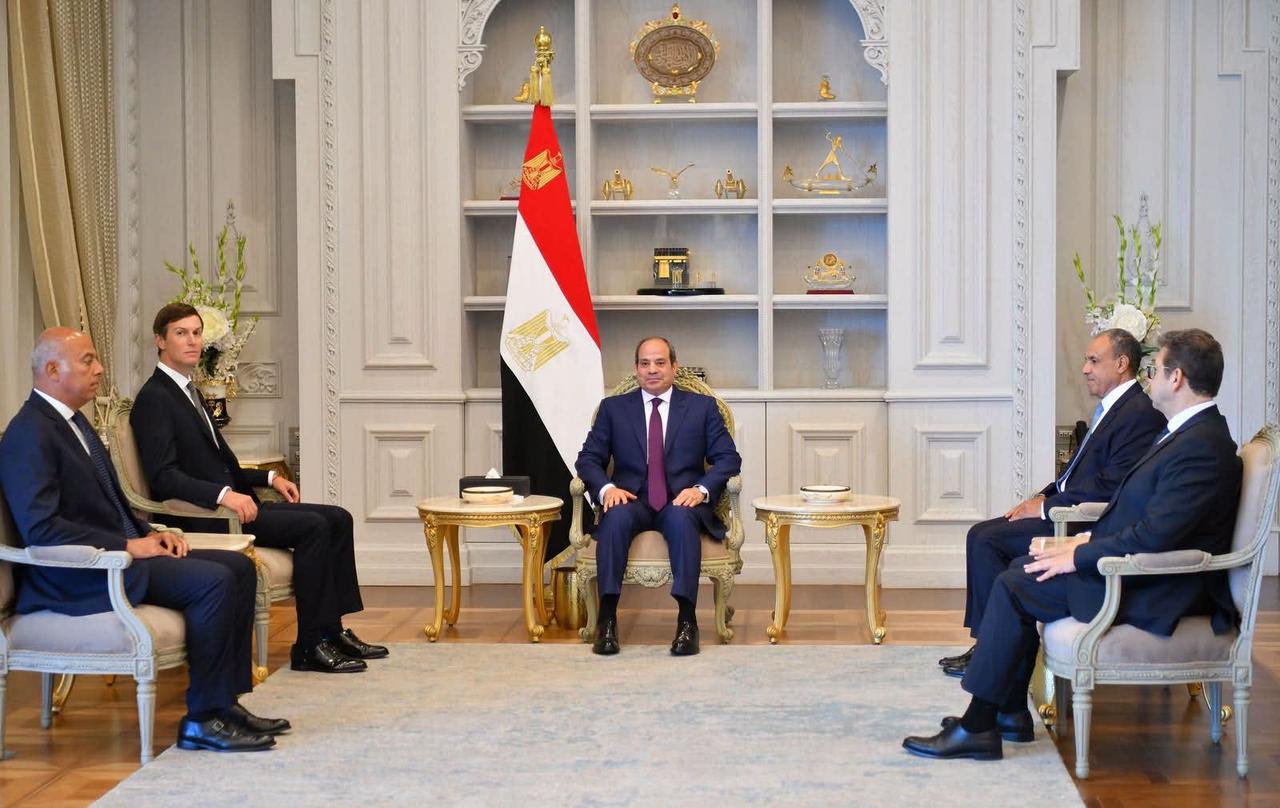
Meeting between Egyptian President Sisi and Trump’s advisor Kushner (August 16, 2026)
During the meeting assessing developments in Gaza, it was stressed that all parties must fulfill their obligations under the ceasefire agreement. The meeting was also attended by Egyptian Foreign Minister Badr Abdelatty and Head of the General Intelligence Service Hasan Reşad.
Following the talks in Cairo, Hamas reiterated its acceptance of the roadmap for the second phase of the Gaza ceasefire agreement. Hamas stated that this position was adopted to guarantee a lasting ceasefire, the complete withdrawal of the Israeli military from the Gaza Strip, and the secure delivery of urgent and uninterrupted humanitarian aid to the region.
Hamas also called on mediators and the Peace Council to ensure Israel fulfills its obligations under the first phase of the ceasefire. The statement demanded an end to Israeli attacks and ground operations and referenced the role of the Trump administration in drafting the ceasefire and the second phase roadmap.
The Gaza Peace Council announced on July 31, 2026, that it had reached an agreement on a detailed roadmap for implementing the subsequent stages of the ceasefire and that Hamas had accepted this framework. The roadmap outlines various steps for restructuring the political, military, and administrative structures in Gaza.
Under the plan, Hamas’s disarmament would occur simultaneously with the gradual withdrawal of the Israeli military from Gaza, the transfer of governance to a committee composed of Palestinian technocrats, and the deployment of an International Stability Force. The transfer of weapons under international supervision to the Gaza Administration National Committee and the initiation of reconstruction efforts were also included as elements of the roadmap.
Israeli Prime Minister Benjamin Netanyahu announced on August 9 that his government did not accept the roadmap prepared by the Gaza Peace Council in its current form. The Netanyahu administration insisted that Hamas must be fully disarmed before any Israeli military withdrawal from Gaza. Hamas, however, reaffirmed its commitment to the roadmap and called on mediators to ensure implementation of the agreed-upon terms.
A key point of disagreement between the parties emerged over the sequence of disarmament and Israeli military withdrawal. While the framework accepted by Hamas and the Peace Council envisioned these two processes as interlinked and phased, the Israeli government opposed any military withdrawal until Hamas was fully disarmed.
U.S. President Donald Trump stated in his remarks on developments in Gaza that Israel must refrain from launching attacks on the Gaza Strip. Trump also said that he had established contact with Hamas through different channels and that Hamas had indicated its willingness to lay down arms.
Hamas announced that it welcomed Trump’s statement. Hamas spokesperson Hazem Qassem urged the U.S. administration to increase pressure on the Israeli government to ensure implementation of the second phase and adherence to the agreed terms.
Following the talks in Cairo, Jared Kushner traveled to Israel and met with Prime Minister Benjamin Netanyahu to discuss the transition to the second phase of the Gaza ceasefire. According to Israeli state television KAN, the meeting lasted approximately four hours. Representatives of the Peace Council, including Nikolay Mladenov and former British Prime Minister Tony Blair, attended the meeting alongside Kushner. On the Israeli side, security and intelligence officials participated.
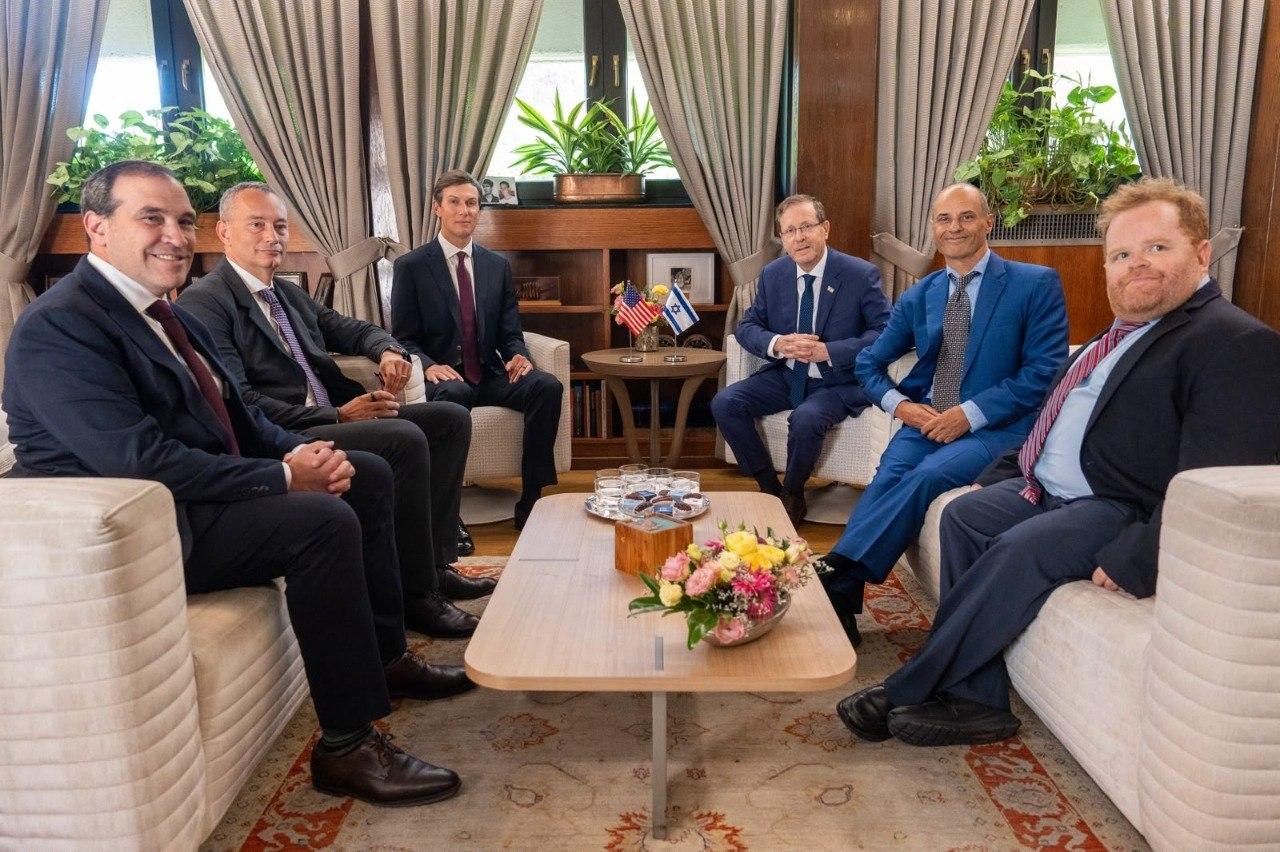
Meeting between Jared Kushner, advisor to U.S. President Donald Trump, and Israeli President Isaac Herzog in West Jerusalem (August 17, 2026)
The Israeli Prime Minister’s Office described the talks as “constructive.” However, media reports in Israel indicated that while the parties made some progress on certain issues regarding implementation of the second phase of the ceasefire, fundamental disagreements remained unresolved. Reports from Reuters and AP on August 17 also confirmed that while some advances were made, core disagreements persisted.
As a result of the talks between Kushner and Netanyahu, an agreement was reached to establish two separate working groups on Gaza. The first working group was tasked with focusing on the process of Hamas’s disarmament. The Israeli Prime Minister’s Office stated that both Israel and the Peace Council agreed that disarmament must be completed before any reconstruction efforts begin.
The second working group was designated to focus on public health conditions in Gaza, including issues such as hygiene, access to clean water, and other public health concerns.
According to information reported in the Israeli press, progress was made during the talks regarding how Hamas’s disarmament would be implemented. It was suggested that an agreement was reached for Hamas to transfer its weapons to the International Stability Force, led by U.S. Commander Jasper Jeffers, rather than to the Gaza Administration National Committee composed of Palestinian technocrats.
However, this agreement did not resolve other outstanding disputes in the second phase of the ceasefire. While the Israeli side insisted that reconstruction in Gaza could not begin until Hamas was fully disarmed, it was reported that Netanyahu had not agreed to halt all attacks in Gaza.
One of the unresolved core issues in the Kushner-Netanyahu meeting was the withdrawal of the Israeli military from the Gaza Strip. No decision was reached on the withdrawal of Israeli troops from Gaza, nor was any agreement attained on reducing the number of Israeli forces in the region.
The Israeli government tied progress in the process to the complete elimination of Hamas’s military capabilities. Hamas, meanwhile, demanded the full withdrawal of the Israeli military from Gaza, an end to all attacks, and implementation of the roadmap as agreed. Thus, the fundamental disagreement over the second phase remained centered on the sequence of disarmament and military withdrawal. This ongoing dispute was widely reported in international media following the talks.
The Israeli press claimed that due to Netanyahu’s objections, the Gaza Peace Council had begun reevaluating its current framework regarding Hamas’s disarmament and the Israeli military’s withdrawal from Gaza. The original roadmap proposed dividing areas under Hamas control into five separate zones, each to be disarmed progressively.
Under this model, the Israeli military was to withdraw gradually from each zone after verification of weapon handover. Netanyahu, however, opposed any Israeli withdrawal from any location until Hamas was fully disarmed. This disagreement was reportedly unresolved during the talks between Kushner and Netanyahu.
The alternative formula reportedly under evaluation by the Peace Council proposes that Hamas surrender its weapons in all areas of Gaza simultaneously rather than progressively. In return, the Israeli military would withdraw directly to the Gaza-Israel border, bypassing the intermediate staging points previously outlined in the roadmap.
It was noted that such a change would require Hamas’s approval. It was assessed that modifying the roadmap in response to Israeli objections could prolong the negotiation process. Some diplomats from mediator countries reportedly suggested that it was unlikely Netanyahu would backtrack from his current position before the elections scheduled for October 27 in Israel.
Following the Kushner-Netanyahu meeting, reports in the American press claimed that Jared Kushner had warned Israeli Prime Minister Netanyahu not to obstruct the implementation of the second phase of the Gaza ceasefire. The claim was based on sources providing details of the four-hour meeting.
In statements made during the same period, Kushner indicated that if Hamas fails to fulfill its commitments on disarmament, Israel could receive increased support from the United States and other allies. Kushner also asserted that no reconstruction in Gaza would be permitted until disarmament was completed and that Israel’s right to defend itself against threats would not be restricted.
Thus, while some technical mechanisms for transitioning to the second phase of the ceasefire saw progress during the diplomatic engagements of August 2026, fundamental disagreements persisted regarding the disarmament of Hamas, the withdrawal of the Israeli military from Gaza, the cessation of attacks, and the timing of reconstruction efforts.
Anadolu Ajansı. "Hamas: İsrail, Şarm El-Şeyh Anlaşması'na ve Trump'ın Gazze planına uymuyor." Accessed August 18, 2026.
Euronews Türkçe. "Kushner, Mısır'daki Hamas temaslarının ardından Netanyahu ile görüşecek." Accessed August 18, 2026.
Reuters. "Kushner's talks with Israel, Hamas end without breakthrough on Trump Gaza plan." Accessed August 18, 2026.

U.S. President Donald Trump announced that the Peace Council has reached a historic agreement calling for the disarmament of Hamas and other armed groups in Gaza. Under the agreement, disarmament is to be carried out in phases, Israeli forces are to withdraw gradually from Gaza, and security will be transferred to a new Palestinian police force under the International Stability Force.
No Discussion Added Yet
Start discussion for "Peace Council's Agreement on the Disarmament of Hamas" article
July 31, 2026
Content of the Agreement and Phased Implementation Plan
July 31, 2026
Israeli Withdrawal from Gaza and the International Stability Force Plan
July 31, 2026
The Mediation Role of Türkiye, Qatar, and Egypt
July 31, 2026
Hamas’s Approach to the Agreement and Its Conditions
July 31, 2026
Statement by the Palestinian Islamic Jihad Movement
July 31, 2026
Israel’s Approach to the Agreement
July 31, 2026
Statements by Nickolay Mladenov and the Board of Peace
July 31, 2026
Future Governance Model for Gaza
July 31, 2026
Roadmap and Timeline for Implementation of the Agreement
July 31, 2026
Disarmament Mechanism and International Verification Process
July 31, 2026
Impact of the Military and Humanitarian Situation in Gaza on the Process
July 31, 2026
Uncertainties Regarding Implementation and Potential Outcomes
August 11, 2026
Developments Following the Announcement of the Peace Council’s Agreement on Hamas’s Disarmament (31 July – 11 August 2026)
August 11, 2026
Details of the Peace Council’s 15-Point Roadmap
August 11, 2026
Hamas Accepts the Comprehensive Package Agreement
August 11, 2026
Palestinian Expectations in Gaza (1 August 2026)
August 11, 2026
Increase in Israeli Attacks Despite the Agreement (2–3 August 2026)
August 11, 2026
Israel’s Objections to Three Provisions of the Roadmap (2 August 2026)
August 11, 2026
Order to Limit Israeli Military Attacks (4 August 2026)
August 11, 2026
Israeli Security Cabinet Rejects the Roadmap (7 August 2026)
August 11, 2026
U.S. Pressure on Israel and Internal Cabinet Divisions (8 August 2026)
August 11, 2026
Netanyahu Rejects the Plan (9 August 2026)
August 11, 2026
Reconstruction Plan in Rafah and Transfer of Concrete Facilities to the U.S.
August 11, 2026
Gaza Government’s Response to Netanyahu’s Rejection (10 August 2026)
August 11, 2026
Allegation that Netanyahu Told Kushner He Was Willing to Give the Plan a Chance and Mladenov’s Statements (10 August 2026)
August 11, 2026
Current Situation on the Ground (11 August 2026)
August 18, 2026
Hamas Delegation’s Contacts in Cairo (August 16)
August 18, 2026
Participation of Kushner and Mladenov in Cairo Talks
August 18, 2026
Sisi-Kushner Meeting
August 18, 2026
Hamas Reiterates Acceptance of the Second Phase Roadmap
August 18, 2026
Key Elements of the Second Phase
August 18, 2026
Netanyahu’s Objection to the Roadmap
August 18, 2026
Trump’s Call for Cessation of Israel’s Attacks on Gaza
August 18, 2026
Kushner-Netanyahu Meeting
August 18, 2026
Establishment of Two Working Groups on Gaza
August 18, 2026
Agreement on Transfer of Weapons to the International Stability Force
August 18, 2026
No Agreement Reached on Israeli Military Withdrawal from Gaza
August 18, 2026
Allegation that the Peace Council is Reevaluating Its Disarmament Framework
August 18, 2026
Alternative Disarmament and Withdrawal Formula
August 18, 2026
Kushner’s Warning to Netanyahu