

This article was automatically translated from the original Turkish version.
+1 More
Pervane Medresesi is a historical structure located in the center of Sinop, north of Alaaddin Camii. The medrese was commissioned by Muînüddin Süleyman Pervâne, the vizier of the Anatolian Seljuks, in AH 661 (AD 1262–63) to commemorate the second conquest of Sinop. According to its inscription, construction took place after Sinop was taken from the Empire of Trebizond. During the period of the Pervâneoğulları Beylik, the medrese became an important center of cultural activity. In 1889, during the governorship of Faik Bey of Konya, certain parts were repaired and the front of the main iwan was closed off to form a room. The building was used as a museum between 1932 and 1970, and in 2002, the Sinop Provincial Directorate converted it into a marketplace.
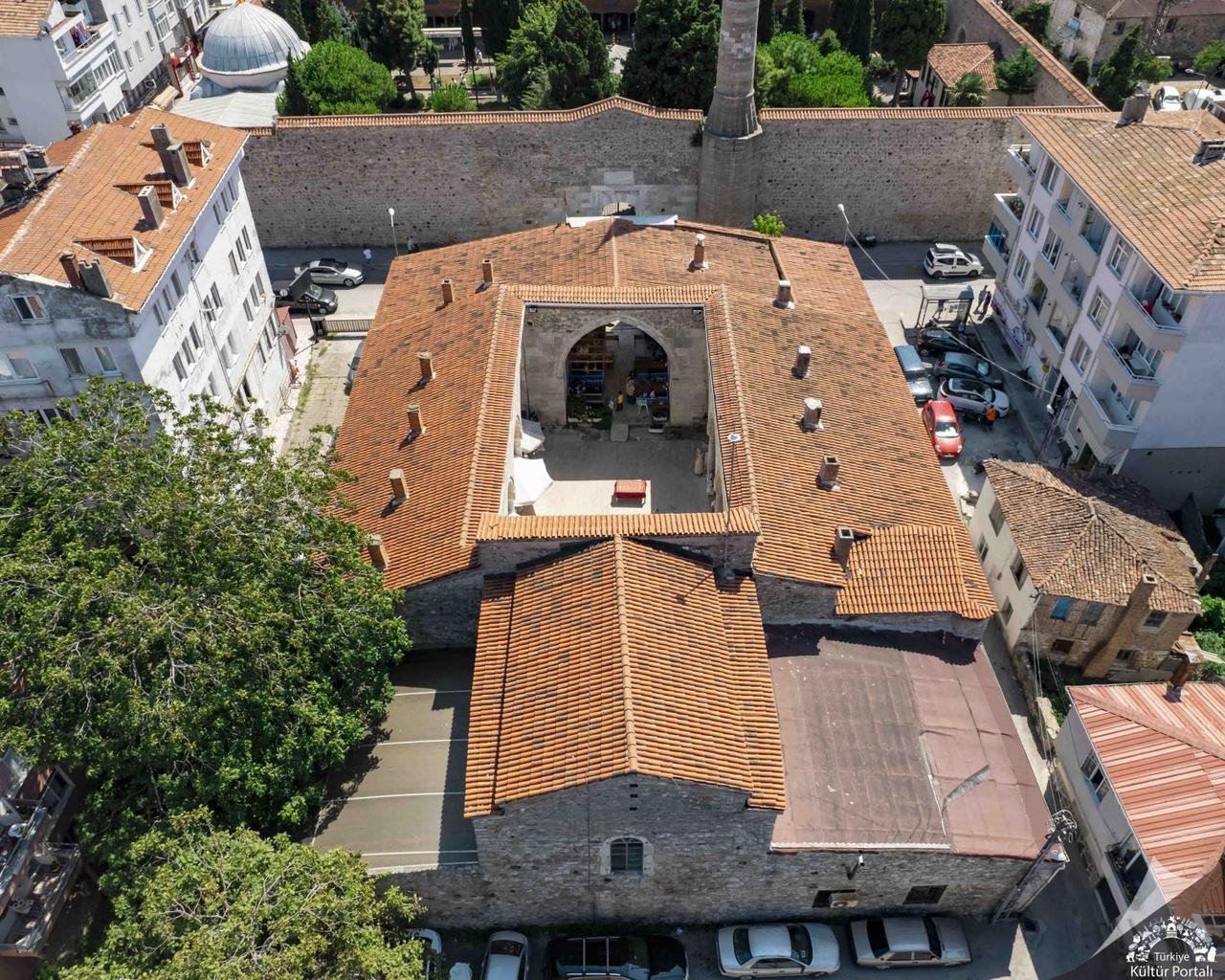
Pervane Medresesi (Türkiye Culture Portal)
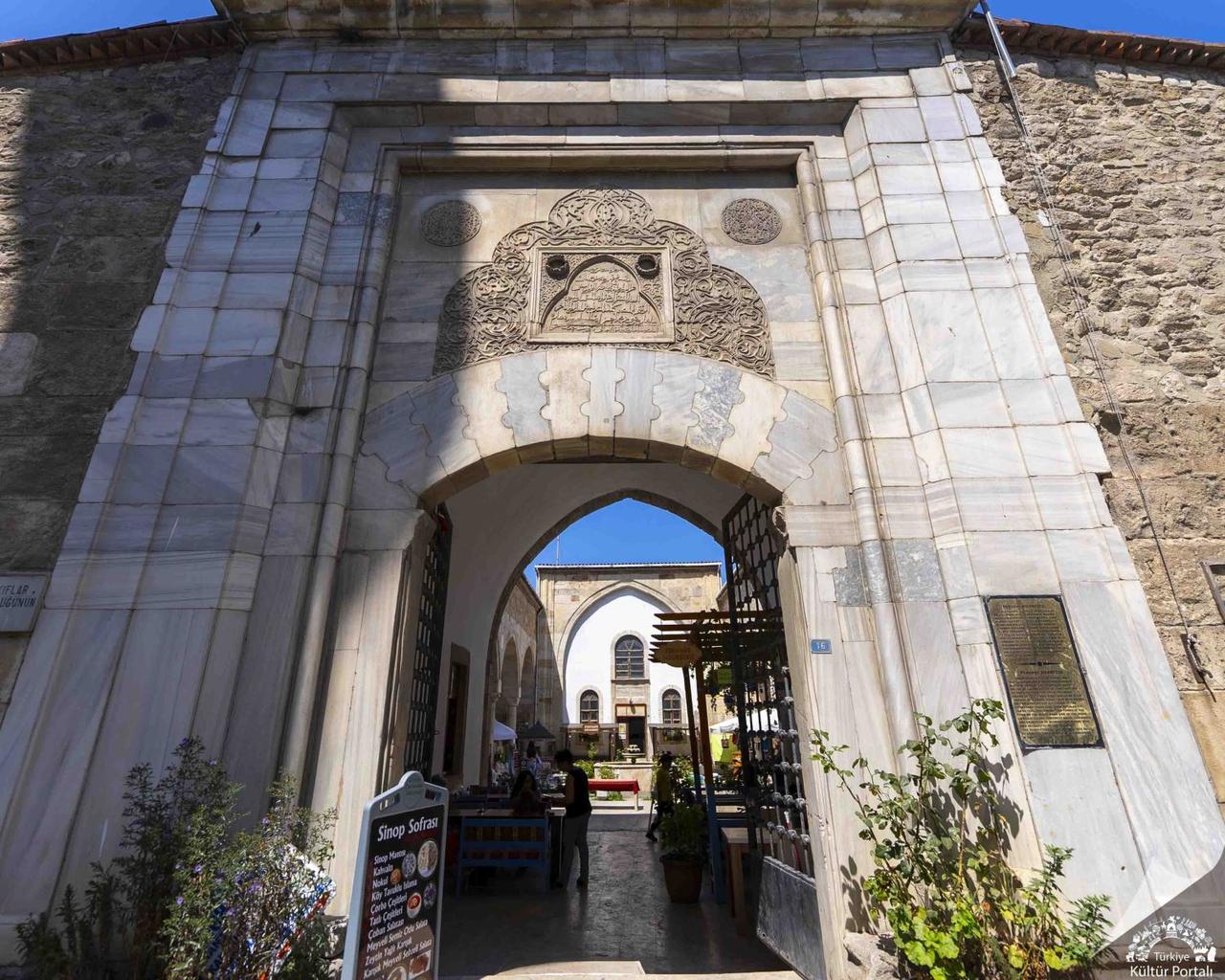
The medrese is a rectangular, north-south oriented structure with an open courtyard and two iwans. Rooms open onto arched porticoes along the eastern and western sides of the courtyard. The building was constructed primarily using cut stone and rubble stone. The entrance façade is entirely made of marble and features a monumental portal with fine stonework and relief decorations. Rooms are situated on both sides of the main iwan and the entrance iwan; to the east of the main iwan lies a tomb, while to the west is an open-air space.
In the center of the courtyard stands an octagonal pool placed on an octagonal platform. Square-sectioned column bases, believed to have supported a şadırvan, are located at the corners of the platform. The porticoes open onto the courtyard through arches supported by three columns each, some of which were repurposed from ancient structures. Behind the porticoes are eleven rooms, each containing stoves and large windows. Some of the vaulted rooms are oriented east-west, while others are oriented north-south.
The entrance iwan is located on the southern façade, while the main iwan is on the northern façade. The main iwan is elevated above the courtyard level. Two rooms flank the entrance iwan on its right and left sides. The tomb located to the east of the main iwan contains the graves of Gazi Çelebi, the last ruler of the Pervâneoğulları, and his daughter. Gazi Çelebi’s tombstone bears the date AH 722 (AD 1322). According to the inscription, this area belonged to Gazi Çelebi, son of Mesud Çelebi.
Two inscriptions are associated with the medrese. One is located on the entrance portal on the southern façade, and the other is on the doorway of the main iwan on the northern façade. The Arabic inscription on the entrance portal consists of seven lines and states that the medrese was commissioned by Süleyman Pervâne in AH 661 (AD 1262–63). The other inscription, written in Ottoman Turkish on the main iwan doorway, refers to a restoration carried out in 1307 AH / 1889 AD. This restoration was conducted during the governorship of Faik Bey of Konya.
Pervane Medresesi belongs to the group of thirteenth-century Anatolian Seljuk medreses characterized by a two-iwan, open-courtyard plan. In terms of plan typology, it resembles structures such as the Afgunu Medresesi in Kayseri, the Hatuniye Medresesi in Karaman, and the Bimarhane in Amasya. The tomb is situated adjacent to the main iwan in the northeast corner of the courtyard. This arrangement is also found in some other Seljuk medreses of the period.
Greater care is evident in the craftsmanship of the cut stone sections, while areas built with rubble stone show lower quality workmanship. Various parts of the structure have been repaired over time using different materials. Repurposed materials were used in the porticoes, and plant and geometric motifs were applied as decorative elements on the portals. Moss growth on the stones and cracks in some walls have been observed, indicating moisture problems within the building. Overall, the structure is in good condition, but partial deterioration has occurred due to factors such as humidity and inadequate ventilation.

No Discussion Added Yet
Start discussion for "Pervane Medresesi (Sinop)" article
Architectural Features
Inscriptions and Restorations
Plan and Typology
Materials and Conservation Status