


This article was automatically translated from the original Turkish version.
+1 More
Arzuhalcilik emerged as a profession involving the drafting of arzuhaller, documents through which the public conveyed their requests, complaints, and petitions to authoritative bodies, particularly during the Ottoman period. The term derives from the Persian phrase “arz-ı hâl” (statement of condition), which gradually became widespread in Ottoman Turkish as “arzuhal” and acquired a meaning parallel to the modern concept of “dilekçe” (petition).
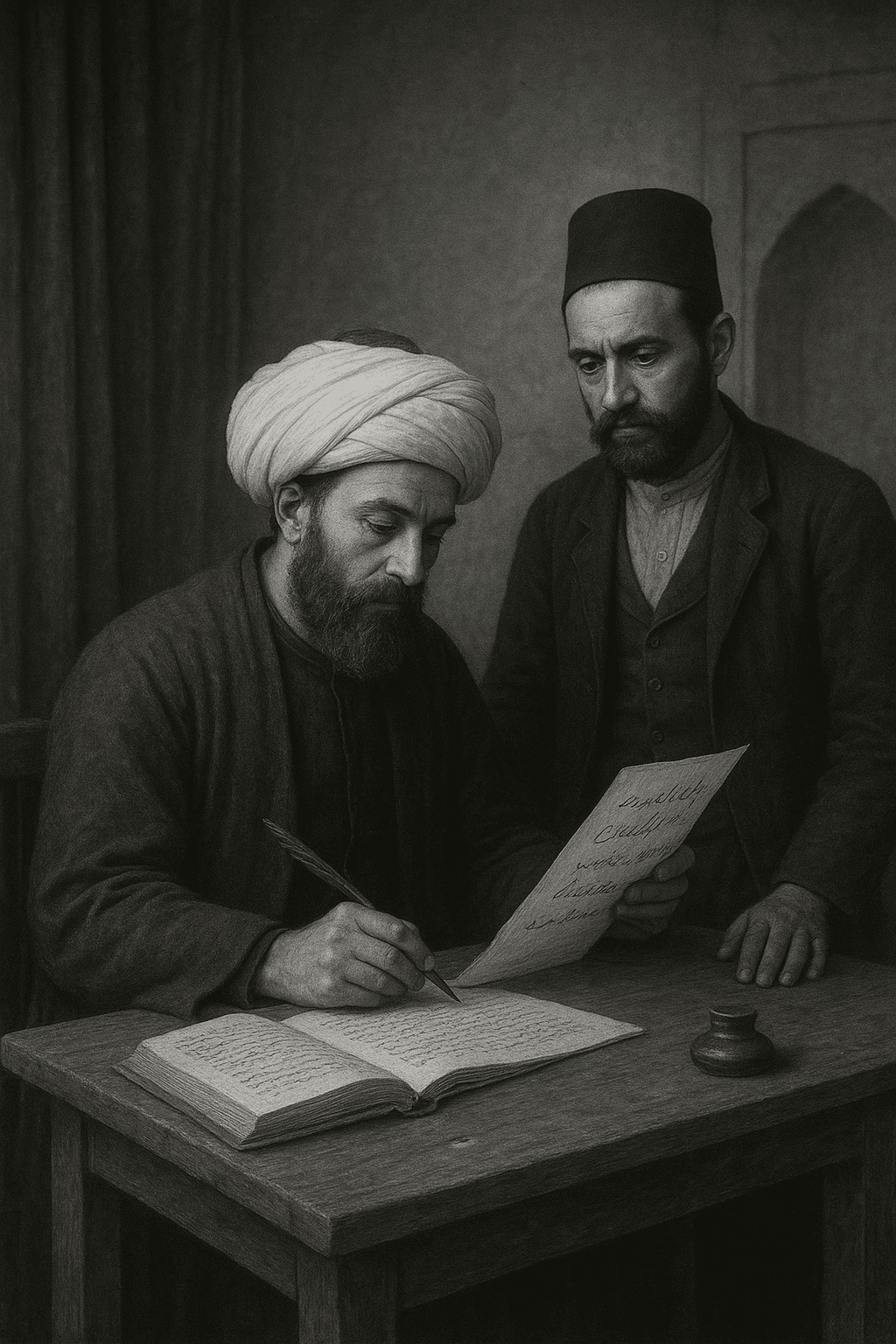
Representative Image of an Arzuhalci (Generated by Artificial Intelligence)
Arzuhalciler served as the voice of the people, working with clients from Istanbul and Anatolia, addressing individuals from every social class. During an era of limited literacy, arzuhalciler took on various writing tasks including letters, compasses, declarations, affidavits, deeds, and contracts, thereby securing an important place in social life by organizing both official and private correspondence.
The origins of arzuhalcilik lie in the Turkic-Islamic states’ tradition of allowing the public to present grievances or requests to authorities, either orally or in writing. From the foundation of the Ottoman Empire onward, the right of the populace to submit arzuhaller to the sultan, the grand vizier, and provincial administrators was recognized as an established practice. Tens of thousands of documents preserved in archives demonstrate that this right was actively exercised from early periods. For instance, according to information transmitted by Ibn Hajar from the physician Şemseddin b. Sagīr, Yıldırım Bayezid would sit on an elevated platform each morning to hear complaints from those who had suffered injustice and immediately resolve their matters. 【1】 This illustrates how arzuhal served as a direct channel of communication between the state and the people.
In the Ottoman Empire, arzuhaller could be submitted either individually (arz-ı hâl) or collectively (arz-ı mahzar), and covered a broad spectrum of content ranging from complaints of injustice to requests for appointments and corrections of errors. Arzuhaller presented to the sultan were considered the most effective means of communication during ceremonies such as Friday salutations, holiday prayers, tomb visits, or hunting expeditions.
In Koçi Bey’s treatise addressed to Sultan İbrâhim, it is noted that arzuhaller were collected by the doorkeeper’s chief and then read personally by the sultan before being transmitted to the grand vizier via imperial decree. 【2】 Administrative bodies such as the Imperial Council (Dîvân-ı Hümâyûn), the afternoon council, the Friday council, and provincial councils regarded the evaluation of arzuhaller as one of their primary duties. During this process, documents found to be submitted with malicious intent were destroyed by order of the sultan, either by burning or tearing.
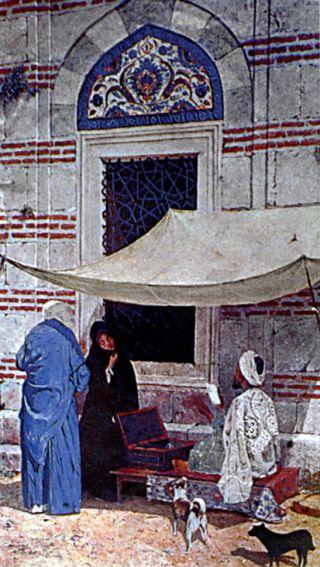
Arzuhalci – Osman Hamdi Bey(Encyclopedia of Islam)
In 1660, by order of the grand vizier, arzuhalciler were formally regulated for the first time. This regulation defined their qualifications (knowledge of law, elegant handwriting, integrity), work permits, and working conditions. A firman dated 1773 emphasized that arzuhalciler must be selected from honest, law-abiding, and experienced individuals, and prohibited unqualified persons from entering the profession.
During the reign of Ahmed II, arzuhalciler were organized into a guild under the supervision of the Arzuhalcibaşı and integrated into a formal institutional framework.
Due to low literacy rates in Ottoman society, arzuhalcilik became a vital profession. Arzuhalciler did not only draft official petitions but also composed various documents such as letters, deeds, contracts, and affidavits. Aspiring arzuhalciler had to pass an examination before a committee composed of the Arzuhalcibaşı, the Clerks’ Guild of the Imperial Council, and the Clerk’s Superintendent. The examination tested candidates’ knowledge of writing rules, official forms of address, and state regulations, as well as their skill in elegant handwriting. Successful candidates were granted an “izin tezkeresi” (license certificate); those lacking these qualifications were barred from practicing the profession.
Arzuhalciler were typically selected from retired scribes who had served in the Imperial Council or Babıali. These individuals stood out for their mastery of official scribal practices and their knowledge of laws. Arzuhaller were written according to a fixed format, on special paper, and began with the mark “beduh.” The top portion of the paper was left blank for the appropriate honorific title (“elkab”) corresponding to the recipient’s rank, while the text was arranged close to the left margin with a wide space on the right. Arzuhaller opened with standardized phrases such as “Ma‘rûz-ı çeker-i Kemineleridir ki” and concluded with expressions like “Ol babda ve katibe-i ahval de emr-ü ferman hazret-i menlehü’l-emrindir.” For those unable to read or write, arzuhalciler also performed the sealing of documents; some even carved their own seals to provide this service.
Arzuhalciler were required not only to be literate but also to possess knowledge of the laws, customs, and conventional expressions of their time. Arzuhaller, enriched with Arabic and Persian constructions, had to be flawless in form and meaning since they were addressed to the sultan or grand vizier. It was also essential to know which administrative unit would process the petition and to articulate the client’s request within the legal framework. Arzuhalciler who drafted private letters—for family, lovers, or soldiers—were also known for personal qualities such as discretion and trustworthiness.
The content of arzuhaller ranged from individual grievances to collective petitions. For example, villagers or townspeople could jointly submit an arzuhal to the sultan complaining of official misconduct, and such complaints could lead to serious consequences. Arzuhaller submitted by the populace of Aydın and Saruhan regions, protesting the oppression of Kalenderoğlu, contributed directly to the execution of Grand Vizier Derviş Paşa. Unsigned arzuhaller were also frequently submitted; however, if the sultan determined that such documents were written with malicious intent, he would order their destruction or locate and punish the author.
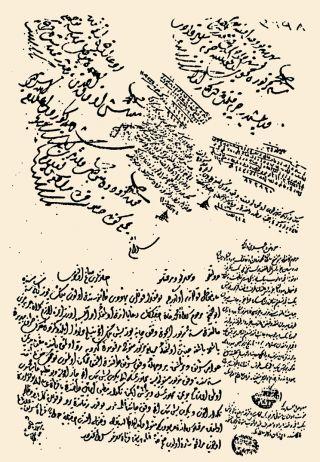
An Arzuhal Regarding a Dispute Over the Jizya Tax(Encyclopedia of Islam)
【3】
Until the 18th century, arzuhalciler primarily worked near official offices, in mosque courtyards, medrese arcades, or coffeehouses. In the 19th century, they became concentrated in Istanbul at locations such as Beyazıt Camii, Yeni Camii, Sultan Ahmed Camii, Hagia Sophia Square, and Tophane. Their workstations, marked by small woven stools, writing boards, reed pens, inkwells containing black and red ink, and rıhdan (fine sand used to dry ink), attracted attention. Some used tables made from orange or lemon crates, while others wrote with paper placed on their knees. Those who owned shops had more ornate furnishings, using tables made of linden or walnut wood and chairs upholstered with Hereke fabric.
The changes in state structure following the 1839 Tanzimat Fermanı further expanded the profession of arzuhalcilik, and some arzuhalciler rose to the position of legal representatives. Among those who specialized in court, land registry, and tax matters, figures such as the renowned Tanzimat-era arzuhalci Ali Efendi emerged. Ali Efendi gained respect within state offices through his mastery of law and the arzuhaller he composed on special documents.
However, from the second half of the 18th century onward, irregularities emerged in the arzuhalcilik system, with unlicensed practitioners and the submission of unlawful arzuhaller becoming common. This situation caused financial losses to the state and administrative problems, prompting punitive measures from the Imperial Council.
The proclamation of the Constitutional Monarchy in 1908 led to the dismissal of numerous civil servants, increasing the number of petition writers; however, the days of former prosperity had passed. The declaration of the Republic and the letter reform profoundly affected the profession of petition writing. Ankara’s designation as the capital caused petition writers in Istanbul to lose their livelihoods. Nevertheless, the profession did not disappear entirely and continued with the aid of modern tools such as typewriters and computers.
As part of Ottoman society, petition writers served as a source of inspiration for both local and foreign writers, painters, and travelers. In the 19th century, Western painters frequently depicted petition writers when portraying exotic elements of the East. Danish artist Martinus Rørbye’s painting “Turkish Petition Writer Drafting a Marriage Contract in Front of the Kılıç Ali Paşa Camii in Tophane” (1837) is among the earliest examples of this theme. Painters such as Preziosi, Wilkie, and Zonaro also portrayed petition writers alongside women, drawing attention to literacy rates and social gender dynamics. These paintings were also intended to introduce European audiences to the daily life of the East.
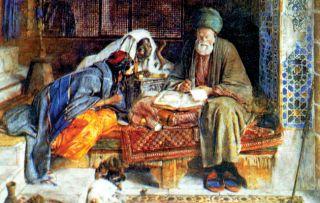
Arab Petition Writer – J. Frederich Lewis(Encyclopedia of Islam)
In a letter dated 1836, Field Marshal Helmuth von Moltke provided a detailed description of a petition writer in the courtyard of the Kılıç Ali Paşa Camii composing letters for female clients, thereby illuminating the social role of the profession.
Today, petition writers typically operate in small shops or mobile stalls near courthouses. Drafting petitions on matters such as enforcement, mediation, divorce, and fraud remains among the most common requests. Predominantly composed of retired civil servants, these petition writers continue their work as the last representatives of the profession.
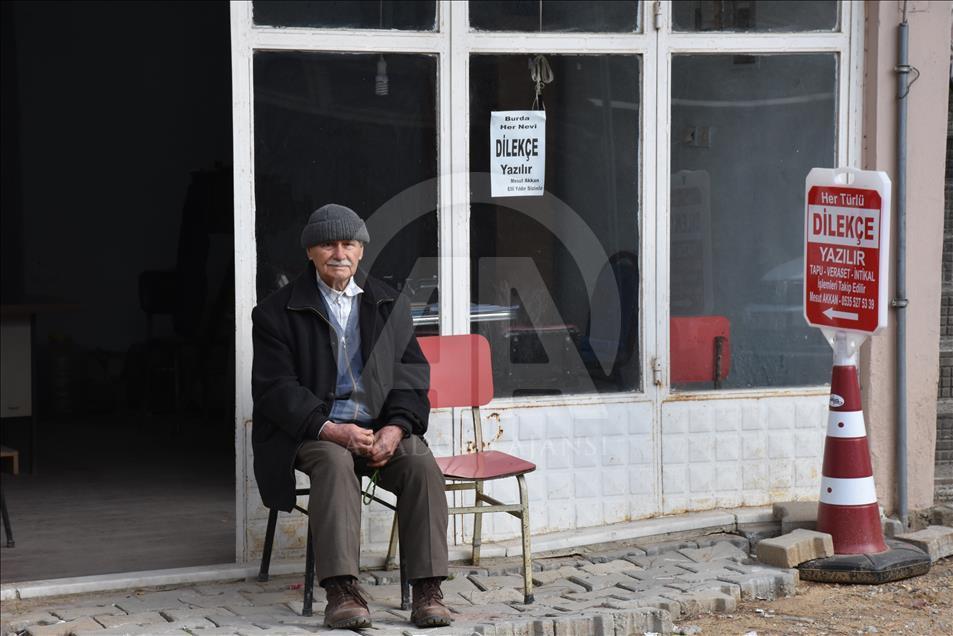
Petition Writing Today(AA)
[1]
Mehmet İpşirli, "Arzuhal," TDV İslâm Ansiklopedisi, 1991, https://islamansiklopedisi.org.tr/arzuhal
[2]
Mehmet İpşirli, "Arzuhal," TDV İslâm Ansiklopedisi, 1991, https://islamansiklopedisi.org.tr/arzuhal
[3]
Belgenin Transkripsiyonu (Sadece Arz Kısmı)
Devletlü ve sa'âdetlü ve merhametlü sultânım hazretleri sağ olsun.
Arzuhâl-i kulları oldur ki; Bu fukarâ kulları Yahûdi tâifesinden olup bin yüz iki senesinde Ebu'l-feth merhûm Sultan Mehmed Han hazretlerinin reâyâlarından olmağla, edâsı üzerlerimize lâzım gelen cizye, mîrî malından sene-i mezbûr içün vakf canîbine yüz beş bin akçe teslîm ve edâ eyledüğimizden sonra taraf-ı mîrîden başına başka ceride olunmağla meblağ-ı mezkûr mütevellî-i merkûmdan gerüye red olmak bâbında [yazup] yedimize evâmir-i şerif virilmiş[k]en bir vechle vakf-ı şerîf tarafından alınmak mümkin olmayup yüz iki senesinde vakf-ı mezbûr mütevellisine memhûr temessük ile yigirmi beş bin akçe câize akçesi deyü matbaa-i âmire[ye] (?) mahsûb olmak üzere yedimize memhûr temessük virilmiş iken tekrâr tarîk-i emîn tarafından bâ-fermân-ı âlî ile bu kullarından tekrâr alınup ve yigirmi beş bin akçe vakf canîbine kalmışdır. Bu kadar zamandan beru bu kullarına külli gadr ve zulüm olunmağın, merhametlü sultânımdan mercûdur ki; Mütevelli ve (...?) İstanbul Kadısı efendi hazretlerine hitâben fermân-ı şerîf-i âlişân olunup mürafaa-i şerîf olup hakkım hak olmak bâbında fermân sa'âdetlü sultânımındır.
Arz Eden: Bende-i cemaat-i Yahûdiyân

Historical Development
Institutionalization in the Ottoman Period
Regulation and Professional Oversight
The Profession of Arzuhalcilik
Professional Structure and Characteristics
Work Environment of Arzuhalciler
Tanzimat and Beyond
Cultural Reflections
Current Status