


This article was automatically translated from the original Turkish version.
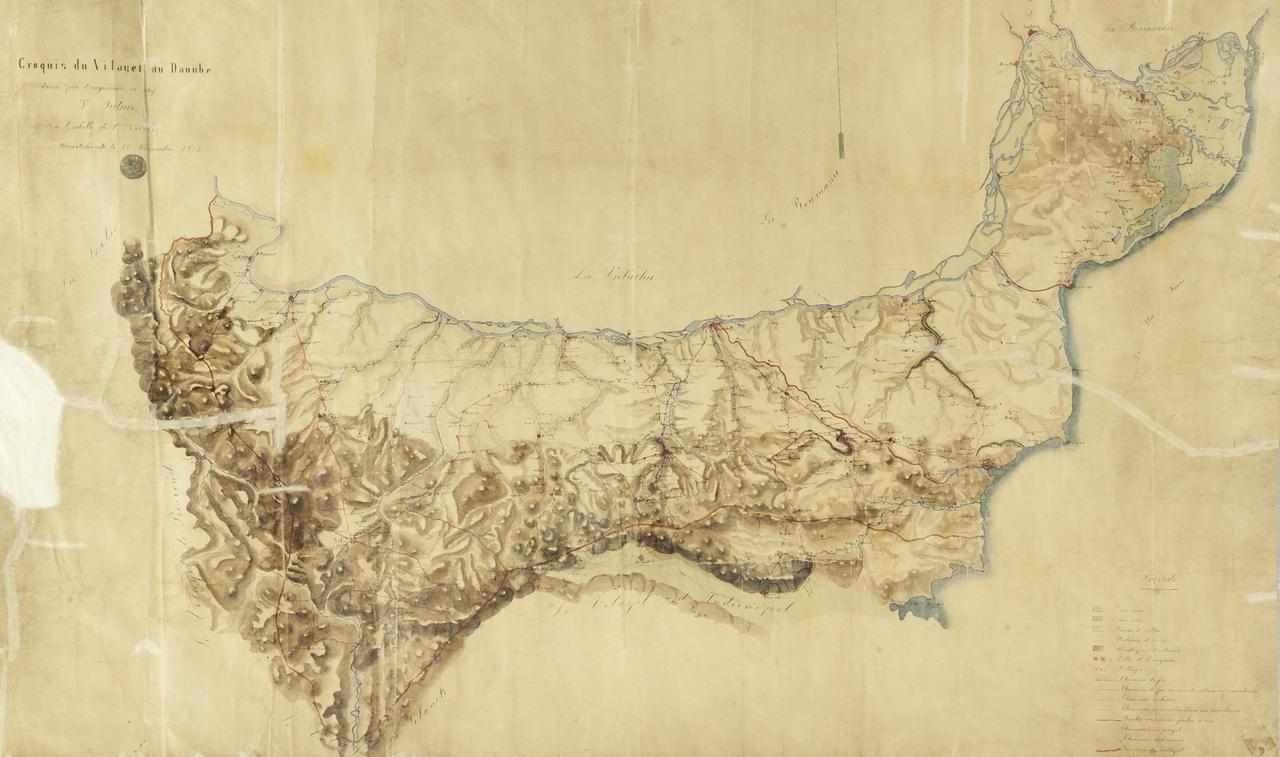
1864 Danube Vilayet (Ottoman Archives, BOA, HRT.h, no.2013)
Law Codes and Regulations | 1871 Vilayet Nizamname 1867 Vilayet-i Umumiye Nizamname 1864 Tuna Vilayeti Nizamname 1858 Talimatname 1852 Talimatname 1849 Talimatname 1840 Muhassıllık System | ||||||||
|---|---|---|---|---|---|---|---|---|---|
The Tanzimat Era reforms were comprehensive measures aimed at strengthening central authority in the Ottoman State and establishing a modern, equitable system in law, administration, and finance. In the 19th century, the need to reinforce central governance and modernize state administration formed the fundamental rationale for the Tanzimat reforms. The Ottoman State, due to internal and external pressures—primarily the influence and pressure of European powers—turned to reviewing its governance system and reorganizing provincial administration. The proclamation of the Tanzimat Decree is regarded as the beginning of efforts to centralize state authority across Ottoman territories, and the reforms carried out within this framework were systematized through the Provincial Regulations of 1864 and 1871. In particular, the 1864 Danube Province Regulation and subsequent amendments fundamentally transformed the Ottoman administrative structure by replacing the eyalet system with the foundation of a modern vilayet system.
The Tanzimat Decree, proclaimed in 1839, marked the first significant step in the Ottoman State’s modernization process. It emphasized the necessity for the state to reform taxation, military service, and legal systems, and sought to ensure security of life and property as well as tax fairness among Ottoman subjects without regard to religion or sect. These reforms are recognized as the beginning of the Ottoman State’s pursuit of modernization and centralized governance.
Following the Tanzimat Decree, profound changes were made in Ottoman provincial administration, with the hierarchical structure reorganized and the tax collection process and administrative framework centralized. Tax collection was removed from the iltizam system and began to be collected through officials appointed by the center known as muhassıls. Muhassıl councils were established to foster cooperation with local councils. These reforms aimed to prevent injustices in the tax system and arbitrary practices by local administrators.

The Proclamation of the Tanzimat Decree by Mustafa Reşid Pasha in Gülhane in 1839 (Generated by Artificial Intelligence)
The muhassıl system was a tax collection mechanism introduced in the Ottoman Empire alongside the proclamation of the Tanzimat Decree to replace the iltizam system. Under the previous iltizam system, tax collection was delegated to individuals known as mültezims in exchange for a fixed payment. The Tanzimat reforms aimed to collect taxes directly in the name of the state. To achieve this goal, officials called muhassıls were appointed to carry out tax collection under the authority of the central government. The muhassıl system, of great importance in reforming the tax collection system during the Tanzimat Era, sought to limit the autonomy of local administrations and enhance state authority in the provinces.
Muhassıls were officials directly subordinate to the central government, entrusted with the task of collecting taxes in specific provinces, districts, and subdistricts. The muhassıl system was established to reduce the pressure exerted on the population by mültezims who collected taxes according to their own interests. It aimed to create a fairer tax collection process. Muhassıls were responsible for transferring collected taxes directly to the state treasury and thus interacted solely with the central government.
To enhance the effectiveness of muhassıls and improve their cooperation with the local population, “muhassıl councils” were established. These councils consisted of prominent representatives of the local population and leading figures of the subdistrict. These bodies assisted muhassıls in determining tax amounts and providing advisory input during the collection process, contributing to its smoother operation. The councils also played a crucial role in ensuring the fair distribution of tax revenues and preventing corruption.
In addition to tax collection, muhassıl councils were responsible for ensuring that collected revenues were properly transmitted to the state treasury. They expressed opinions on how and to what extent taxes should be collected from the population, acting as intermediaries between the people and the state. However, in practice, some muhassıls were found to have imposed excessive burdens on the population or abused their duties. Therefore, granting muhassıl councils a supervisory structure was a vital element for the success of the Tanzimat reforms.

Representative Tax Collection Process (Generated by Artificial Intelligence)
The implementation of the muhassıl system encountered resistance from the local population and stakeholders of the former iltizam system. Mültezims who had made substantial investments under the iltizam system suffered income losses with the introduction of the muhassıl system and began opposing it. The local population, due to past experiences, harbored suspicions about the new tax arrangements.
Following the Tanzimat reforms and the implementation of the muhassıl system, expected tax revenues were not achieved, particularly in the early years. Significant declines in tax revenues occurred in 1840 and 1841. This undermined confidence in the system’s efficiency and in central authority, leading to increased demands for the restoration of the iltizam system.
Some muhassıls abused their duties by imposing excessive taxes on the population. These irregularities eroded public trust in the muhassıl system and triggered local resistance. Instances were also recorded where members of muhassıl councils acted in their own interests, resulting in the exploitation of the population through unfair taxation.
The muhassıl system was viewed as a crucial step in the Ottoman State’s effort to assert control over provincial administration. For the first time, a tax collection mechanism directly subordinate to the state was established, enhancing the central government’s oversight capacity in the provinces.
The muhassıl system played a significant role in laying the foundations of modern Ottoman local administration. Muhassıl councils emerged as one of the first local administrative structures established during the Tanzimat reforms and constituted the initial steps toward a modern municipal system.
Although the muhassıl system initially aimed to ensure fairness in tax collection, it was abolished in central provinces in 1842 due to local resistance, declining revenues, and irregularities. However, the system was not entirely abandoned; it was reorganized under the name “memleket meclisleri” and continued to exist within the Ottoman local administrative structure with a modified functioning. The muhassıl system was an essential component of the Tanzimat Era’s goal to strengthen central authority and represented a step toward restructuring the Ottoman tax system.
Nevertheless, the muhassıl system failed to achieve the expected success due to factors such as local resistance, corruption, and the failure to realize anticipated increases in tax revenues. Nonetheless, it occupies an important place among the administrative reforms aimed at strengthening centralism in the Ottoman State and laid the groundwork for later municipal and local administration reforms.
The regulation issued in 1849 under the title “The Imperial Instructions Issued to the Provincial Councils Organized and Structured under the Authority of the Sublime Porte” was prepared to address administrative irregularities in the provinces following the Tanzimat reforms. This regulation precisely defined the structure of provincial councils and systematically organized their members and duties. The regulation encompassed reforms not only for provincial councils but for the entire Ottoman administrative structure.
The 1849 Regulation reorganized the administrative hierarchy in the provinces, transferring the presidency of provincial councils from the valide to high-ranking officials appointed from the center. In the administrative structure established during this period, officials such as the vali, defterdar, judge, and mufti served as natural members of the councils. Muslim and non-Muslim representatives were also included in the councils to ensure local representation.
The Regulation developed a centralist system to tightly bind provincial administration to the center. However, excessive centralism increased bureaucracy and widened the distance between the center and the provinces. Problems such as bribery and embezzlement remained unresolved. The failure to address these issues contributed to the growth of local problems within Ottoman provincial administration.
The problems arising during the implementation of the 1849 Regulation necessitated a reorganization of the administrative structure. The excessively centralist system disrupted the provincial hierarchy and caused conflicts of authority between council presidents and valis. Moreover, the direct appointment of council presidents by the center imposed additional financial burdens on the treasury and created administrative complexity.
To resolve these issues, a new regulation was issued in 1852, granting broader powers to valis to restore order in the provinces. Under the new arrangement, the presidency of councils was returned to the valis, who were designated as the sole responsible authorities for their provinces. Valis were granted the authority to dismiss officials under their jurisdiction, thereby adopting a structure in which powerful valis would dominate provincial administration rather than strict centralism.
The 1852 Regulation empowered valis in provincial administration, ensuring that provincial governance remained under the direct supervision of valis. Along with the expanded powers granted to valis, the central government’s authority in the provinces increased, yet success in resolving local issues remained limited. Public trust in provincial administration was not restored.
The Islahat Fermanı proclaimed in 1856, in addition to the Tanzimat reforms, focused on non-Muslim subjects and declared equal rights for all subjects regardless of religion or language. This decree heralded a series of innovations aimed at integrating non-Muslims into administrative bodies in the provinces. In this context, a detailed regulation was published in 1858 to ensure order in public administration.
The 46-article regulation titled “Instructions Covering the Duties of Provincial Governors, Mutasarrıfs, and Kaymakams,” prepared by Grand Vizier Ali Pasha and Fuat Pasha, detailed the responsibilities of public officials. The regulation divided state administration into provincial, district, subdistrict, and village units, clearly defining the duties of authorized personnel for each administrative unit. Compliance with laws and the provision of swift and accurate services were emphasized as key elements of the regulation.
The 1858 Regulation imposed moral responsibilities on public officials and required valis and kaymakams to act in accordance with the law. Although this regulation included steps to prevent arbitrary practices by state officials, full success was not achieved in practice, and corrupt practices among public officials continued.
Before the Tanzimat Era, Ottoman territories were governed under the eyalet system. Over time, declining oversight of provincial valis weakened central authority. Major shortcomings emerged in revenue collection and military control in the provinces. The Ottoman State recognized the need for a centralist structure to control growing local forces and strengthen the population’s loyalty to the state.
Administrative Units from Large to Small:
Vilayet > Sancak > Kaza > Nahiye > Kariye (Village)
(“Nahiye” and “Kariye” could be directly subordinate to “Sancak.”)

Representative Image of an Ottoman City in the Balkans in the 19th Century (Generated by Artificial Intelligence)
The reform process initiated by the Tanzimat Decree indicated the necessity of increasing centralism in the administrative structure. The Danube Province Regulation, prepared in this direction, was developed to enable more effective governance in the provinces. Through this regulation, the Ottoman administrative system was intended to become more orderly and centrally manageable. The Danube Province Regulation, which came into effect in 1864, is regarded as a turning point in Ottoman provincial administration. The Ottoman government tested a broad model of centralized administration in the Danube Province. Midhat Pasha was appointed as its first vali.

Danube Province in 1864 (Ottoman Archives, BOA, HRT.h, nr.2013)
The Danube Province Regulation established administrative subdivisions within the Ottoman administrative structure: vilayet, sancak, kaza, nahiye, and village. Each vilayet began to be governed directly by valis subordinate to the center. Under this arrangement, valis were recognized as the highest authorities in the provinces and endowed with extensive powers, thereby ensuring stronger representation of central administration in the provinces. The Danube Province Regulation introduced administrative councils in vilayets, sancaks, and kazas. These councils represented a significant innovation by including representation from both Muslim and non-Muslim populations, thereby securing local support for administrative decisions. Through these councils, partial public participation in governance was achieved, aiming to strengthen the bond between the people and the state. However, an economic criterion was required for membership in the councils, meaning that not the entire population but only those with a certain status could participate in governance.
The Danube Province Regulation also introduced innovations regarding security and tax collection in the provinces. Tax collection was placed under the supervision of vilayet valis, increasing the central government’s influence over revenue. Additionally, military units were established in vilayets to ensure security, and provincial administrative authorities were granted the right to oversee security forces. These measures reflected the Ottoman State’s effort to reestablish its authority in the provinces. Ultimately, the successful outcomes of the reforms under Midhat Pasha’s governorship created the conditions for the rapid extension of the regulation to all Ottoman vilayets.
The vilayet system initiated by the Danube Province Regulation played a vital role in the Ottoman State’s transition to a modern administrative structure. This model was based on a system in which valis subordinate to the central government administered the provinces, aiming to resolve problems in provincial governance. The regulation had long-term effects on the Ottoman administrative system and remained in place until 1913.
Following the successful results of the Danube Province Regulation, the Ottoman State decided to implement this administrative system throughout all its vilayets. With the issuance of the General Vilayet Regulation in 1867, the Danube Province model was extended nationwide, standardizing a new administrative structure across Ottoman provinces. The application of the vilayet system throughout the empire contributed to strengthening state authority in the provinces. Under this system, the powers of valis were expanded and the connection between the central government and the provinces was reinforced. Thus, the Ottoman State was able to exercise more effective control over local elements.
The establishment of the vilayet system through the Danube Province Regulation and the subsequent General Vilayet Regulation strengthened the centralist structure of Ottoman provincial administration. The creation of the vilayet system aimed to prevent corruption such as bribery and embezzlement in local administrations and to enable the central government to monitor local grievances. The centralist approach significantly influenced the Ottoman State’s transition to a modern administrative structure. The practice of local administrative councils initiated by the Danube Province Regulation became a permanent feature in Ottoman provinces. These councils at the vilayet, sancak, and kaza levels were established in other Ottoman vilayets, increasing state oversight in the provinces by facilitating public participation in governance.
The 1871 Vilayet Regulation enhanced centralism in Ottoman provincial administration and rendered the vilayet system a more functional structure. Through this regulation, vilayet, sancak, kaza, nahiye, and village units acquired a more comprehensive and detailed administrative framework, and administrative duties were redefined.
The 1871 Vilayet Regulation provided a more detailed structure for provincial administration by clearly defining the powers of each administrative unit. Vilayets were divided into sancaks, kazas, nahiyas, and villages, and the authorities and responsibilities of officials serving in these subdivisions were explicitly defined. Valis, as the highest authorities in vilayets, were granted broader powers. Mutasarrıfs were appointed in sancaks, kaymakams in kazas, nahiye directors in nahiyas, and muhtars in villages.
The 1871 Regulation established local administrative councils in vilayets and sancaks. Through these councils, public participation in governance was achieved, thereby strengthening the Ottoman State’s authority in the provinces. Elected representatives of the local population became integral components of administrative processes in these councils. This practice, as one of the Tanzimat reforms’ objectives toward the public, aimed to establish a more democratic order in Ottoman provinces.
A more effective administration in tax collection and financial oversight was targeted. The 1871 Regulation aimed to improve oversight of the provincial tax system and ensure fair revenue collection. Tax revenues were collected more efficiently through financial officials serving in vilayets and other subdivisions, ensuring regular transfers to the Ottoman treasury.
The new structural arrangement established by the 1871 Vilayet Regulation took significant steps toward strengthening administrative and financial governance in Ottoman provinces. This regulation formed the foundation of centralism in Ottoman provincial administration as an expanded outcome of the Tanzimat reforms. The powers of valis were expanded; they became responsible for all administrative and financial affairs of their vilayets, enhancing their authority in the provinces. Additionally, the duties of kaymakams in kazas and mutasarrıfs in sancaks were detailed, and administrative hierarchies within each unit were clarified.
The number of vilayet and sancak councils was increased to establish a fair administrative structure in Ottoman provinces. Each council was tasked with managing local administrative affairs and conveying local needs to the central administration. These councils served as a bridge between provincial governance and the population. The 1871 Regulation reinforced the centralist order in the provinces, aiming for valis to operate directly under the center. Officials at all levels of vilayets became more tightly bound to the center in both administrative and financial matters, increasing oversight within the administrative hierarchy.
The Tanzimat Decree proclaimed in 1839 initiated steps to reorganize urban governance as part of modernizing the state structure. During the Tanzimat Era, the establishment of modern municipal organizations in Ottoman cities aimed to improve infrastructure and public health services. In this context, the first modern municipal organization, named Altıncı Daire-i Belediye, was established in 1857 in the Galata and Beyoğlu districts of Istanbul. Inspired by European models, this organization sought to provide public services such as urban infrastructure, health, and sanitation and became the first example of a modern municipal system in the Ottoman Empire.

Building of Altıncı Daire-i Belediye (Cultural Inventory)
Following Istanbul, municipalities were established in port cities such as İzmir, Thessaloniki, and Beirut to extend the modernization process to the provinces. However, these municipalities remained under the control of the central government and lacked local autonomy. Although the 1877 Municipal Law assigned municipalities the responsibility of providing urban infrastructure services, financial insufficiency in provincial municipalities hindered effective service delivery. Provincial municipalities, financially dependent on the central government, failed to establish a strong local governance structure and did not achieve the expected outcomes of the Tanzimat modernization efforts.
The Tanzimat reforms initiated in the mid-19th century brought about fundamental changes in the structure of the Ottoman Empire by adopting a centralist and modern administrative approach. The reform process begun with the Tanzimat Decree took concrete form through the 1864 and 1871 Vilayet Regulations, implementing comprehensive changes in Ottoman provincial administration. In particular, 1864 Danube Vilayet Regulation and the subsequent 1871 Vilayet Regulation aimed to establish a more effective administrative structure in Ottoman provinces and strengthen central authority. Through these regulations, the eyalet system was replaced by the vilayet system, creating a more orderly and centrally aligned administrative framework in the provinces.
The muhassıl system, along with eyalet and vilayet reforms, encompassed steps toward ensuring tax fairness in Ottoman provinces, regulating bureaucracy, and enhancing oversight of public officials. However, difficulties within the muhassıl system, bureaucratic inefficiencies stemming from excessive centralism, and local resistance limited the effectiveness of centralist reforms. These steps laid the foundations for modern municipal governance after the Tanzimat Era, aiming to bring Ottoman territories closer to Western standards in local administration and public services. Although the 1877 Municipal Law sought to improve infrastructure services in local administrations, financial insufficiency in the provinces complicated this process.
Cemaloğlu, Necati. “Osmanlı Devleti’nde Yapılan Tanzimat Reformlarının Eğitim Sistemine Etkileri, Uygulamaları ve Sonuçları (1839–1876).” *Manas Üniversitesi Sosyal Bilimler Dergisi* 7, no. 14 (2005): 153–165. Accessed November 13, 2025. https://dergipark.org.tr/tr/pub/manassosyal/issue/49973/640671.
Gençoğlu, Mustafa. “1864 ve 1871 Vilâyet Nizamnamelerine Göre Osmanlı Taşra İdaresinde Yeniden Yapılanma.” *Çankırı Karatekin Üniversitesi Sosyal Bilimler Enstitüsü Dergisi* 2, no. 1 (2011): 29–50. Accessed November 13, 2025. https://dergipark.org.tr/tr/pub/jiss/issue/25899/272992.
Kartal, Nazım. “Tanzimat’tan Cumhuriyete Osmanlı’da Mülki İdare.” *Akademik Yaklaşımlar Dergisi* 4, no. 1 (2013): 1–24. Accessed November 13, 2025. https://dergipark.org.tr/tr/pub/ayd/issue/3329/46174.
Olgar, İnan Kenan. *Altıncı Daire-i Belediye Binası*. 2021. Accessed June 26, 2025. https://kulturenvanteri.com/yer/altinci-daire-i-belediye-binasi/#17.1/41.028256/28.973528.
Ortaylı, İlber. Türkiye Teşkilat ve İdare Tarihi. Ankara: Cedit Neşriyat, 2008.
T.C. Cumhurbaşkanlığı Devlet Arşivleri Osmanlı Arşivleri. Tuna Vilayeti Haritası, HRT.h.. nr.2013. Fr. (Scale 1/550000).
Tekin, Abdullah Sami. “XIX. Yüzyılda Osmanlı İmparatorluğu’nda Dâhiliye Alanındaki Reformlar.” *İnönü Üniversitesi Uluslararası Sosyal Bilimler Dergisi* 5, no. 1 (2016): 91–98. Accessed November 13, 2025. https://www.researchgate.net/publication/395205442.
Çadırcı, Musa. “Tanzimat Döneminde Türkiye'de Yönetim (1839–1856).” *Belleten*, no. 203 (August 1988): 601–626. Accessed June 26, 2025. https://belleten.gov.tr/tam-metin/2035/tur DOI: 10.37879/belleten.1988.601.

1864 Danube Vilayet (Ottoman Archives, BOA, HRT.h, no.2013)
Law Codes and Regulations | 1871 Vilayet Nizamname 1867 Vilayet-i Umumiye Nizamname 1864 Tuna Vilayeti Nizamname 1858 Talimatname 1852 Talimatname 1849 Talimatname 1840 Muhassıllık System | ||||||||
|---|---|---|---|---|---|---|---|---|---|
No Discussion Added Yet
Start discussion for "Administrative Reforms of the Tanzimat Period" article
The Muhassıl System (1840)
Duties of Muhassıls and Muhassıl Councils
Problems in the Operation of the Muhassıl System
The End and Impact of the Muhassıl System
Regulations of 1849–1858 and Reforms in Eyalet Administration
The Issuance Process of the 1849 Regulation
The 1852 Regulation and the Reorganization Brought by Centralism
The 1858 Regulation and Ottoman Public Administration
Transformation of the Ottoman Administrative Structure in 1864–1867
The 1864 Danube Province Regulation
1867 General Provincial Regulation
The 1871 Vilayet Regulation
Reorganization of Administrative Units and Hierarchy
The Expanded Structure of Provincial Administration under the 1871 Vilayet Regulation
Establishment of Municipal Organizations in the Provinces
Establishment of the First Municipal Organizations
The 1877 Municipal Law