

This article was automatically translated from the original Turkish version.
Type(s) | Nizamname | ||||||||
|---|---|---|---|---|---|---|---|---|---|
History | 1864-11-07 | ||||||||
Initial Implementing Governor | Ahmet Şefik Midhat Paşa | ||||||||
Implementation Period | 1864–1871 (revised by the 1871 Nizamname) | ||||||||
The 1864 Danube Vilayet Regulation is a foundational 82-article regulation enacted on 7 November 1864 (Hijri 7 Jumada II 1281) designed to modernize the Ottoman state’s provincial administration by abolishing the classical eyalet system and introducing a centralized vilayet governance model. It also includes one special article. Initially implemented in the pilot region named the Danube Vilayet, this regulation established a hierarchical administrative structure comprising governors (vali), district governors (kaymakam), subdistrict governors (mutasarrıf), and village heads (muhtar), along with associated administrative councils, aiming to effectively extend central authority to the provinces. Inspired by the French provincial administration model, the regulation also introduced limited local participation through councils representing both Muslim and non-Muslim communities and reorganized administrative units into vilayet, sanjak, kaza, and village levels.
The Ottoman state’s provincial administration had traditionally been based on the eyalet and sanjak system, which maintained central authority through the iltizam and timar systems and the judicial-religious relationship between kadis and the populace. However, from the eighteenth century onward, this structure weakened under the growing influence of local power centers—ayan, ashraf, and mütesellims—leading to de facto decentralization in the provinces. The modernization process initiated by the 1839 Tanzimat Decree brought comprehensive reforms not only to central institutions but also to provincial governance. Seeking to eliminate the authority vacuum and fragmentation in the provinces, the Ottoman government embarked on a search for a new administrative system, resulting in numerous temporary regulations and reform initiatives from the 1840s onward.
From 1842, experimental administrative reforms were launched to enhance the applicability of the Tanzimat in the provinces; particularly in places such as Niş, Edirne, and Aydın, “temporary regulations” tested a new administrative approach. However, these initiatives failed to establish a cohesive structure within provincial organization. Consequently, a comprehensive legal and administrative framework was required. In the early 1860s, pressure from European public opinion, unrest in the Balkan vilayets, and examples of relative administrative success in Egypt pushed the Ottoman government toward a systematic provincial reform. In this context, in 1864 an “exemplary vilayet” was established in the Danube region, and the Danube Vilayet Regulation was adopted to define its foundational principles.
The selection of the Danube Vilayet was determined by its administrative and strategic characteristics. Due to its dense Bulgarian population, Russian influence in the Balkans, and its location in a region closely monitored by Western powers, it became a testing ground for carefully implemented reforms. The Danube Vilayet experiment marked the first step in a provincial administrative reform that would later be extended to the rest of the empire through the 1867 General Vilayet Regulation. This regulation aimed both to strengthen centralization and to reorganize essential public services such as tax collection, security, justice, and infrastructure.
The 1864 Danube Vilayet Regulation was a comprehensive statute that fundamentally transformed the structural and institutional framework of Ottoman provincial administration. While redefining the vilayet organization, it regulated the administrative hierarchy, jurisdictional boundaries, division of duties, council structures, and the functioning of public services. As the most comprehensive and systematic application of Tanzimat administrative reforms, it was grounded in centralization while incorporating local elements to a limited extent in decision-making processes.
The Danube Vilayet was divided into seven sanjaks: Rusçuk, Varna, Tulça, Vidin, Tırnova, Sofya, and Niş. Each sanjak was further subdivided into kazas.
According to the regulation, provincial administration was divided into four tiers: vilayet, sanjak (liva), kaza, and nahiye. Defined administrative positions with specific duties, authorities, and responsibilities were established for each unit. The highest official of the vilayet, the vali, was directly appointed by the Sublime Porte and served as the government’s representative. The vali was responsible for all civil, security, and economic activities within the vilayet. Under the vali, various branch directorates were established in the vilayet center, including those for documents, finance, police, waqf, and public works.
In the sanjaks, the position of kaymakam was appointed rather than mutasarrıf—a distinctive feature of the Danube Regulation. This designation would later change, and the term mutasarrıf would be reintroduced. The kazas were administered by officials titled müdür. At the lowest level, within the nahiye and village units, the positions of nahiye müdürü and muhtar were established. Thus, administrative authority was distributed hierarchically from the center down to the village.
The regulation also mandated the establishment of an “administrative council” at each level. In the vilayet center, these were the Vilayet Meclis-i Umumisi and Vilayet Meclis-i Dairesi; in the sanjak center, the Sancak Meclisi; and in the kaza centers, the Kaza Meclisi. These councils included representatives from both Muslim and non-Muslim communities and functioned as advisory and decision-making bodies on local matters. Some members were appointed by the government, while others were elected by the local populace. This practice was regarded as a limited example of local representation.
The Vilayet Regulation did not merely define administrative divisions but also introduced regulations governing the operation of public services. Security, justice, education, health, and public works were assigned to specific officials, and local administrative mechanisms were created to ensure the regular delivery of services. Alongside the regulation, a vilayet matbaası (vilayet printing house) was established, a vilayet newspaper was published, and a communication channel was created between the populace and administrators.
The regulation also contained provisions aimed at increasing direct state control over practices such as tax collection, conscription, road construction, and quarantine measures. Thus, the administrative system was intended to be reorganized according to modern bureaucratic norms.
The Danube Vilayet was designated as the first pilot region for implementing the Vilayet Regulation. Created in 1864 by merging the former eyalets of Niş, Vidin, and Silistre, its capital was Rusçuk. This choice was strategic, as the region lay along a border zone inhabited by diverse ethnic and religious communities and maintained direct contact with Europe. Seven sanjaks were established: Rusçuk, Tulça, Varna, Tırnova, Sofya, Vidin, and Niş. The plan was to extend the new system throughout the Ottoman territories if it proved successful here.

Administrative Map of the Danube Vilayet (Source: Mehmet Salih Çoban)
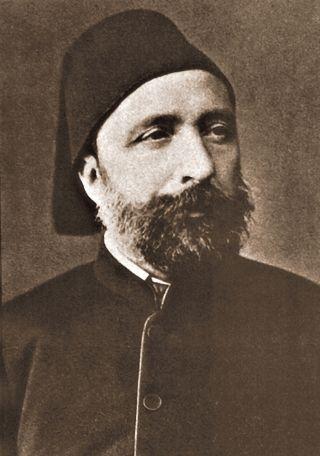
Mithat Paşa was appointed as the first vali of the Danube Vilayet and entrusted with the responsibility of implementing the regulation. Mithat Paşa, noted for his administrative successes in Niş between 1861 and 1864, was specifically chosen for his reformist reputation. Beginning his duties in late 1864, Paşa rapidly initiated organizational reforms. Appointments were made for officials at the vilayet and sanjak levels: mutasarrıfs, kaza müdürleri, muhtars, and council members were appointed. Simultaneously, administrative councils were established at the vilayet, sanjak, and kaza levels, with Muslim and non-Muslim representatives selected in fair proportions. Thus, for the first time in the Ottoman Empire, mixed religious administrative councils operated systematically.
Mithat Paşa ensured that the implementation went beyond mere legal formalities by directly improving the daily lives of the population through projects aligned with the regulation:
The reforms in the Danube Vilayet quickly showed results: tax revenues increased and public confidence in state administration grew. Tax collection became regular, and agricultural production and trade volume rose noticeably. This situation particularly softened the reactions of the Bulgarian population and temporarily calmed separatist tendencies.
However, this success generated unease among external powers such as Russia and Austria-Hungary, who feared that Ottoman administrative and developmental achievements in the region might weaken local independence movements. These powers’ representatives pressured the Ottoman government to remove Mithat Paşa. In 1868, Paşa was recalled to the capital for another assignment. Yet, because the administrative structure he established rested on solid foundations, the reforms endured.
Following the perceived success of the Danube Vilayet experiment, the system was rapidly extended to other vilayets. By 1865, similar administrative structures were established in vilayets such as Bosnia, Syria, Beirut, Aleppo, Adana, Ankara, and Aydın. In 1867, the General Vilayet Regulation formally extended the framework of the 1864 Danube Vilayet Regulation throughout the entire empire.
During this process, new needs emerged and the system was gradually refined:
However, implementation faced challenges in some regions. Difficulties included a shortage of adequately educated officials, the influence of local elites on councils, and the inability to establish municipal organizations in certain rural areas—problems that hindered uniform application of the reform across the empire.
Article 1
The general administration of this region has been entrusted to the governing body specified below, and this administration shall be established at a designated center.
Article 2
This administrative region is divided into seven sanjaks, including the central sanjak; each sanjak shall be administered by a kaymakam, and the sanjak’s central city shall serve as its seat.
Article 3
Each sanjak shall be subdivided into multiple kazas; each kaza shall be administered by a müdür, whose official seat shall be the town serving as the kaza center.
Article 4
Each kaza shall be divided into villages, and each village shall have a municipal administration as specified in the following clauses. Small administrative units formed by the union of several villages shall not be considered independent kazas but shall be attached to another kaza according to geographical location and shall be recognized as “nahiye.”
Article 5
Settlements in towns and cities consisting of at least fifty households shall be recognized as mahalles and shall be treated as villages in status.
Article 6
The civil, financial, security, and political affairs of the vilayet, as well as the enforcement of legal rulings, are entrusted to a vali appointed directly by the Sultan. The vali is responsible for implementing all state orders and managing the internal affairs of the vilayet within the scope of the authority granted to him.
Article 7
The financial and accounting affairs of the vilayet are assigned to a financial official bearing the title “vilayet muhasebecisi.” This official shall be responsible for all financial matters, serve alongside the vali, and be directly accountable to the Ministry of Finance regarding accounting matters.
Article 8
The duties of the vali and the muhasebeci concerning financial and accounting matters shall be defined by a special regulation; all accounting operations of the vilayet shall be conducted under the management of the muhasebeci and in accordance with the procedures established by the Ministry of Finance.
Article 9
The general correspondence of the vilayet shall be entrusted to a state-appointed official bearing the title “vilayet mektupçusu.” Under this official’s supervision, a records office shall be established to maintain all official correspondence and documentation. Additionally, a printing house shall be established within the vilayet and shall be subordinate to the mektupçuluğu.
Article 10
A state-appointed official, selected by the Ministry of Foreign Affairs, shall be assigned to oversee treaties and matters relating to foreign relations. This official shall facilitate oral and written communication between the government and foreign representatives.
Article 11
A public works official shall be appointed to the vilayet and shall be selected and appointed by the Ottoman state upon the recommendation of the Ministry of Public Works. This official, together with his engineers, shall be responsible for identifying, reviewing, and implementing projects concerning roads, bridges, and buildings.
Article 12
An official shall be appointed to facilitate agriculture and trade, evaluate the vilayet’s products, and record imports and exports. This official shall be appointed by the state upon the recommendation of the Ministry of Trade and Agriculture.
Article 13
A council shall be established alongside the vali. This administrative council shall consist of the şer’i judge inspector, the muhasebeci, the mektupçu, the foreign affairs director, and six members elected from the populace—three Muslim and three non-Muslim. The vali shall preside over the council; in his absence, a suitable official designated by him shall preside.
Article 14
The Administrative Council shall be authorized to deliberate on matters concerning administration, finance, foreign relations, public works, and agriculture; however, it shall not intervene in legal affairs. The procedures for its deliberations and the implementation of its decisions shall be determined by a special regulation.
Article 15
Public order in the vilayet shall generally be carried out under the orders of the governor; the distribution of this force among sanjaks and kazas, as well as its transfer from one location to another when necessary, shall be within the vali’s authority. At the head of this security force shall be a senior officer bearing the rank of alaybeyi (colonel) and the military rank of miralay (brigadier general), who shall be responsible for organizing the police forces under the vali’s command.
Article 16
A “şer’i judge inspector” shall be appointed by the Caliphate upon the recommendation of the Office of Fatwas, responsible for inspecting all şer’i courts within the vilayet and reviewing decisions and other şer’i documents to be submitted to the central government.
Article 17
The inspection powers and other duties of the şer’i judge inspector over şer’i courts shall be defined by a “tenbihnâme” (directive) issued by the office of the Şeyhülislam.
Article 18
A high court of legal appeal shall be established in the vilayet to examine appeals against decisions of the second-tier sanjak courts of appeal and cases brought before it by citizens within procedural and legal frameworks.
Article 19
The vilayet court of legal appeal shall convene under the presidency of the şer’i judge inspector and shall consist of six mümeyyiz (legal members)—three Muslim and three non-Muslim—selected by the method described in the fifth section. Additionally, a state-appointed official with expertise in legal matters shall serve on this court.
Article 20
This court of legal appeal shall be responsible for examining and adjudicating all civil and administrative cases, except those pertaining to Muslims adjudicated in şer’i courts, non-Muslims adjudicated in religious administrations, criminal cases examined by criminal courts, and commercial matters adjudicated by commercial courts.
Article 21
Cases adjudicated by the vilayet court of legal appeal shall be submitted to the vali in the form of minutes bearing the seals of the şer’i judge inspector and the mümeyyizs. The vali shall implement these decisions within the scope of his authority and refer those exceeding his jurisdiction to the central government for review and instruction.
Article 22
A high criminal court shall be established in the vilayet to examine and adjudicate criminal cases appealed from the second-tier sanjak criminal courts, which are required by procedure and law to be appealed or have been appealed by plaintiffs.
Article 23
The vilayet criminal court shall convene under the presidency of the şer’i judge inspector and shall consist of six members—three Muslim and three non-Muslim—selected by the method described in the fifth section. Additionally, a state-appointed official with expertise in legal matters shall serve on this court.
Article 24
Cases adjudicated by the vilayet criminal court shall be submitted to the vali in the form of minutes certified by the seals of the inspector and members. The vali shall implement these decisions within his authority and refer those exceeding his jurisdiction to the central government for instruction.
Article 25
A commercial court, established in accordance with the form and procedure prescribed by the Commercial Law, shall have its authority confined within the limits set by that law. This vilayet commercial court, composed of a president and various members, shall serve as the appellate authority for sanjak commercial court decisions.
Article 26
In the sanjak attached to the vilayet center, there shall also be an administrative council, a court of legal appeal, a criminal court, and a commercial court. These councils shall perform the same duties as those in other sanjaks and shall also manage the administrative and legal affairs of the kazas attached to the center. The kaymakam of the central sanjak shall assist the vali in general affairs.
Article 27
A Vilayet General Council shall be established; four members shall be sent from each sanjak—two Muslim and two non-Muslim—as specified in the fifth section. The vali shall preside over the council, and a second president shall be appointed by the vali from among officials.
Article 28
The General Council shall convene once a year at the vilayet center, and its sessions shall not exceed forty days.
Article 29:
The Vilayet General Council shall be responsible for:
Article 30
Members sent from each sanjak shall be responsible for submitting to the vilayet council petitions concerning the sanjak as a whole and specific matters from the kazas. These petitions shall be communicated to the vali before submission; only those deemed appropriate by the vali shall be placed on the agenda. Additionally, matters concerning the general interest of the vilayet and submitted directly to the council by the vali shall also be discussed. The Vilayet General Council shall be limited to expressing opinions; implementation remains the responsibility of the central government. Minutes containing the council’s decisions shall be submitted by the vali to the central government and implemented according to received orders and decrees.
Article 31
Each sanjak shall have a kaymakam appointed by the Sultan’s decree, responsible for administrative, financial, and police affairs and serving as the primary point of appeal. The kaymakam shall implement all state orders and directives from the vilayet and manage the internal affairs of the sanjak within the scope of the authority granted to him.
Article 32
The financial and accounting affairs of the sanjak shall be entrusted to an official bearing the title “mal müdürü.” This official shall be subordinate to the vilayet muhasebeci and shall be appointed by the Ministry of Finance.
Article 33
The duties of the kaymakam and the mal müdürü concerning financial and accounting matters shall be defined by a special regulation; the sanjak’s accounting operations shall be conducted under the management of the mal müdürü and in accordance with the procedures established by the vilayet muhasebeci.
Article 34
The correspondence affairs of the sanjak shall be entrusted to an official appointed by the state bearing the title “livâ tahrirat müdürü.” Under this official’s supervision, a records office shall be established to maintain all official correspondence and documentation within the sanjak.
Article 35
A council shall be established alongside the kaymakam. This council shall consist of the kaza’s judge, the mufti, the spiritual representatives of non-Muslim communities, the mal müdürü, the tahrirat müdürü, and six permanent members—three Muslim and three non-Muslim. The kaymakam shall preside over the council; in his absence, an official designated by him shall act as president.
Article 36
The administrative council shall be responsible for managing administrative, financial, police, tax collection, public works, land registry, agriculture, and emergency matters; however, it shall not intervene in legal affairs. The procedures for its deliberations and the implementation of its decisions shall be determined by a special regulation.
Article 37
There shall be a müdür attached to the sanjak center; this müdür shall ensure that cases are heard by the sanjak councils, administer the kaza, and assist the kaymakam in general affairs.
Article 38
The commander of the police force in the sanjak shall be the kaymakam. The kaymakam shall distribute this police force among the kazas according to orders received from the vali and may transfer it from one kaza to another as needed. The highest-ranking officer of the sanjak police shall serve as the sanjak police commander and shall operate under the kaymakam’s command in accordance with the police regulation.
Article 39
Each sanjak shall have a judge responsible for adjudicating cases falling under şer’i courts, excluding those within nizami and kanuni courts. The judge shall be appointed by the Caliphate upon the recommendation of the Office of Fatwas and by the Sultan’s decree.
Article 40
A court of legal appeal shall be established in the sanjak to examine and adjudicate cases that the kaza courts of appeal cannot handle or that have been appealed by parties after being heard in the kazas.
Article 41
The sanjak court of legal appeal shall convene under the presidency of the judge and shall consist of six mümeyyiz members—three Muslim and three non-Muslim—along with a state-appointed official with expertise in legal matters.
Article 42
The court of legal appeal shall handle cases pertaining to Muslims adjudicated in şer’i courts and non-Muslims adjudicated in religious administrations, as well as all other civil and administrative cases except those examined by criminal courts or commercial courts.
Article 43
Cases adjudicated by the court of legal appeal shall be submitted to the kaymakam in the form of certified minutes bearing the seals of the judge and the mümeyyizs. The kaymakam shall implement decisions within his authority and refer those exceeding his jurisdiction to the vilayet center for review.
Article 44
The sanjak criminal court shall convene under the presidency of the sanjak judge and shall consist of six mümeyyiz members—three Muslim and three non-Muslim—selected by the method specified in the fifth section.
Article 45
Cases adjudicated by the sanjak criminal court shall be submitted to the kaymakam in the form of certified minutes bearing the seals of the judge and the mümeyyizs. The kaymakam shall forward these minutes to the vali.
Article 46
A commercial court, composed of a president and multiple members operating in accordance with the procedures prescribed by the Commercial Law, shall be established to oversee commercial affairs in the sanjak.
Article 47
Each kaza shall have a müdür appointed by the state to oversee administrative, financial, and police affairs; the müdür’s immediate superior shall be the sanjak kaymakam. The müdür shall implement all state orders and directives from the vilayet and sanjak and manage the internal affairs of the kaza within the scope of the authority granted to him.
Article 48
The müdür shall be responsible for collecting state revenues, transmitting them to the sanjak center, and carrying out authorized expenditures.
Article 49
One or, if necessary, two kaza kâtibs shall be appointed to handle accounting and correspondence matters in the kaza.
Article 50
A council shall be established alongside the kaza müdür. This council shall consist of the kaza judge, the town mufti, the spiritual representatives of non-Muslim communities, the kaza kâtib, and four additional members. The müdür shall preside over the council.
Article 51
Of the four members mentioned in the preceding article, two shall be Muslim and two non-Muslim. These members shall be selected in accordance with the rules specified in the fifth section.
Article 52
This administrative council shall be responsible for managing administrative, financial, police, tax collection, public works, land registry, and agricultural affairs within the kaza; it shall not intervene in legal matters. The procedures for its deliberations and the implementation of its decisions shall be determined by a special regulation.
Article 53
The commander of the police force in the kaza shall be the kaza müdür. The müdür shall deploy this force in accordance with orders received from the sanjak kaymakam and the rules specified in the police regulation.
Article 54
Each kaza shall have a judge responsible for adjudicating cases falling under şer’i courts, excluding those within nizami and kanuni courts. The kaza judge shall be appointed by the Caliphate upon the recommendation of the Office of Fatwas.
Article 55
A case council shall be established in each kaza under the presidency of the judge. This council shall consist of four mümeyyiz members—two Muslim and two non-Muslim—selected in accordance with the rules specified in the fifth section.
Article 56
This case council shall be responsible for examining and adjudicating cases pertaining to Muslims adjudicated in şer’i courts and non-Muslims adjudicated in religious administrations, as well as criminal matters examined by criminal courts and civil and administrative cases not falling under commercial courts or those of minor offense or misdemeanor within its jurisdiction.
Article 57
Cases adjudicated by the case council shall be submitted to the müdür in the form of certified minutes bearing the seals of the kaza judge and the mümeyyizs. The müdür shall implement decisions within his authority and refer those exceeding his jurisdiction to the kaymakam.
Article 58
In each village, two muhtars shall be elected by the populace of each community in accordance with the procedure specified in the fifth section. However, if a community in a village consists of fewer than twenty households, only one muhtar shall be elected from that community.
Article 59
After their election, village muhtars shall be reported to the kaza müdür and shall be appointed upon his approval.
Article 60
Each muhtar, representing his community, shall serve as an agent of the state in tax collection and other duties. The administration of municipal affairs for each community within the village shall also fall under the muhtars.
Article 61
The management of village guards, watchmen, and other personnel responsible for village security shall be entrusted to the village muhtars, who shall act in accordance with special regulations established for these positions.
Article 62
In each village, an elder council shall be established for each community, consisting of between three and twelve members, selected in accordance with the principles specified in the fifth section. Additionally, the imams of the Muslim community and the spiritual heads of non-Muslim communities shall be natural members of their respective elder councils.
Article 63
The elder councils shall supervise the distribution of tax shares within their community, deliberate on matters concerning cleanliness, order, and the facilitation of agricultural activities, and shall be responsible for resolving minor disputes and conflicts through reconciliation within the limits prescribed by law.
Article 64
If a village has general matters such as municipal or agricultural affairs and is inhabited by multiple communities, the elder councils of each community shall convene jointly for consultation. Disputes between individuals belonging to different communities shall be examined and adjudicated by a reconciliation council composed of an equal number of members from each side (between six and twelve). The presidency of this reconciliation council shall always be held by the eldest muhtar.
Article 65
Instructions shall be issued to muhtars for carrying out duties assigned by the government and for managing village affairs. The populace of each community shall be jointly liable and responsible for the financial actions of their muhtars.
Article 66
Muhtars may be dismissed from office by the government for misconduct or fault, or upon the request of their elder councils.
Article 67
Each year, the populace of each community residing in the village, aged eighteen or older, Ottoman subjects, and paying at least fifty kurush in direct annual taxes, shall convene to elect their own muhtars and elder council members.
Article 68
Muhtars and elder council members shall be Ottoman subjects and property holders within the village. These individuals must be at least thirty-five years old and pay at least one hundred kurush in direct annual taxes.
Article 69
The muhtars and elder council members elected annually in the village shall be reported to the kaza müdür through a document bearing the seals or marks of those who participated in the election.
Article 70
Muhtars and elder council members shall be elected for a term of one year; however, they may be re-elected. If a muhtar is removed from office for reasons specified in Article 66 or dies, or if an elder council member dies, the eligible voters in the village shall convene an extraordinary meeting to elect a replacement in accordance with procedure.
Article 71
Every two years, a committee composed of the müdür, judge, mufti, spiritual heads of non-Muslim communities, and kaza kâtibs shall convene in the kaza. This committee shall first identify candidates for administrative council membership from among Ottoman subjects who reside in the kaza or in villages, pay at least one hundred fifty kurush in direct annual taxes, are over thirty years old, and preferably literate. Three times the number of required candidates shall be identified, half Muslim and half non-Muslim, with non-Muslims distributed proportionally among their communities. Similarly, candidates for the case councils shall be identified in triple the number, separated into Muslim and non-Muslim categories, with twelve candidates selected in the first year and six in subsequent years.
Article 72
The names of candidates identified according to the above principles shall be entered on printed forms prepared in accordance with this regulation, bearing the inscription “information and approval,” sealed with the kaza seal, and sent to each village. Upon receipt of these documents, the elder councils shall convene as a general assembly, read the candidate lists, and select twice the number of members and mümeyyizs required (e.g., from twelve candidates, select eight), reseal the documents with the inscription “information and approval,” and send them to the kaza.
Article 73
The documents concerning elections in the villages shall be recorded in minutes by the election committee and preserved in the administrative council. Similarly, the election procedures in the villages shall be documented in minutes, sealed by the elder council members, and registered.
Article 74
Upon receipt of the election documents from the villages, the previously constituted election committee shall reconvene and examine the documents through the kaza kâtib. From the previously identified candidates, one-third of those receiving the fewest votes in each category shall be eliminated; the remaining candidates shall be recorded in a minute such that their number equals twice the number of persons to be selected by the government and shall be sent to the sanjak kaymakam. Each village shall count as one vote, and the candidates receiving the most votes shall be deemed elected.
Article 75
Upon receipt of election results from the kazas, the sanjak kaymakam shall appoint suitable candidates to serve on the administrative council and as mümeyyizs for the case councils. In making these appointments, the kaymakam shall consult the sanjak administrative council as a principle.
Article 76
Official documents (buyruldu) shall be issued to the administrative council members and mümeyyizs appointed by the sanjak kaymakam, and these documents shall be delivered to them by the kaza müdürs.
Article 77
In each sanjak, a “Selection Committee” shall be formed consisting of the kaymakam, sanjak judge, mal müdürü, mufti of the sanjak center, spiritual heads of non-Muslim communities, and the tahrirat kâtib. This committee shall select eighteen individuals from the sanjak center and attached villages, three Muslim and three non-Muslim, to serve as candidates for six positions. Using the same method, candidates for the court of legal appeal shall be selected, printed forms prepared in accordance with the procedure applied in the kazas, and sent to each kaza. These forms shall be evaluated at the joint meeting of the kaza administrative and case councils, and twice the number of candidates required for sanjak positions shall be selected, sealed with six seals, and sent to the sanjak.
Article 78
Upon receipt of the election forms from the kazas, the previously constituted selection committee shall reconvene, and the kaza forms shall be read by the tahrirat kâtib. One-third of the candidates receiving the fewest votes in each category shall be eliminated. The remaining candidates shall be recorded in a minute such that their number equals twice the number of persons to be selected by the government and shall be sent to the vali. Each kaza shall count as one vote, and the candidates receiving the most votes shall be deemed elected.
Article 79
Upon receipt of the election results from the sanjaks, the vali shall appoint suitable candidates to serve on the councils and as mümeyyizs for the courts of appeal. In making these appointments, the vali shall consult the central administrative council as a principle.
Article 80
Official documents (buyruldu) shall be issued to the members and mümeyyizs selected and appointed by the vali, and these documents shall be sent to the relevant kaymakams for delivery to the appointees.
Article 81
In the vilayet center, a selection committee shall convene under the presidency of the vali, composed of the müfettiş-i hükkâm, muhasebeci, mektupçu, legal and criminal court officials, the mufti and judge of the center, and the spiritual heads of non-Muslim communities. This committee shall select three times the number of candidates required for principal members and mümeyyizs from among Ottoman subjects residing in the vilayet center and sanjak centers who pay at least five hundred kurush in direct annual taxes to the state, are literate, respected, and possess distinguishing qualities. The lists of these selected candidates shall be sent to the relevant sanjaks. Upon receipt of these lists from the sanjaks, the vali shall select suitable candidates according to the determined number and submit their names to the Sublime Porte. The appointments of these persons shall be formally approved in writing by the Grand Vizierate.
Article 82
One month before the annual meeting of the Vilayet General Council, four delegates from each kaza shall convene at the sanjak center and select three individuals from among candidates meeting the appropriate conditions in the sanjak center and kaza. These names shall be sent to the vilayet center upon the recommendation of the kaymakam. These individuals shall determine the members to be selected for the Vilayet General Council and shall present to the vali matters concerning agriculture, trade, transportation, and infrastructure received from the kazas.
Special Article
Half of the members of the administrative councils and the mümeyyizs of the courts of legal and criminal appeal shall be renewed every two years; those newly selected shall retain the right to be re-elected. Accordingly, elections shall be held annually for half of these positions. However, the members of the Vilayet General Council shall be renewed entirely each year, and previous members may be re-elected.
Gençoğlu, M. “1864 ve 1871 Vilâyet Nizamnamelerine Göre Osmanlı Taşra İdaresinde Yeniden Yapılanma.” *Çankırı Karatekin Üniversitesi Sosyal Bilimler Enstitüsü Dergisi* 2, no. 1 (2011): 29–50. https://dergipark.org.tr/tr/download/article-file/254071.
Gökhan Çetinsaya and Ş. Tufan Buzpınar. “Midhat Paşa.” *TDV İslâm Ansiklopedisi*. TDV İslâm Araştırmaları Merkezi, 2020. Accessed July 25, 2025. https://islamansiklopedisi.org.tr/midhat-pasa.
Kılıç, S. K. “1864 Vilayet Nizamnamesinin Tuna Vilayetinde Uygulanması ve Mithat Paşa.” Tarih Araştırmaları Dergisi 24, no. 37 (2005): 99–111. https://dergipark.org.tr/tr/download/article-file/782415.
Ortaylı, İlber. Tanzimat Devrinde Osmanlı Mahalli İdareleri (1840–1880). Ankara: Türk Tarih Kurumu, 2018.
Ortaylı, İlber. Türkiye Teşkilat ve İdare Tarihi. Ankara: Cedit Neşriyat, 2008.
Seyitdanlıoğlu, Mehmet. "Yerel Yönetim Metinleri III: Tuna Vilâyeti Nizâmnâmesi." Çağdaş Yerel Yönetimler 5, no. 2 (March 1996): 67–81.
Takvim-i Vekayi, def’a 773, 7 Cemaziyelahir 1281 / November 7, 1864.
Çadırci, Musa. "Türkiye’de Kaza Yönetimi (1840–1876)." Belleten 53, no. 206 (April 1989): 237–258.

Type(s) | Nizamname | ||||||||
|---|---|---|---|---|---|---|---|---|---|
History | 1864-11-07 | ||||||||
Initial Implementing Governor | Ahmet Şefik Midhat Paşa | ||||||||
Implementation Period | 1864–1871 (revised by the 1871 Nizamname) | ||||||||
No Discussion Added Yet
Start discussion for "1864 Danube Vilayet Regulation" article
Historical Background and Causes
Legal Regulation
Implementation of the Regulation
Text of the Regulation in Modern Turkish
First Section / Central General Administration
First Chapter / Civil Administration
Second Chapter / Legal Affairs
Third Chapter / Special Affairs of the Vilayet
Second Section / Administration of Sanjaks
First Chapter / Administrative Affairs
Second Chapter / Administration of Sanjak Legal Affairs
Third Section / Administration of Kazas
First Chapter / Administrative Affairs
Second Chapter / Legal Affairs of the Kaza
Fourth Section / Administration of Villages
Fifth Section
First Chapter / Election Procedure in Villages
Second Chapter / Election Procedure in Kazas
Third Chapter / Election Procedure in Sanjaks
Fourth Chapter / Election Procedure for the Vilayet Center