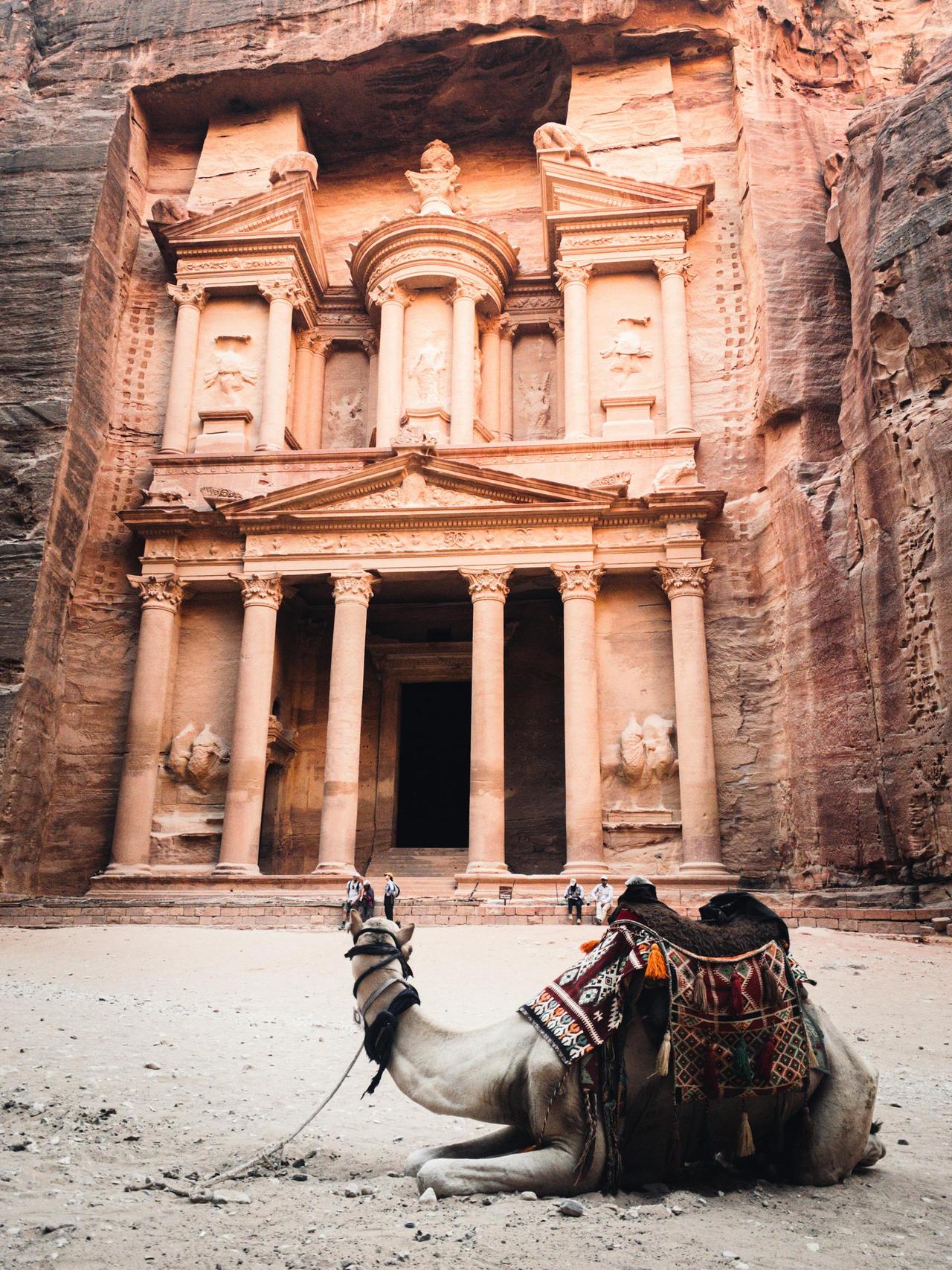


This article was automatically translated from the original Turkish version.
+1 More
Location | Jordan's Ma'an Governorate lies between the Gulf of Aqaba and the Dead Sea. | ||||||||
|---|---|---|---|---|---|---|---|---|---|
Foundation | Capital city established by the Nabataeans in the 4th century BCE. | ||||||||
Early Settlement | Neolithic settlement traces extending back to the 7000s BCE. | ||||||||
Rediscovery | Discovered in 1812 by the Swiss traveler Johann Ludwig Burckhardt. | ||||||||
Architecture and Structures | the Colonnaded Street. Qasr al-Bint the Royal Tombs the Amphitheater Al-Deir Al-Khazneh | ||||||||
UNESCO Status | Inscribed on the UNESCO World Heritage List on 6 December 1985. | ||||||||
Petra is an ancient city located in a strategic position between the Gulf of Aqaba and the Dead Sea, in today’s Ma’an Governorate of Jordan. Since antiquity, it has been known as a major center of trade and culture. Its location at the intersection of trade routes connecting the Red Sea with the ports of Damascus and the Mediterranean made Petra a significant hub of commerce and culture throughout history. The city is distinguished by its structures carved into reddish sandstone cliffs, advanced water management systems, and architectural diversity. Known for its half-carved, half-built structures, Petra is often called the “Rose City” due to the color of its sandstone cliffs.
Petra served as the capital of the Nabataean Kingdom in antiquity and continued to exist during the Roman and Byzantine periods. Owing to its rich architectural heritage, sophisticated water management systems, and long-standing commercial role, it was designated a UNESCO World Heritage Site in 1985. Today, Petra is recognized as one of Jordan’s most important cultural assets, both archaeologically and touristically.
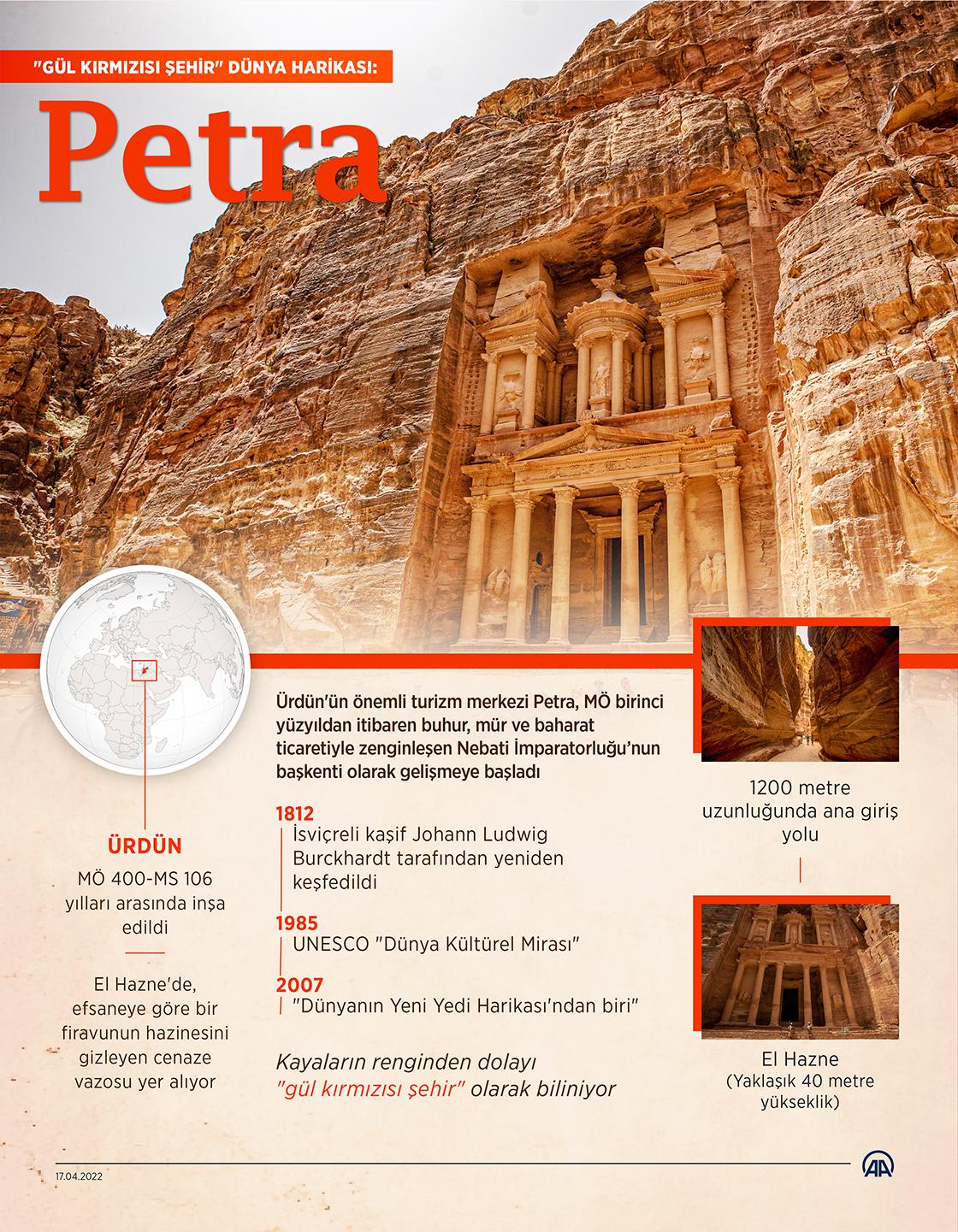
The Ancient City of Petra (Anadolu Agency)
Human settlement in Petra and its surroundings dates back to the Neolithic period. Archaeological finds from Beidha and nearby sites, dated to around 7000 BCE, indicate that the region was already a center of agriculture and settled life in very early times. During the Iron Age, the Petra region was inhabited by the Edomites and became a territory controlling key trade routes.
From the 4th century BCE, the Nabataeans, a nomadic Arab group, settled in the region and established Petra as their capital. During this period, the city grew wealthy through trade in incense, myrrh, spices, silk, and precious stones brought from Arabia.
The Nabataeans secured the trade routes, collected tolls from caravans, and invested their wealth in constructing monumental buildings. They also developed advanced water management systems in the arid landscape, using channels, cisterns, and dams to make the city habitable.
In 106 CE, during the reign of the Roman Emperor Trajan, Petra was incorporated into the Roman Empire and became the capital of the province of Arabia Petraea. During the Roman period, colonnaded streets, monumental gateways, and a theater were constructed in the city. However, beginning in the 3rd century, the growing importance of sea routes diminished the significance of overland trade routes, reducing Petra’s commercial role.
With the spread of Christianity in the 4th century CE, churches were built in Petra and some tomb structures were converted into places of worship. The Urn Tomb was used as a cathedral during this time. Earthquakes in 363 and 551 severely damaged the city’s water systems and buildings.
With the spread of Islam in the region, Petra declined to a small settlement. It briefly regained strategic importance during the Crusades but was nearly abandoned after the 12th century.
In 1812, the Swiss traveler Johann Ludwig Burckhardt, disguised in Arab attire, visited Petra and introduced it to the Western world. Travel accounts, drawings, and photographs from the 19th and 20th centuries helped establish the city’s fame in Europe. Systematic archaeological excavations began from the 20th century onward.
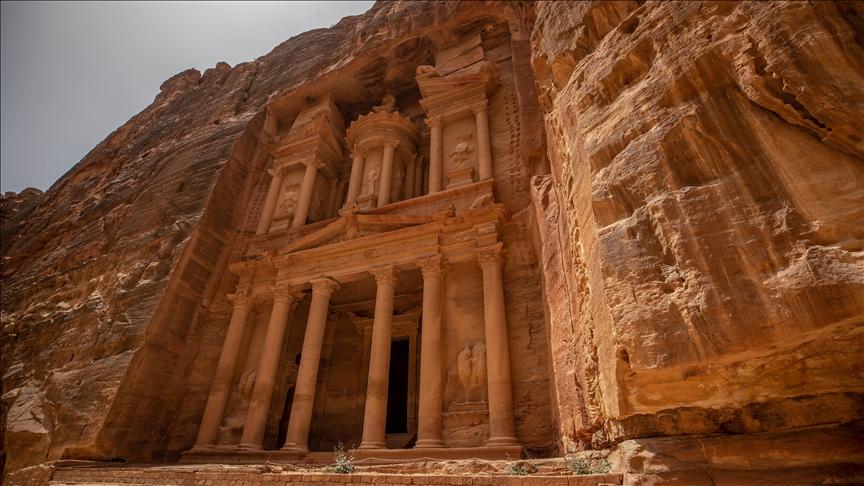
The Treasury (Al-Khazneh) within the Ancient City of Petra (Anadolu Agency)
Petra contains more than 600 rock facades. The city is renowned for its rock-cut tombs, monumental temples, and public buildings.
Due to its location, Petra became a major center for the trade of incense, myrrh, spices, silk, and precious stones from Arabia in antiquity. Caravans stopped in Petra, and the Nabataeans collected tolls from passing traders, generating substantial income.
Petra also produced agricultural goods. Thanks to its advanced irrigation systems, gardens and farmland were established within the city. During the Roman period, Petra began to lose its former prominence as maritime trade routes gained importance. This decline was accelerated by earthquakes, leading to economic collapse.
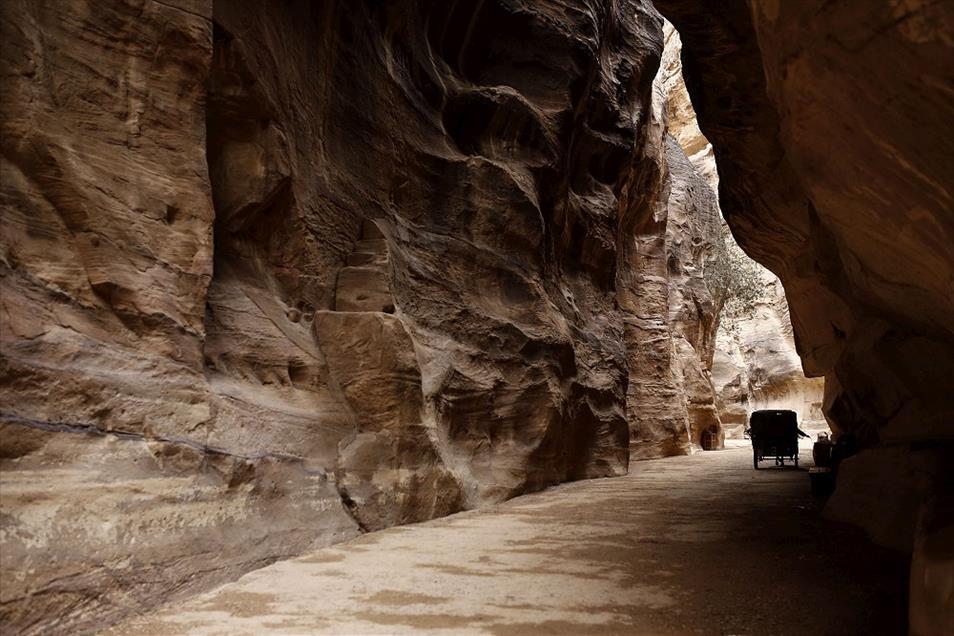
The 1200-Meter-Long Main Entrance Way (Anadolu Agency)
Petra’s recognition in the Western world began with Burckhardt’s visit in 1812. The rediscovery initiated in 1812 was documented by travelers, artists, and explorers in the 19th century, sparking European interest. Systematic excavations began in 1929 under the direction of Agnes Conway, George Horsfield, and Tawfiq Canaan, marking the start of modern archaeological work.
From the 1950s onward, systematic excavations were conducted through collaboration between the British School of Archaeology, Brown University, and Jordan’s Department of Antiquities. Structures such as the Great Temple, the Byzantine Church, and the Temple of the Winged Lions were studied. To date, only a small portion of the city has been excavated, with the majority still buried underground.
Petra was inscribed on the UNESCO World Heritage List on 6 December 1985. The site was evaluated under criteria (i), (iii), and (iv) for its unique rock-cut architecture, advanced water management systems, and layered historical significance.
UNESCO identifies tourism pressure, natural erosion, flooding, and infrastructure challenges as the primary threats to Petra’s preservation. To address these, various conservation and restoration projects are carried out by the Petra National Park and the Petra Regional Authority.
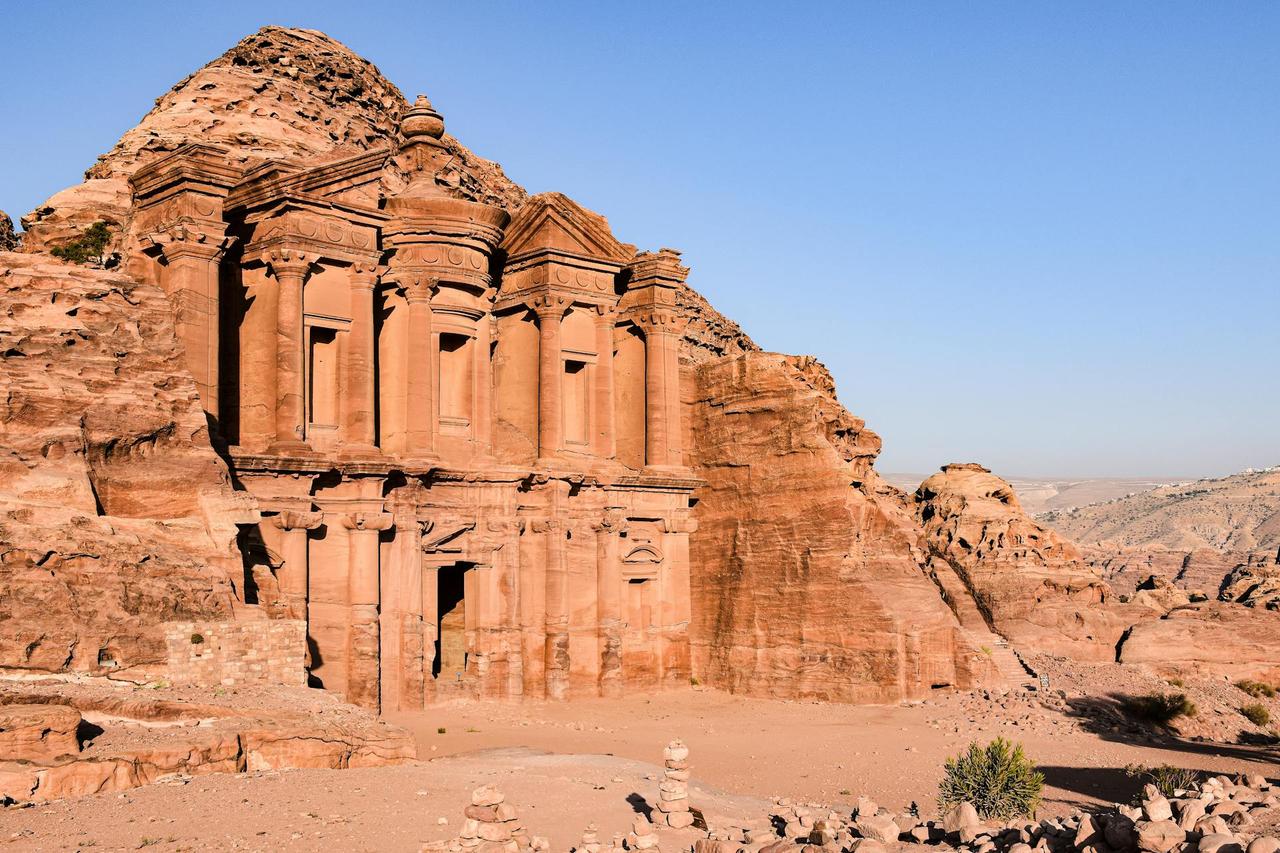
Ed-Deir (The Monastery) within the Ancient City of Petra (AXP Photography)
Petra is today Jordan’s most visited tourist destination. Its selection in 2007 as one of the “New Seven Wonders of the World” enhanced its international recognition. In 2019, over 1.1 million tourists visited the site.
While tourism is a vital source of income for the local population, excessive visitor numbers, the use of animals for tourism purposes, natural disasters, and environmental pressures complicate conservation efforts. Projects conducted in collaboration between the Petra National Foundation and UNESCO aim to ensure this important cultural heritage is preserved for future generations.
Petra also holds a significant place in popular culture. Films such as Indiana Jones and the Last Crusade, The Mummy Returns, and Transformers: Revenge of the Fallen were shot here, further increasing the city’s global visibility.
AXP Photography. "Petra in Jordan" Pexels. Accessed September 28, 2025. https://www.pexels.com/photo/petra-in-jordan-18717331/
American Museum of Natural History. “The Ancient City of Petra.” *AMNH.org*. Accessed September 28, 2025. https://www.amnh.org/explore/ology/archaeology/the-ancient-city-of-petra2
Anadolu Ajansı. "Turistlerin Uğrak Yeri Petra Antik Kenti." Accessed September 28, 2025. https://www.aa.com.tr/tr/pg/foto-galeri/turistlerin-ugrak-yeri-petra-antik-kenti/146#
Anadolu Ajansı. “Dağların Arasındaki ‘Harika’ Eser Petra.” Accessed September 28, 2025. https://www.aa.com.tr/tr/pg/foto-galeri/daglarin-arasindaki-quot-harikaquot-eser-petra/0/46486
Anadolu Ajansı. “Dünya Harikası Petra.” Accessed September 28, 2025. https://www.aa.com.tr/tr/pg/foto-galeri/dunya-harikasi-petra#
Anadolu Ajansı. “Gül-Kırmızı Şehir: Dünya Harikası Petra.” Accessed September 28, 2025. https://www.aa.com.tr/tr/dunya/gul-kirmizisi-sehir-dunya-harikasi-petra/2564282
Brown University / Joukowsky Institute. “History of Petra Excavations.” Joukowsky Institute / Brown University WebHelper. Accessed September 28, 2025. https://webhelper.brown.edu/joukowsky/Petra/excavations/history.html
Güler, Ayşe Betül. Petra Şehir Tarihi. Master's thesis, Marmara University Institute of Social Sciences, Department of Islamic History and Arts, Department of Islamic History, Istanbul, 2024.
History.com. "Petra." History.com. Accessed September 28, 2025. https://www.history.com/articles/petra
Petra Tourism Board / VisitPetra.jo. “History of Petra.” VisitPetra.jo. Accessed September 28, 2025. https://www.visitpetra.jo/en/page/12/History-of-Petra
Popovkin, Alexander. “Petra’daki Hazine Girişinin Yakınında Yatan Deve.” Pexels. Accessed September 28, 2025. https://www.pexels.com/tr-tr/fotograf/petra-daki-hazine-girisinin-yakininda-yatan-deve-15449777/
UNESCO World Heritage Centre. “Petra.” UNESCO World Heritage List. Accessed September 28, 2025. https://whc.unesco.org/en/list/326/
Wilke, Carolyn. “Lost City Petra.” National Geographic. Accessed September 28, 2025. https://www.nationalgeographic.com/history/article/lost-city-petra

Location | Jordan's Ma'an Governorate lies between the Gulf of Aqaba and the Dead Sea. | ||||||||
|---|---|---|---|---|---|---|---|---|---|
Foundation | Capital city established by the Nabataeans in the 4th century BCE. | ||||||||
Early Settlement | Neolithic settlement traces extending back to the 7000s BCE. | ||||||||
Rediscovery | Discovered in 1812 by the Swiss traveler Johann Ludwig Burckhardt. | ||||||||
Architecture and Structures | the Colonnaded Street. Qasr al-Bint the Royal Tombs the Amphitheater Al-Deir Al-Khazneh | ||||||||
UNESCO Status | Inscribed on the UNESCO World Heritage List on 6 December 1985. | ||||||||
History
Early Settlements
Nabataean Period
Roman Period
Byzantine and Later Periods
Rediscovery
Architecture and Structures
Economy and Trade
Archaeological Research
UNESCO World Heritage Status
Petra Today