


This article was automatically translated from the original Turkish version.
+1 More
Phantom limb pain is the sensation of pain in a limb that has been amputated, as if it were still present. This condition most commonly occurs in limbs such as the arm or leg that have been removed, and individuals may experience sensations such as burning, stabbing, cramping, or itching in the amputated area. The brain continues to generate signals related to a limb that no longer exists physically, as it maintains its perception of bodily integrity. Phantom limb pain affects 60 to 80 percent of individuals who have undergone amputation and can significantly impair quality of life.
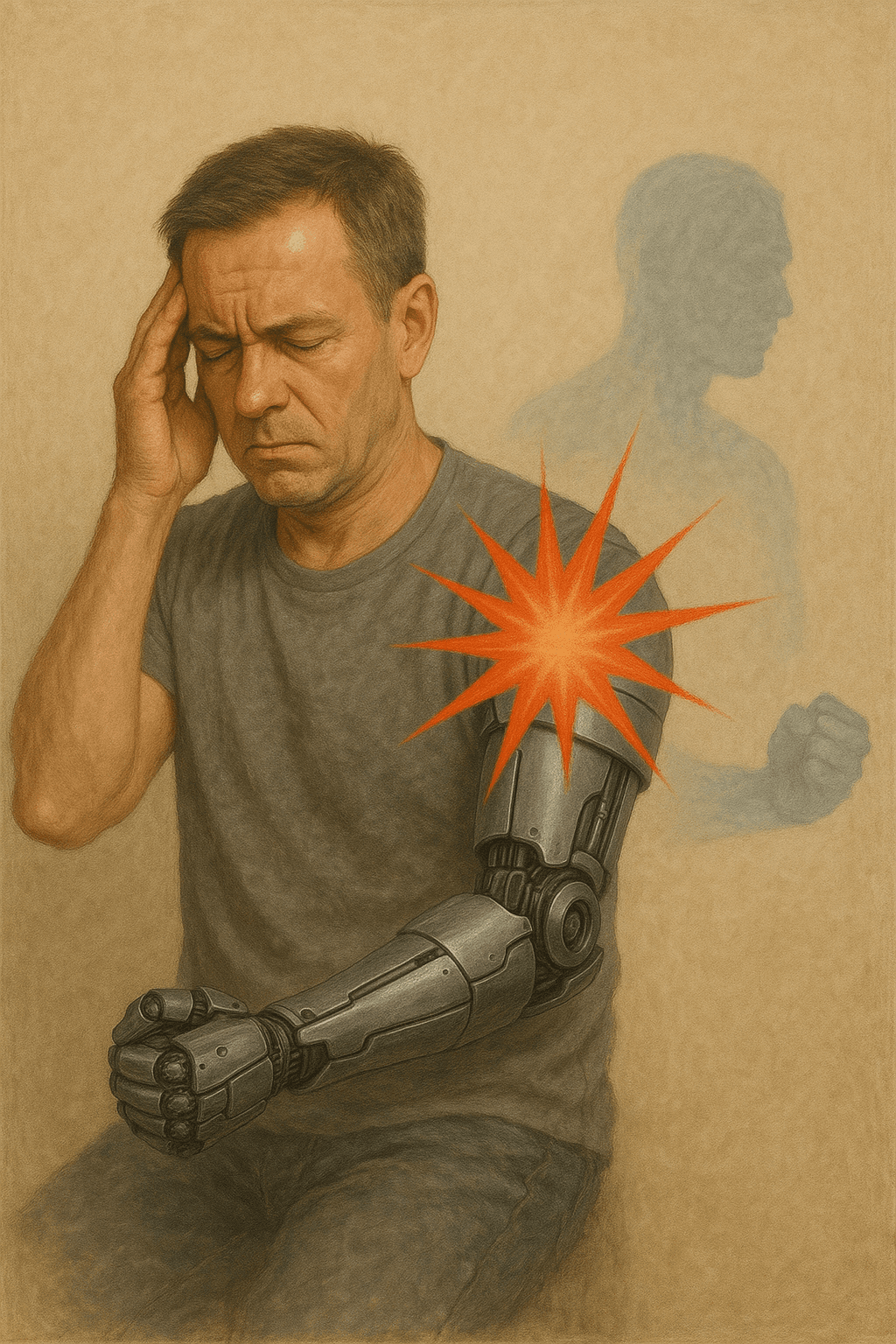
A visual representation of phantom limb pain. (Generated by artificial intelligence.)
Phantom limb pain is not merely a neurological condition but also a perceptual and psychological phenomenon. The brain continues to perceive the missing limb as present, and this misperception leads to the sensation of pain. Long-term psychological support can be decisive in helping individuals cope with this condition.
Warning: The content in this article is provided solely for general encyclopedic informational purposes. The information here should not be used for diagnosis, treatment, or medical advice. Before making any decisions regarding health, you must consult a physician or qualified healthcare professional. The author and KÜRE Encyclopedia assume no responsibility for any consequences arising from the use of this information for diagnostic or therapeutic purposes.
Accessed May 13, 2025.
Accessed May 13, 2025.
Flor, H. (2002). Phantom-limb pain: characteristics, causes, and treatment. The Lancet Neurology, 1(3), 182–189.
Ramachandran, V.S., and Hirstein, W. (1998). The perception of phantom limbs. Brain, 121(9), 1603–1630.
Subedi, B., & Grossberg, G.T. (2011). Phantom limb pain: mechanisms and treatment approaches. *Pain Research and Treatment*, 2011, Article ID 864605. Accessed May 13, 2025.

Causes of Phantom Limb Pain
Treatment Methods
Pharmacological Treatment
Physical and Neurological Therapies
Psychotherapy and Neuromodulation
Psychological Dimension and Cognitive Impact