


+1 More

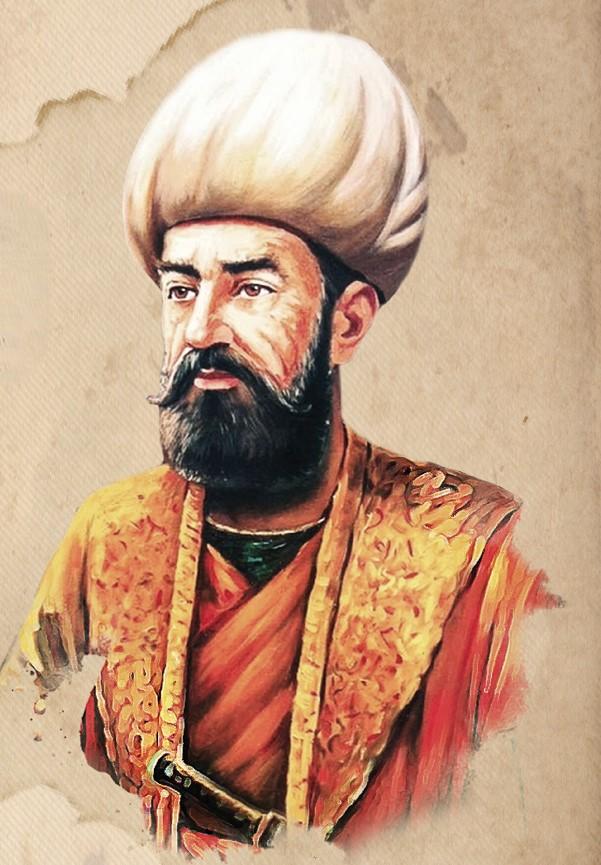
Pîrî Reis
The original name of Piri Reis is Muhyiddin Pîrî, and he is regarded as one of the most prolific figures in 16th-century Ottoman maritime history, both militarily and scientifically. He held high-ranking positions in the navy during the reigns of Yavuz Sultan Selim and Suleiman the Magnificent, but he gained his lasting fame through his works that entered the history of world cartography. His career, which spanned from piracy (gaza) to official state admiralship, ended with his execution amid political and military tensions in Cairo.
Exact details regarding the birth date and place of Pîrî Chief remain unclear due to limitations in archival sources. However, based on statements in the Kitâb-ı Bahriye and modern research, it is accepted that his family originated from Karaman and was relocated first to Istanbul and then to Gelibolu, the naval base of the era, under the population transfer policies of Fatih Sultan Mehmed. His approximate birth date is estimated between 1465 and 1470.【1】
His introduction to seafaring occurred under the guidance of his renowned Turkish admiral uncle, Kemal Reis. While still a young levend (volunteer sailor), he participated in independent raids along the coasts of Spain, France, Corsica, and Sardinia in the western Mediterranean between 1481 and 1494. This period enabled Piri Reis to gain practical knowledge of the Mediterranean geography, wind patterns, and port characteristics, forming the foundation for his later works.【2】
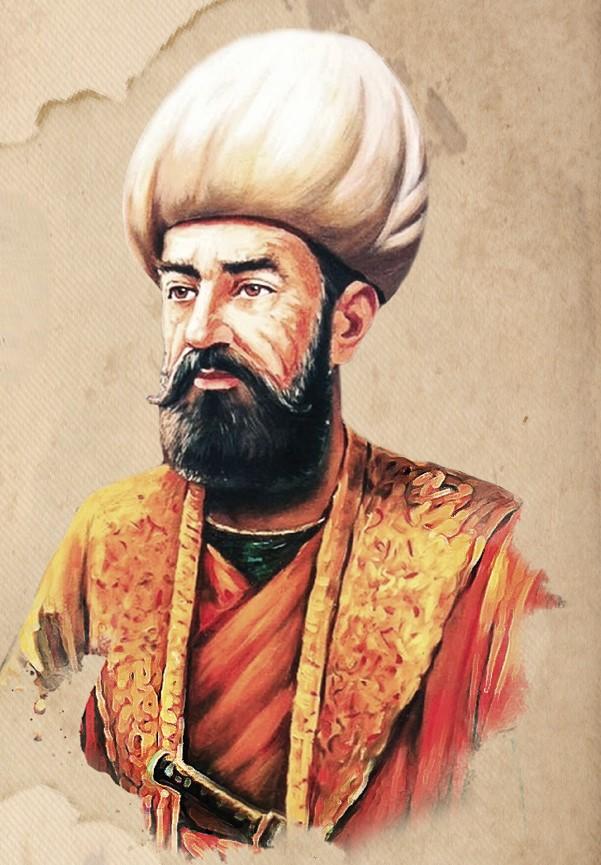
Portrait of Pîrî Reis (AA)
Bayezid II made a strategic decision to elevate the Ottoman navy to a level capable of competing with Venice in open seas by inviting experienced Turkish corsairs into state service. In response to this call, Piri Reis arrived in Istanbul in 1494 with his uncle Kemal Reis, presented himself to the sultan, and formally joined the Ottoman navy. This enrollment elevated his status from that of a levend to an official “Reis” receiving a state salary (ulûfe).
Piri Reis’s first major test in the navy was the Ottoman-Venetian Wars between 1499 and 1502. The battle of August 1499, known in naval history as the Battle of Zonchio (Sapienza Naval Battle), marked the first major open-sea engagement in which the Ottomans effectively employed galleys and artillery. Piri Reis served as a ship commander in Kemal Reis’s main fleet and played a key role in the destruction of the Venetian navy. Following the war, the strategic fortresses of Modon and Koron, known as Venice’s “Two Eyes,” along with Navarino, were captured. During these conquests, Piri Reis did not merely fulfill a military role; he also recorded the topography, defensive arrangements, and water depths of these ports, gathering data for his future work, the Kitâb-ı Bahriye.
During the rise of Ottoman maritime power, 1511 marked a turning point for Piri Reis. His uncle and patron, Kemal Reis, died when his ship sank in a violent storm in the Aegean Sea. Kemal Reis’s death deprived Piri Reis not only of a family elder but also of his strongest political supporter at court.【3】
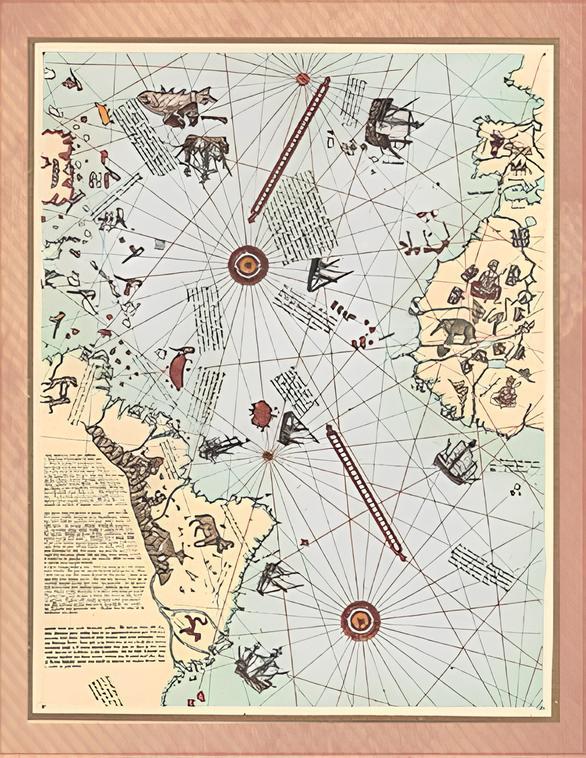
Pîrî Reis’s 1513 World Map (AA)
Due to the spiritual shock of this loss and shifting political circumstances, Piri Reis withdrew from active military campaigns and retreated to Gelibolu. However, this period was not one of passive mourning but of intense scholarly production. During these “retreat” years in Gelibolu (1511–1513), he organized notes from his voyages with and without his uncle, studied captured foreign maps, and produced the 1513 World Map, one of the most important works in the history of world cartography. Thus, Kemal Reis’s death paradoxically laid the groundwork for Piri Reis to shed his military identity and forge his identity as a cartographer.
Piri Reis’s place in the history of world science is defined not by his military successes but by his contributions to cartography.
Video on Pîrî Reis’s Kitâb-ı Bahriye (MEB)
Amid rising Portuguese threats in the Indian Ocean and the endangerment of the spice trade routes, in 1547 Piri Reis was appointed to the position of “Captaincy of India” (Admiral of Egypt). Although advanced in age at the time of his appointment, his familiarity with the region and extensive seafaring experience influenced this decision. His first strategic success in this role was the recapture of Aden from Portuguese-supported local forces in 1548–1549. The conquest of Aden brought the entrance to the Red Sea under Ottoman control and strengthened Ottoman authority in Yemen.【6】
However, the process that determined Piri Reis’s fate began with his Second Indian Campaign in 1552. Departing from Suez with a fleet of thirty vessels (galleys, galleons, and bastarnas) and approximately 850 soldiers, Piri Reis sailed through the Bab-el-Mandeb Strait toward the Omani coast and laid siege to Muscat, one of the key Portuguese strongholds. After a brief siege, the fortress of Maskat was captured, the Portuguese commander and garrison taken prisoner, and the fortifications demolished. This victory was significant in demonstrating the Ottoman navy’s operational capability in open seas.【7】
Following the victory at Maskat, Piri Reis turned toward Hormuz Island, considered the key to the Persian Gulf. During the siege of Hormuz, which began on 19 September 1552, Ottoman forces captured the city and seized substantial plunder, but they failed to take the inner citadel where the Portuguese had taken refuge. Sources indicate that Piri Reis did not bring heavy siege artillery capable of breaching the walls, and this was the primary technical reason for the siege’s failure. While the siege continued, intelligence arrived that the Portuguese Governor of Goa was approaching with a large fleet. According to Portuguese sources, the main reason Piri Reis lifted the siege was fear of the approaching Portuguese navy. The Ottoman claim that Piri Reis accepted a bribe from the Hormuzis and withdrew is not corroborated in Portuguese chronicles; on the contrary, the Portuguese expressed surprise at his sudden departure.【8】
Fearing that the Portuguese would block the exit of the Persian Gulf, Piri Reis lifted the siege and withdrew his fleet to Basra. However, in Basra, he encountered a serious conflict of authority and strategy with Kubad Paşa, the regional governor. Kubad Paşa accused Piri Reis of failing to adequately resist the Portuguese and was reluctant to provide the necessary logistical support to the fleet.
Recognizing that repairs to the fleet would take a long time and fearing that the Portuguese navy might blockade the Gulf of Basra, Piri Reis made a risky decision. He left the bulk of his fleet and soldiers in Basra and secretly set sail with three (some sources say two) galleys loaded with plunder, heading for Suez. During the voyage, one of the ships ran aground and broke apart. Piri Reis reached Egypt with the remaining vessels. His departure from Basra with the treasure, abandoning his fleet and soldiers, was reported to Istanbul as “military desertion” and “disobedience.” The complaint letters sent by Kubad Paşa to the central administration played a decisive role in the issuance of Piri Reis’s death warrant.【9】
Negative reports sent to Istanbul by Kubad Paşa, the Governor of Basra, and Dukakinzade Mehmed Paşa, the Governor of Egypt, led to Piri Reis being charged with “misuse of duty” and “abandoning the fleet.” His defense—that his withdrawal was a strategic maneuver to prevent the fleet from being trapped in the gulf—was not accepted, due to the influence of his political rivals and his advanced age of over eighty.
By order of Kanuni Sultan Süleyman, Pîrî Reis was executed in Cairo in late 1553 or early 1554. After his execution, the state confiscated all of Piri Reis’s property and transferred it to Istanbul. Piri Reis’s execution is viewed not merely as the consequence of a military failure but as the outcome of a conflict between the central administration and provincial bureaucracy.【10】
Anadolu Ajansı. "Türk denizcilik tarihinin parlayan yıldızı: Piri Reis." Infographic. December 8, 2019. Accessed December 16, 2025. https://www.aa.com.tr/tr/info/infografik/16463.
Bostan, İdris. "Yavuz Sultan Selim Dönemi’nde Kızıldeniz ve Akdeniz’de Osmanlılar". In Osmanlı Denizciliği ve Deniz Teşkilatı. İstanbul: Kültür Konseyi, 2022.
Bostan, İdris. Osmanlı Denizciliği ve Deniz Teşkilatı. İstanbul: Kültür Konseyi, 2022.
Celâlzâde Mustafa Çelebi. Tabakātü’l-memâlik ve Derecâtü’l-mesâlik. Edited by Petra Kappert. Wiesbaden: Franz Steiner Verlag, 1981.
Kâtib Çelebi. Tuhfetü’l-kibâr fî Esfâri’l-bihâr. Prepared by Orhan Şaik Gökyay. İstanbul: MEB Yayınları, 1973.
Ministry of National Education. "Pîrî Reis ve Kitâb-ı Bahriye." YouTube video, 0:59. December 10, 2021. Accessed December 16, 2025. https://www.youtube.com/watch?v=KPHrKeXs5Ko.
Orhonlu, Cengiz. "Hint Kaptanlığı ve Piri Reis". Belleten 34, sy. 134 (1970): 235-254.
Pîrî Reis. Kitâb-ı Bahriye. Tıpkıbasım. Ankara: Türk Tarih Kurumu Yayınları, 2002.
Pîrî Reis. Kitâb-ı Bahriye. İstanbul: Türk Tarih Kurumu, 1935.
Selen, Sadi. "Piri Reis’in Şimali Amerika Haritası Telifi 1528." *Marife* 9, no. 2 (Fall 2009): 271-274. https://dergipark.org.tr/en/download/article-file/2217444.
Sezgin, Fuat. İslam Bilim Tarihi Sohbetleri. İstanbul: Timaş Yayınları, 2010.
Soucek, Svat. "Pīrī Reʾīs". The Encyclopaedia of Islam, New Edition. Vol. VIII, 308-309. Leiden: Brill, 1995.
Soucek, Svat. Pīrī Reis and Turkish Mapmaking after Columbus: The Khalili Portolan Atlas. London: The Nour Foundation, 1996.
Uluslararası Pîrî Reis Sempozyumu Tebliğler Kitabı: 27-29 Eylül 2004. İstanbul, ts.
Önalp, Ertuğrul. "Piri Reis'in Hürmüz Seferi ve İdamı Hakkında Bir İspanyol Kaynağı". Ankara Üniversitesi Dil ve Tarih-Coğrafya Fakültesi Dergisi 50, sy. 2 (2010): 179-182.
Özbaran, Salih. The Ottoman Response to European Expansion: Studies on Ottoman-Portuguese Relations in the Indian Ocean and Ottoman Administration in the Arab Lands during the Sixteenth Century. Istanbul: The Isis Press, 1994.
İnan, Afet. Piri Reis'in Hayatı ve Eserleri. Ankara: Türk Tarih Kurumu Yayınları, 1983.
[1]
Afet İnan, Piri Reis'in Hayatı ve Eserleri (Ankara: Türk Tarih Kurumu Yayınları, 1983), 9-12; Svat Soucek, "Pīrī Reʾīs," The Encyclopaedia of Islam, New Edition, c. VIII (Leiden: Brill, 1995), 308.
[2]
Pîrî Reis, Kitâb-ı Bahriye, tıpkıbasım (Ankara: Türk Tarih Kurumu Yayınları, 2002), "Giriş"; İdris Bostan, Osmanlı Denizciliği ve Deniz Teşkilatı (İstanbul: Kültür Konseyi, 2022).
[3]
Kâtib Çelebi, Tuhfetü’l-kibâr fî Esfâri’l-bihâr, haz. Orhan Şaik Gökyay (İstanbul: MEB Yayınları, 1973), 28; Afet İnan, Piri Reis'in Hayatı ve Eserleri (Ankara: Türk Tarih Kurumu Yayınları, 1983), 11.
[4]
Svat Soucek, Pīrī Reis and Turkish Mapmaking after Columbus: The Khalili Portolan Atlas (London: The Nour Foundation, 1996), 45-50; Fuat Sezgin, İslam Bilim Tarihi Sohbetleri (İstanbul: Timaş Yayınları, 2010).
[5]
Pîrî Reis, Kitâb-ı Bahriye (İstanbul: Türk Tarih Kurumu, 1935), 518, 578.
[6]
Cengiz Orhonlu, "Hint Kaptanlığı ve Piri Reis," Belleten 34, sy. 134 (1970): 236-238; İdris Bostan, "Yavuz Sultan Selim Dönemi’nde Kızıldeniz ve Akdeniz’de Osmanlılar," içinde Osmanlı Denizciliği ve Deniz Teşkilatı (İstanbul: Kültür Konseyi, 2022), 584-586.
[7]
Salih Özbaran, The Ottoman Response to European Expansion: Studies on Ottoman-Portuguese Relations in the Indian Ocean and Ottoman Administration in the Arab Lands during the Sixteenth Century (Istanbul: The Isis Press, 1994), 115-118; Kâtib Çelebi, Tuhfetü’l-kibâr fî Esfâri’l-bihâr, haz. Orhan Şaik Gökyay (İstanbul: MEB Yayınları, 1973), 89.
[8]
Svat Soucek, "Pīrī Reʾīs," The Encyclopaedia of Islam, New Edition, c. VIII (Leiden: Brill, 1995), 308-309; Ertuğrul Önalp, "Piri Reis'in Hürmüz Seferi ve İdamı Hakkında Bir İspanyol Kaynağı," Ankara Üniversitesi Dil ve Tarih-Coğrafya Fakültesi Dergisi 50, sy. 2 (2010): 179-182.
[9]
Celâlzâde Mustafa Çelebi, Tabakātü’l-memâlik ve Derecâtü’l-mesâlik, nşr. Petra Kappert (Wiesbaden: Franz Steiner Verlag, 1981), vr. 482a-483b; Orhonlu, "Hint Kaptanlığı," 245-248.
[10]
Cengiz Orhonlu, "Hint Kaptanlığı ve Piri Reis," Belleten 34, sy. 134 (1970): 235-254; Uluslararası Pîrî Reis Sempozyumu Tebliğler Kitabı: 27-29 Eylül 2004 (İstanbul, ts.), 112-120.

Pîrî Reis
Birth, Family, and Youth
Transition to the Ottoman Navy and Wars
Scientific Works and Cartographic Achievements
Admiralship of India and Final Campaign
Trial and Execution