


This article was automatically translated from the original Turkish version.
Polar air systems are fundamental meteorological processes that describe the extreme weather conditions and atmospheric circulation patterns at Earth’s northern and southern extremes. These systems form through the combination of polar-specific conditions such as low temperatures high pressure and extensive ice and snow cover. Both the Arctic and Antarctic regions play critical roles in the global atmospheric balance through their unique wind patterns and climatic arrangements. Understanding the structure of polar air systems helps explain not only the climate of these regions but also weather phenomena at lower latitudes and the dynamics of global climate change.
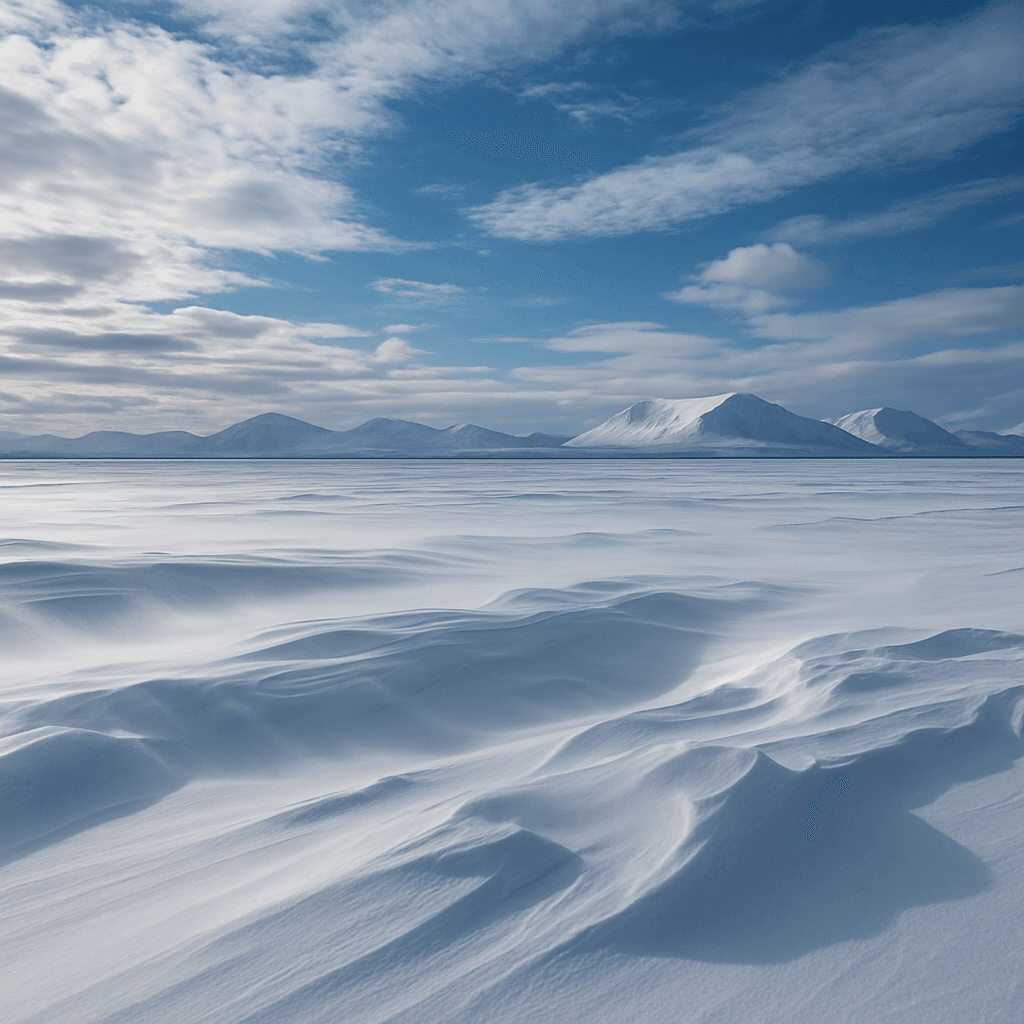
Polar Air Systems and Winter Atmosphere (Generated by Artificial Intelligence.)
One of the defining features of polar air systems is the presence of strong high-pressure areas that persist throughout the year. These areas commonly referred to as “polar anticyclones” form large stable air masses over the Arctic and Antarctic regions. For much of the year the combination of low temperatures and net radiative cooling causes air to become denser and surface pressure to rise. As a result stable and calm atmospheric conditions prevail at the surface over the poles.
The primary cause of these high-pressure areas is prolonged darkness during the polar night and continuous heat loss from the surface. Air in the lower atmosphere cools becomes heavier and sinks toward the surface. This process creates a thick stable atmospheric layer known as a temperature inversion: contrary to the usual decrease in temperature with altitude the air near the surface is colder than the air above it.
Polar high-pressure areas also influence horizontal air movement. Due to anticyclonic circulation air flows clockwise in the Northern Hemisphere and counterclockwise in the Southern Hemisphere. These flows limit the transport of heat and moisture and contribute to the long-term stability of polar air masses. This condition strengthens cold air reservoirs in polar regions and is one of the main drivers of climatic extremes.
The extent and intensity of polar high-pressure areas fluctuate throughout the year in response to changes in solar radiation and albedo. Although surface temperatures rise slightly during summer months due to increased sunlight these areas regain strength during the long polar night of winter. Thus polar air systems are significant climatic structures that remain dynamic throughout the year but generally exhibit a stable character.
Another key component of polar air system dynamics is polar low-pressure areas and associated cyclonic activity. Particularly just outside the polar zone at latitudes between 60° and 70° the regions where warm and cold air masses meet are known as “polar fronts.” These fronts are the birthplaces and development zones of cyclonic systems. Consequently polar regions are characterized not only by high-pressure areas but also by active cyclonic storms.
Polar cyclones form at polar fronts where temperature gradients intensify. When warm moist air masses encounter cold dry polar air intense low-pressure centers develop. This process is known as “cyclonic development” or “cyclonic deepening.” Especially during winter the collision between the intense cold air mass over the poles and warmer air masses from lower latitudes leads to rapid deepening of these cyclones.
Polar cyclones exhibit distinct characteristics in both the northern and southern polar regions. Arctic cyclones typically form as air masses originating from the Atlantic and Pacific reach the polar fronts. These cyclones are frequently observed along the coasts of Greenland and Siberia and can transport Arctic air masses to lower latitudes triggering events such as “cold air outbreaks.” Antarctic cyclones on the other hand develop more frequently and intensely over the Southern Ocean. These cyclones form the foundational components of the low-pressure belt encircling Antarctica.
Cyclonic activity shapes the climate and atmospheric dynamics of polar regions while also contributing to global atmospheric circulation. In particular the wind fields generated by polar cyclones influence sea ice movement and ocean currents. This reinforces the role of polar regions in the global energy balance. Additionally the moisture carried by polar cyclones supports snowfall and the renewal of ice sheets in these regions.
The seasonal distribution and frequency of polar cyclones are also significant in the context of climate change. Research indicates that cyclonic activity has increased in the Arctic in recent years and that this trend is accelerating sea ice melt. Especially during summer months polar cyclones can fragment melting ice sheets leading to faster melting. Therefore monitoring polar low-pressure areas and cyclones is a crucial component of climate change projections.
One of the fundamental building blocks of polar air systems is polar air masses distinguished by their unique physical properties. These air masses are typically cold dry and stable. During the long polar nights heat rapidly radiates from land and sea surfaces cooling the lower atmosphere and forming a thick layer of cold air. As a result polar air masses acquire high density and weight and remain stable at the surface.
Polar air masses also differ in their water vapor content. Due to low temperatures polar regions have limited atmospheric moisture capacity. Consequently polar air masses generally exhibit low relative humidity. This low moisture content results in clear visibility and dry conditions. During winter these cold dry air masses create ideal conditions for the formation of dense frost and ice crystals over land surfaces. Thus polar air masses define the “dry cold” character of the regional climate.
These air masses do not remain confined to polar regions; they extend into lower latitudes as part of the general atmospheric circulation. Especially during winter the cold dense nature of polar air masses enables them to move southward producing weather events known as “cold air outbreaks” or “polar outbreaks.” These events cause sudden temperature drops and snowstorms in mid-latitudes. Therefore the characteristics of polar air masses determine not only polar climate but also weather conditions at lower latitudes.
When polar air masses encounter polar fronts they trigger significant atmospheric interactions. A polar front is a dynamic boundary where warm moist air masses meet cold polar air. At this boundary upward motion and strong temperature contrasts initiate cyclonic activity. Thus polar air masses serve as the primary fuel for polar cyclones and storm systems. These interactions enhance the meteorological diversity and complexity of polar regions.
The relationship between polar air masses and thick ice and snow cover is also noteworthy. These air masses contribute to the preservation of permanent snow cover and help maintain local ecosystem balance. Furthermore temperature differences over sea ice influence the movement of air masses and the processes of sea ice melt. For example in regions where sea ice melts heat exchange occurs more rapidly potentially disrupting the stability of polar air masses. Therefore the dynamic structure of polar air masses is a critical focus in climate change research.
Polar air systems play a critical role in Earth’s global atmospheric circulation. These regions are essential for maintaining the planetary energy balance and establishing temperature gradients. The low temperatures and high albedo values at the poles regulate the global energy balance through atmospheric movements that transport excess heat away from the poles. These movements drive large-scale atmospheric circulation patterns that balance the temperature difference between the equator and the poles.
Specifically the high-pressure areas formed at the poles trigger the flow of cold air masses toward tropical regions. This movement directly influences the dynamics of the Hadley and Ferrel cells. Cold air streams originating from the poles interact with warm air at lower latitudes generating powerful frontal systems and jet streams. Jet streams facilitate rapid air movement between the polar zone and mid-latitudes playing a key role in the transport of weather systems.
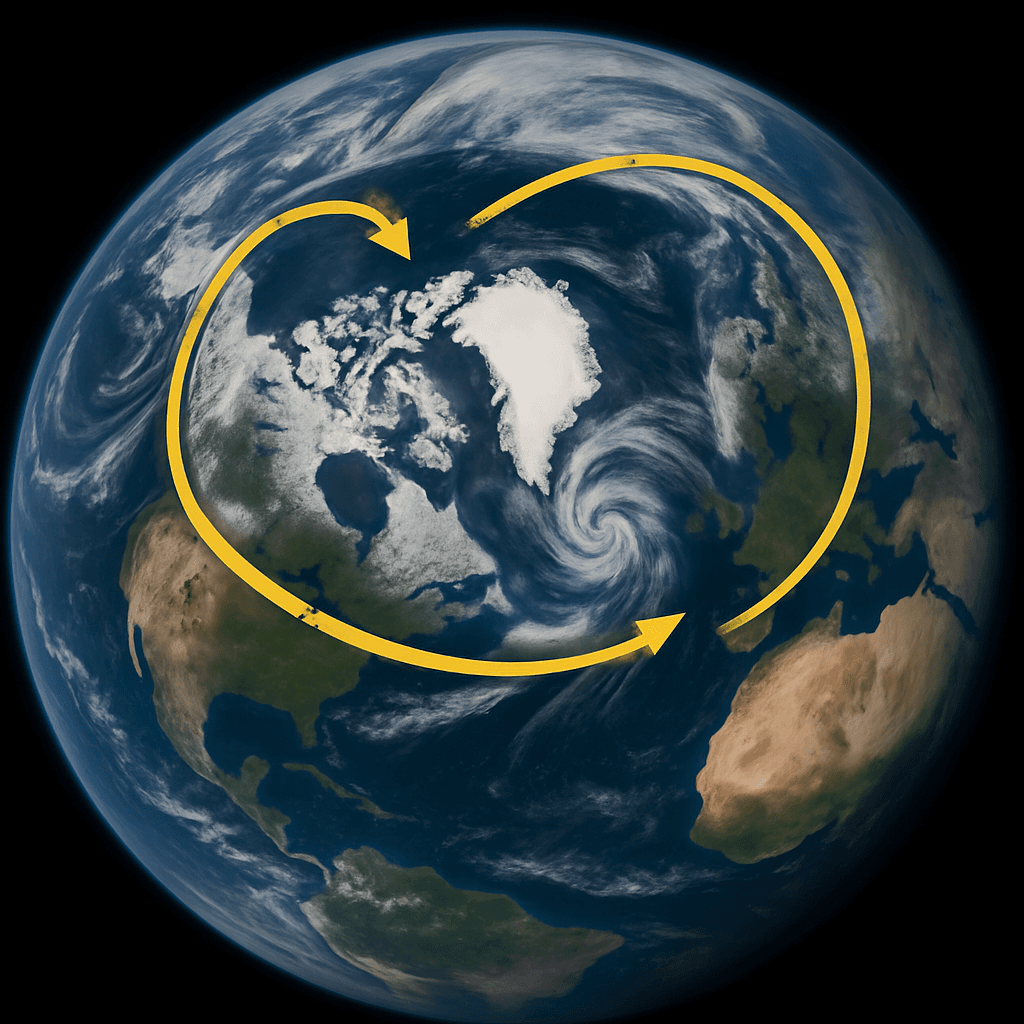
The Role of Polar Air Systems in Global Atmospheric Circulation (Generated by Artificial Intelligence.)
This interaction between polar air systems and jet streams directly contributes to the formation of storm belts in mid-latitudes. Especially during winter cold air masses from the poles collide with warm moist air masses at mid-latitudes generating powerful cyclones. These cyclones cause widespread snowstorms intense winds and temperature fluctuations. Thus polar air systems determine not only the climate of polar regions but also the winter weather patterns across both the Northern and Southern Hemispheres.
Moreover the role of polar air systems in global atmospheric circulation has become even more significant in the context of climate change. Global warming is accelerating ice melt in polar regions and weakening the stability of polar air systems. For example the reduction of Arctic sea ice causes shifts in polar high-pressure areas and increases the waviness of jet streams. This disruption impairs the poles’ function as “cold air reservoirs” and leads to an increase in extreme weather events at mid-latitudes.
The influence of polar air systems on global circulation is also linked to ocean currents. For instance strong westerly winds around Antarctica shape the direction and speed of Southern Ocean currents. These currents play a vital role in global heat transport and marine food chain dynamics. Thus polar air systems have become decisive forces not only in the atmosphere but also in ocean-atmosphere interactions.

Polar High-Pressure Areas and Thermal Dynamics
Polar Low-Pressure Areas and Cyclonic Activity
Characteristics and Interactions of Polar Air Masses
The Role of Polar Air Systems in Global Atmospheric Circulation