



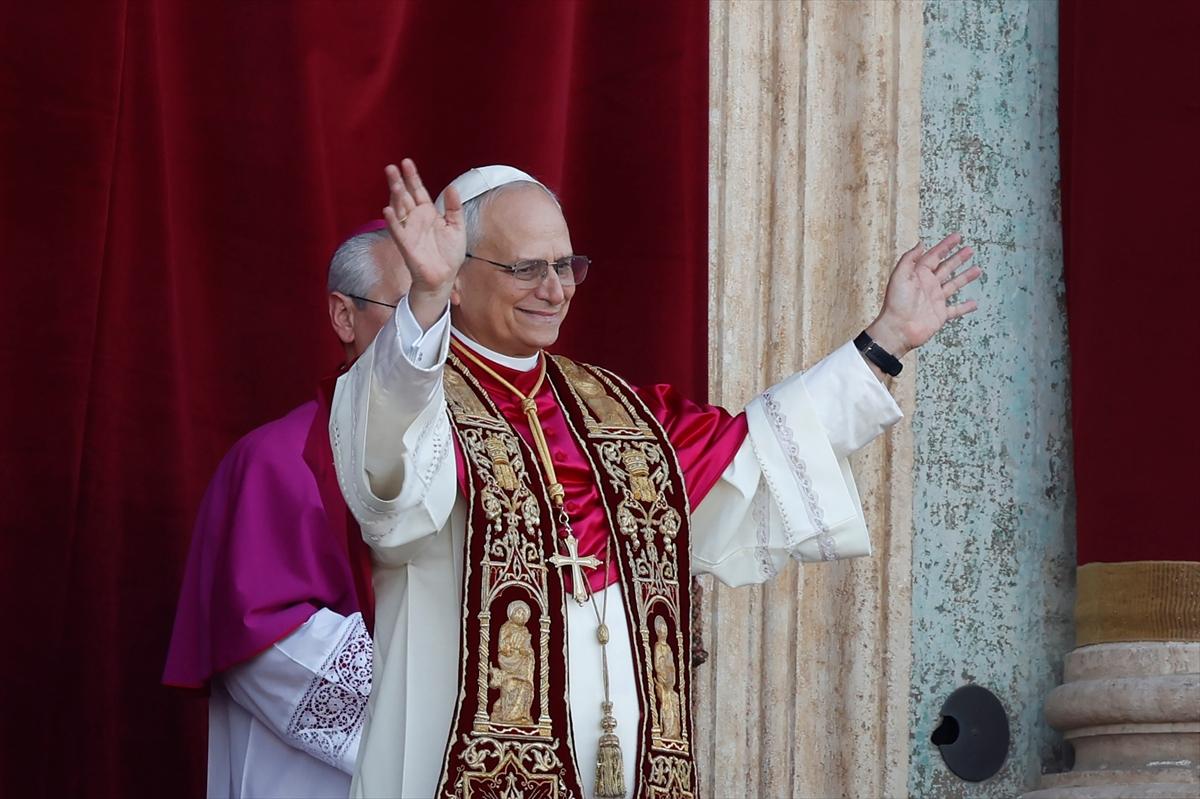
Pope XIV Leo (Robert Francis Prevost)
Doğum tarihi | 1955-09-14 | ||||||||
|---|---|---|---|---|---|---|---|---|---|
Place of Birth | Chicago, USA | ||||||||
Nationality | United States of America | ||||||||
Order | Order of Saint Augustine (O.S.A.) | ||||||||
Episcopate | Apostolic Administrator of Callao (2020) Bishop of Chiclayo (2015–2023) | ||||||||
Cardinalate | 30 September 2023 (deaconry of Santa Monica) | ||||||||
Date of Election as Pope | 2025-05-08 | ||||||||
Papal Name | Pope XIV Leo | ||||||||
Languages | Latin Italian Spanish English | ||||||||
Annesi | Mildred Martínez | ||||||||
Babası | Louis Marius Prevost | ||||||||
Pope Leo XIV is an American Catholic clergyman born on September 14, 1955 in Chicago. He was elected the 267th pope of the Catholic Church on May 8, 2025. He is the first American to hold the papal title and the first pope to come from the Order of Saint Augustine. He served for many years in Peru and has acquired Peruvian citizenship. Prior to his papacy, he presided over the Dicastery for Bishops and the Pontifical Commission for Latin America. He was named cardinal in 2023 and, following the 2025 Conclave, became the spiritual leader of the Church under the name Leo XIV.
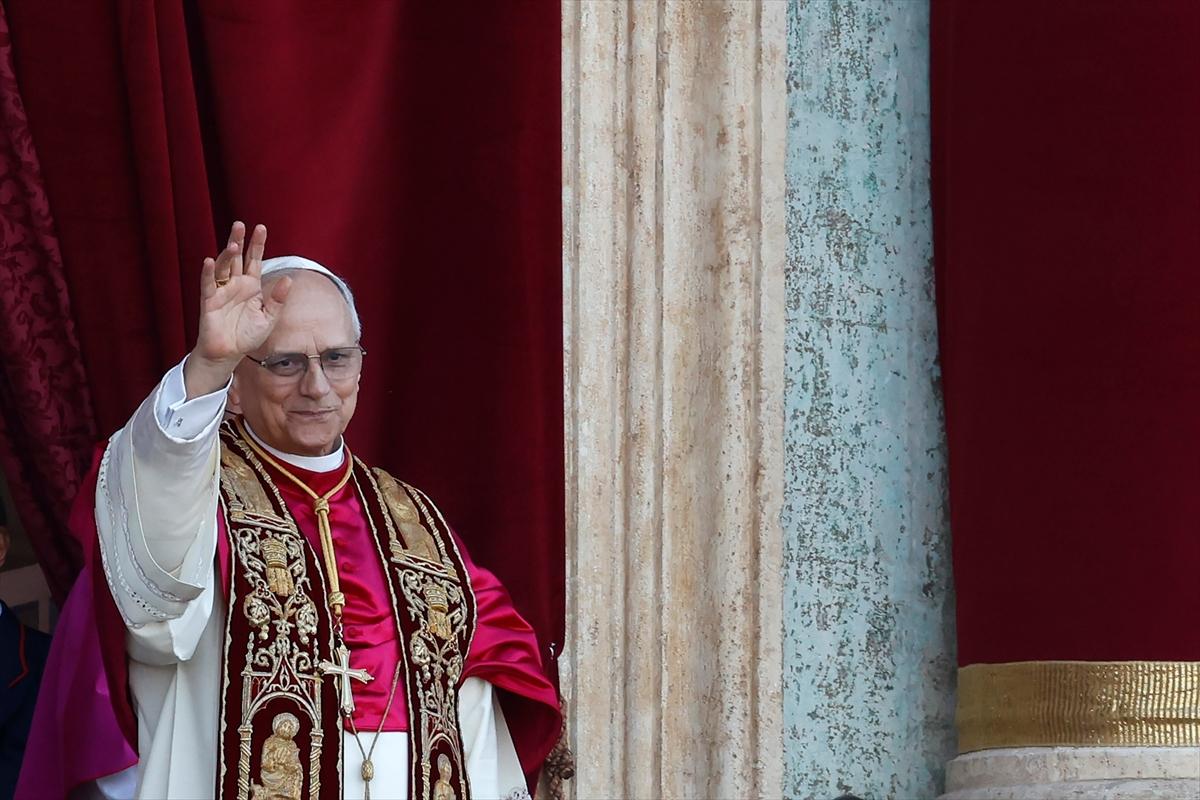
Pope Leo XIV, May 8, 2025. (Anadolu Ajansı)
Robert Francis Prevost was born on September 14, 1955 in the city of Chicago, Illinois, United States of America. His father, Louis Marius Prevost, was of French and Italian descent, while his mother, Mildred Martínez, was of Spanish origin. Prevost, who has two brothers, completed his primary and secondary education in Chicago.
Raised in a Catholic environment, Prevost served as an altar boy during his youth and became acquainted with the Augustinian tradition during this period. After secondary school, he studied at a minor seminary affiliated with the Order of Saint Augustine in Michigan. In 1977, he earned a bachelor’s degree in mathematics from Villanova University in Pennsylvania. He also received philosophical formation training at the same university.
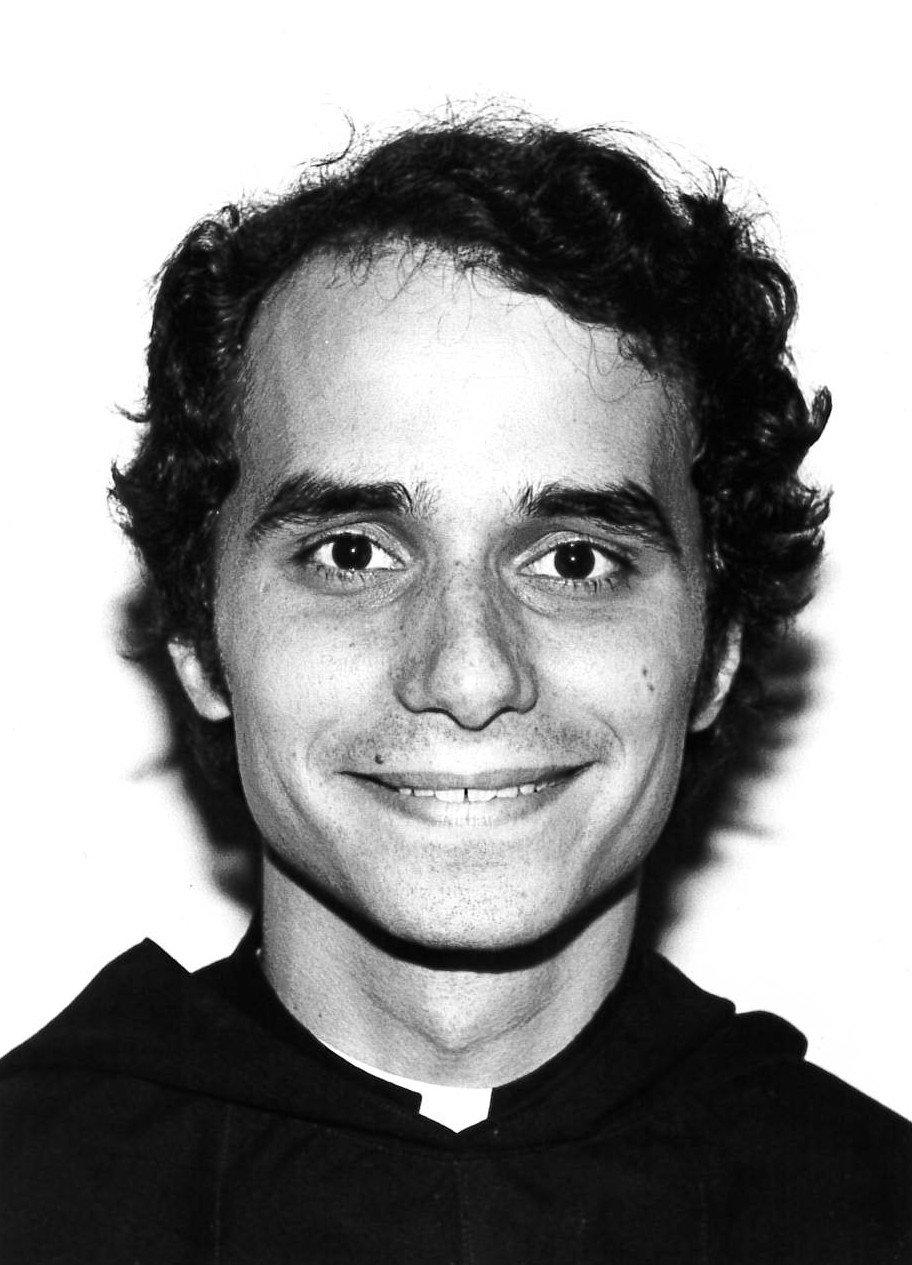
Robert Francis Prevost in his youth. (Midwest Augustinian)
In 1977, Prevost joined the Order of Saint Augustine (Ordo Sancti Augustini) and began monastic life at the “Our Lady of Good Counsel” province in Saint Louis. He made his first vows on September 2, 1978, and his perpetual vows on August 29, 1981. He continued his religious formation at the Catholic Theological Union in Chicago and was ordained a priest on June 29, 1982, in Rome at Saint Monica College by Archbishop Jean Jadot, a senior Vatican official.
Also in 1982, Prevost was sent by his order to Rome, where he pursued graduate and doctoral studies in canon law at the Pontifical University of Saint Thomas Aquinas (Angelicum). He completed his master’s degree in 1984 and his doctorate in 1987. His doctoral thesis was titled “The Role of Local Superiority in the Order of Saint Augustine.” During his studies, he attained proficiency in Latin, Italian and Spanish.
After joining the Order of Saint Augustine, Robert Francis Prevost was sent to Peru in 1985 to serve in the order’s missionary activities. He initially served in Chulucanas in the Piura region. After a brief assignment in this area, he moved to Trujillo in 1988 and assumed long-term responsibilities in the order’s formation programs for Latin America.
From 1988 to 1998, he served as director of formation at the order’s house in Trujillo. During the same period, beginning in 1992, he took charge of advanced education for trained members of the order. From 1988 to 1992, he served as local superior (prior) of the community, overseeing the education and administration of its members. From 1989 to 1998, he served as judicial vicar under the Archdiocese of Trujillo and also taught church law, patristic theology and moral theology at the San Carlos y San Marcelo Seminary.
During these years, he also carried out pastoral duties in the suburbs of Trujillo. In 1988, he was appointed to manage the center named “Our Lady Mother of the Church,” which later received official status as Santa Rita Parish. From 1992 to 1999, he also assumed administrative responsibility for another church named “Our Lady of Monserrat.”
In 1999, he returned to the United States and was elected provincial prior of the “Mother of Good Counsel” province in Chicago. After serving this position for two and a half years, he was elected in 2001 at the order’s general chapter to the highest administrative office in the order, the Prior General. He was re-elected to the same position in 2007 and held it until 2013.
During this international service from 2001 to 2013, as head of the Order of Saint Augustine’s general secretariat, he oversaw the education, administration and organizational structures of communities in various countries. These roles within the order brought him into direct contact with Vatican structures.
After completing his term as general superior of the Order of Saint Augustine, Robert Francis Prevost returned in 2013 to the affiliated province in Chicago, where he assumed administrative roles including formation responsibility, first counselor and provincial vicar. On November 3, 2014, Pope Francis appointed him Apostolic Administrator of the Diocese of Chiclayo in northern Peru. He entered his jurisdiction on November 7, 2014, and was consecrated bishop on December 12, 2014, at the Cathedral of Chiclayo.
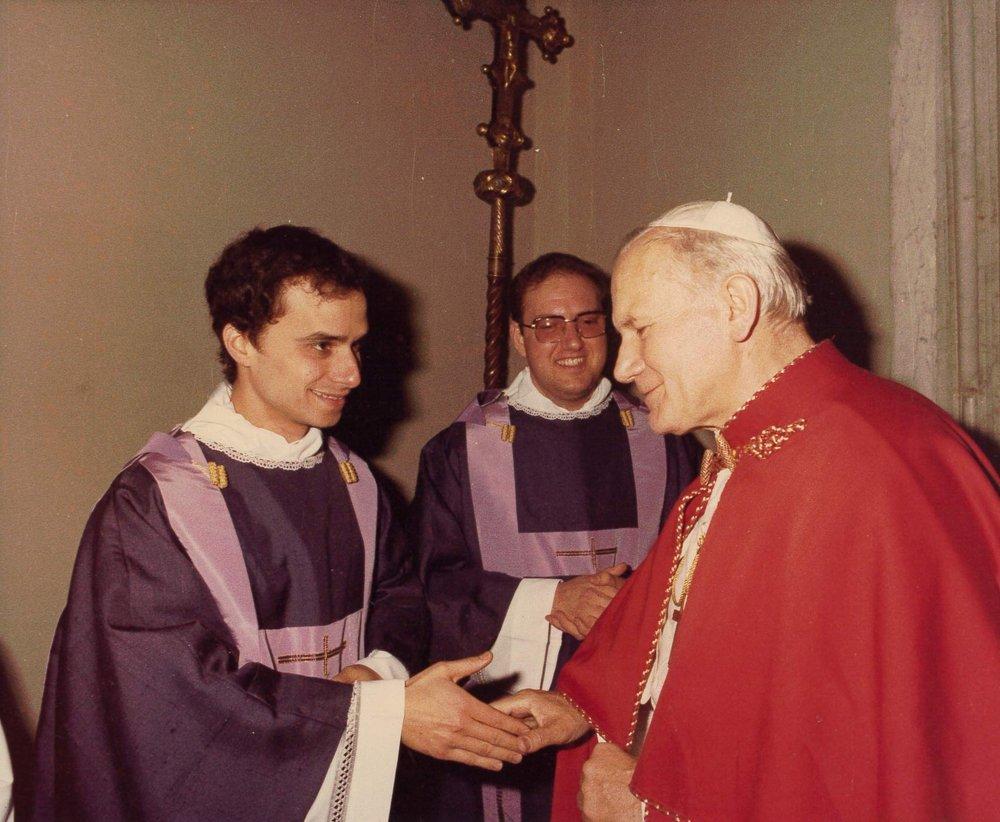
Photograph of Robert Prevost with Pope John Paul II. (Midwest Augustinian)
Within the same year, he received the title of Titular Bishop of Sufar, a historic episcopal see. On November 26, 2015, Pope Francis appointed him officially as Bishop of Chiclayo, a position he held until 2023.
During this period, he held various positions within the Peruvian Episcopal Conference. In 2018, he was elected second vice-president and assumed leadership roles in the Economic Council and the Commission on Culture and Education. In 2020, he was temporarily appointed Apostolic Administrator of the Diocese of Callao, which is dependent on Lima. Thus, for a specific period, he simultaneously administered the dioceses of Chiclayo and Callao. Throughout his service in Peru, he implemented programs related to clerical formation, cultural initiatives and diocesan governance. In 2015, he acquired Peruvian citizenship.
While serving as Bishop of Chiclayo, Robert Francis Prevost was appointed to various committees within the Vatican. On July 13, 2019, he was named a member of the Congregatio pro Clericis (Dicastery for Clergy), and on November 21, 2020, he was appointed to the Congregatio pro Episcopis (Dicastery for Bishops).
On January 30, 2023, Pope Francis appointed him Prefect of the Dicasterium pro Episcopis and also entrusted him with the presidency of the Pontificia Commissio pro America Latina (Pontifical Commission for Latin America). With this appointment, Prevost left his episcopal duties in Chiclayo and assumed his Rome-based role. He was also granted the title of archbishop at the same time.
On October 4, 2023, he was appointed a member of eight additional Vatican dicasteries: the Dicastery for Evangelization (First Section: General Evangelization and New Particular Churches), the Dicastery for the Doctrine of the Faith, the Dicastery for the Eastern Churches, the Dicastery for Clergy, the Dicastery for Institutes of Consecrated Life and Societies of Apostolic Life, the Dicastery for Culture and Education, the Dicastery for Legislative Texts and the Pontifical Commission for Vatican City State.
On September 30, 2023, during a consistory presided over by Pope Francis, he was created cardinal with the title of Santa Monica. He assumed formal responsibility for this diaconate on January 28, 2024. On February 6, 2025, he was promoted to the Order of Cardinal Bishops and became Titular Archbishop of Albano.
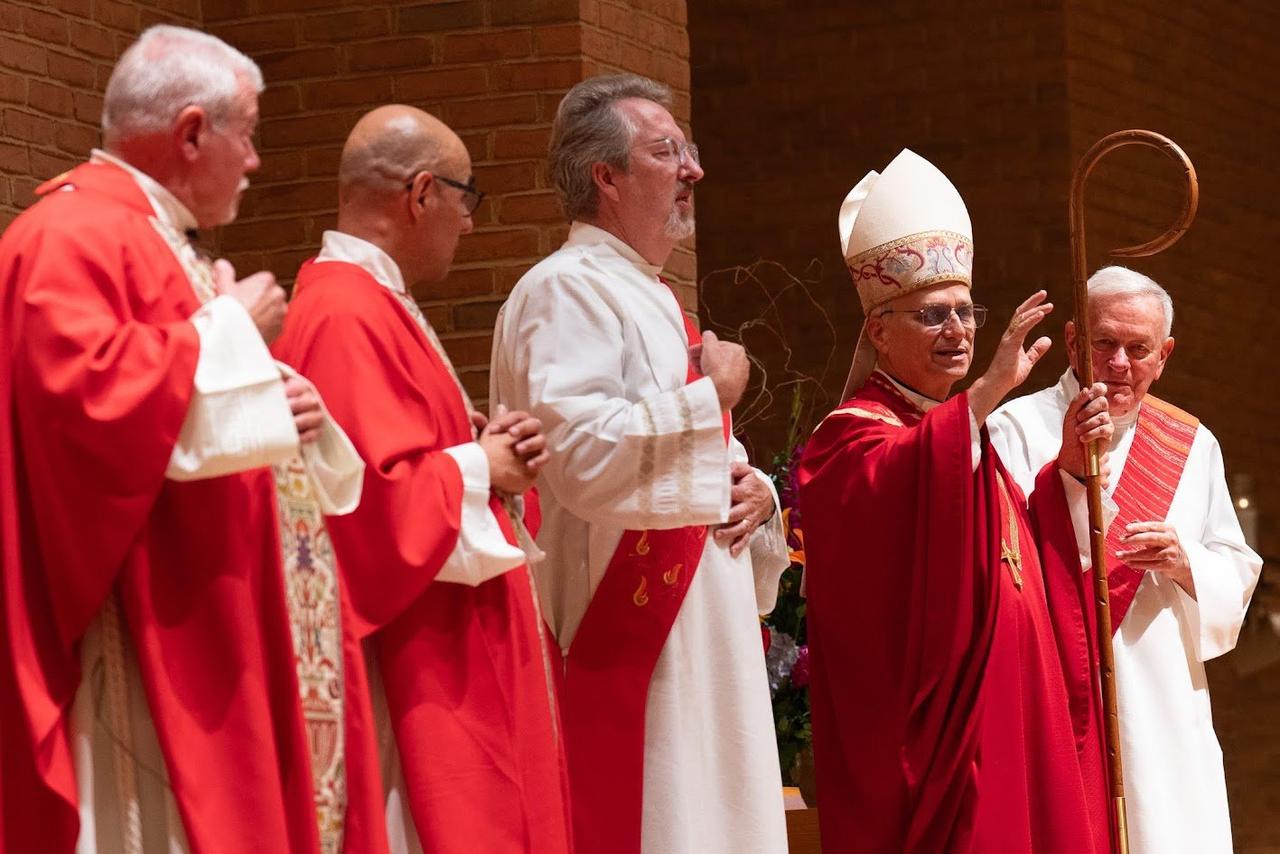
Robert Francis Prevost, 2024. (Midwest Augustinian)
During his cardinalate, he participated in both sessions of the 16th Ordinary Synod of Bishops held in 2023 and 2024. He also accompanied Pope Francis on his apostolic trips abroad as part of the official delegation. While serving as Prefect of the Dicastery for Bishops, he participated in the evaluation processes for episcopal appointments worldwide.
Robert Francis Prevost was elected the 267th pope of the Catholic Church on May 8, 2025, taking the name Leo XIV. The election took place during the conclave convened after the death of Pope Francis on April 21, 2025. On the second day of the conclave, following a ballot in the Sistine Chapel, Prevost obtained the required two-thirds majority and was proclaimed pope.
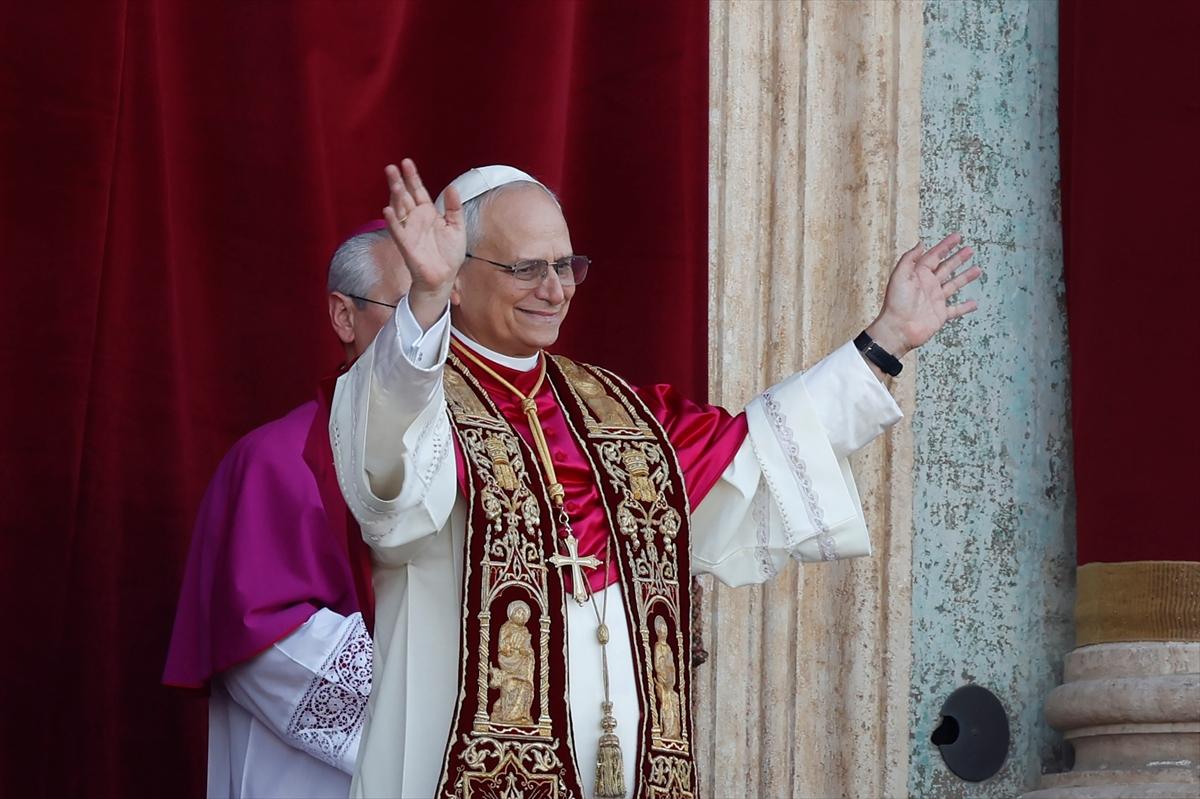
After the election, “Pope Leo XIV” greets the crowd gathered in Saint Peter’s Square, May 8, 2025. (Anadolu Ajansı)
White smoke rose from the chimney of the Sistine Chapel to signal the election of a new pope. Subsequently, Cardinal Protodeacon Dominique Mamberti announced from the central balcony of Saint Peter’s Basilica the traditional formula “Habemus Papam,” declaring that the elected pope was “Robertus Franciscus Cardinalis Prevost” and that he had chosen the name Leo XIV.
At the time of his election, Prevost was 69 years old, becoming the first pope born in the United States of America. The election was conducted by secret ballot with the participation of 133 cardinals, and Prevost secured at least a two-thirds majority to assume the office.
After his election, Pope Leo XIV addressed the crowd gathered in Saint Peter’s Square. He delivered his first address in Latin and Italian. In his inaugural speech, he paid tribute to his predecessor, Pope Francis, and extended greetings to the people of Peru, where he had served for many years.
Following the election of Pope Leo XIV as spiritual leader of the Catholic Church on May 8, 2025, congratulatory messages were issued by heads of state and government and religious representatives from various countries.
United States President Donald Trump, in a social media statement, welcomed the papal election and expressed his desire to speak with Pope Leo XIV. U.S. Secretary of State Rubio, in a written statement, emphasized the significance of this election for the Catholic world. Russian President Vladimir Putin, in a telegram, expressed his hope for the continuation of dialogue between the Vatican and Russia. German Chancellor Friedrich Merz highlighted that this election coincided with an important moment in the international context. Italian Prime Minister Giorgia Meloni viewed the pope’s election as a development occurring during a period of global crises.
Among Latin American countries, Peru’s statements drew attention to the pope’s past service in the country and his citizenship status. President Dina Boluarte recalled the pope’s ties to Peru. Colombian President Gustavo Petro pointed to the pope’s history in Latin America. Leaders of Mexico, Ecuador, Bolivia, Paraguay, Cuba, Guatemala and Honduras also shared similar messages of congratulations.
Statements were issued from the Middle East and North Africa by Qatar, the United Arab Emirates, Egypt and Palestine. The Emir of Qatar and leaders of the UAE sent messages emphasizing peace. Egyptian President Abdel Fattah el-Sisi expressed his wishes regarding the pope’s tenure. Palestinian President Mahmoud Abbas issued a congratulatory message containing statements on peace. Sheikh Ahmed el-Tayeb of Al-Azhar expressed his hope for the advancement of interfaith cooperation. Messages from Balkan countries and other regions of Europe, including representatives of Greece, Croatia, Slovenia, Montenegro and North Macedonia, conveyed good wishes regarding Pope Leo XIV’s papacy and referenced various social values.
Anadolu Ajansı. "Yeni Papa Hakkında Bilgiler (İnfografik)." Accessed May 9, 2025. https://www.aa.com.tr/tr/info/infografik/45930
Anadolu Ajansı. “ABD’li Kardinal Prevost Yeni Papa Seçildi.” Accessed May 9, 2025. https://www.aa.com.tr/tr/dunya/abdli-kardinal-prevost-yeni-papa-secildi/3561458
BBC News. “Pope Leo XIV: US Cardinal Robert Prevost Elected as New Pontiff.” BBC News. Accessed May 9, 2025. https://www.bbc.com/news/articles/c0ln80lzk7ko
Catholic News Agency. “Who Is Pope Leo XIV? A Bio of the First American Pope.” Catholic News Agency. Accessed May 9, 2025. https://www.catholicnewsagency.com/news/263963/who-is-pope-leo-xiv-a-bio-of-the-first-american-pope
College of Cardinals Report. “Robert Francis Prevost.” Accessed May 9, 2025. https://collegeofcardinalsreport.com/cardinals/robert-francis-prevost/
Conclavoscope. “Cardinal Robert Francis Prevost.” Accessed May 9, 2025. https://conclavoscope.com/en/cardinal/robert-francis-prevost
Vatican News. “Biography of Robert Francis Prevost, Pope Leo XIV.” *Vatican News*. Accessed May 9, 2025. https://www.vaticannews.va/en/pope/news/2025-05/biography-of-robert-francis-prevost-pope-leo-xiv.html
Vatican News. “Cardinal Elected Pope Takes Name Leo XIV.” Vatican News. Accessed May 9, 2025. https://www.vaticannews.va/en/pope/news/2025-05/cardinal-elected-pope-papal-name.html
Vatican Press Office. “Robert Francis Prevost.” Holy See Press Office – Biographies of Cardinals. Accessed May 9, 2025. https://press.vatican.va/content/salastampa/en/documentation/cardinali_biografie/cardinali_bio_prevost_rf.html
Villanova University. “Prevost Appointed Cardinal.” Villanova University Press Releases. Accessed May 9, 2025. https://www1.villanova.edu/university/media/press-releases/2023/prevost-appointed-cardinal.html

Pope XIV Leo (Robert Francis Prevost)
Doğum tarihi | 1955-09-14 | ||||||||
|---|---|---|---|---|---|---|---|---|---|
Place of Birth | Chicago, USA | ||||||||
Nationality | United States of America | ||||||||
Order | Order of Saint Augustine (O.S.A.) | ||||||||
Episcopate | Apostolic Administrator of Callao (2020) Bishop of Chiclayo (2015–2023) | ||||||||
Cardinalate | 30 September 2023 (deaconry of Santa Monica) | ||||||||
Date of Election as Pope | 2025-05-08 | ||||||||
Papal Name | Pope XIV Leo | ||||||||
Languages | Latin Italian Spanish English | ||||||||
Annesi | Mildred Martínez | ||||||||
Babası | Louis Marius Prevost | ||||||||
Family Origins, Early Life and Education
Augustinian Period and Religious Service
Episcopacy and the Chiclayo Years
Cardinalate and Duties in Rome
Election as Pope
International Reactions and Congratulations