

This article was automatically translated from the original Turkish version.
In the heart of Europe, at the very center of Rome, lies a state: Vatican. Though it covers only 0.49 km², this city-state is the smallest independent country in the world, yet its religious, cultural and political influence is undeniably immense. As the spiritual center of the Catholic world, Vatican attracts attention through its historical structures, religious leadership and unique system of governance.
Vatican is located west of Rome, the capital of Italy, near the Tiber River. This microstate, with an area of just half a square kilometer, is surrounded by high walls. Important structures such as St. Peter’s Basilica, the Sistine Chapel, the Vatican Gardens and the Apostolic Palace lie within its borders. The Vatican Gardens, with their lush greenery and sculptures, resemble a hidden paradise covering one third of the country.
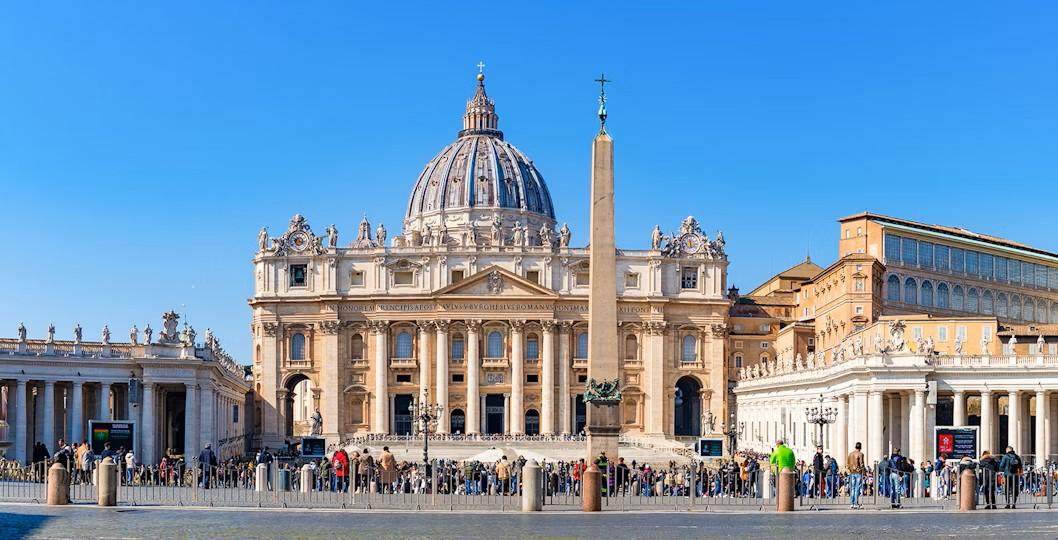
St. Peter’s Basilica (Vatican Museum)
Vatican shares the same climate as Rome. Summers are hot and dry, while winters are mild and rainy. Spring and autumn are the ideal times to visit. This climate preserves the vitality of the gardens and enables outdoor ceremonies to proceed without disruption.
Only about 800 people live in Vatican, making it the country with the smallest population in the world. However, do not be misled by this number; Vatican’s spiritual influence extends to billions of people worldwide. Citizenship is not inherited but granted for the duration of one’s service. This population consists of the Pope, cardinals, priests, Swiss Guards and a few hundred civilian employees.
Vatican is governed as a theocratic absolute monarchy. The head of state and spiritual leader is the Pope. All executive, legislative and judicial powers belong directly to the Pope. In this regard, Vatican has one of the most centralized systems in the world. Cardinals and the Pontifical Commission assist the Pope in administrative matters. The Governor of Vatican is responsible for day-to-day administration.
One of Vatican’s most intriguing processes is the papal election, known as the “Conclave.” When a Pope dies or resigns, cardinals under the age of 80 from around the world are summoned to Vatican. The election takes place inside the Sistine Chapel, completely isolated from the outside world. Voting occurs daily until a candidate secures a two-thirds majority, at which point a new Pope is elected.
At the conclusion of the election, white smoke emerging from the chimney signals that a Pope has been chosen, while black smoke indicates that no decision has yet been reached. When a new Pope is elected, he appears before the crowd in St. Peter’s Square and announces: “Habemus Papam” (We have a Pope!).
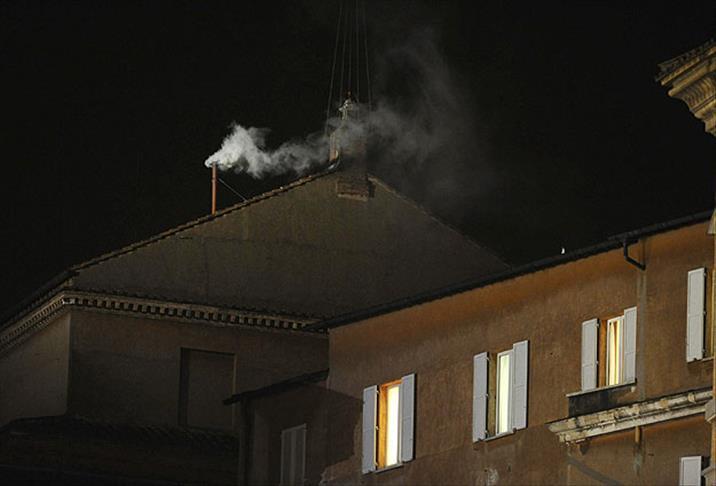
An image depicting the ritual announcing the election of a new Pope. (AA)
Although Latin is Vatican’s official language, Italian is used in daily administrative affairs. In addition, German, French and English are also widely spoken. Its official publication, the newspaper L’Osservatore Romano, and Vatican Radio broadcast in many languages to reach a global audience.
There is no agriculture or industry in Vatican. Its economy revolves around donations, tourism and publishing. Revenue is generated primarily from museum entrance fees, souvenirs, donations from the Catholic faithful (especially “Peter’s Pence”), and sales of newspapers and books. Vatican uses the euro as its currency and also minting a limited number of its own euro coins.
Vatican holds a unique position in the history of art. Michelangelo’s famous ceiling frescoes in the Sistine Chapel, Raphael’s frescoes, Bernini’s sculptures and the Vatican Museums demonstrate the immense cultural heritage contained within this small state. Millions of tourists visit annually to witness these artistic masterpieces. Religious ceremonies, rituals and holy days are also held here and broadcast live around the world.
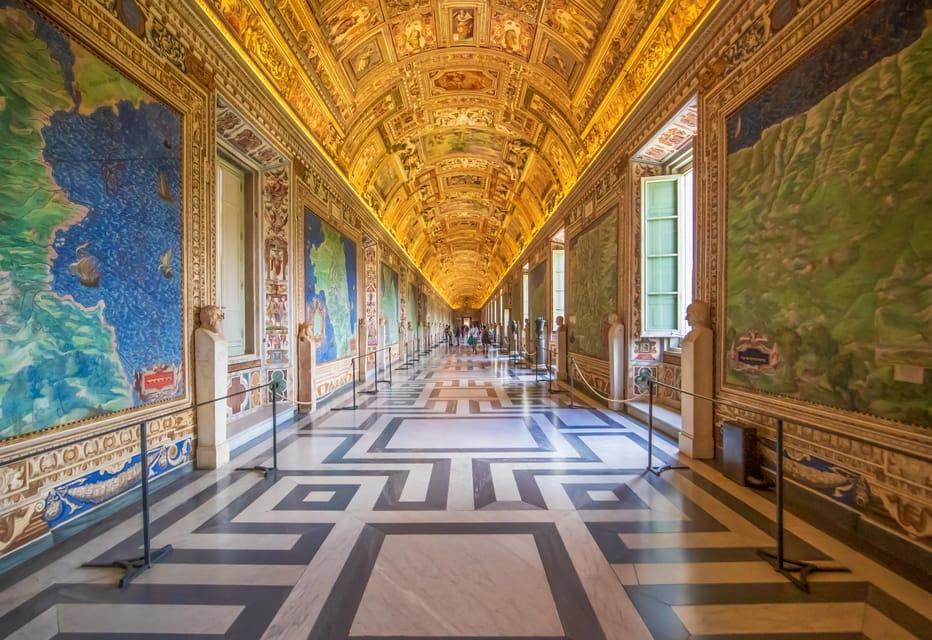
Vatican Museums and the Sistine Chapel (Rome Site)
Treccani. "Treccani, il portale del sapere - Treccani." Accessed April 22, 2025. https://www.treccani.it/.
“St. Peter's Basilica.” Vatican Museums Tickets. December 20, 2024. Accessed April 22, 2025. https://www.vatican-museums.com/st-peters-basilica/?tm=tt&ap=gads&aaid=adaRQW1JfXz9S.
“The Holy See.” Vatican.Va. Accessed April 22, 2025. https://www.vatican.va/content/vatican/en.html.
“Vatican City | History, Map, Flag, Location, Population, & Facts.” Encyclopedia Britannica. April 22, 2025. Accessed April 22, 2025. https://www.britannica.com/place/Vatican-City.
“Vatican Museums & Sistine Chapel.” RomeSite.com, by BWDTravelGuides.com. Accessed April 22, 2025. https://romesite.com/vatican-museums-sistine-chapel.html.
“Yeni Papa Seçildi.” Anadolu Ajansı. Accessed April 22, 2025. https://www.aa.com.tr/tr/dunya/yeni-papa-secildi/265594.
A State in the Heart of Rome: The Geographic Location of Vatican
Mediterranean Climate with Warm and Mild Days
Limited Population, Infinite Influence
A Governance Where Religion and State Are United
Papal Election: Behind Closed Doors in the Sistine Chapel
Latin Is Spoken, Italian Is Lived
Its Economy Draws Strength From Faith, Not Production
Capital of Culture and Art
