
badge icon

This article was automatically translated from the original Turkish version.

Article

Porcini Mushroom (Boletus edulis)

Quote
Kingdom (Regnum)
Fungi
Phylum (Divisio)
Basidiomycota
Class (Classis)
Agaricomycetes
Order (Ordo)
Boletales
Family (Familia)
Boletaceae
Genus (Genus)
Boletus
Species (Species)
Boletus edulis Bull

Porcini Mushroom (Boletus edulis) is a large, fleshy, and tubed edible fungus species belonging to the phylum Basidiomycota, also known as “bear mushroom” or “bread mushroom.” This species develops in Türkiye’s natural forested areas through ectomycorrhizal symbiosis with oak, beech, and pine trees. It serves both as an ecological contributor to forest balance and as a natural resource of economic importance in the food and pharmaceutical industries due to its high nutritional and functional value. With a cap diameter reaching up to 30 cm, this species is notable for its aromatic profile, dense texture, and bioactive compounds. In Türkiye, it is not cultivated and is considered solely a wild-harvested product; it is frequently studied in scientific research due to its potential as a functional food and nutraceutical.


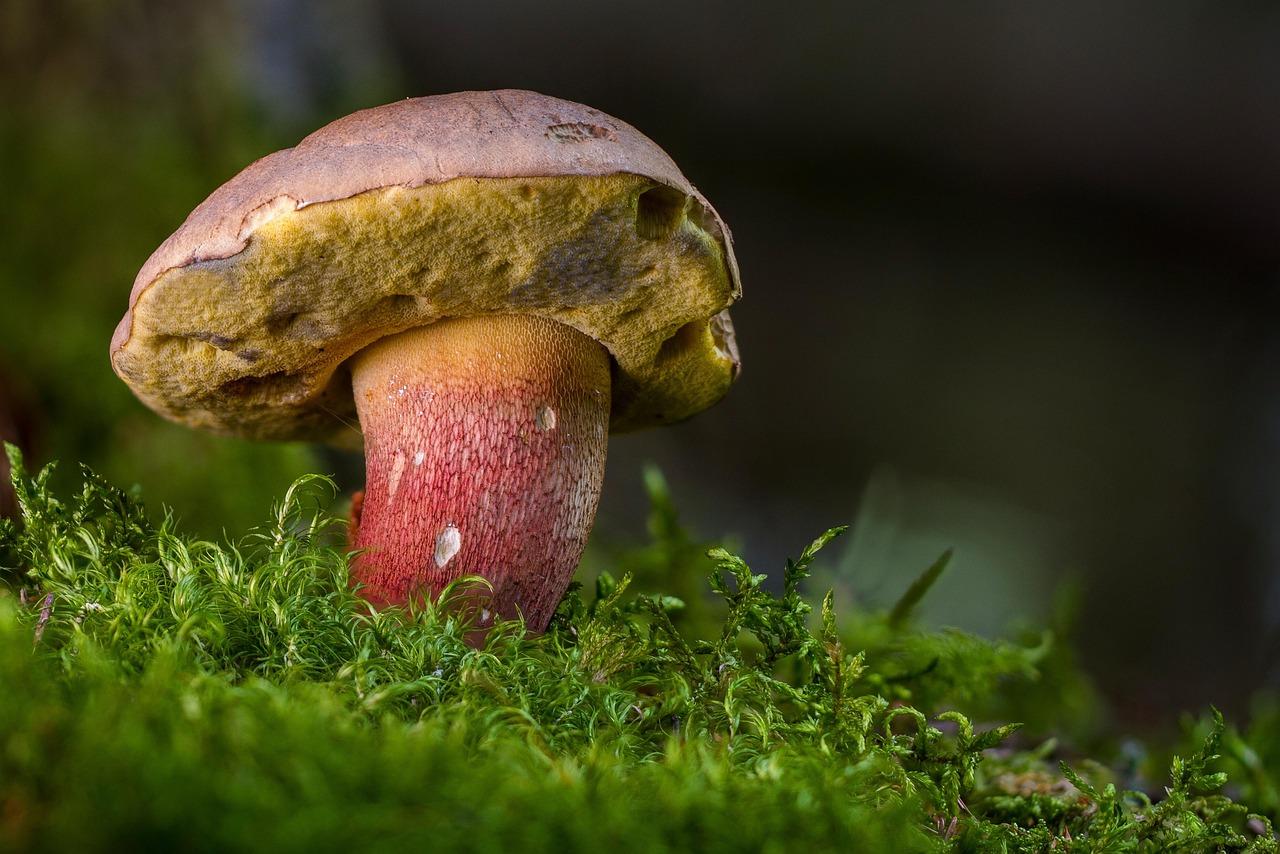
Porcini Mushroom (Pixabay)

Morphological Characteristics

  • Cap (Pileus): Initially hemispherical, becoming convex to flat with maturity; diameter ranges from 7–30 cm, color is chestnut to pale brown.
  • Tube Layer: Cream-white when young, turning yellowish-green as it matures; tubes extend from beneath the cap to the stem margin.
  • Stem (Stipe): Cylindrical, 3–20 cm long and 3–4 cm thick; may exhibit a golden-netted pattern.
  • Sporprint: Cream to yellowish in color.

Ecology & Natural Habitat

  • B. edulis is an ectomycorrhizal species that forms symbiotic relationships with trees such as oak, beech, and pine.
  • It thrives in cool, moist forest environments; in Türkiye, it naturally grows especially in the Black Sea, Marmara, and inland regions.

Seasonal Cycle & Harvesting Methods

  • Appears in spring (May–June) as the “summer bolete” and reappears in autumn (September–October) as the “winter bolete.”
  • Harvesting is typically done early in the morning. For sustainable collection, a clean cut at the base of the stem is recommended.

Nutritional Value & Functional Compounds

  • Contains high levels of phenolic compounds, measured at 17.11 mg GAE/g dry matter in aqueous extracts.
  • High antioxidant capacity: exhibits strong free radical scavenging activity with ORAC values of 204.14 μmol TE/g and CUPRAC values of 314.00 μmol TE/g.
  • Displays antimicrobial activity against both Gram-positive and Gram-negative bacteria.
  • Contains bioactive compounds such as polyphenols, β-glucans, and ergosterol, contributing to potential health benefits.

Functional Health Effects

  • Antioxidant properties help reduce oxidative stress and may offer protection against chronic diseases.
  • Antimicrobial effects provide potential benefits in reducing infection risk.
  • Support for maintenance of microbial flora may aid digestive health; further research is needed in these areas.

Author Information

Avatar
AuthorYusuf İslam TuğlaDecember 4, 2025 at 10:28 AM

Tags

Discussions

No Discussion Added Yet

Start discussion for "Porcini Mushroom (Boletus edulis)" article

View Discussions

Contents

  • Morphological Characteristics

  • Ecology & Natural Habitat

  • Seasonal Cycle & Harvesting Methods

  • Nutritional Value & Functional Compounds

  • Functional Health Effects

Ask to Küre