


This article was automatically translated from the original Turkish version.
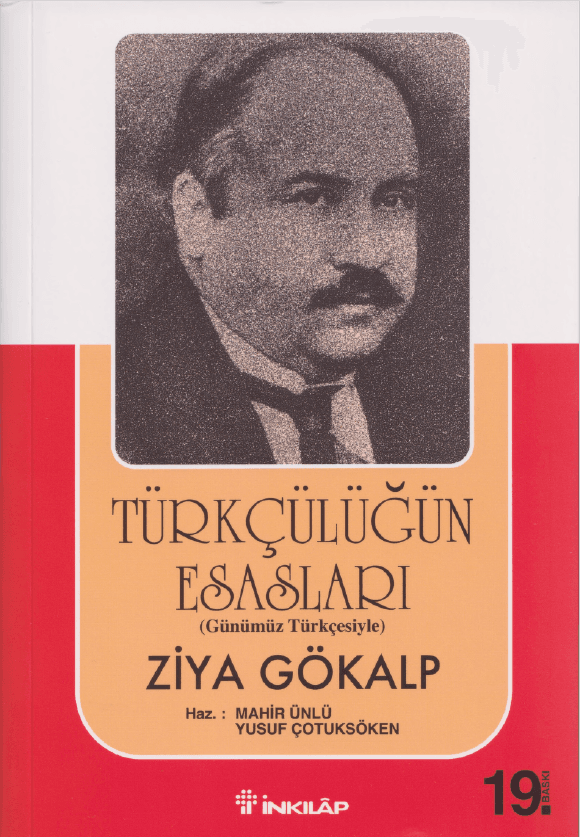
Principles of Turkism
Type(s) | Political/Ideological Manifesto | ||||||||
|---|---|---|---|---|---|---|---|---|---|
Author(s) | Ziya Gökalp | ||||||||
Language(s) | Turkish | ||||||||
First Edition | 1923 | ||||||||
Publisher(s) | İnkılâp Yayınevi | ||||||||
Page | 200 | ||||||||
Prepared by | Mahir Ünlü, Yusuf Çotuksöken | ||||||||
The Principles of Turkism is a theoretical and practical manifesto of nationalism, written by Ziya Gökalp, which redefines the cultural, social, and political identity of the Turkish nation with the goal of modernization. First published in 1923, this work played a significant role in the ideological construction of the Republic of Türkiye and contributed to the intellectual foundations of some of the reforms during the Atatürk era.
Ziya Gökalp’s work The Principles of Turkism is a comprehensive study that systematically examines Turkish nationalism, laying out both its theoretical foundations and practical applications. Within the framework of the emerging nationalism of the late Ottoman period, the book defines Turkish identity in terms of its cultural, linguistic, moral, and social dimensions. In this context, Gökalp constructs the philosophical basis of Turkism around concepts such as “nation,” “culture,” and “civilization.”
The book is divided into two main sections. The first section focuses on the historical development, definition, scope, and social characteristics of Turkism. It addresses topics such as the relationship between Turkism and Turanism, its connection to populism, the distinction between culture and civilization, and its role in the process of Westernization. The second section details the practical applications of Turkism in the fields of language, aesthetics, ethics, law, religion, economics, politics, and philosophy.
The book presents Turkism not merely as an ethnic or political stance but as an integrated social structure bound together by language, art, ethics, law, and systems of thought. Under each heading, the effort to establish connections between the historical legacy of the Turkish nation and the values of modern civilization becomes evident. In this respect, the work offers a model for understanding the social transformation of its time.
According to Gökalp, Turkism rests on eight principles:
Gökalp, Ziya. Türkçülüğün Esasları. haz. Mahir Ünlü, Yusuf Çotuksöken. İstanbul: İnkılâp Yayınevi, 2018.

Principles of Turkism
Type(s) | Political/Ideological Manifesto | ||||||||
|---|---|---|---|---|---|---|---|---|---|
Author(s) | Ziya Gökalp | ||||||||
Language(s) | Turkish | ||||||||
First Edition | 1923 | ||||||||
Publisher(s) | İnkılâp Yayınevi | ||||||||
Page | 200 | ||||||||
Prepared by | Mahir Ünlü, Yusuf Çotuksöken | ||||||||
No Discussion Added Yet
Start discussion for "Principles of Turkism (Book)" article