


This article was automatically translated from the original Turkish version.
+2 More
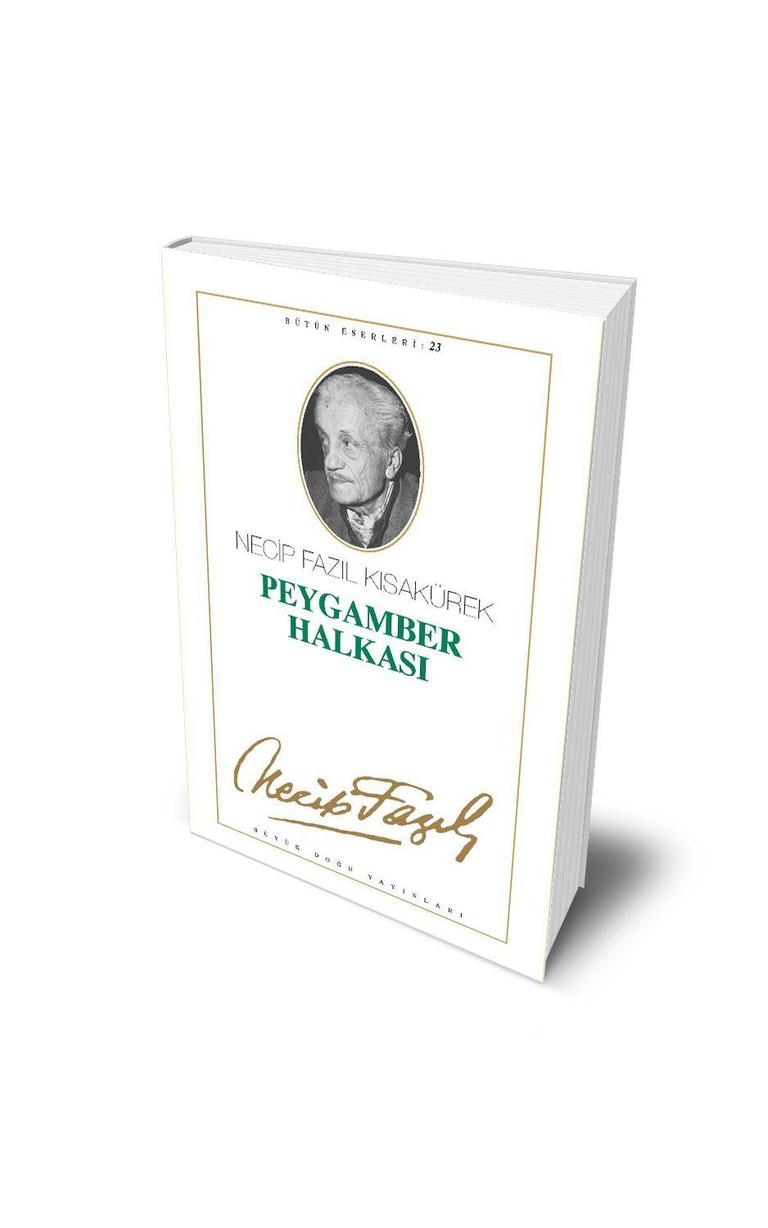
Necip Fazıl Kısakürek’s Peygamber Halkası is one of the texts that reflect his understanding of Islam and his conception of history and civilization.
Peygamber Halkası is a text in which Necip Fazıl expresses his love and devotion to the Islamic Prophet Muhammad within a Sufi and metaphysical framework. The work carries the character of a response to the secularization process of the Republican era. In Kısakürek’s conception of civilization shaped by his “Great East” ideal, Prophet Muhammad occupies a central position as both a moral and political leader.
The central theme of the text is love for the Prophet and absolute devotion to him. This devotion is presented not merely as an expression of faith but as part of a historical and metaphysical continuity. The metaphor of the “ring” represents the links of a spiritual chain extending from the past to the present, with Prophet Muhammad at its center. Thus, Kısakürek implies that the ummah has always oriented itself toward this same center throughout history, and that the collapse of civilization would follow if this center were severed.
The language of the work, consistent with Necip Fazıl’s general style, is dense, imagistic, and at times metaphorical. However, compared to some of his other works, Peygamber Halkası features a simpler and more direct narrative. This choice reflects both the broad audience the text addresses and the author’s desire for immediate transmission of his message. Rhetorical elements reinforce the text’s intellectual intensity without distancing it from its poetic structure.
Necip Fazıl’s conception of civilization is founded on opposition to the West and a vision of Islamic-centered reconstruction. Peygamber Halkası can be regarded as one of the foundational pillars of this vision. According to Kısakürek, Western civilization represents a deviation based on individualism and materialism. In contrast, Islamic civilization possesses a structure centered on the Prophet, grounded in spirituality, and holistic in nature. The expressions in the work concretize the author’s perspective on this matter.

No Discussion Added Yet
Start discussion for "Prophet's Ring (Book)" article
Context and Historical Background
Themes
Language and Style
Kısakürek’s Conception of Civilization