

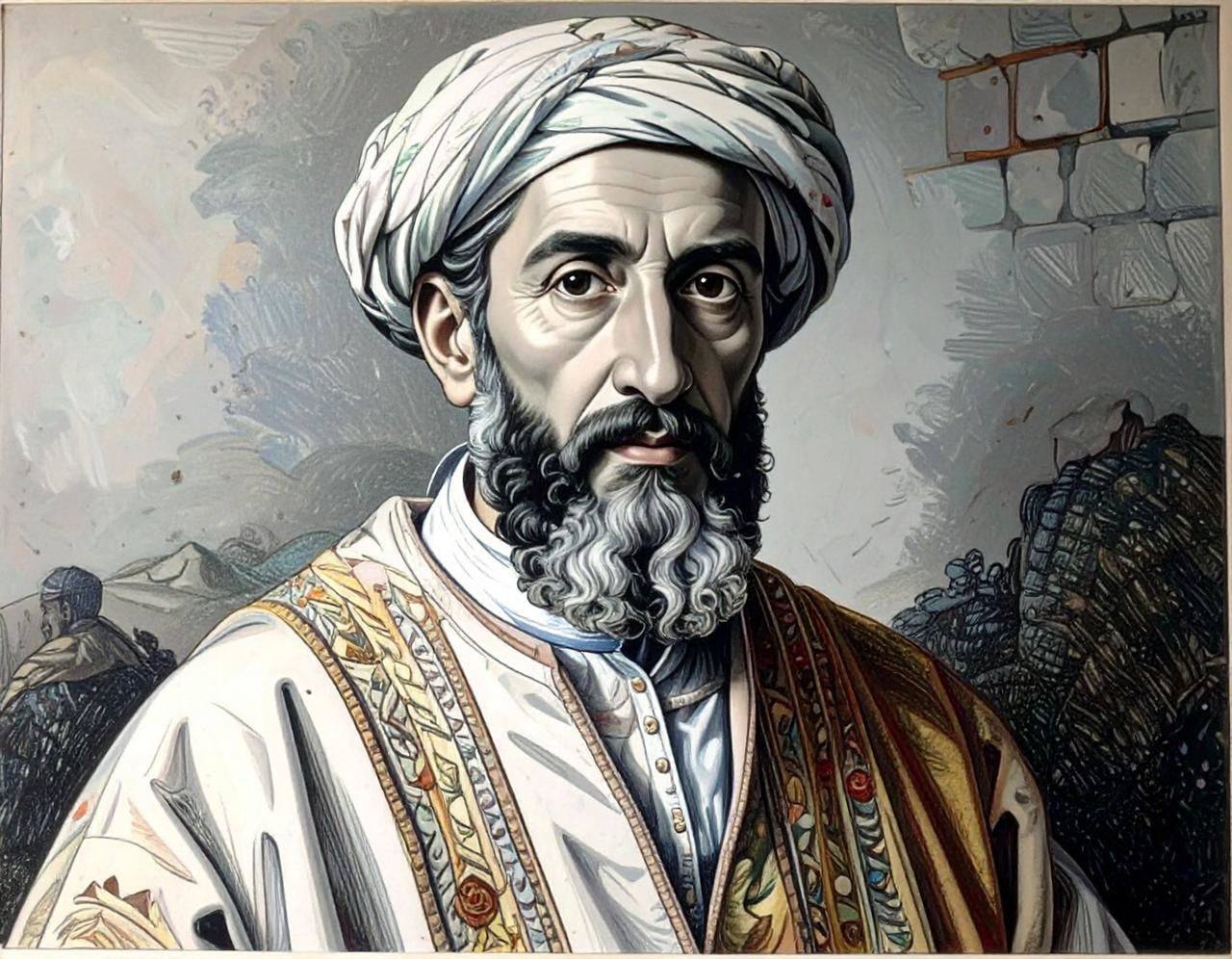

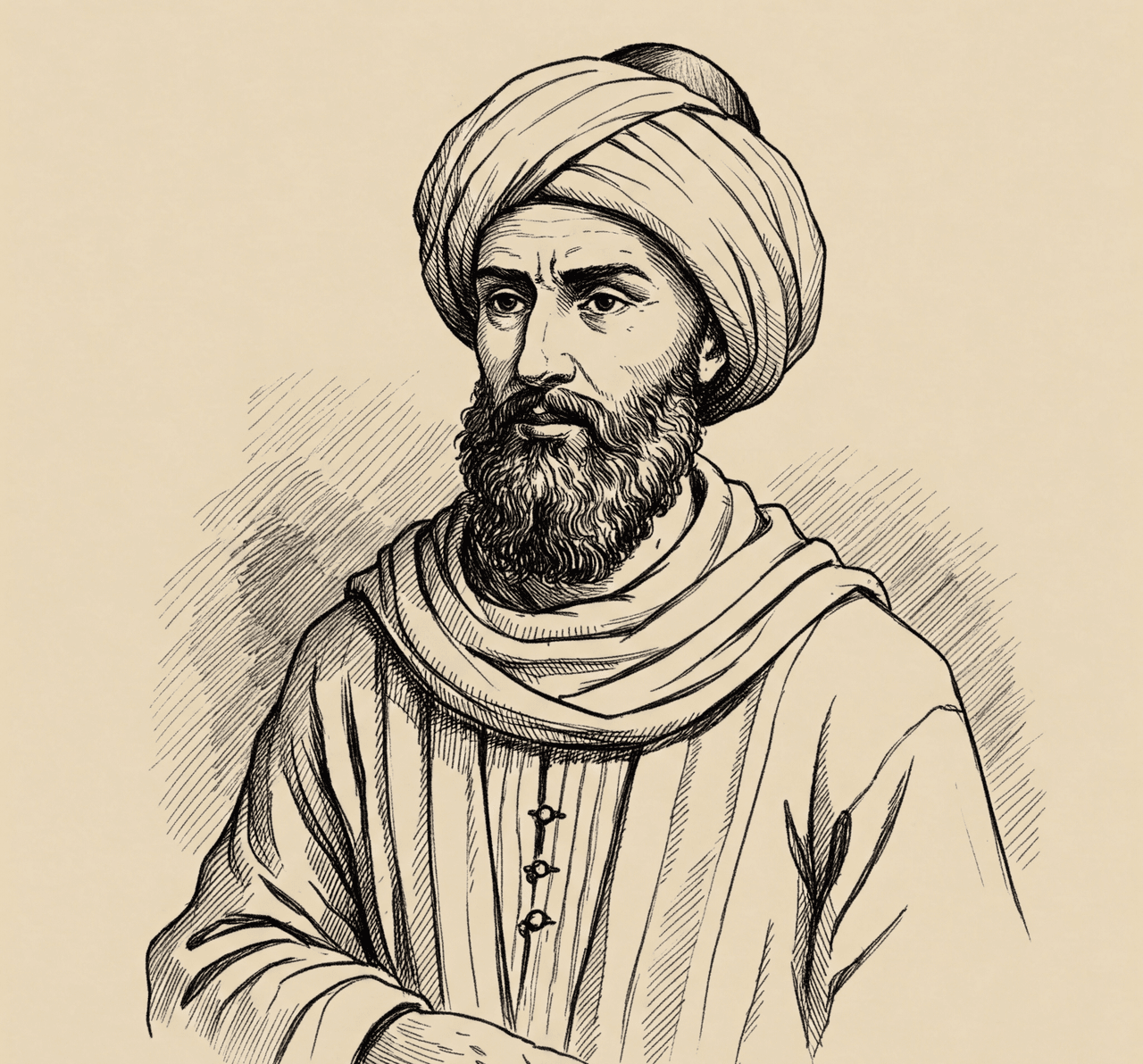
Radiyyuddin al-Rahbi
Date and Place of Birth | 534/1239-40 Ceziret-i İbn Ömer (Cizre) | ||||||||
|---|---|---|---|---|---|---|---|---|---|
Date and Place of Death | 631/1233 Damascus | ||||||||
Teachers | Ibn Jami, Muhezzebüddin b. En-Nakkash | ||||||||
Areas of Interest and Profession | Medicine, Physician, Medical Teacher, Chief Physician | ||||||||
Institutions Served | Nuri Hospital, Ayyubi Palace | ||||||||
Rulers Associated with | Saladin Ayyubi, al-Malik al-Adil Abu Bakr, al-Malik al-Muazzam Isa | ||||||||
Students | Muhezzebüddin Abdurrahim b. Ali, Ibn Abi Usaybia, Imran al-Israili, Ibrahim b. Halef as-Samiri, Sharafuddin ar-Rahbi, Fakhriddin as-Saati, Rashiddin Ali b. Khalifa | ||||||||
Cities Lived In | Ceziret-i İbn Ömer, Rahbe, Baghdad, Cairo, Damascus | ||||||||
Çocuk | Sharafuddin ar-Rahbi | ||||||||
Eş-Şeyh el-Hakîm el-İmâm el-Âlim Radiyyüddîn Ebu’l-Haccâc Yusuf b. Haydere er-Rahbî was one of the most renowned physicians of his time.
His father was from Rahba and was also a physician, though it is noted that he specialized more in the practice of ophthalmology (kehhallik). Radiyyüddîn was born and raised in Ceziret-i İbn Ömer (Cizre), where he resided before traveling to Baghdad and other cities. He devoted himself to medicine and became an expert in the field, meeting and learning from eş-Şeyh el-Muvaffak, known in Egypt as İbn Cemi el-Mısrî. He arrived in Damascus in 555/1160, during the rule of its governor Nureddîn Mahmud Zengî (d. 569/1174). He lived in Damascus for two years with his father; after his father’s death, Radiyyüddîn adopted Damascus as his home. He continued practicing medicine in his clinic and copied numerous medical texts there.
He studied medicine under Mühezzebüddîn b. En-Nakkâş (d. 574/1178) and served as his assistant.
After completing his studies, Rahbî met el-Melikü’n-Nâsır Salahaddîn Yusuf b. Eyyûb (d. 589/1193), who appointed him a monthly salary of thirty dinars. He began traveling to the palace and became occupied with treating patients at the Bimaristan. Salahaddîn requested that Rahbî accompany him on military campaigns, but Rahbî declined. When Salahaddîn died in Damascus, his brother el-Melikü’l-Âdil Ebû Bekr (d. 615/1218) ascended the throne and requested that Rahbî continue in his service. Rahbî refused, so el-Melikü’l-Âdil asked him to remain in Damascus and granted him the salary previously allocated to him during Salahaddîn’s reign. Later, el-Melikü'l-Muazzam İsa (d. 624/1227) came to power and also granted him a salary, though reduced to fifteen dinars; Rahbî continued his regular visits to the Bimaristan.
Many individuals studied medicine under him, and numerous medical schools emerged from his teachings. According to sources, if any physician in Sham had received medical training, he had either studied directly under Rahbî or under one of his students. Among the most famous and influential physicians of the era, Mühezzebüddîn Abdürrahim b. Ali (d. 628/1230) studied medicine under Rahbî before learning from İbnü'l-Mitran.
İbn Ebî Useybia reports the following anecdote: “One day, eş-Şeyh Radiyyüddîn told me: ‘All those who studied under me and served as my assistants attained prosperity, and people benefited from them.’ He mentioned to me numerous names of those who distinguished themselves in medicine and later passed away.”
It is stated that he never taught medicine to any non-Muslim, as he found none worthy of such instruction. Again, İbn Ebî Useybia relates directly from Rahbî’s own words: “I told him: ‘Throughout my life, I taught only two individuals from the ahl al-dhimma: al-Hakîm / İmrân el-İsrailî and İbrahim b. Halef es-Sâmirî. Both became distinguished physicians.’” İbn Ebî Useybia, who himself studied under Rahbî, continues: “In the years 622 and 623 (1225 and 1226), I studied a medical text from him, particularly a compendium of practical sections drawn from the works of Ebî Bekr Muhammed b. Zekeriya er-Râzî and others, from which I derived great benefit.”
İbn Ebî Useybia, who recounts important anecdotes from Rahbî’s students and life, also preserves the following remark made by Rahbî during a lesson: “One day, while reading to me a passage from er-Râzî concerning the regulation of food intake, I learned that er-Râzî advised a person to eat twice a day, and only once on the second day. He said to me: ‘Have you not heard that regardless of the time, whether you eat twice or once a day, whether by day or night, the right time to eat is when your appetite is genuine. Eating when your appetite is true is beneficial; if not, it becomes harmful to the body.’ His statement was correct.”
It is reported that Rahbî, while treating patients at the Nûrî Bimaristan and teaching medical students from his library, would sit on a lectern and attend to patients, with medications prescribed for their conditions immediately procured by the hospital staff. After attending to patients, Rahbî would move to his library and deliver theoretical and practical lessons to medical students, explaining how to diagnose illnesses, how to formulate prescriptions, and which therapeutic methods to apply.
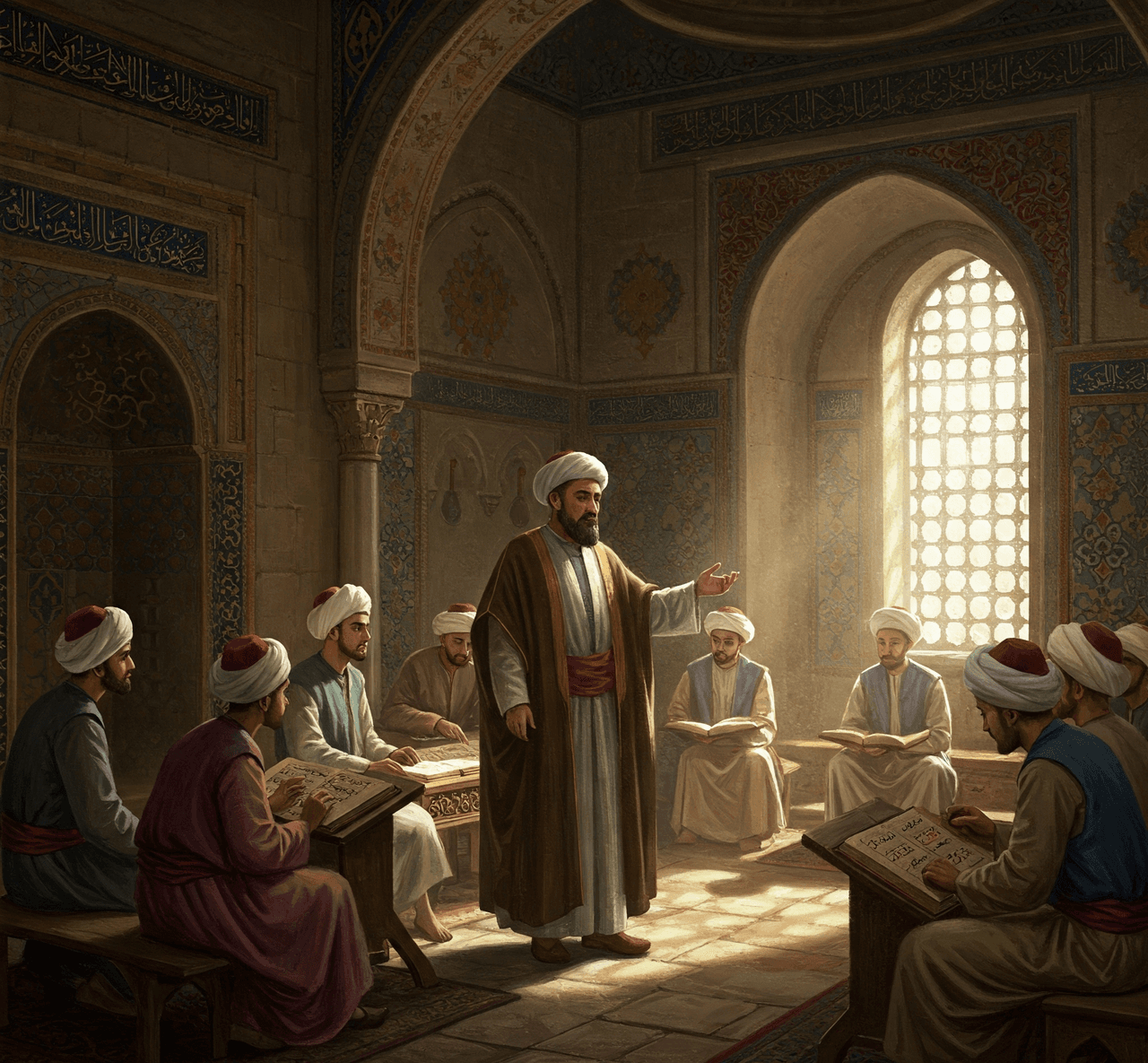
Representative illustration depicting the environment in which Rahbî taught at the Nûrî Bimaristan (generated by artificial intelligence).
Rahbî is said to have paid close attention to his own health and maintained certain routines: he visited the bathhouse on Thursdays, rested in the garden on Saturdays, and visited the elite on Fridays. One particularly striking anecdote notes that, believing climbing stairs shortened life, he did not ascend to the upper floor of his home for twenty-five years.
Er-Rahbî was born in Ceziretü İbn Ömer in Jumâdâ al-Awwal 534 (December-January 1139-40). He died in Damascus in Muḥarram 631 (October-November 1233).
Works:
Tehzîbü Şerhi İbni’t-Tayyib li-Kitâbi’l-Fusûl li-Bokrat.
İhtisaru Kitâbi’l-Mesâil li-Huneyn. He did not complete this work.
es-Safedî, Selahaddin Halil b. Aybek. el-Vâfî bi'l-Vefayât. thk. Ahmed Arnavut-Türki Mustafa. Beyrut 2000. C. XIX.
İbn Ebî Useybia, Muvaffakuddîn Ebü’l-Abbas Ahmed b. el-Kâsım b. Halîfe b. Yûnus es-Sa’dî el-Hazrecî. Uyûnu’l-Enbâ fî Tabakâti’l-Etıbba. thk. Nizâr Rızâ. Beyrut, 1965.
İsa, Ahmed. Tarihu’l-Bimaristânât fi’l-İslâm. Daru’r-Raidi’l-Arabî. Beyrut 1981.

Radiyyuddin al-Rahbi
Date and Place of Birth | 534/1239-40 Ceziret-i İbn Ömer (Cizre) | ||||||||
|---|---|---|---|---|---|---|---|---|---|
Date and Place of Death | 631/1233 Damascus | ||||||||
Teachers | Ibn Jami, Muhezzebüddin b. En-Nakkash | ||||||||
Areas of Interest and Profession | Medicine, Physician, Medical Teacher, Chief Physician | ||||||||
Institutions Served | Nuri Hospital, Ayyubi Palace | ||||||||
Rulers Associated with | Saladin Ayyubi, al-Malik al-Adil Abu Bakr, al-Malik al-Muazzam Isa | ||||||||
Students | Muhezzebüddin Abdurrahim b. Ali, Ibn Abi Usaybia, Imran al-Israili, Ibrahim b. Halef as-Samiri, Sharafuddin ar-Rahbi, Fakhriddin as-Saati, Rashiddin Ali b. Khalifa | ||||||||
Cities Lived In | Ceziret-i İbn Ömer, Rahbe, Baghdad, Cairo, Damascus | ||||||||
Çocuk | Sharafuddin ar-Rahbi | ||||||||
No Discussion Added Yet
Start discussion for "Radiyyuddin al-Rahbi" article
Educational Life and Responsibilities
Students