


This article was automatically translated from the original Turkish version.
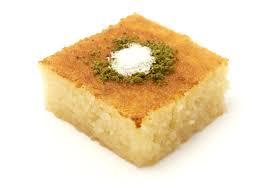
Revani
Material(s) | Semolina Syrup Lemon/Orange Zest Yogurt Sugar Egg Flour | ||||||||
|---|---|---|---|---|---|---|---|---|---|
Origin(s) | Ottoman Cuisine Victory of Revan | ||||||||
Service | Square or Baklava Slice, with Tea/Coffee | ||||||||
Cultural Significance | Indispensable for Holiday and Banquet Tables | ||||||||
Revani is a traditional Turkish dessert made with semolina, flour, eggs, and sugar syrup. Known for its light and porous texture, revani is often enhanced with lemon or orange flavoring and served on special occasions, at gatherings, or during tea time. Revani belongs to the category of syrup-based desserts in Turkish cuisine and has been passed down from Ottoman cuisine to the present day. This dessert, prepared in various regional variations, is commonly consumed both at home and in pastry shops.
The origin of revani is traced to Ottoman cuisine, and it is believed to have derived its name from the Ottoman victory over Revan (modern-day Yerevan) in the 16th century. Syrup-based desserts held an important place in the Ottoman palace kitchen, and revani distinguished itself from other sweets through its use of semolina. Due to the texture imparted by semolina and the sweetness of the syrup, revani became popular both in the Ottoman palace kitchen and among the general public. From the 19th century onward, it began to be made at home in various regions of Anatolia and gradually established itself as a traditional dessert in modern Turkish cuisine.
Revani appears in similar forms in Middle Eastern and Balkan cuisines; however, the Turkish version is distinguished by its use of lemon or orange aroma and the proportion of semolina. Because it can be prepared with inexpensive ingredients, revani has become a staple on tables across all social classes.
Revani is prepared with minor variations across different regions of Türkiye. In the Aegean Region, a subtle aroma from lemon zest or juice is preferred, while in the Mediterranean Region, orange juice or zest is commonly used. In some areas, it is served with kaymak, ice cream, or shredded coconut sprinkled on top. In Central Anatolia, a denser and more syrup-soaked version is favored.
Revani is made using basic ingredients such as semolina, flour, eggs, sugar, yogurt, and baking powder. For the syrup, sugar, water, and lemon juice are used. The dessert is typically baked in an oven, and cold syrup is poured over the hot cake to complete the process. Revani is cut into squares or baklava-like pieces before serving.
A standard revani recipe includes the following steps:
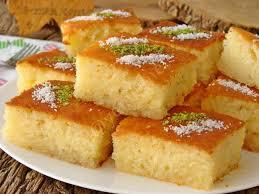
Traditional Turkish Syrup-Based Dessert Revani, Sliced. (yemek.net)
Semolina, flour, sugar, yogurt, eggs, liquid oil, baking powder, vanilla, lemon zest, water, lemon juice, sugar (for syrup)
The balance between semolina and flour determines the texture of the dessert. For optimal results, the syrup must be cold and the cake hot when the syrup is poured; this ensures even and thorough absorption by the cake, helping it achieve the desired moisture and texture. Additionally, the addition of citrus aromas such as lemon or orange imparts a refreshing flavor profile and helps balance the sweetness of the sugar.
Revani is a widely consumed traditional syrup-based dessert in Turkish cuisine. It is frequently served during daily meals as well as on special occasions such as holidays, weddings, and receptions. Among syrup-based desserts, its relatively light structure and compatibility with tea or coffee make it a preferred choice. Its relatively simple preparation has contributed to its widespread popularity as a homemade dessert. Revani is an integral part of Turkish dessert culture, reflecting the enduring tradition of using local ingredients like semolina and the custom of syrup-soaked sweets that stretches from the Ottoman era to modern Türkiye.
Hürriyet Lezizz. (2023, June 6). *Revani Tarifi*. Accessed June 6, 2023. https://www.hurriyet.com.tr/lezizz/revani-tarifi-36802560
Yemek.com. (2023, June 6). *Portakallı Revani Tarifi*. Accessed June 6, 2023. https://yemek.com/tarif/portakalli-revani/
Yeni Şafak. "Osmanlı mutfağından kalan revani tatlısı." Accessed October 15, 2022. https://www.yenisafak.com/osmanli-mutfagindan-kalan-revani-tatlisi-h-3806207

Revani
Material(s) | Semolina Syrup Lemon/Orange Zest Yogurt Sugar Egg Flour | ||||||||
|---|---|---|---|---|---|---|---|---|---|
Origin(s) | Ottoman Cuisine Victory of Revan | ||||||||
Service | Square or Baklava Slice, with Tea/Coffee | ||||||||
Cultural Significance | Indispensable for Holiday and Banquet Tables | ||||||||
History and Origin
Regional Variations
Preparation
Recipe and Techniques
Ingredients
Key Tips
Cultural Significance