


This article was automatically translated from the original Turkish version.
+2 More
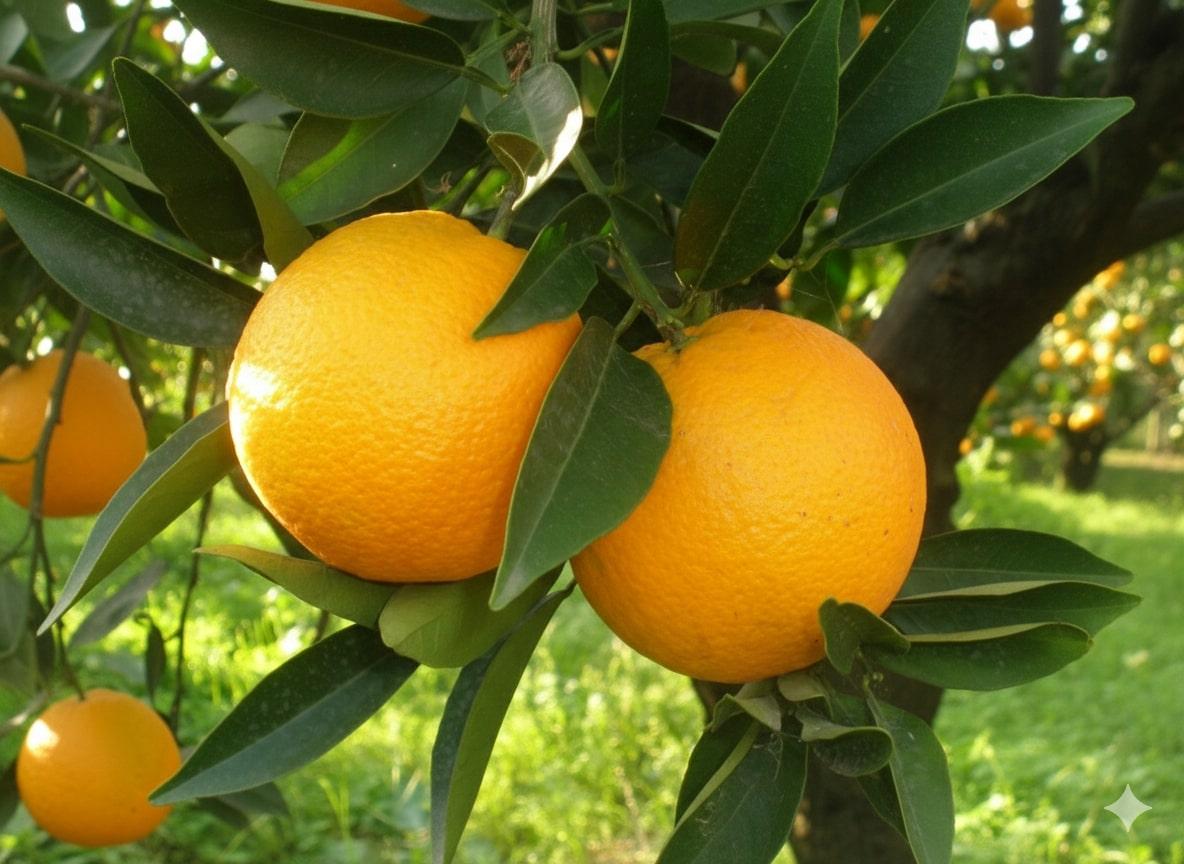
Ribera Portakalı (Yapay Zeka ile Oluşturulmuştur.)
Ribera Orange (Original name: Arancia di Ribera) is a Protected Designation of Origin orange variety cultivated in specific municipalities of the Italian provinces of Agrigento and partially Palermo, and protected by the European Union. It is particularly known for its sweetness, seedlessness, and juicy pulp, distinguishing it from other red-pigmented, subacid Sicilian oranges in the region.
The Ribera Orange is designated for fruits derived from the Brasiliano (Brasiliano comune, Brasiliano risanato), Washington Navel (Washington navel comune, Washington Navel risanato, Washington Navel 3033), and Navelina (Navelina comune, Navelina risanata, Navelina ISA 315) varieties. When offered for consumption, the fruits must have a minimum transverse diameter of 70 mm and a minimum grade of 6 according to European classification standards. They are typically spherical-ellipsoidal (ovoid, flattened or elliptical) in shape with a navel structure. The peel color ranges in shades of orange and tends to develop a reddish hue by the end of winter. The pulp is uniformly orange in color, fine and firm in texture, and seedless. The juice has a minimum yield of 40% and is orange in color.
About the Ribera Orange (Sicilia BioMediterraneo)
The production area of the Ribera Orange includes the municipalities of Bivona, Burgio, Calamonaci, Caltabellotta, Cattolica Eraclea, Cianciana, Lucca Sicula, Menfi, Montallegro, Ribera, Sciacca, Siculiana, and Villafranca Sicula in the province of Agrigento, and the municipality of Chiusa Sclafani in the province of Palermo.
Production may be carried out using traditional, integrated, or organic farming methods. Tree density must range between 400 and 650 plants per hectare. Harvesting is performed manually using shears to prevent detachment of the fruit from the calyx. Maximum yield per hectare is limited to 400 quintals, and the application of green removal (deverdizzazione) to the fruits is strictly prohibited. The harvesting period for the Navelina variety begins on 1 November and ends at the end of February, while for the Brasiliano and Washington Navel varieties it begins during the first ten days of December and concludes at the end of May.
Orange groves are located along the banks and slopes of the Verdura, Magazzolo, Platani, and Carboj rivers. The soils belong to the Vertisol and Inceptisol orders, characterized by high clay content that causes cracking during summer months and high agroonomic potential. These soils have a high cation exchange capacity and increased potassium content. High potassium levels combined with typical Mediterranean climatic conditions enhance sugar content and thus improve fruit taste quality. Additionally, irrigation during summer months is supplied with high-quality, low-conductivity, contaminant-free water drawn from the Castello, Arancio, and Prizzi reservoirs, fed by the Magazzolo, Carboj, and Verdura rivers. Marine influence maintains thermal and hygrometric conditions throughout the year that align well with the ecophysiological requirements of the orange tree.
All packaging operations must be carried out within the designated production area to preserve product quality and integrity, as transportation and contamination risks increase with external handling. The Ribera Orange undergoes no chemical treatment other than washing with potable water before, during, and after harvest; the absence of wax or chemical preservatives on the peel renders the fruit more sensitive to transport. Labels must mandatorily display the name “Arancia di Ribera D.O.P.” and its logo (in characters larger than other text), the orange variety (Brasiliano, Washington Navel, and Navelina), the name and/or trade name of the producer and/or packer, their address, and their commercial category (“Extra” or “I”). The logo also includes a stylized geographic representation of the island of Sicily.

Ribera Portakalı (Yapay Zeka ile Oluşturulmuştur.)
Product Characteristics
Production Area
Cultivation Method
Environmental and Quality Link
Packaging and Labeling