


This article was automatically translated from the original Turkish version.
+1 More
Rirekisho is a traditional used in job applications in Japan.
The word “Rirekisho” means “curriculum vitae” or “biography” in Japanese. This document is commonly known for being completed by hand and carries certain characteristics unique to Japanese work culture.
Rirekisho is typically formatted according to a standardized template that can be purchased from stationery stores across Japan. The uniform format enables employers to compare applications more easily.
Rirekisho generally includes the following sections:
Name, date of birth, address, telephone number and email address.
Schools and workplaces listed in chronological order.
Professional qualifications and certifications obtained are specified.
Provides insight into the applicant’s personality for the employer.
Explains the reasons why the applicant wishes to work in the position applied for.
In Japanese work culture, completing the rirekisho by hand is considered important as it demonstrates the applicant’s interest and attention to detail. Additionally, handwriting is believed to reflect the applicant’s personality. This tradition underscores the value placed on precision in Japan’s business environment.
When writing a rirekisho, great importance is placed on calligraphy and neat handwriting.
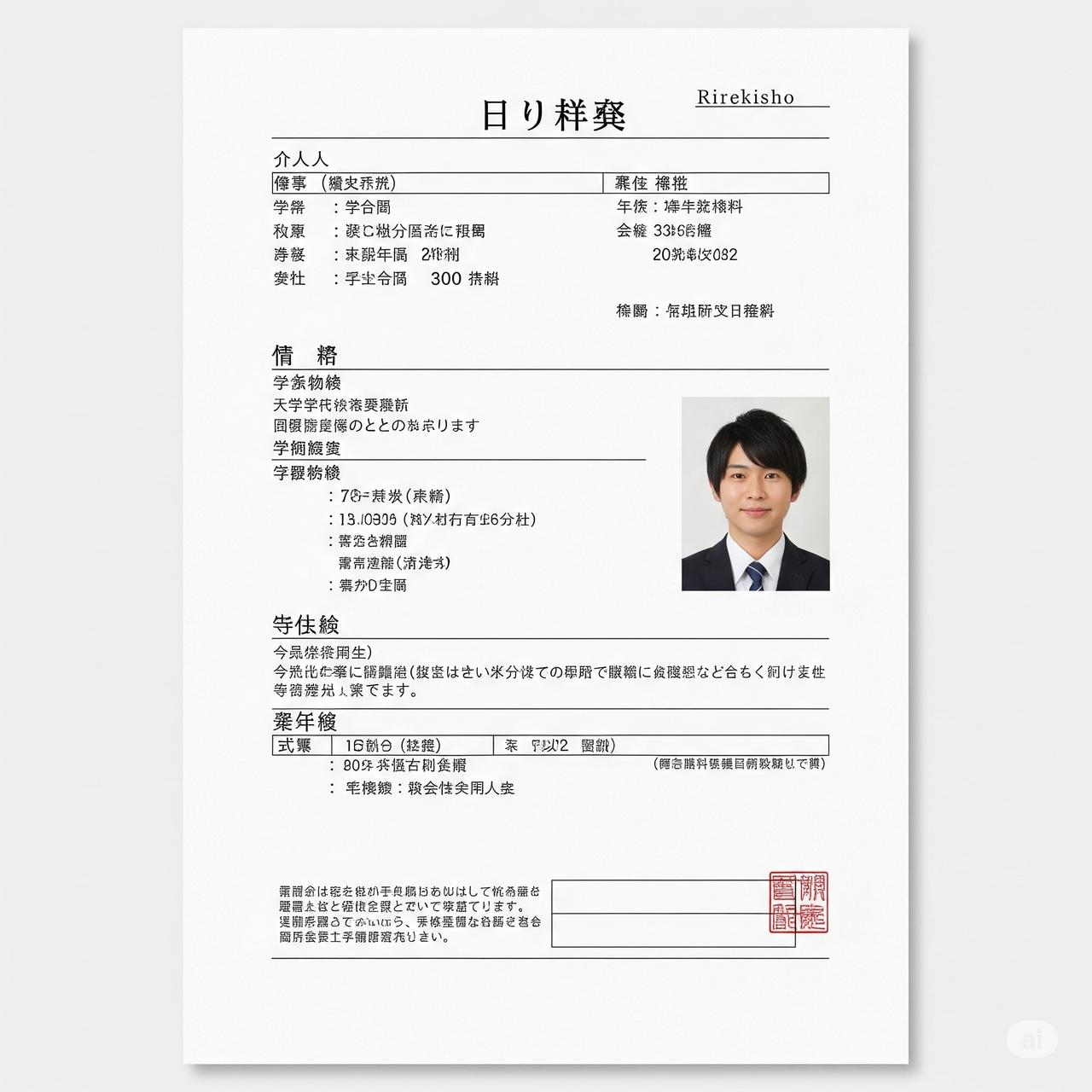
Rirekisho Example (Generated by Artificial Intelligence)
In the modern workplace, particularly in international companies and the technology sector, digital application methods are becoming increasingly common. However, many traditional Japanese companies still require rirekisho forms completed by hand.
Rirekisho represents discipline, attention to detail and adherence to tradition in Japanese work culture. It not only presents an individual’s career history in a systematic manner but also reveals personal interests and motivations.
This tradition establishes a framework of mutual respect between applicants and employers in Japan’s business environment.
Japanese business culture is defined by its emphasis on detail, discipline and mutual respect. The use of the handwritten rirekisho is a reflection of this culture in hiring processes. Its application in job applications is a standard practice in Japan’s business world and carries multiple layers of meaning.
The rirekisho reflects the applicant’s interest and effort toward the position applied for. Handwriting the document demonstrates the time and attention devoted to the application process.
Handwriting is used to convey the applicant’s self-discipline and dedication to their application. In the event of writing errors, the document is often rewritten from the beginning.
Although prepared using a standard format, the rirekisho gains a personal touch when completed by hand. This allows the applicant’s individual characteristics to be assessed alongside the content of the document.
Rirekisho has been used in Japan for a long time as a standard curriculum vitae format. While traditional companies continue to use this method, online formats have become widespread in international companies due to digitalization.
The rirekisho serves as an important reference document during job interviews. Employers refer to the information provided in the document and formulate questions accordingly.
International College of Liberal Arts (iCLA). "Writing a Japanese Resume – An International Student's Guide." Accessed June 4, 2025. https://www.icla.ygu.ac.jp/en/careers/resume/.
Izanau. "How to Create a Japanese Resume/Rirekisho(履歴書)." Accessed June 4, 2025. https://izanau.com/article/view/rirekisho-japanese-resume.

Structure
The Importance of Handwriting
How to Write a Rirekisho
Contemporary Practices
Cultural and Social Context
Business Etiquette in Japan and the Rirekisho
Expression of Care
Emphasis on Discipline and Attention
Personalization
Traditional and Modern Practices
Preparation for Job Interviews