+1 More

Birth | 18 August 1936 | ||||||||
|---|---|---|---|---|---|---|---|---|---|
Place of Birth | Santa Monica, California, USA | ||||||||
Death | 16 September 2025 | ||||||||
Place of Death | Utah, USA | ||||||||
Occupation(s) | Actor Producer Director | ||||||||
Spouse(s) | Lola Van Wagenen (1958–1985) Sibylle Szaggars (2009–2025) | ||||||||
Child | Scott (died in 1959) James (1962–2020) Amy Shauna | ||||||||
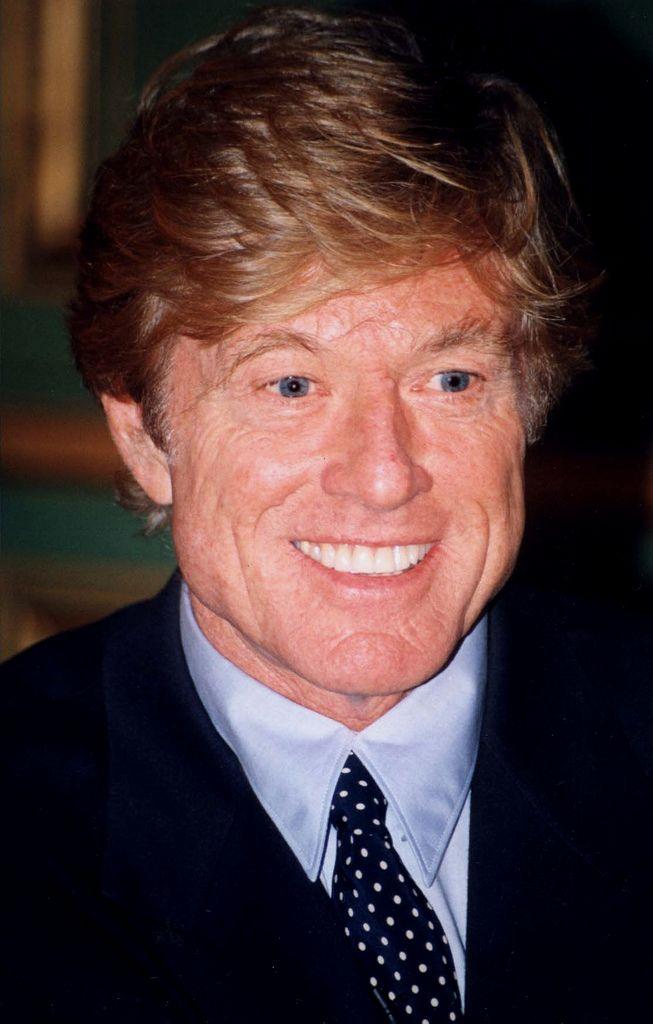
Charles Robert Redford Jr. (August 18, 1936, Santa Monica–September 16, 2025, Utah) was an American film and theater actor, film director, and producer. He gained widespread recognition as a leading actor from the late 1960s onward; he won the Academy Award for Best Director for his first feature film, Ordinary People, in 1980. Through the Sundance Institute, which he founded in 1981, and the Sundance Film Festival, which he transformed, he made a lasting institutional impact on independent cinema.
Redford was born in Santa Monica; his father, Charles Robert Redford Sr., was an accountant, and his mother, Martha Hart, was a homemaker. He spent his childhood and early teenage years in the Van Nuys neighborhood of Los Angeles. He graduated from Van Nuys High School in 1954. He enrolled at the University of Colorado on a baseball scholarship but left his studies midway due to disciplinary and adjustment issues and traveled to Europe. There he engaged with art in France, Spain, and Italy.
Upon returning to the United States, he studied design at the Pratt Institute in New York and took acting classes at the American Academy of Dramatic Arts (AADA). The death of his mother and other family losses during his youth laid the groundwork for recurring themes in his later work—grief and familial communication.
Redford made his New York stage debut in 1959 in Tall Story; the same year he appeared in The Highest Tree. In 1963, his portrayal of Paul Bratter in Neil Simon’s Barefoot in the Park (dir. Mike Nichols) brought him his breakthrough on Broadway. During this period, he became a frequent guest on television, appearing in episodic roles on Perry Mason, Alfred Hitchcock Presents/The Alfred Hitchcock Hour, The Twilight Zone, The Virginian, and other dramas. He received an Emmy nomination for Best Supporting Actor for The Voice of Charlie Pont (1962).
Redford transitioned to film in 1962 with War Hunt. In 1967, he shared the lead with Jane Fonda in the film adaptation of Barefoot in the Park. His international breakthrough came with his role as the “Sundance Kid” in George Roy Hill’s 1969 film Butch Cassidy and the Sundance Kid (opposite Paul Newman). He then made diverse choices in tone and genre: Downhill Racer (1969), Tell Them Willie Boy Is Here (1969), and the political satire The Candidate (1972).
In 1973, he rose to prominence with two major box-office successes: Sydney Pollack’s The Way We Were (with Barbra Streisand) and Hill’s The Sting (with Paul Newman); The Sting earned Redford his only Academy Award nomination for Best Actor. In 1974, he starred in The Great Gatsby; in 1975, in Three Days of the Condor (dir. Pollack); and in 1976, in All the President’s Men (about the Watergate scandal, with Dustin Hoffman)—all defining films of his 1970s filmography.

Natalie Wood and Robert Redford, 1966. (Flickr)
In the mid-1980s, Redford appeared as a leading actor in The Natural (1984) and Out of Africa (1985, dir. Pollack). In the 1990s, he appeared in both politically engaged and more popular projects: Sneakers (1992), Indecent Proposal (1993), and Up Close & Personal (1996). He concluded this era with The Horse Whisperer (1998), which he directed and starred in.
In the 2000s, Redford appeared in films such as The Legend of Bagger Vance (2000, director), The Last Castle (2001), and Spy Game (2001); in 2007, he directed and starred in Lions for Lambs. In the 2010s, he directed The Conspirator (2010) and The Company You Keep (2012).
His most notable performance as an actor in recent years was in the nearly dialogue-free, solo performance of All Is Lost (2013). He followed this with a role as Alexander Pierce in the Marvel Cinematic Universe’s Captain America: The Winter Soldier (2014) and a brief return in Avengers: Endgame (2019). In 2015, he portrayed Dan Rather in Truth; in 2017, he reunited with Jane Fonda in the Netflix production Our Souls at Night. In 2018, he announced that The Old Man & the Gun would be his final acting role.
Redford’s first feature film as director, Ordinary People (1980), is a drama examining the disintegration of an upper-middle-class family after a loss; the film won four Academy Awards including Best Picture and earned Redford the Oscar for Best Director.
Trailer for Ordinary People, directed by Robert Redford and winner of four Academy Awards(Rotten Tomatoes Classic Trailers)
He followed with The Milagro Beanfield War (1988), A River Runs Through It (1992), and Quiz Show (1994). Quiz Show received Oscar nominations for Best Picture and Best Director among other major categories.
Redford directed and starred in The Horse Whisperer in 1998; he continued directing in the 2010s with The Conspirator and The Company You Keep. As a producer, he participated in both fictional and documentary projects through his own companies and partnerships.
In 1981, Redford founded the Sundance Institute to create a workshop and mentorship infrastructure for independent cinema. In the mid-1980s, he took over a film festival in Utah and rebranded it as the Sundance Film Festival. The festival rose to prominence in 1989 with films such as Sex, Lies and Videotape and became one of the leading festivals for American independent cinema.
Throughout the 1990s and 2000s, numerous directors and documentary filmmakers gained visibility through the Sundance ecosystem. The institute and festival structure, through creative development programs and exhibition-distribution networks, contributed significantly to the continuous circulation of non-studio narratives.
Redford held public positions for many years on environmental issues, particularly the preservation of natural areas in Utah and its surroundings; he participated in local campaigns against energy projects and infrastructure initiatives. His associations with conservation organizations, such as his board membership at the NRDC, were long-standing. He preferred independent advocacy and storytelling over formal public office; his discourse consistently emphasized the environment, local communities, and transparency in planning processes.
In 1958, he married Lola Van Wagenen; the couple had four children: Scott (died at a few months old in 1959), Shauna (b. 1960), David James/Jamie (1962–2020), and Amy (b. 1970). Their marriage ended in 1985. Redford married Sibylle Szaggars in Hamburg in 2009; this marriage lasted until his death.
Redford died at his home in Utah on September 16, 2025, at the age of 89. His death was announced as having occurred peacefully in his sleep; no specific cause was disclosed.
Redford established himself as a consistent leading figure in American cinema from the 1960s onward; from 1980, as a director, he turned toward “serious dramatic” narratives centered on “family, loss, moral dilemmas, institutions, and public life.” As the founder of the institute and festival, he institutionalized the production and exhibition ecosystem of American independent cinema. Through environmental advocacy and narratives of nature conservation at local and national levels, he solidified a lasting public impact beyond cinema.
Throughout his career, Robert Redford won 46 awards and was nominated for 65 others. Some of these include:
Anadolu Ajansı. “ABD'li oyuncu ve yönetmen Robert Redford 89 yaşında hayatını kaybetti.” Accessed September 17, 2025. https://www.aa.com.tr/tr/kultur/abdli-oyuncu-ve-yonetmen-robert-redford-89-yasinda-hayatini-kaybetti/3689581
BJ Alias. “Robert Redford, Natalie Wood.” Flickr. Accessed September 17, 2025. https://www.flickr.com/photos/77154191@N08/8791340094
Encyclopedia.com. "Redford, Robert." Encyclopedia.com. Accessed September 17, 2025. https://www.encyclopedia.com/people/literature-and-arts/film-and-television-biographies/robert-redford
IMDb. "Ordinary People." Accessed September 17, 2025. https://www.imdb.com/title/tt0081283/
IMDb. "Robert Redford – Biography." IMDb. Accessed September 17, 2025. https://www.imdb.com/name/nm0000602/bio/
IMDb. “Robert Redford – Awards.” IMDb. Accessed September 17, 2025. https://www.imdb.com/name/nm0000602/awards/?ref_=nm_awd
John Mathew Smith. “Robert Redford.” Flickr. Accessed September 17, 2025. https://www.flickr.com/photos/kingkongphoto/
Rotten Tomatoes Classic Trailers. "Ordinary People (1980) Trailer #1 | Movieclips Classic Trailers." YouTube. Accessed September 17, 2025. https://www.youtube.com/watch?v=HQKEdiQ79OM
TRT Haber. "Robert Redford 89 Yaşında Hayatını Kaybetti." Accessed September 17, 2025. https://www.trthaber.com/haber/dunya/robert-redford-89-yasinda-hayatini-kaybetti-920069.html
TV Guide. "Robert Redford." *TV Guide*. Accessed September 17, 2025. https://www.tvguide.com/celebrities/robert-redford/bio/3030390359/
The New York Times. “Robert Redford, Screen Idol Turned Director and Activist, Dies at 89.” The New York Times. Accessed September 17, 2025. https://www.nytimes.com/2025/09/16/movies/robert-redford-dead.html
World Travel & Tourism Council. “Robert Redford.” Flickr. Accessed September 17, 2025. https://www.flickr.com/photos/worldtravelandtourismcouncil/7217905986

Birth | 18 August 1936 | ||||||||
|---|---|---|---|---|---|---|---|---|---|
Place of Birth | Santa Monica, California, USA | ||||||||
Death | 16 September 2025 | ||||||||
Place of Death | Utah, USA | ||||||||
Occupation(s) | Actor Producer Director | ||||||||
Spouse(s) | Lola Van Wagenen (1958–1985) Sibylle Szaggars (2009–2025) | ||||||||
Child | Scott (died in 1959) James (1962–2020) Amy Shauna | ||||||||
Early Life and Education
Theater and Television (1959–1966)
Cinema Acting (1962–1979)
The 1980s and 1990s
The 2000s and 2010s
Directing and Producing
Sundance Institute and Sundance Film Festival
Social and Environmental Activism
Personal Life
Death
Awards