



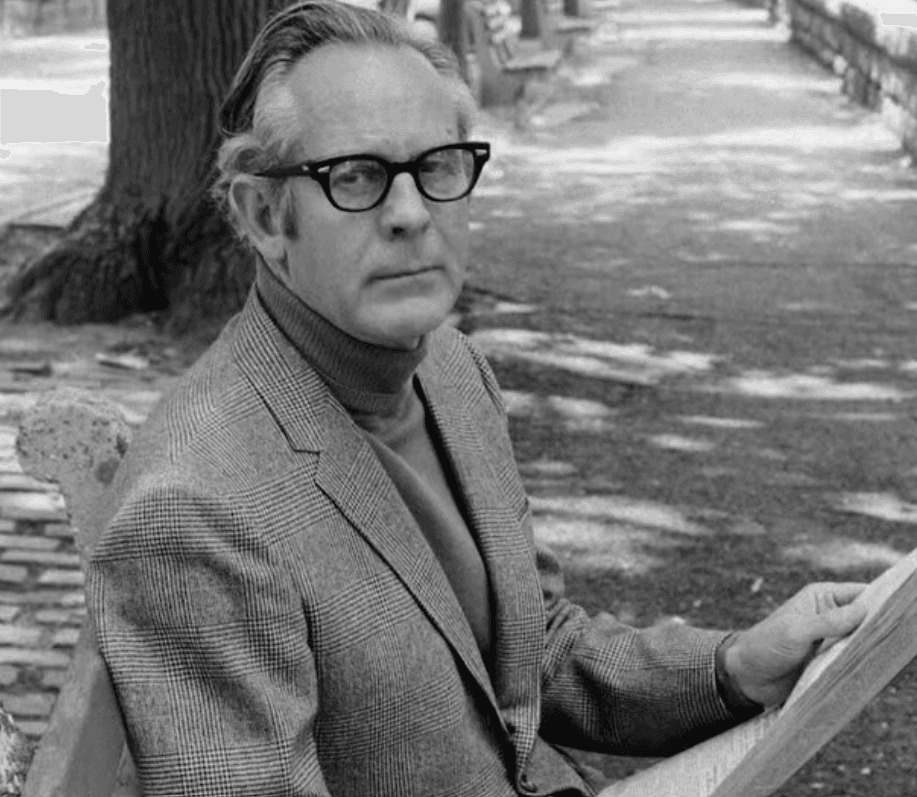
Rollo May
Doğum tarihi | 1909-04-21 | ||||||||
|---|---|---|---|---|---|---|---|---|---|
Place of Birth | Ada, Ohio, United States | ||||||||
Ölüm tarihi | 1994-10-22 | ||||||||
Place of Death | Tiburon, California, United States | ||||||||
Education | 1949) White Institute (Psychoanalytic Training) 1938) Columbia University (Ph.D. in Psychology 1930) Union Theological Seminary (Theology Oberlin College (Bachelor's | ||||||||
Works | 1983) Man's Search for Himself Freedom and Destiny 1969) The Meaning of Anxiety The Courage to Create The Discovery of Being (The Discovery of Being Love and Will (Love and Will | ||||||||
Rollo May was born on April 21, 1909, in the town of Ada, Ohio, United States. His childhood was spent in Marine City, a small Midwestern town in Michigan. His parents’ divorce and his difficult relationship with his mother were among the personal challenges he faced at an early age. These experiences are believed to have formed the foundation of his later interest in psychology.
May graduated from Oberlin College in 1930. After graduation, he worked as a teacher in Greece for a period. He then returned to the United States and studied theology at Union Theological Seminary in New York, graduating in 1938. There he met the renowned Protestant theologian Paul Tillich. Following his work in theology, he turned to psychology and received training in psychoanalysis at the White Institute. He completed his doctorate in psychology at Columbia University in 1949.
Throughout his career, Rollo May made significant contributions to existential psychotherapy. In 1958, he co-edited the book Existence with Ernest Angel and Henri Ellenberger. This book is regarded as one of the foundational texts in adapting European existential philosophy to psychotherapy.
May’s psychological approach is based on the synthesis of European existentialism with American psychology. This perspective centers on the individual’s search for meaning in life, as well as existential concerns such as anxiety, freedom, responsibility, loneliness, and death.
May defined the psychotherapeutic process not merely as the elimination of symptoms but as helping the individual understand their own existential condition. Within this framework, the individual’s freedom, capacity for choice, and responsibility for those choices are fundamental principles. According to May, anxiety is an inevitable and necessary element of human development. He developed a constructive understanding of anxiety, viewing it as a productive inner experience.
May’s concept of freedom is linked not only to the ability to act but also to the capacity to realize one’s own becoming. For him, freedom is the individual’s ability to hold multiple possibilities in mind and to make choices. This freedom is seen as a dynamic that reveals the human creative dimension and enables access to authentic selfhood. He established a dialectical relationship between destiny and freedom, arguing that the individual realizes freedom by confronting their destiny.
Rollo May authored numerous important works, in which he explored the individual’s existential problems, creative power, and psychological struggles. His most notable books include:
In these works, he examined in detail the psychological effects of inner conflicts and interactions with social conditions.
May is regarded as one of the pioneers of American humanistic psychology alongside Abraham Maslow and Carl Rogers. However, unlike the humanistic approach, he placed greater emphasis on the conflicted nature of human beings and the tragic dimensions of life. Concepts such as the limitations of human nature, the awareness of death, and the responsibility brought by freedom form the core of his existential approach.
Rollo May spent the final years of his life in the town of Tiburon, California, and died on October 22, 1994, in the San Francisco area. Even after his death, his influence on existential psychology and psychotherapy has continued, and his writings remain foundational texts in many psychology and counseling programs.
Aydın, Muhammet. 2018. Özgürlük ve Kader, Rollo May. Trans. Ali Babaoğlu. 4th ed. İstanbul: Okuyan Us Yayınları.
Doğanay, Ezgi. 2023. "Varoluşçu Bağlamda Ölüm Kaygısı ve Ölüm Kaygısını Etkileyen Faktörler." *Premium Sosyal Bilimler E-Dergisi* 7(36): 1713–1723. https://orcid.org/0009-0003-4738-3002. Accessed May 10, 2025.
R.com.tr. n.d. "Rollo May Kitapları." Accessed May 10, 2025. https://www.dr.com.tr/yazar/rollo-may/s=219688?srsltid=AfmBOorUTnkDB3tWBgIKu4WLf5TFK955k7_-wul15MwRLDArh_OsXk03.
RolloMay.net. n.d. “Rollo May Resmi Web Sitesi.” Accessed May 10, 2025. https://www.rollomay.net/.
Yılmaz, Bilal. 2024. “Existential Therapy in Social Work.” *Turkish Journal of Applied Social Work* 7(1): 66–79. . Accessed May 10, 2025.

Rollo May
Doğum tarihi | 1909-04-21 | ||||||||
|---|---|---|---|---|---|---|---|---|---|
Place of Birth | Ada, Ohio, United States | ||||||||
Ölüm tarihi | 1994-10-22 | ||||||||
Place of Death | Tiburon, California, United States | ||||||||
Education | 1949) White Institute (Psychoanalytic Training) 1938) Columbia University (Ph.D. in Psychology 1930) Union Theological Seminary (Theology Oberlin College (Bachelor's | ||||||||
Works | 1983) Man's Search for Himself Freedom and Destiny 1969) The Meaning of Anxiety The Courage to Create The Discovery of Being (The Discovery of Being Love and Will (Love and Will | ||||||||
Birth and Early Life
Educational Background
Academic and Professional Career
Contributions to Existential Psychotherapy
Concept of Freedom and Destiny
Major Works
Relationship with Humanistic Psychology
Death and Legacy