


This article was automatically translated from the original Turkish version.
+2 More
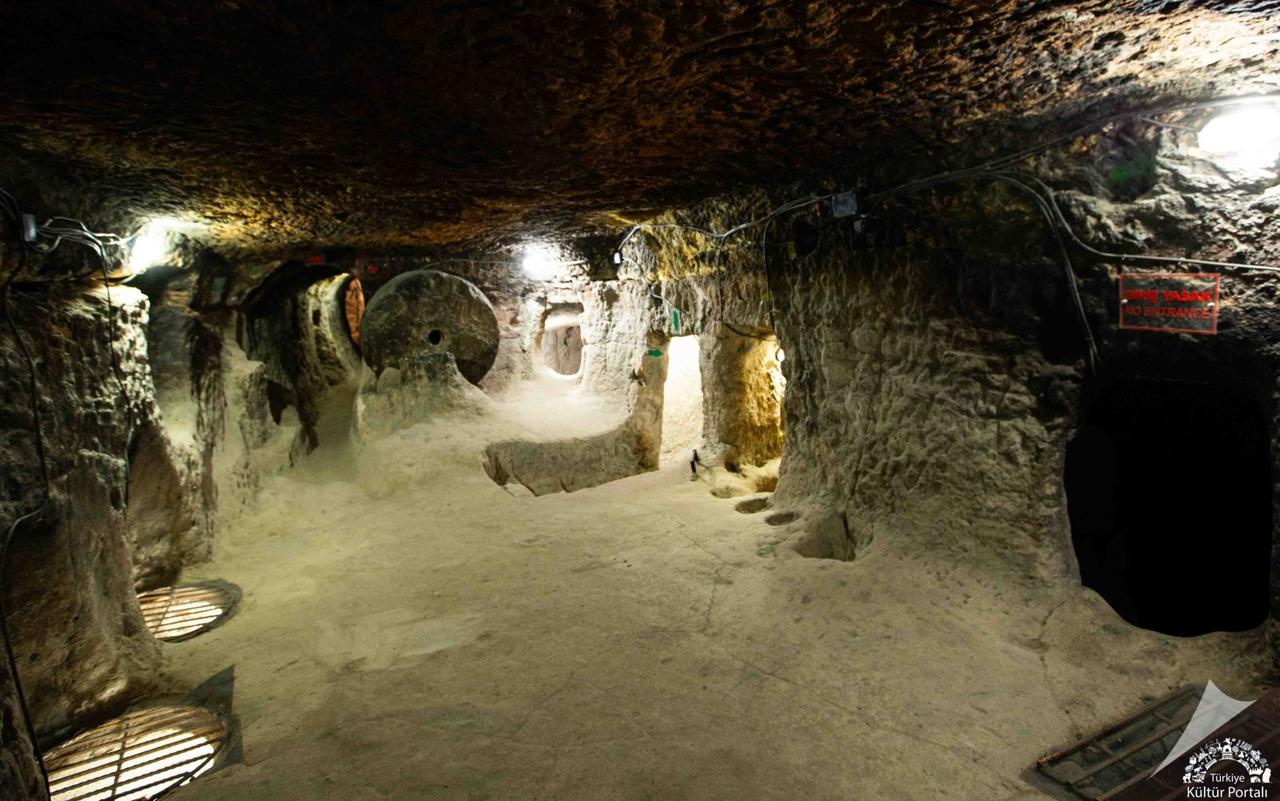
Saint Mercurius Underground City
Period(s) | Saratlı Village Aksaray Gülağaç District | ||||||||
|---|---|---|---|---|---|---|---|---|---|
Location | Late Roman–Byzantine Period (3rd century CE) | ||||||||
Purpose of Use(s) | Shelter Place of Worship | ||||||||
Number of Floors | 7 (Open to Three Visits) | ||||||||
The Underground City and Church of Saint Mercurius was used as a refuge during the 250s AD, when Christianity was prohibited. The settlement is associated with the life of the Roman commander Saint Mercurius, after whom it is named. It is known that Saint Mercurius lived between 225 and 250 AD, was born in Cappadocia, and was exiled for embracing Christianity. According to tradition, he was killed in this region, and part of his body was sent to Egypt.

Underground City of Saint Mercurius (Anadolu Agency)
The underground city was constructed with seven levels; today, only three have been cleared and opened to visitors. Access is provided through a caravanserai from the Seljuk period known locally as “Develik”; from this point, passages, corridors, and rooms lead to the other levels. All passages connect to the church located at the center of the structure. The church within this underground settlement is larger than those found in other underground cities and resembles a cathedral in architectural terms. The church was in use during the Eastern Roman period and continued to serve as a place of worship until later periods.

Underground City of Saint Mercurius (Anadolu Agency)
Archaeological investigations within the church have identified 20 tombs belonging to children and adults. One tomb contains the remains of a woman and a man stacked on top of each other within the same sarcophagus. Some of these sarcophagi contain skeletal remains. It is believed that Saint Mercurius and his family were also buried in these tombs. Notable among the tombs are cases of missing skulls; written sources indicate that Saint Mercurius’s head was sent to Cairo. Different forms of cross symbols have been observed marking the locations of burial chambers within the church.

Underground City of Saint Mercurius (Anadolu Agency)
The underground city also contains large storage vessels used for food preservation. In one corner of the structure stands a tomb known as the “Develi Dam,” which is locally regarded as a votive shrine. In a chamber adjacent to the tomb, carved reliefs depicting ducks or swans have been found on stone surfaces.
Aksaray İl Directorate of Culture and Tourism. "Yeraltı Şehirleri." Ministry of Culture and Tourism of the Republic of Turkey. Accessed June 13, 2025. https://aksaray.ktb.gov.tr/TR-63663/yeralti-sehirleri.html.
Anadolu Ajansı. “Aksaray'daki Aziz Mercurius Yer Altı Şehrindeki Mezarlar İlgi Görüyor.” Accessed June 13, 2025. https://www.aa.com.tr/tr/kultur-sanat/aksaraydaki-aziz-mercurius-yer-alti-sehrindeki-mezarlar-ilgi-goruyor/2369447.
Anadolu Ajansı. “Aziz Mercurius Yer Altı Şehri Turizme Açılıyor.” Accessed June 13, 2025. https://www.aa.com.tr/tr/kultur-sanat/aziz-mercurius-yer-alti-sehri-turizme-aciliyor/587520.
Türkiye Kültür Portalı. "Aziz Mercurius Yer Altı Şehri - Aksaray." Accessed June 13, 2025. https://www.kulturportali.gov.tr/turkiye/aksaray/gezilecekyer/aziz-mercurius-yeralti-sehri.

Saint Mercurius Underground City
Period(s) | Saratlı Village Aksaray Gülağaç District | ||||||||
|---|---|---|---|---|---|---|---|---|---|
Location | Late Roman–Byzantine Period (3rd century CE) | ||||||||
Purpose of Use(s) | Shelter Place of Worship | ||||||||
Number of Floors | 7 (Open to Three Visits) | ||||||||
No Discussion Added Yet
Start discussion for "Saint Mercurius Underground City" article
Architectural Structure and Plan
Church and Tombs
Other Structural Elements