


This article was automatically translated from the original Turkish version.
+1 More
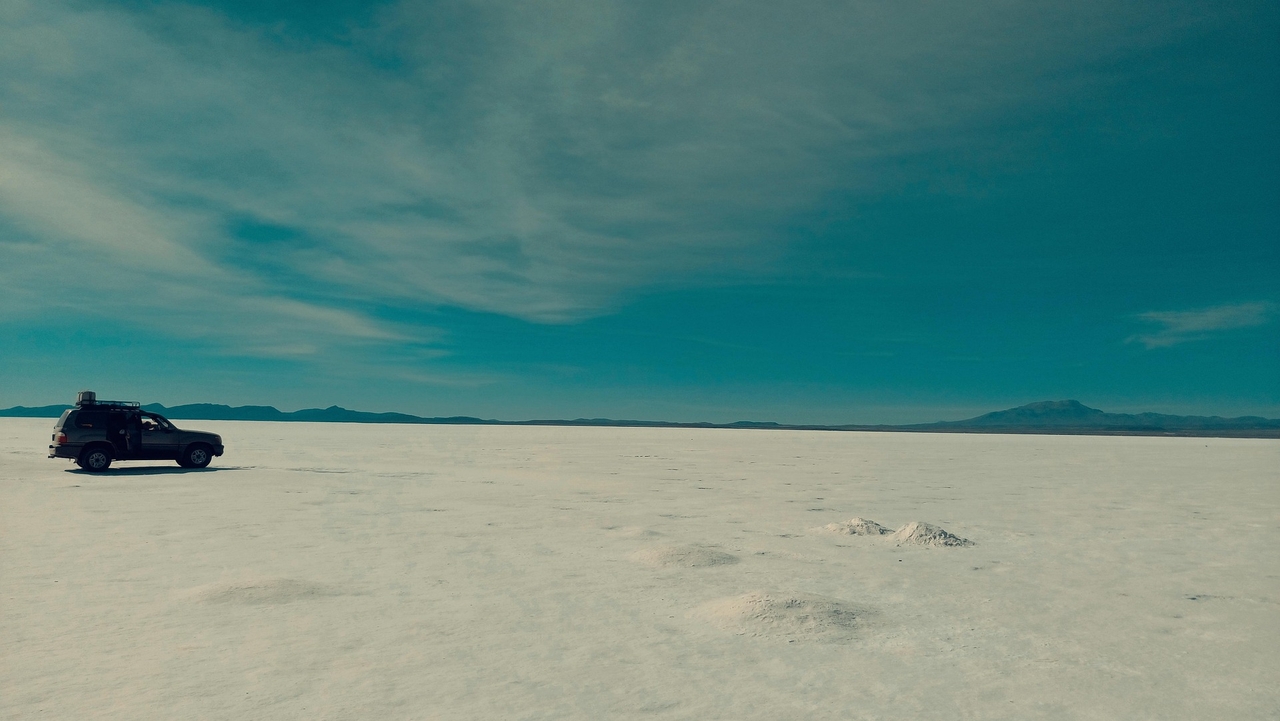
Salar de Uyuni (pixabay)
Salar de Uyuni is a vast evaporite field located in southwestern Bolivia, on the Altiplano plateau of the Andes Mountains, recognized as one of the world’s largest salt flats. Situated at an elevation of approximately 3,650 meters above sea level, this area formed as a result of the drying of historical lake systems and consists largely of accumulations of salt and minerals, primarily halite【1】. Covering an area of approximately 10,582 square kilometers, its exceptionally flat surface and high reflectivity make it a geologically, economically and scientifically significant natural formation【2】.
Salar de Uyuni is situated in southwestern Bolivia, near the border with Chile, and forms part of the high-altitude plateau system known as the Altiplano. This geographical structure functions as a closed basin, preventing surface water from draining outward. This condition has intensified the long-term effects of sedimentation and evaporation processes.

Prominent reflection of Salar de Uyuni at sunset(Pixabay)
The area is defined by its vast expanse and extraordinarily flat surface. Elevation differences across the surface are extremely minimal. This feature creates a striking geomorphological characteristic and enables its use as a reference surface in remote sensing studies. Polygonal crack patterns are visible on the upper layer of the salt crust, formed as a result of crystallization and drying processes.
The formation of Salar de Uyuni is linked to the gradual shrinkage and complete desiccation of large lakes that existed in the region during historical periods. As these paleolake systems evaporated, minerals dissolved in the water precipitated, forming a thick salt layer. The evaporation process occurred over long time spans under conditions of a closed basin and a semi-arid climate.
As a result of this process, halite (sodium chloride) accumulated extensively on the surface, along with other evaporite minerals such as gypsum. Beneath the salt crust lie mineral-rich brine layers. This structure is one of the key elements determining the region’s mineral potential.
Because Salar de Uyuni lies within a closed basin, precipitation and meltwater from surrounding mountains accumulate within the area. The absence of outward drainage makes evaporation the primary mechanism of water loss. During the dry season, the surface appears hard and dry. During the rainy season, a thin layer of water forms atop the salt crust.
This thin water layer causes the surface to act like a mirror. The reflection of the sky and clouds dramatically alters the area’s visual characteristics. Seasonal changes affect both surface morphology and reflectivity properties relevant to remote sensing techniques.
Salar de Uyuni is notable not only for its vast salt reserves but also for containing economically significant minerals. The dominant mineral on the surface is halite, which constitutes the primary component of the salt crust and creates an extensive white surface. In addition to halite, other evaporite minerals such as gypsum are present both on the surface and in lower layers.
The brine layers beneath the salt crust are rich in dissolved minerals【3】. Among these dissolved minerals is lithium, an element critical for energy storage technologies, which enhances the region’s economic importance. The presence of lithium is related to the chemical composition of the brine, a result of prolonged evaporation and precipitation processes.
The presence of mineral resources has led to the development of industrial activities in the region【4】. However, the preservation of the natural environment and the environmental impacts of resource extraction remain important considerations in the region’s management.
The vast, homogeneous and exceptionally flat surface of Salar de Uyuni serves as a technical reference area for remote sensing studies. The highly reflective, light-colored salt crust provides a stable surface for radiometric calibration of satellite sensors. The area’s large size and minimal elevation variation create favorable conditions for geometric accuracy testing.
Observations and analyses published by NASA Earth Observatory demonstrate that Salar de Uyuni is clearly visible from space and has been used as a reference surface in various satellite missions. Its homogeneity and high albedo value provide a technical advantage in testing sensor performance and improving data accuracy【5】.

Satellite image of Salar de Uyuni NASA Earth Observatory
Salar de Uyuni attracts tourism due to its natural appearance and seasonal reflective effects. The mirror-like effect created during the rainy season and the polygonal surface patterns visible during the dry season form the primary focal points for visitors. Tourism activity in the region tends to concentrate during specific seasons.
Tourism activities are integrated into the local economic structure, with transportation and accommodation services adapted to the region’s natural conditions.
[1]
NASA Earth Observatory. “Salar de Uyuni, Bolivia.” NASA Science. December 12, 2005. Erişim Tarihi :4 Mart 2026. https://science.nasa.gov/earth/earth-observatory/salar-de-uyuni-bolivia-6096/.
[2]
NASA Earth Observatory. “Salar de Uyuni, Bolivia.” NASA Science. December 12, 2005. Erişim Tarihi :4 Mart 2026. https://science.nasa.gov/earth/earth-observatory/salar-de-uyuni-bolivia-6096/.
[3]
NASA Earth Observatory. “Salar de Uyuni, Bolivia.” NASA Science. December 12, 2005. Erişim Tarihi :4 Mart 2026. https://science.nasa.gov/earth/earth-observatory/salar-de-uyuni-bolivia-6096/.
[4]
Unger, Elizabeth. “How to See Salar de Uyuni Salt Flats, Bolivia.” National Geographic. May 3, 2017. Erişim Tarihi 4 Mart 2026.
https://www.nationalgeographic.com/travel/article/how-to-see-salar-de-uyuni-salt-flats-bolivia
[5]
NASA Earth Observatory. “Salar de Uyuni, Bolivia.” NASA Science. December 12, 2005. Erişim Tarihi :4 Mart 2026. https://science.nasa.gov/earth/earth-observatory/salar-de-uyuni-bolivia-6096/.

Salar de Uyuni (pixabay)
No Discussion Added Yet
Start discussion for "Salar de Uyuni Lake (Bolivia)" article
Geographical Location and Physical Characteristics
Geological Formation Process
Hydrological and Climatic Characteristics
Natural Resources and Minerals
Importance for Remote Sensing and Satellite Calibration
Tourism and Human Activities