


Doğum tarihi | 1906-04-13 | ||||||||
|---|---|---|---|---|---|---|---|---|---|
Citizenship | Irish | ||||||||
Profession(s) | Writer Poet | ||||||||
Languages | English, French | ||||||||
Ölüm tarihi | 0089-12-22 | ||||||||
Place of Death | Paris, France | ||||||||
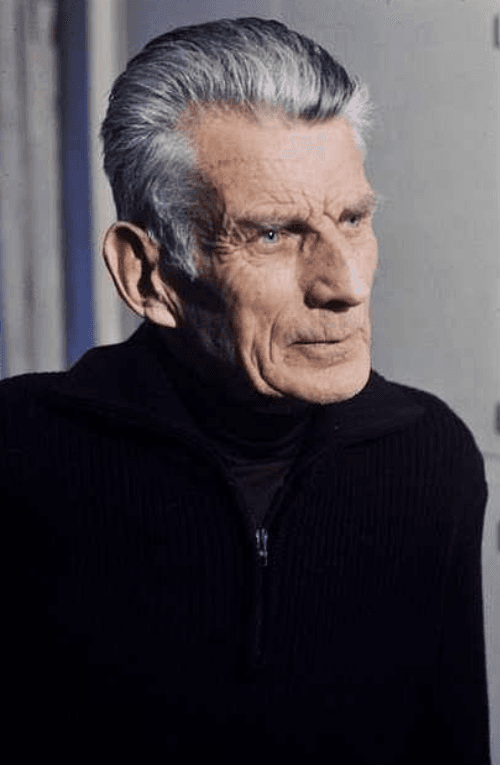
Samuel Beckett is one of the major playwrights, novelists, and poets of 20th-century literature. He was born on 13 April 1906 in Dublin, Ireland. He completed his education at Trinity College Dublin where he taught French and later continued his academic and literary work in Paris in association with the École Normale Supérieure. From 1938 onward he spent most of his life in France. In his literary output he moved between English and French and translated a significant portion of his own works.
Samuel Beckett (Francesco Ghisi)
During the 1930s and 1940s Beckett wrote his first novels and short stories. Thanks to Ireland’s neutral status during World War II he was able to remain in Paris. However from 1940 he joined the French Resistance. After his resistance cell was dismantled by the Gestapo in 1942 he and his wife Suzanne Dechevaux-Dumesnil were forced to flee to unoccupied France. He lived there until the end of the war and was later awarded the Croix de Guerre for his bravery. In the final stages of the war he volunteered for the Red Cross.
After the war Beckett settled in Paris and entered his most productive phase. Within a brief span of five years he wrote plays such as Eleutheria Waiting for Godot and Endgame novels such as Molloy Malone Dies The Unnamable and Mercier et Camier two collections of short stories and a work of literary criticism. The novel trilogy he wrote in the 1950s and especially Waiting for Godot established him as an internationally recognized writer. The 1954 publication and staging of the play in English solidified Beckett’s reputation in the United States.
Beckett’s works have often been interpreted by critics in terms of pessimism meaninglessness and the exhaustion of human existence. Critics such as Melvin Maddocks R.D. Smith Martin Esslin and George Wellwarth have viewed Beckett’s language and themes as a literary strategy that reveals the diminished isolated and painful aspects of human experience. By stripping his characters of recognizable historical and social contexts Beckett foregrounds philosophical questions about the essence of being.
However critics such as Esslin Smith and Alec Reid have argued that Beckett did not establish an aesthetics of absolute despair. Instead they contend that confronting reality stripped of illusions strengthens human dignity. Richard N. Coe on the other hand has suggested that describing Beckett’s attitude as one of despair is reductive and that the central idea in his thought is that of impossibility.
Beckett’s theatre is frequently grouped with that of Eugène Ionesco Jean Genet and Harold Pinter under the label “Theatre of the Absurd.” Yet this classification contradicts Beckett’s own fundamental skepticism toward categorical definitions. Critics have interpreted his writing within frameworks of existentialism particularly Sartre’s philosophy Cartesian dualism and epistemological uncertainty.
Beckett regarded his novels as more central than his plays. With Watt he began systematically removing guiding elements such as time space and causality from narrative. His writing in French has been regarded as an essential part of his formal discipline.
The 1960s were a period of growing international theatrical success and increased experience in directing for Beckett. His radio and cinema texts written for the BBC expanded his creative scope. In 1961 he secretly married Suzanne Dechevaux-Dumesnil who managed his literary affairs and copyright relations. In 1969 he was awarded the Nobel Prize in Literature but declined to attend the ceremony or deliver a speech.
During the 1970s and 1980s he continued writing while leading a more isolated life outside Paris. His health deteriorated in the late 1980s and he died in Paris on 22 December 1989 from respiratory failure shortly after the death of his wife Suzanne in July 1989.
Francesco Ghisi. "Samuel Beckett in berlin - 1969." YouTube. Accessed December 22, 2025. https://www.youtube.com/watch?v=LtMUL0aDFO8
Picrly. "Samuel Becket, 1977." Accessed December 22, 2025. https://picryl.com/media/samuel-beckett-1977-63c17c
Poetry Foundation. "Samuel Beckett." Accessed December 22, 2025. https://www.poetryfoundation.org/poets/samuel-beckett
The Nobel Prize. "Samuel Beckett Facts." Accessed December 22, 2025. https://www.nobelprize.org/prizes/literature/1969/beckett/facts/

Doğum tarihi | 1906-04-13 | ||||||||
|---|---|---|---|---|---|---|---|---|---|
Citizenship | Irish | ||||||||
Profession(s) | Writer Poet | ||||||||
Languages | English, French | ||||||||
Ölüm tarihi | 0089-12-22 | ||||||||
Place of Death | Paris, France | ||||||||
Early Period and World War II
Literary Breakthrough and Mature Period
Criticism
Absurdist Theatre
Novels
Late Period Awards and Death