


This article was automatically translated from the original Turkish version.
+2 More
Location | Ortaköy District Türkiye Çorum | ||||||||
|---|---|---|---|---|---|---|---|---|---|
Type(s) | Ancient Site Ancient City | ||||||||
Period(s) | Hittites 14th century BCE (Middle Hittite Period) | ||||||||
Area(s) | 9 km² (Lower and Upper City) | ||||||||
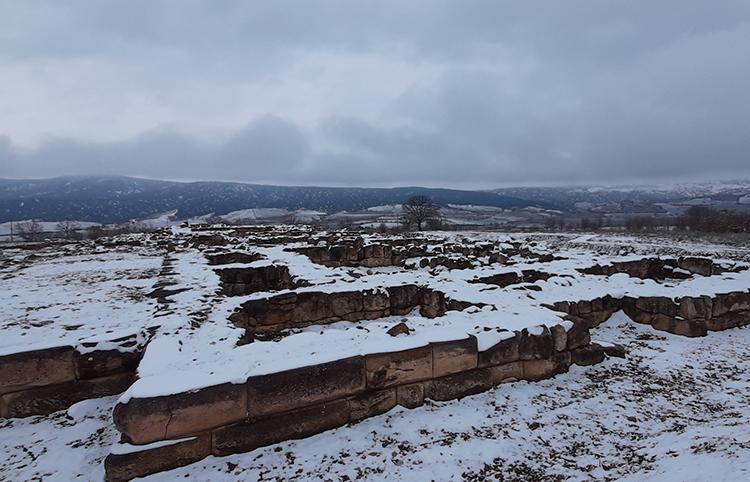
Şapinuva is an archaeological site and ancient city located three kilometers southwest of the Ortaköy district of Çorum Province, 53 kilometers from the city center of Çorum. The ancient settlement was built on a plateau sloping eastward, along the northern slopes of the Özderesi Valley, a tributary of the Çekerek River. The settlement, covering approximately 9 km², is divided into two parts: the lower city and the upper city. Its position at the end of the Kelkit Valley, one of the main routes into Anatolia via the Caucasus, enhanced Şapinuva’s strategic importance.

Şapinuva Archaeological Site (Türkiye Culture Portal
Şapinuva was a major military, religious, and administrative center during the Hittite Empire period. During the reign of Great King Tudhaliya II and his queen Taduhepa in the first half of the 14th century BCE, it became a significant settlement. Hittite documents contain correspondence indicating Şapinuva’s high administrative status. A tablet discovered at Maşat Höyük in Tokat provides direct evidence of the city’s military and administrative functions. Evidence has been documented of royal palace complexes and units such as the army command located within the city.

Şapinuva Archaeological Site (Türkiye Culture Portal
Şapinuva was discovered through surface surveys conducted in 1988–1989 by Prof. Dr. Aygül Süel and Dr. Mustafa Süel. Excavations began in 1990 and are currently ongoing under the auspices of Hittite University. Excavations are carried out in two main areas: the Tepelerarası Region and the Ağılönü Region.
In this area, various monumental structures, protective walls, and archive zones have been identified. Structure A, a symmetrical monumental building covering 2,500 m², yielded approximately 4,000 cuneiform tablets and tablet fragments belonging to three distinct archives. These tablets contain administrative, military, religious, and political content and confirm that Tudhaliya II and Queen Taduhepa ruled from this site.
Structure B, located 150 meters to the east, is a building with a ramped and double-gated entrance. Around seventy cubic units weighing approximately one ton were found here, suggesting commercial use. Structure C, situated 120 meters south, is a religious building with three sections. Structure D stands out with its ceremonial hall, relief orthostats【1】, and an L-shaped hall. A pool believed to have been used for ritual purposes is also located within the hall. Additionally, metal workshops dating to the Hittite period have been identified in this region.
Approximately 600 meters north of the Tepelerarası Region, Ağılönü appears as a semi-island surrounded by floodplain deposits. Excavations conducted here since 2000 have revealed workshops and shops. Among the finds are ritual vessels shaped like animal heads. North of Ağılönü, a 12-layered stone-paved area has been uncovered, and south of this pavement, sacrificial pits containing traces of liquids and burnt offerings have been identified. This area is unique in Anatolian archaeology.
A significant portion of the tablets recovered from the excavations are written in Hittite. Texts in Hittite, Hurrian, and Akkadian are also present. The tablets, functioning as an archive, are largely from the Middle Hittite period (14th century BCE). The texts include military orders, administrative correspondence, religious compositions, and divination records.
Şapinuva is currently regarded as a destination open to both cultural and natural tourism. Near the archaeological site lies the İncesu Canyon Cultural Park, which is part of the Hittite Route cultural trail. Şapinuva is recommended as a stop along the Hittite tourism circuit together with Hattuşa, Alacahöyük, and the Çorum Archaeological Museum. The typical visit route includes the Tepelerarası and Ağılönü regions.
Anadolu Ajansı. “Şapinuva Antik Kenti Beyaz Örtüyle Kaplandı.” Accessed June 18, 2025. https://www.aa.com.tr/tr/yasam/sapinuva-antik-kenti-beyaz-ortuyle-kaplandi/3475588.
Gerçek, Semih, and Sevgül Çilingir Cesur. “Şapinuva (Ortaköy) Örenyeri.” *Türkiye Turizm Ansiklopedisi*, 2019. Accessed June 18, 2025. https://turkiyeturizmansiklopedisi.com/sapinuva-ortakoy-orenyeri.
Nişanyan Sözlük. “Ortostat.” Accessed June 18, 2025. https://www.nisanyansozluk.com/kelime/ortostat
Turkish Ministry of Culture and Tourism. "Örenyerleri."Çorum İl Directorate of Culture and Tourism. Accessed June 18, 2025. https://corum.ktb.gov.tr/TR-58772/orenyerleri.html.
Türkiye Kültür Portalı. “Şapinuva Ören Yeri - Çorum.” Accessed June 18, 2025. https://www.kulturportali.gov.tr/turkiye/corum/gezilecekyer/sapinuva-orenyeri.
[1]
Ortostatlar: Klasik Yunan mimarisi çerçevesinde, genellikle duvarların alt bölümüne yerleştirilen ve derinliklerinden çok yükseklikleriyle dikkat çeken büyük, dikdörtgen taş bloklardır.

Location | Ortaköy District Türkiye Çorum | ||||||||
|---|---|---|---|---|---|---|---|---|---|
Type(s) | Ancient Site Ancient City | ||||||||
Period(s) | Hittites 14th century BCE (Middle Hittite Period) | ||||||||
Area(s) | 9 km² (Lower and Upper City) | ||||||||
No Discussion Added Yet
Start discussion for "Şapinuva Archaeological Site" article
Historical Significance and Function
Archaeological Discovery and Excavation Projects
Tepelerarası Region
Ağılönü Region
Linguistic and Cultural Data
Tourism and Current Status