This article was automatically translated from the original Turkish version.
+1 More
Location | Near Yalınyazı Village Tokat Province Zile District | ||||||||
|---|---|---|---|---|---|---|---|---|---|
Period(s) | 2nd millennium BCE Hittite Period | ||||||||
Excavations | Conducted between 1973 and 1984 under the leadership of Prof. Dr. Tahsin Özgüç | ||||||||
Findings | and defensive walls storehouses palace structures Cuneiform tablets belonging to the Hittites (Maşat texts) | ||||||||
Significance | it provides important information about Hittite urban planning The earliest examples of diplomatic texts found in Anatolia were discovered at this mound | ||||||||
Status | Protected as an archaeological site | ||||||||
Maşat Höyük is an archaeological mound located within the boundaries of the Zile district of Tokat Province, exhibiting continuous settlement from the Middle Bronze Age to the Iron Age. Based on archaeological findings linked to Hittite written records, Maşat Höyük is one of the key centers illuminating the prehistoric and early historic periods of Anatolia, particularly noted for its archival remains and defensive structures from the Hittite period. Excavations have revealed the extent to which this region played a central role in the political, administrative, and cultural history of Anatolia.
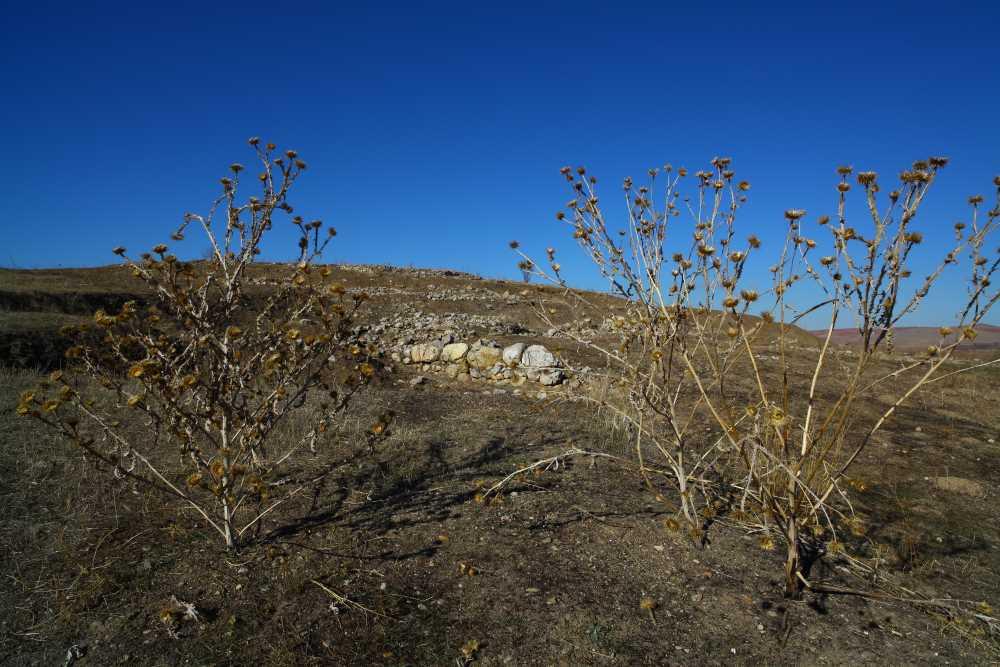
Maşat Höyük is situated near the village of Alacık in the Zile district, close to the Yeşilırmak river basin. Its proximity to natural water sources and fertile agricultural land has made it an attractive settlement location throughout history. The mound rises approximately 30 meters above the surrounding flat terrain, dominating the landscape. This position indicates that the settlement was strategically advantageous for both agricultural production and defensive purposes.

Zile Maşat Höyük (Culture Portal)
The first systematic excavations at Maşat Höyük began in the 1970s in collaboration with Turkish Historical Society and the Ministry of Culture. The findings revealed that the stratigraphic layers from the Middle and Late Bronze Ages are exceptionally well preserved. Among the most significant discoveries are clay tablets, seals, baked clay figurines, ceramic fragments, and remnants of defensive architecture from the Hittite period.
More than 100 cuneiform tablets uncovered during the excavations provide important insights into the functioning of the Hittite bureaucracy and local administrative relationships. The place names, personal names, and administrative correspondence recorded on the tablets suggest that Maşat Höyük functioned as a “lugal” (governorship or petty kingship) center during the Hittite Empire period. These documents also offer valuable data on the provincial application of Hittite diplomatic language and archival systems.
The settlement layers identified at Maşat Höyük demonstrate intensive occupation beginning in the Middle Bronze Age. Excavations have uncovered architectural remains from the early period as well as walls, city gates, and administrative structures dating to the Late Bronze Age. During the Iron Age, the mound was inhabited to a limited extent, but the settlement pattern of this period appears sparser and more dispersed.
Maşat Höyük holds scientific importance comparable to major Hittite centers such as Boğazköy (Hattuşa) and Alacahöyük. It makes significant contributions to Hittitology through tangible evidence in areas such as provincial administration, archival systems, and urban defense. The written documents and seal impressions recovered from the site demonstrate that Maşat Höyük was not merely a rural settlement but also housed an organized administrative center.
Maşat Höyük is protected as a registered archaeological site by the Ministry of Culture and Tourism. Post-excavation conservation measures have been implemented around the area, and accessible sections have been organized with directional signage and security fencing. Many archaeological artifacts recovered from the mound are exhibited at the Museum of Anatolian Civilizations in Ankara and the Tokat Museum.
Arslan, Dursun. *Maşat Höyük*. Accessed July 17, 2025. https://www.academia.edu/34385885/MAŞAT_HÖYÜK
T.C. Ministry of Culture and Tourism. "Zile Maşathöyük." *Türkiye Kültür Portalı*. Accessed July 17, 2025. https://www.kulturportali.gov.tr/turkiye/tokat/gezilecekyer/zle-masathoyuk
T.C. Tokat Provincial Directorate of Culture and Tourism. "Antik Kentler." Tokat İl Kültür ve Turizm Müdürlüğü Resmî Web Sitesi. Accessed July 17, 2025. https://tokat.ktb.gov.tr/TR-231603/antik-kentler.html

Location | Near Yalınyazı Village Tokat Province Zile District | ||||||||
|---|---|---|---|---|---|---|---|---|---|
Period(s) | 2nd millennium BCE Hittite Period | ||||||||
Excavations | Conducted between 1973 and 1984 under the leadership of Prof. Dr. Tahsin Özgüç | ||||||||
Findings | and defensive walls storehouses palace structures Cuneiform tablets belonging to the Hittites (Maşat texts) | ||||||||
Significance | it provides important information about Hittite urban planning The earliest examples of diplomatic texts found in Anatolia were discovered at this mound | ||||||||
Status | Protected as an archaeological site | ||||||||
Geographical Location and Geological Structure
Excavations and Archaeological Findings
Stratigraphy and Settlement Continuity
Cultural and Historical Significance
Protection Status and Current Condition