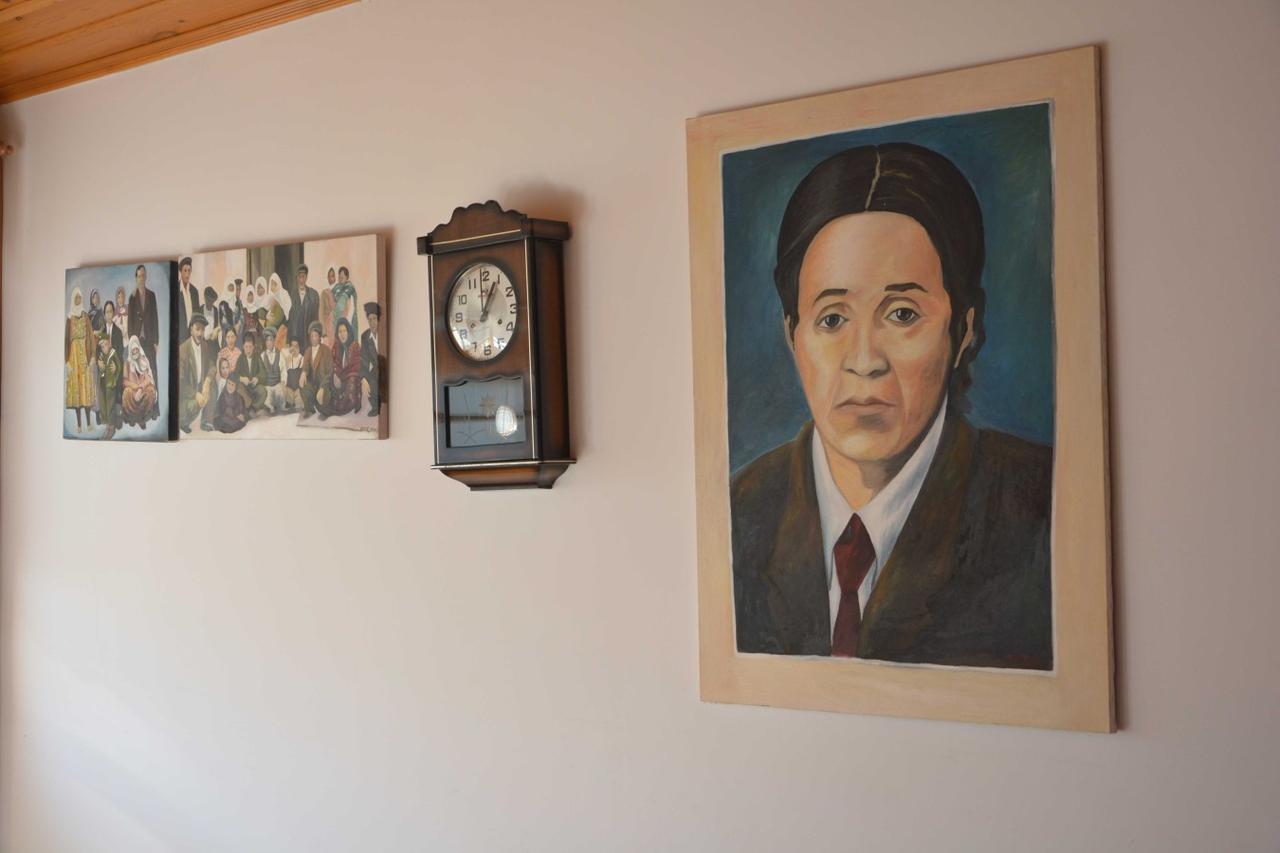

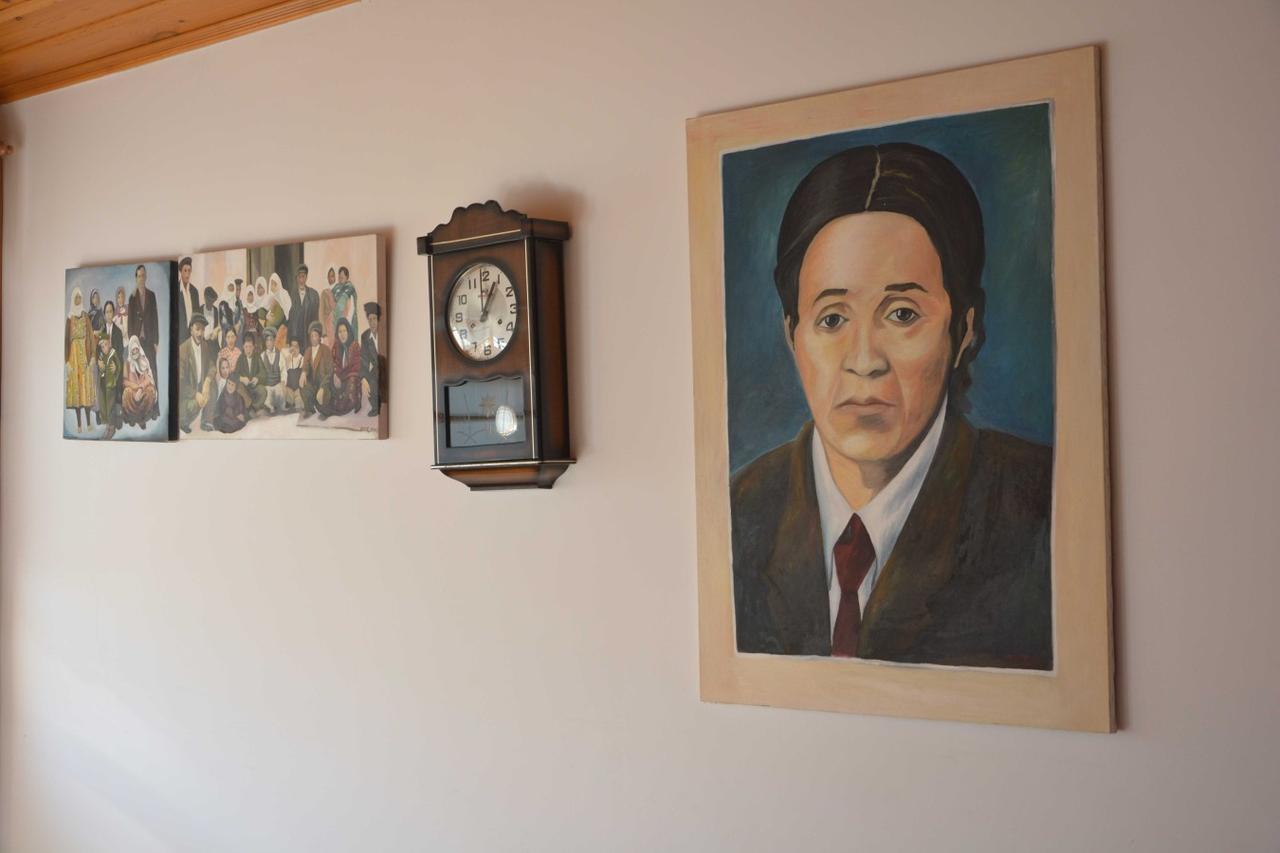

Satı (Hatı) Çırpan, one of the first female village heads and the first female members of parliament of the Republic of Türkiye, was a political actor who actively participated in local governance and legislative activities during the early years of the Republic and assumed public office during the transformation process toward women’s political representation.
Her real name was actually Hatice, but she became widely known as Satı Kadın. She was born in 1890 in Kazan Village, Ankara, as the daughter of Muhtar Kara Mehmet Efendi and Emine Hanım.
Hatı Çırpan, who served as village head of Kazan, was among the women elected to parliament in the 1935 elections and served only one term. After her father’s death, while still young, she had to fight against Kara Yusuf, a local bully, to claim her inheritance. After winning this struggle, she began to be called “Satı Ağa.” During the War of Independence, she struggled to supply materials to the army. After the Alphabet Reform, she learned to read and write at the newly opened People’s Schools.
After women were granted the right to vote and stand for election as village heads in 1933, she took over her father’s position as village head and worked tirelessly to resolve the village’s problems, riding horseback and armed to assist in maintaining local order.
Satı Çırpan married İbrahim Çırpanoğlu, a veteran of the Balkan Wars. From this marriage, she had five children: Lütfiye, Remzi, Emet, Ahmet, and Bediha.【1】
Satı Kadın’s husband, İbrahim Efendi, was injured when a trench collapsed. He participated in the National Liberation War and was wounded again. Satı Kadın took great care to fill the void left by her husband, assuming responsibility for the family’s livelihood and the care of her children.
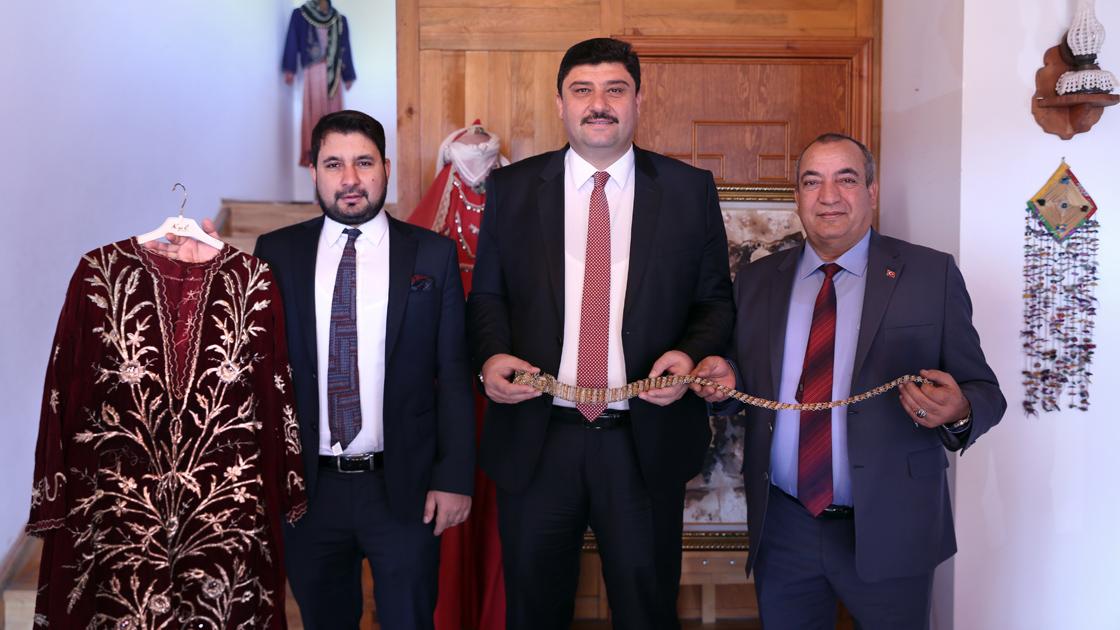
Satı Kadın’s Dress and Belt When She Met Atatürk (Anadolu Ajansı)
While serving as village head of Kazan, Satı Kadın learned that Atatürk was traveling toward Kızılcahamam. She organized a cleanup of the village and gathered the villagers to go to Bitik Nahiyesi near Kazan, where they waited for him. After some time, Atatürk arrived. Satı Kadın kissed his hand and stood beside him.
Later, the villagers wished to offer Atatürk ayran they had prepared, but they hesitated. Seeing their hesitation, Satı Kadın herself offered it to him. When the villagers murmured, “Will he not beat you or cut you? Are you not afraid?”, she replied without concern, “Can anyone do wrong to him?” and presented the ayran to Atatürk.【2】
Atatürk learned that she was the village head of Kazan and asked if she was satisfied with her position. Satı Kadın replied that she was. He then asked her when she was born. She answered, “I was born in 1919 when Atatürk landed in Samsun…”” Atatürk was surprised. It was 1934, and he assumed she was only fifteen years old based on her statement, although she appeared to be around twenty-five. He asked her how this was possible. She replied, “Yes, Pasha. Before then, I did not live…””【3】
As he continued his journey, Atatürk told Nuri Conker, “Here is the woman who will become a deputy,” and recorded her name and village.【4】
A few months after Atatürk’s visit, she was told by the village watchman that she had been summoned by the platoon commander. Accompanied by a neighbor, Satı Kadın went to the commander, who said to her, “We will make you the head of the village heads.” She replied, “Very well, I will serve. Even my soul is at the government’s disposal.”【5】 Shortly afterward, newspapers reported that Hatı Çırpan had been nominated as a candidate. After the elections, Hatı Çırpan, the village head of Kazan, was elected as the head of village heads.
On February 2, the CHF General Council, chaired by Atatürk, convened at Dolmabahçe to determine party candidates for parliament. The candidate selections were finalized on February 4 and announced nationwide on February 5. Satı Çırpan, village head of Kazan in the Bitik Nahiyesi of Ankara, was nominated as a candidate from Ankara.
In the February 8, 1935 elections, Satı Kadın received 1,273 votes and was elected as a deputy for Ankara in the Fifth Term of the Grand National Assembly. Shortly after her election, she was taken from her village to the İsmet Paşa Institute, where she was dressed as a modern Turkish woman and received special education, quickly learning to read and write.
In the 1935 elections, Satı Kadın received votes from the following districts of Ankara: 332 from Merkez Kazası, 77 from Ayaş, 74 from Beypazarı, 48 from Nallıhan, 68 from Çubuk, 139 from Kızılcahamam, 80 from Haymana, 144 from Keskin, 41 from Polatlı, 73 from Bala, 99 from Kalecik, and 98 from Ş.Koçhisar.【6】
Throughout her term as a deputy in Ankara, she continued to live in her village home to avoid the perception that “Satı’s nose had grown,” and remained constantly engaged with the problems of her villagers. She welcomed visitors from her village in this home.
In interviews after entering parliament, Satı Kadın stated that husbands and wives should not divorce, as children of divorced couples suffered greatly, and she pledged to work to prevent such divorces. She also committed herself to ensuring that villagers received modern agricultural tools and equipment, and that roads, water, healthcare, and education services reached rural communities. In addition, she worked to expand the activities of People’s Houses.
Atatürk changed Satı Kadın’s name, inspired by a woman named “Hatı” renowned among Central Asian Turks. From then on, she was officially recorded as Hatı Çırpan. In an interview with a reporter from Yedigün Magazine on this matter, Satı Kadın said:
“Do as your heart desires… It was an old Turkish name. My old name was Satı, but my father wished it so!”【7】
In an interview given to a news agency by Satı Kadın’s grandchildren regarding the name Atatürk gave their grandmother, they said:
"Atatürk gave my grandmother the name 'Hatı,' meaning a strong and courageous Turkish woman, and addressed her as such. That is why her name appears in historical records as both 'Satı' and 'Hatı.'"【8】
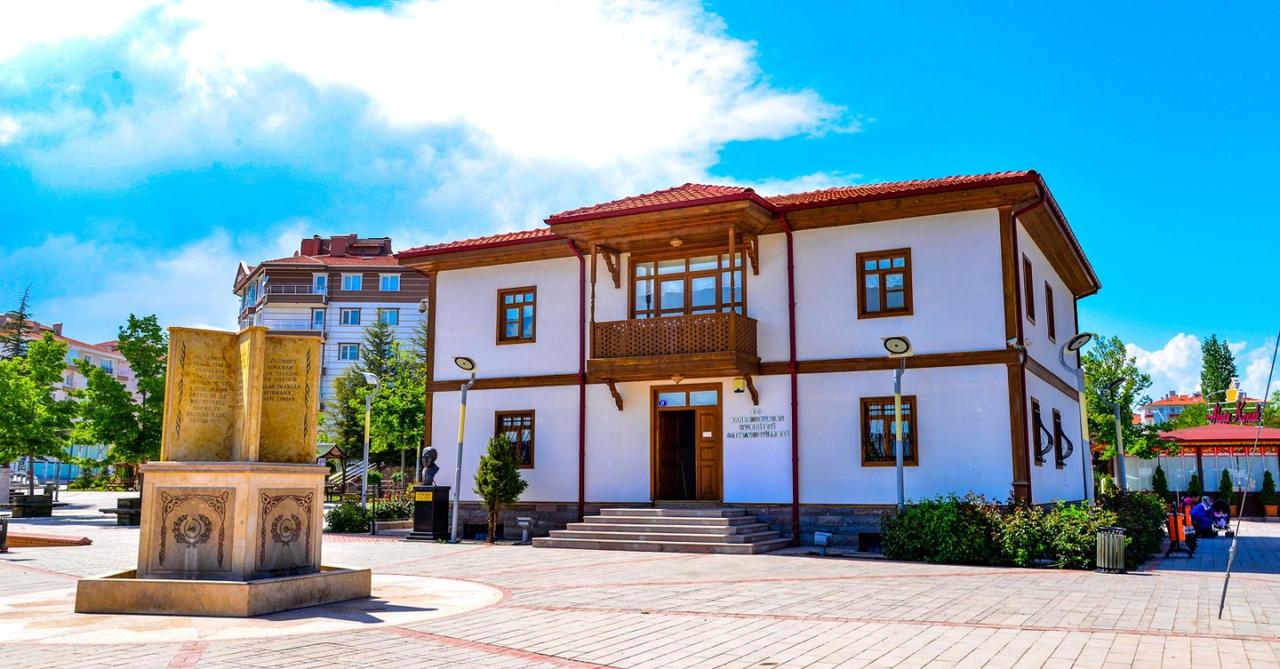
Satı Kadın’s House, Converted into a Museum (Kahramankazan Belediyesi)
Satı Kadın, whose name Atatürk changed to “Hatı,” died on March 19, 1956. Her grave is located in the Kazan district of Ankara. Her house has been restored and converted into a museum.
The museum displays Satı Kadın’s personal belongings, clothing, and artifacts from her era. Museum staff provide visitors with information about her life. Visitors also pay respects at the memorial tomb in the garden of her house. The Satı Kadın Museum House, built by the Kahramankazan Municipality, also preserves the name of the first female member of parliament among the first 18 women elected to parliament to have a museum established in her honor.
Altunok, Hatice, Işık, Ayhan, Muaz, and Gedikkaya, Gül, Fatma. “Siyasette İlk Kadın Parlamenterler Dönemi: 8 Mart Dünya Kadınlar Günü Özel Yayını.” *Yasama Derneği Dergisi*, 2018. PDF file. p. 29. Accessed February 23, 2026. https://www.academia.edu/36116015/S%C4%B0YASETTE_%C4%B0LK_KADIN_PARLAMENTERLER_D%C3%96NEM%C4%B0_Hatice_Altunok_Muaz_Ayhan_I%C5%9F%C4%B1k_Fatma_G%C3%BCl_Gedikkaya
Arslantunalı, Eren. “Türk Kadını Mecliste: Satı Çırpan’ın Hikayesi.” *MİK Portal* (Medya ve İletişim Kulübü), March 11, 2024. Accessed February 23, 2026. https://medyaveiletisim.kulup.tau.edu.tr/turkkadinimeclistesaticirpan/
Arvas, Faruk. “Satı Kadın Kimdir, Nereli? İlk Kadın Muhtar ve Milletvekili Satı Kadın’ın Hayatı.” *TGRThaber - Mavi Kadın*. Accessed February 23, 2026. https://www.tgrthaber.com/mavikadin/sati-kadin-kimdir-nereli-ilk-kadin-muhtar-ve-milletvekili-sati-kadinin-hayati/
Kahramankazan Belediyesi. "Satı Kadın Müze Evi." Kahramankazan Municipality, September 1, 2022. Accessed February 23, 2026. https://kahramankazan.bel.tr/sosyal-tesisler/sati-kadin-muze-evi
Ulusan, Şayan. “Hatı (Satı) Çırpan (Oğlu) (1890–1956).” *Atatürk Ansiklopedisi, Atatürk Araştırma Merkezi Başkanlığı*, March 22, 2021. Accessed February 23, 2026. https://ataturkansiklopedisi.gov.tr/detay/789/Hat%C4%B1-(Sat%C4%B1)-%C3%87%C4%B1rpan-(O%C4%9Flu)-(1890-1956)
Usul, Ahmet Sertan. “Torunları İlk Kadın Milletvekillerinden ‘Satıkadın’ın Hatırasına Gözü Gibi Bakıyor.” Anadolu Ajansı, December 4, 2019. Accessed February 23, 2026. https://www.aa.com.tr/tr/yasam/torunlari-ilk-kadin-milletvekillerinden-satikadinin-hatirasina-gozu-gibi-bakiyor/1663259
[1]
Altunok, Hatice, Işık, Ayhan, Muaz ve Gedikkaya, Gül, Fatma. “Siyasette İlk Kadın Parlamenterler Dönemi: 8 Mart Dünya Kadınlar Günü Özel Yayını.” Yasama Derneği Dergisi, 2018. PDF dosyası. Sayfa: 29. Erişim tarihi: 23 Şubat 2026. https://www.academia.edu/36116015/S%C4%B0YASETTE_%C4%B0LK_KADIN_PARLAMENTERLER_D%C3%96NEM%C4%B0_Hatice_Altunok_Muaz_Ayhan_I%C5%9F%C4%B1k_Fatma_G%C3%BCl_Gedikkaya
[2]
Ulusan, Şayan. “Hatı (Satı) Çırpan (Oğlu) (1890–1956).” Atatürk Ansiklopedisi, Atatürk Araştırma Merkezi Başkanlığı, 22 Mart 2021. Erişim tarihi: 23 Şubat 2026. https://ataturkansiklopedisi.gov.tr/detay/789/Hat%C4%B1-(Sat%C4%B1)-%C3%87%C4%B1rpan-(O%C4%9Flu)-(1890-1956)
[3]
Ulusan, Şayan. “Hatı (Satı) Çırpan (Oğlu) (1890–1956).” Atatürk Ansiklopedisi, Atatürk Araştırma Merkezi Başkanlığı, 22 Mart 2021. Erişim tarihi: 23 Şubat 2026. https://ataturkansiklopedisi.gov.tr/detay/789/Hat%C4%B1-(Sat%C4%B1)-%C3%87%C4%B1rpan-(O%C4%9Flu)-(1890-1956)
[4]
Ulusan, Şayan. “Hatı (Satı) Çırpan (Oğlu) (1890–1956).” Atatürk Ansiklopedisi, Atatürk Araştırma Merkezi Başkanlığı, 22 Mart 2021. Erişim tarihi: 23 Şubat 2026. https://ataturkansiklopedisi.gov.tr/detay/789/Hat%C4%B1-(Sat%C4%B1)-%C3%87%C4%B1rpan-(O%C4%9Flu)-(1890-1956)
[5]
Ulusan, Şayan. “Hatı (Satı) Çırpan (Oğlu) (1890–1956).” Atatürk Ansiklopedisi, Atatürk Araştırma Merkezi Başkanlığı, 22 Mart 2021. Erişim tarihi: 23 Şubat 2026. https://ataturkansiklopedisi.gov.tr/detay/789/Hat%C4%B1-(Sat%C4%B1)-%C3%87%C4%B1rpan-(O%C4%9Flu)-(1890-1956)
[6]
Arvas, Faruk. “Satı Kadın Kimdir, Nereli? İlk Kadın Muhtar ve Milletvekili Satı Kadın’ın Hayatı.” TGRThaber - Mavi Kadın. Erişim tarihi: 23 Şubat 2026. https://www.tgrthaber.com/mavikadin/sati-kadin-kimdir-nereli-ilk-kadin-muhtar-ve-milletvekili-sati-kadinin-hayati/
[7]
Arvas, Faruk. “Satı Kadın Kimdir, Nereli? İlk Kadın Muhtar ve Milletvekili Satı Kadın’ın Hayatı.” TGRThaber - Mavi Kadın. Erişim tarihi: 23 Şubat 2026. https://www.tgrthaber.com/mavikadin/sati-kadin-kimdir-nereli-ilk-kadin-muhtar-ve-milletvekili-sati-kadinin-hayati/
[8]
Usul, Ahmet Sertan. “Torunları İlk Kadın Milletvekillerinden ‘Satıkadın’ın Hatırasına Gözü Gibi Bakıyor.” Anadolu Ajansı, 4 Aralık 2019. Erişim tarihi: 23 Şubat 2026. https://www.aa.com.tr/tr/yasam/torunlari-ilk-kadin-milletvekillerinden-satikadinin-hatirasina-gozu-gibi-bakiyor/1663259

No Discussion Added Yet
Start discussion for "Satı Woman (Hatı Çırpan)" article
Birth
Personal Life
Satı Kadın’s Meeting with Atatürk
Satı Kadın’s Path to Becoming a Member of Parliament
Atatürk’s Change of Satı Kadın’s Name
Death