


This article was automatically translated from the original Turkish version.
+2 More
The Archipelago Sea is the traditional Turkish name for the Aegean Sea, derived from the numerous islands it contains. It is bordered by Greece to the west and the Turkish coast to the east. Throughout history, it has been a sea of strategic importance in geopolitical, military, and commercial terms. Although the term “Aegean Sea” is used in international literature today, the expression “Archipelago Sea” continues to be preserved within Turkish maritime tradition.
The maritime basin known as the Aegean Sea exhibits a toponymic duality reflecting distinct historical narratives and geopolitical perspectives. On one side stands the terminology “Aegean Sea,” rooted in Hellenistic mythology and widely accepted in international literature; on the other, the designation “Archipelago Sea” is grounded in the region’s geographical characteristics, historical depth, and Turkish maritime heritage. This distinction between the two names goes beyond mere semantic difference—it reflects competing historical claims to dominance and expressions of national identity in the region.
The most prevalent explanation for the etymological origin of the name “Aegean Sea” is based on the Hellenistic myth of Aegeus, king of Athens. According to the legend, King Aegeus awaited the safe return of his son Theseus, who had been sent to slay the Minotaur in the labyrinth of Crete. It was agreed that if Theseus succeeded, he would raise white sails on his ship; however, upon his return, he forgot to change the sails from black to white. Seeing the black sails, Aegeus mistakenly believed his son had died and, overcome with grief, threw himself into the sea. In his memory, these waters came to be known as the “Sea of Aegeus” (Pontos Aigaîos). This mythological narrative has become the established explanation for the sea’s name in Western and Hellenic historiography.【1】
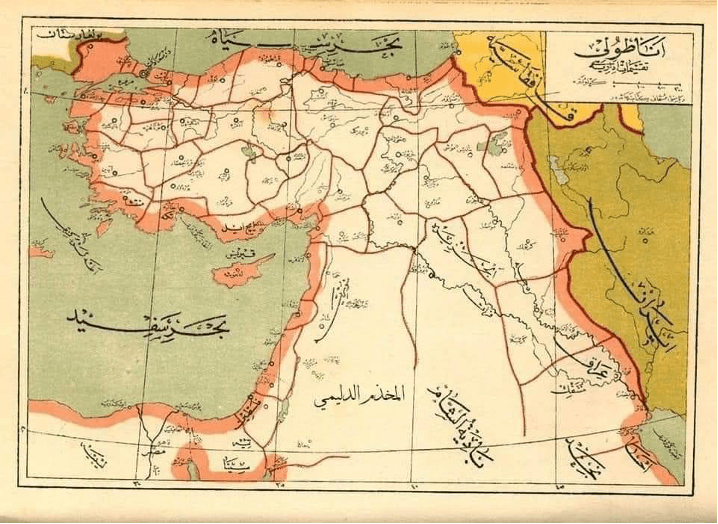
The term “Archipelago Sea” is a deep-rooted and organic designation derived from the sea’s physical geography—the abundance of islands—and from Turkish maritime history that emerged from the 11th century onward. This naming first appeared on the historical stage with Çaka Bey, who established the first Turkish naval beylik centered in İzmir in 1081, following the Turkish settlement in Anatolia. Çaka Bey realized a vision of maritime dominance in the Archipelago Sea by building a fleet and laid the foundations of Turkish naval presence in the region after his victory at the Battle of Koyun Adaları in 1090. Historical sources confirm that Çaka Bey named the sea “Archipelago Sea” in reference to its geographical structure, and this usage was subsequently adopted and institutionalized by later Turkish beyliks and the Ottoman Empire. Indeed, this terminology appears in numerous historical maps and documents, notably those produced by Ottoman cartographers such as Piri Reis.
【2】
Following centuries of rivalry with Latin maritime powers such as Venice, Genoa, and the Knights of St. John during the Middle Ages, the Archipelago Sea gradually came under Ottoman control. The conquest of Crete in 1669 marked a critical turning point in this process, and Ottoman dominance in the region was solidified with the capture of the island of Istendil (Tinos) in 1715. This status was formally recognized diplomatically by the Treaty of Passarowitz on 21 July 1718, granting the Archipelago Sea de facto status as an Ottoman internal sea—that is, a “mare internum.” This full sovereignty persisted uninterrupted until Greece was internationally recognized as an independent state on 24 April 1830.
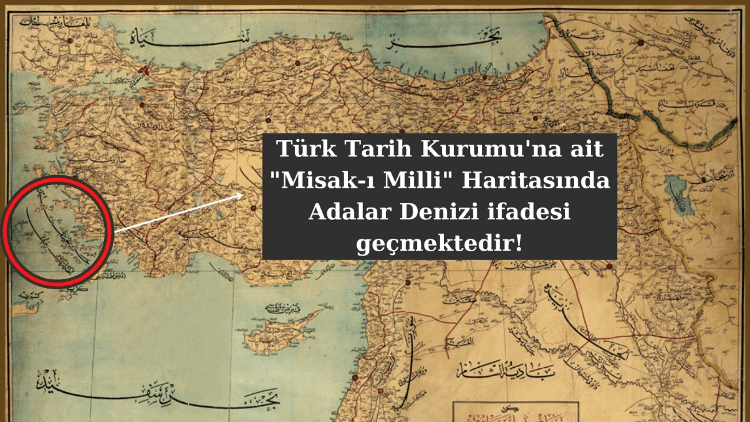
The term “Archipelago Sea” as it appears on the Misak-ı Milli Map held by the Turkish Historical Society.(Turkish Historical Society)
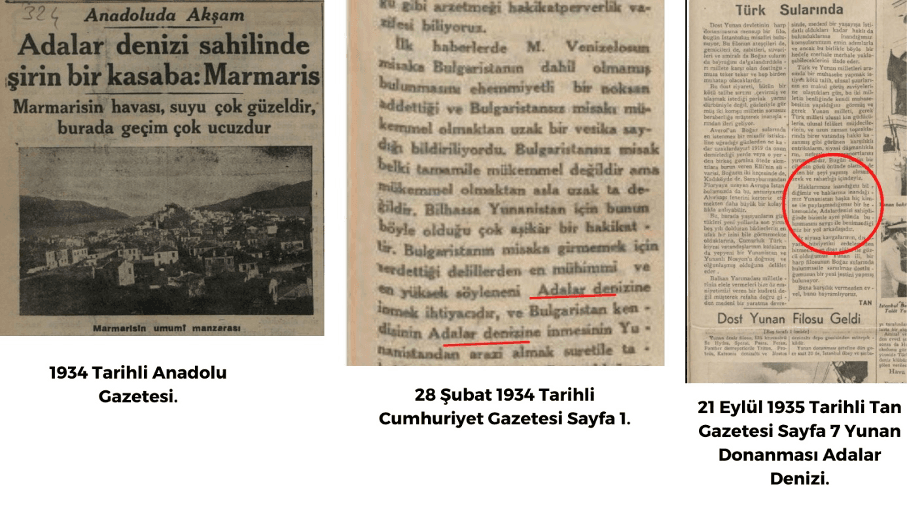
The term “Archipelago Sea” is not only historical and cultural but also has a legal basis. In the Turkish-language text of the Treaty of Lausanne of 24 July 1923, the foundational legal document of the Republic of Türkiye, the sea basin in question is referred to as the “Archipelago Sea.” This confirms that the terminology held official and diplomatic validity during the early years of the Republic. This usage continued in official correspondence and public discourse until 1941.
In June 1941, the First Geography Congress, chaired by then Minister of National Education Hasan Âli Yücel, made significant decisions regarding geographical nomenclature in Türkiye. The congress resolved to officially adopt the term “Aegean Sea” in place of “Archipelago Sea,” citing the need for alignment with international usage and the goal of toponymic standardization.
【3】
The dual nomenclature—“Aegean Sea” and “Archipelago Sea”—goes beyond a mere preference in naming; it embodies historical, cultural, and geopolitical meanings. The terminology “Archipelago Sea” represents a heritage stretching back to the 11th century, aligned with geographical reality, reinforced during the Ottoman period by its status as a “mare internum,” and granted legal legitimacy through its inclusion in foundational documents such as the Treaty of Lausanne. Determining geographical place names according to local history, language, and cultural context is a widely accepted international practice and is essential for preserving national identity and historical memory. In this context, the designation “Archipelago Sea” must be understood as a toponym reflecting Türkiye’s historical presence and perception of sovereignty in its seas.
Başeren, Sertaç Hami. *Ege Sorunları*. Türk Deniz Araştırmaları Vakfı Yayın No: 25. İstanbul: TÜDAV, 2006. https://tudav.org/wp-content/uploads/2018/04/Ege_Sorunlari_2006.pdf.
Turk Tarih Kurumu. "Misak-ı Millî Haritası." Turk Tarih Kurumu. Accessed July 30, 2025. https://ttk.gov.tr/misak-i-milli-haritasi-3/.
Yaycı, Cihat. Soru ve Cevaplarla Mavi Vatan. İstanbul: Girdap Kitap, 2025.
Yaycı, Cihat. Yunanistan Talepleri (Ege Sorunları): Soru ve Cevaplarla. Ankara: Türk Tarih Kurumu, 2020.
[1]
Sertaç Hami Başeren, Ege Sorunları, Türk Deniz Araştırmaları Vakfı Yayın No: 25 (İstanbul: TÜDAV, 2006), 1, https://tudav.org/wp-content/uploads/2018/04/Ege_Sorunlari_2006.pdf.
[2]
Cihat Yaycı, Soru ve Cevaplarla Mavi Vatan (İstanbul: Girdap Kitap, 2025), 88.
[3]
Cihat Yaycı, Soru ve Cevaplarla Mavi Vatan (İstanbul: Girdap Kitap, 2025), 101.

Mythological Origins of the Term “Aegean Sea”
Historical and Geopolitical Background of “Archipelago Sea”
Ottoman Hegemony and the “Mare Internum” Status of the Archipelago Sea
The Treaty of Lausanne as a Legal and Diplomatic Foundation
Standardization Decision at the 1941 Geography Congress