


This article was automatically translated from the original Turkish version.
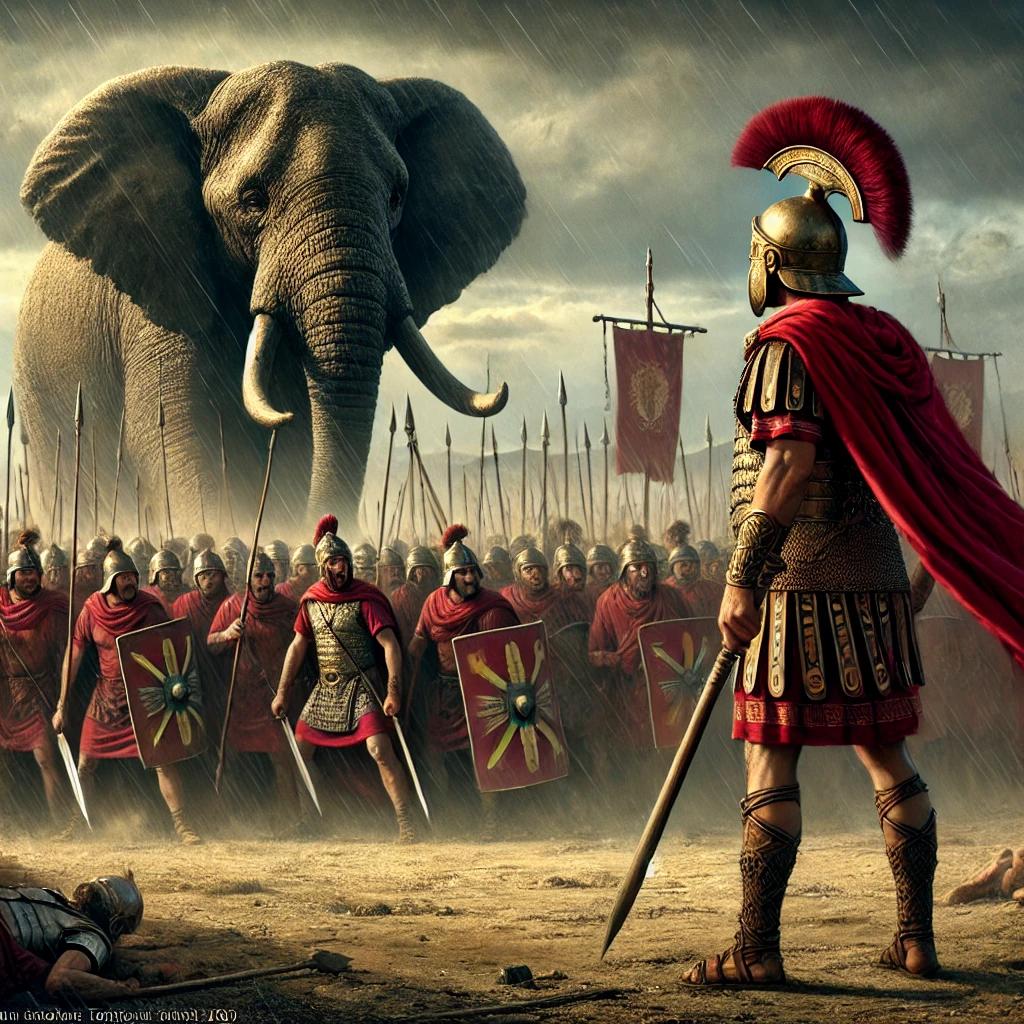
(Generated by artificial intelligence)
Second Punic War
Starting Point of the Campaign | Cartagena, Spain | ||||||||
|---|---|---|---|---|---|---|---|---|---|
Advance Across the Iberian Peninsula | Crossing the Ebro River, traversing the Pyrenees, contact with local tribes | ||||||||
Movement Through Gallic Territories | Northeastward advance along southern Gaul, encampment on the western bank of the Rhône River, use of rafts and temporary bridges to cross the river | ||||||||
Entry into the Alps and Selection of the Pass | Possible passes: Col de la Traversette, Col du Clapier, Mont Cenis; Duration of passage: approximately 15 days | ||||||||
Process of Crossing the Alps | Harsh climatic conditions: snow and ice; Narrow passes: steep slopes; Attacks by local tribes; Losses of personnel and animals in the army; Crossing mountains with war elephants | ||||||||
Descent into Italy | Arrival at the Po Valley (northern Italy), alliance with Gallic communities | ||||||||
First Military Engagements | Around the Ticinus River: first encounter with the Romans; Battle of the Trebia (218 BCE): successful battle formation | ||||||||
The Second Punic War was a military conflict between the Roman Republic and Carthage that took place between 218 and 201 BCE. This war represented the continuation of the longstanding political economic and strategic rivalry between the two powers in the Mediterranean region and constitutes the second phase of the Punic Wars.
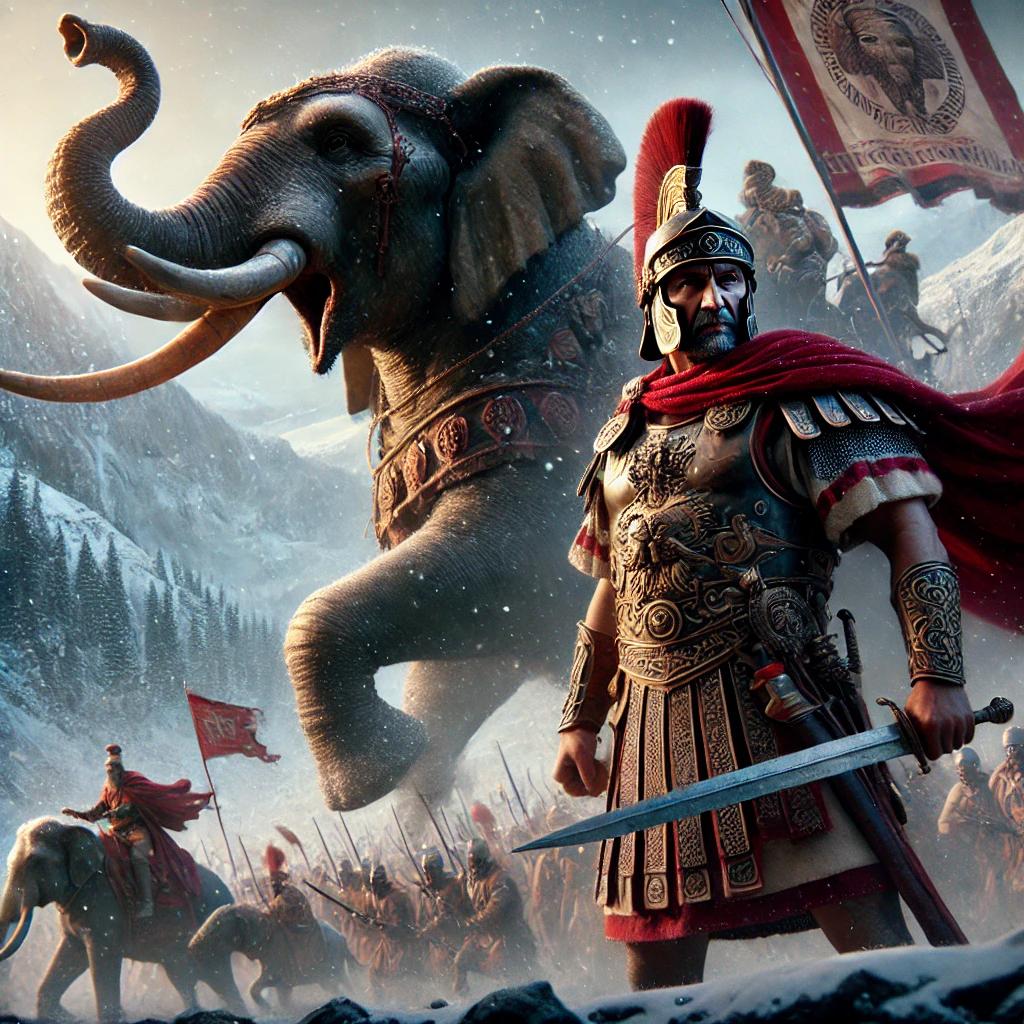
Hannibal Setting Out on Campaign (Generated by Artificial Intelligence)
The war was rooted in Carthage’s expanding activities on the Iberian Peninsula and the violation of the earlier Ebro Treaty between Rome and Carthage. The siege of Saguntum, a city allied with Rome, by Carthaginian forces prompted Rome to regard this act as a casus belli. As both sides sought to extend their spheres of influence in the region, the situation rendered armed conflict inevitable.
In the early stages of the war the Carthaginian army marched overland from the Iberian Peninsula into the Italian Peninsula crossing the Alps to enter Roman territory. Following this maneuver Carthaginian forces achieved superiority over Rome in the Battles of the Trebia (218 BCE) the Trasimene Lake (217 BCE) and Cannae (216 BCE).
During the later phases of the war the Roman Republic shifted from a defensive strategy to an offensive one. In this context the Roman commander Publius Cornelius Scipio launched an amphibious landing on the African coast targeting Carthaginian territory directly.
In Italy Hannibal secured a series of major victories against Roman forces. He inflicted heavy defeats on Roman armies at the Battles of the Trebia (218 BCE) and Lake Trasimene (217 BCE). His greatest triumph came at the Battle of Cannae (216 BCE) where he annihilated a large number of Roman legions through a double envelopment tactic. This victory is regarded as one of the most devastating defeats in Roman military history. Despite these successes Hannibal did not launch a direct assault on Rome itself. Rome instead adopted a prolonged war of attrition avoiding direct confrontation with Hannibal’s army and focusing on cutting his supply lines.
During this period Rome also achieved successes on other fronts. In particular General Publius Cornelius Scipio defeated Carthaginian forces in Spain severing Hannibal’s lines of reinforcement. As Rome turned its attention toward North Africa Hannibal was forced to withdraw from Italy in 203 BCE. The final confrontation occurred at the Battle of Zama (202 BCE) where Hannibal was decisively defeated by Scipio’s forces. This defeat brought the Second Punic War to an end and compelled Carthage to surrender to Rome under harsh terms.
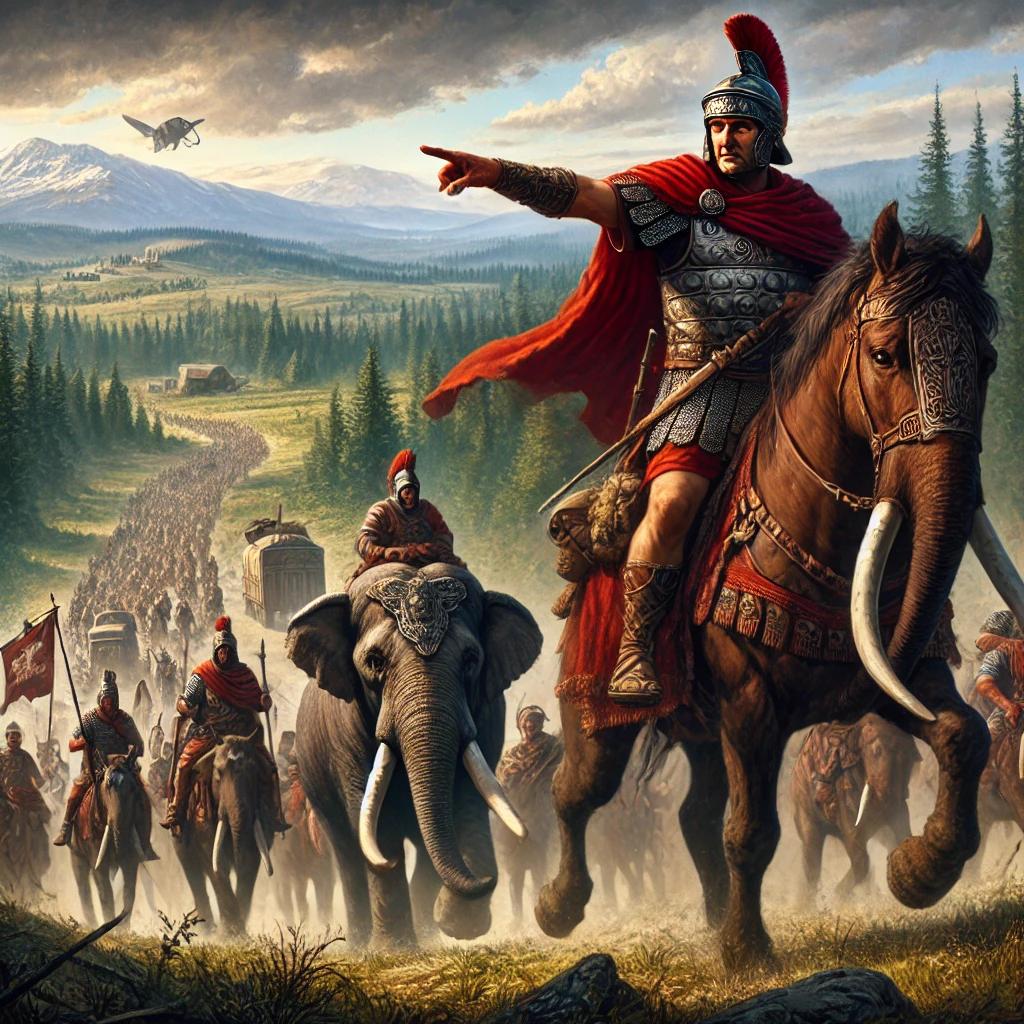
Hannibal Marching Through Europe (Generated by Artificial Intelligence)
Following the Battle of Zama a peace treaty was signed between Carthage and Rome. Under its terms:
As a result Rome strengthened its dominance in the western Mediterranean and established a more decisive position in the regional political structure.
The Second Punic War is regarded as a critical phase in the long-standing rivalry between Rome and Carthage and has been the subject of historical analysis regarding military strategy political administration and resource utilization. Rome’s strategies of logistics and reinforcement during the war and Carthage’s battlefield adaptations to diverse terrain conditions remain key elements in studies of this period.
The military decision-making processes alliance policies and logistical capabilities of both sides significantly influenced the course of the war. The ultimate outcome favored Rome due to its superior long-term resource management and political cohesion. The Second Punic War marked the most intense phase of the prolonged rivalry between Rome and Carthage particularly due to Hannibal Barca’s campaign in Italy which profoundly affected the war’s trajectory.
Although Hannibal achieved numerous military successes on Roman soil he failed to attain his strategic objectives and could not establish lasting superiority against Rome’s defensive strategy. The war ended in 202 BCE with Carthage’s defeat at the Battle of Zama and Rome’s dominance in the western Mediterranean was consolidated. This outcome significantly weakened Carthage’s naval power and political influence while serving as a decisive turning point in Rome’s rise to supremacy.
Altınbay, Egehan Hayrettin. *2. Pön Savaşı’nın Oyun Kuramsal Analizi.* Master's thesis, Orta Doğu Teknik Üniversitesi, 2021. Accessed October 11, 2025. https://tez.yok.gov.tr/UlusalTezMerkezi/TezGoster?key=1zw6GvYMe-q3Hf6HR-3US943TRhYbEZze4UUBZkynhjhgNEdXvltsHRKUzEnWfuO.
Baldıran, Asuman. *Arkaik Dönemden Roma Dönemine Kadar Önemli Donanma Savaşları.* Master's thesis, Ankara Üniversitesi, 2019. Accessed October 11, 2025. https://tez.yok.gov.tr/UlusalTezMerkezi/TezGoster?key=zqI_ZOq-b18GC2rT9c2JGmFvgjNTxNQS_z37jQkUZRCHQo8icCx3_FrsEg4GtHFJ.
Kapka, Emine. *Roma-Kartaca Savaşları ve Hannibal.* Master's thesis, Afyon Kocatepe Üniversitesi, 2022. Accessed October 11, 2025. https://tez.yok.gov.tr/UlusalTezMerkezi/TezGoster?key=Br_XTptK8CZ70f0JGX9xEg9PUSVdt3rEVKIRI4uVlBCcvL8v1zmVrULBbB9gE4lL.

(Generated by artificial intelligence)
Second Punic War
Starting Point of the Campaign | Cartagena, Spain | ||||||||
|---|---|---|---|---|---|---|---|---|---|
Advance Across the Iberian Peninsula | Crossing the Ebro River, traversing the Pyrenees, contact with local tribes | ||||||||
Movement Through Gallic Territories | Northeastward advance along southern Gaul, encampment on the western bank of the Rhône River, use of rafts and temporary bridges to cross the river | ||||||||
Entry into the Alps and Selection of the Pass | Possible passes: Col de la Traversette, Col du Clapier, Mont Cenis; Duration of passage: approximately 15 days | ||||||||
Process of Crossing the Alps | Harsh climatic conditions: snow and ice; Narrow passes: steep slopes; Attacks by local tribes; Losses of personnel and animals in the army; Crossing mountains with war elephants | ||||||||
Descent into Italy | Arrival at the Po Valley (northern Italy), alliance with Gallic communities | ||||||||
First Military Engagements | Around the Ticinus River: first encounter with the Romans; Battle of the Trebia (218 BCE): successful battle formation | ||||||||
Causes and Background
Outbreak of the War
Course of the Second Punic War
The Battle of Zama and the Peace Treaty