This article was automatically translated from the original Turkish version.
+2 More
Place(s) | Selimiye Camii Külliyesi Edirne | ||||||||
|---|---|---|---|---|---|---|---|---|---|
Building | Darül Kurra Medresesi | ||||||||
Architect(s) | Mimar Sinan | ||||||||
Founding Sultan | II. Selim | ||||||||
Sections | Dershane, Maden, Çini, Saatler, Hat, Ahşap | ||||||||
Managing Institution | Vakıflar Genel Müdürlüğü | ||||||||
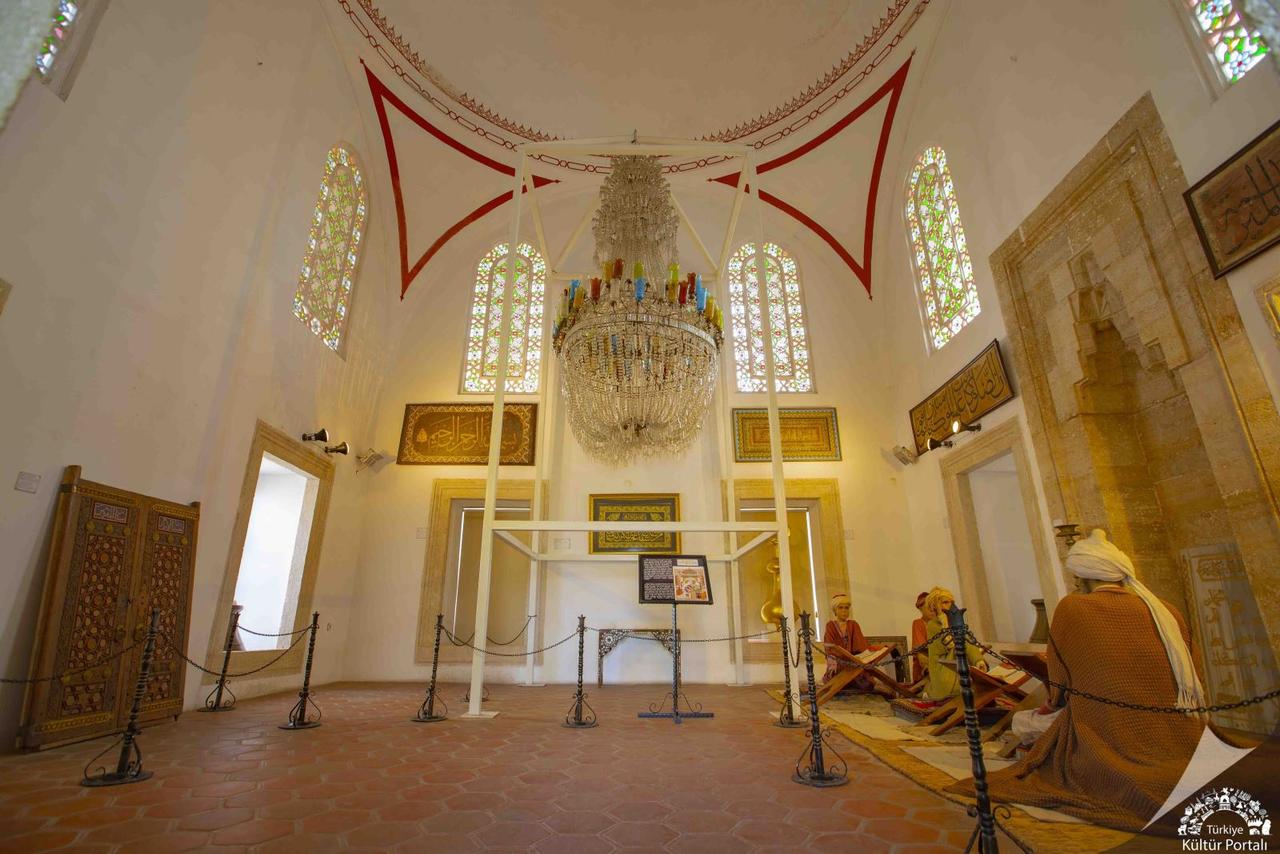
The Selimiye Foundation Museum operates in the Darül Kurra Medrese building within the Selimiye Camii Külliyesi in Edirne. The museum was opened to the public in 2007 following the restoration of the medrese, which had served as a higher education institution during the Ottoman period. The majority of the collection consists of movable cultural assets originating from foundation buildings in Edirne, Kırklareli, and the surrounding areas.
The Darül Kurra Medrese was constructed between 1569 and 1575 by the order of Sultan Selim II and designed by the architect Mimar Sinan, alongside the Selimiye Camii. The medrese is located at the southwest corner of the mosque and built using finely cut stone and brick. The entrance features a portal-style doorway. At its center lies a rectangular courtyard surrounded by pointed-arch arcades on all four sides. Behind the arcades, to the east, is a large square-plan domed dershane and mosque; to the south and west are rooms intended for use by the teachers and students.
After remaining vacant for many years, restoration works were carried out, and the building was reorganized as a museum in 2007, adopting the name Selimiye Foundation Museum. This restoration enabled both the preservation of the medrese and its contribution to cultural tourism.
The objects in the museum collection are movable cultural assets known as “teberrükat,” which were used in foundation buildings. The artifacts are classified according to material and artistic type:
In the central courtyard and arcades of the medrese, informational panels illustrate the life and works of Mimar Sinan. The museum also hosts temporary exhibitions and various artistic events. In 2008, in collaboration with the Çekül Foundation, the exhibition “Salute to Sinan: Photography Exhibition” was held; in 2009, the exhibition “Foundation Restoration Processes” showcased the restoration of foundation artifacts.
The Selimiye Foundation Museum is managed by the General Directorate of Foundations, which aims to preserve Edirne’s historical and cultural heritage. The museum conveys to visitors the Ottoman foundation culture and the educational system of medreses, while also highlighting the cultural value of the Selimiye Külliyesi, one of Mimar Sinan’s masterpieces. The museum offers free admission to its collection of 315 registered artifacts.
Bilar, Ender. 2020. "Selimiye Vakıf Müzesi." Türkiye Turizm Ansiklopedisi. Accessed August 16, 2025. https://turkiyeturizmansiklopedisi.com/selimiye-vakif-muzesi.
Edirne Provincial Directorate of Culture and Tourism. "Selimiye Vakıf Museum." Ministry of Culture and Tourism. Accessed https://edirne.ktb.gov.tr/TR-347879/selimiye-vakif-muzesi.html.
Edirne Valiliği. "Selimiye Vakıf Müzesi." Accessed August 16, 2025. http://www.edirne.gov.tr/selimiye-vakif-muzesi.
Ministry of Culture and Tourism. 2024. "Selimiye Vakıf Müzesi – Edirne." Türkiye Kültür Portalı. Accessed https://www.kulturportali.gov.tr/turkiye/edirne/gezilecekyer/selimiye-vakif-muzesi-.
Place(s) | Selimiye Camii Külliyesi Edirne | ||||||||
|---|---|---|---|---|---|---|---|---|---|
Building | Darül Kurra Medresesi | ||||||||
Architect(s) | Mimar Sinan | ||||||||
Founding Sultan | II. Selim | ||||||||
Sections | Dershane, Maden, Çini, Saatler, Hat, Ahşap | ||||||||
Managing Institution | Vakıflar Genel Müdürlüğü | ||||||||
No Discussion Added Yet
Start discussion for "Selimiye Foundation Museum" article
History and Architecture
Museum Collection and Sections
Exhibitions and Activities
Cultural and Touristic Significance