

This article was automatically translated from the original Turkish version.
+1 More
Type of Geographical İndication | Mahreç Sign | ||||||||
|---|---|---|---|---|---|---|---|---|---|
Application Date | 26.01.2020 | ||||||||
Registration Number | 875 | ||||||||
Registration Date | 24.08.2021 | ||||||||
Product / Product Group(s) | Handcraft products other than carpets kilims and textiles | ||||||||
Province(s) | Isparta | ||||||||
Applicant/Registrant(s) | Senirkent Municipality | ||||||||
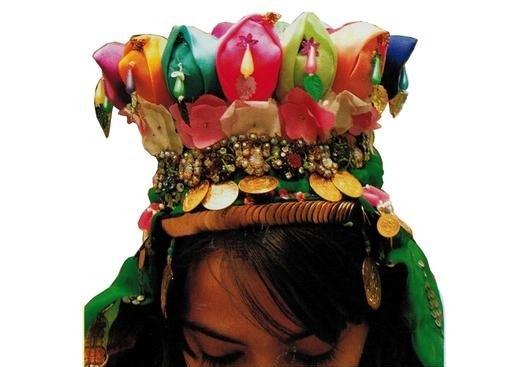
Senirkent Gelin Fesi is a richly symbolic and culturally significant headpiece that evolved within the wedding traditions of Senirkent district in Isparta Province, Türkiye. Entirely handmade, this item is not merely an aesthetic accessory; it represents the convergence of social rituals, local production techniques, and symbolic narratives. In 2021, it was officially registered with a geographical indication mark following an application by the Senirkent Municipality.

Senirkent Gelin Fesi (Culture Portal)
The Senirkent Gelin Fesi is a unique wedding headdress specific to the Senirkent district of Isparta. Presented to the bride during wedding ceremonies, this item is more than a decorative element; it is a culturally meaningful heritage embodying local livelihood practices and symbolic motifs. This tradition, stretching from the past to the present, holds a significant place in the region’s cultural memory.
One of the traditional wedding rituals, the Bride’s Face Day, takes place the day after the wedding and symbolizes the bride’s acceptance into her new family. During this ceremony, the bride kisses the hands of her father-in-law and mother-in-law. Subsequently, the Gelin Fesi, prepared by the mother-in-law, is removed from a bundle and placed on the bride’s head. In the absence of a mother-in-law, this duty is assumed by a female relative. Women who have previously married also participate wearing their own fes and traditional bindallı attire. This ritual signifies the bride’s acceptance within her new family structure and the symbolic expression of her social authority.
The Senirkent Gelin Fesi is entirely handmade and custom-fitted to the individual bride. Production is restricted exclusively within the geographical boundaries of Senirkent. The process begins with a skeleton made of felt and stiffened through felting, tailored to the bride’s head measurements.
Among the decorative elements, the forehead section stands out, adorned with gold or gold-colored ornaments weighing between 20 and 80 grams. A row of 80-gram gold pieces is arranged along the upper edge of the forehead, with one Republic gold coin placed on each side. One Republic gold coin is also sewn onto each of the sections known as “dululuk.”
The most striking component is the botanical crown. Here, 16 colored organza flower buds are used, designed based on the unopened blossoms of the afyon plant cultivated in the region. The colors include the green of the afyon leaf, the white of the afyon flower, the red of the bride’s flower, the purple of afyon, the yellow of afyon seeds within the cocoon, milk white, rose pink, and blue.
The crown is completed with an antler-shaped element locally called “kaş,” enriched with ornamental precious stones, beyoğlu stones, amber decorations, and brooches. Two shawls known as “pullu” are sewn onto the back of the fes: one in red with “erbe” embroidery and the other in green with scale-like patterns.
The Senirkent Gelin Fesi was officially registered with a geographical indication mark in 2021. This registration requires that production occur exclusively within Senirkent district and that the product maintain its intrinsic association with this geographical region. Annual inspections, conducted at least once per year under the coordination of the Senirkent Municipality in collaboration with the Isparta Provincial Directorate of Culture and Tourism and the Senirkent Chamber of Tradespeople and Artisans, assess material compliance, color arrangements, adherence to traditional production methods, and the correct use of the geographical indication mark.
Kültür Portalı. "Senirkent Gelin Fesi." Kültür Portalı. Accessed July 3, 2025. https://www.kulturportali.gov.tr/portal/senirkent-gelin-fesi
Turkish Patent and Trademark Office. "Senirkent Gelin Fesi." *Geographical Indications Portal*, registration number 875, application date January 26, 2020, registration date August 24, 2021. Accessed July 3, 2025. https://ci.turkpatent.gov.tr/cografi-isaretler/detay/1585
Ürekli, Havva. “Senirkent Gelin Fesi.” *Türkiye Turizm Ansiklopedisi*, 2025. Accessed July 3, 2025. https://turkiyeturizmansiklopedisi.com/senirkent-gelin-fesi

Type of Geographical İndication | Mahreç Sign | ||||||||
|---|---|---|---|---|---|---|---|---|---|
Application Date | 26.01.2020 | ||||||||
Registration Number | 875 | ||||||||
Registration Date | 24.08.2021 | ||||||||
Product / Product Group(s) | Handcraft products other than carpets kilims and textiles | ||||||||
Province(s) | Isparta | ||||||||
Applicant/Registrant(s) | Senirkent Municipality | ||||||||
No Discussion Added Yet
Start discussion for "Senirkent Gelin Fesi" article
Historical and Cultural Background
The Bride’s Face Day and Social Function
Production Features and Ornamental Details
Geographical Indication and Monitoring Process