This article was automatically translated from the original Turkish version.
Type of Geographical İndication | Mahreç Sign | ||||||||
|---|---|---|---|---|---|---|---|---|---|
Application Date | 24.01.2021 | ||||||||
Registration Number | 971 | ||||||||
Registration Date | 10.12.2021 | ||||||||
Product / Product Group(s) | Bakery and confectionery products sweets dough products | ||||||||
Province(s) | Ankara | ||||||||
Applicant/Registrant(s) | Şereflikoçhisar Municipality | ||||||||
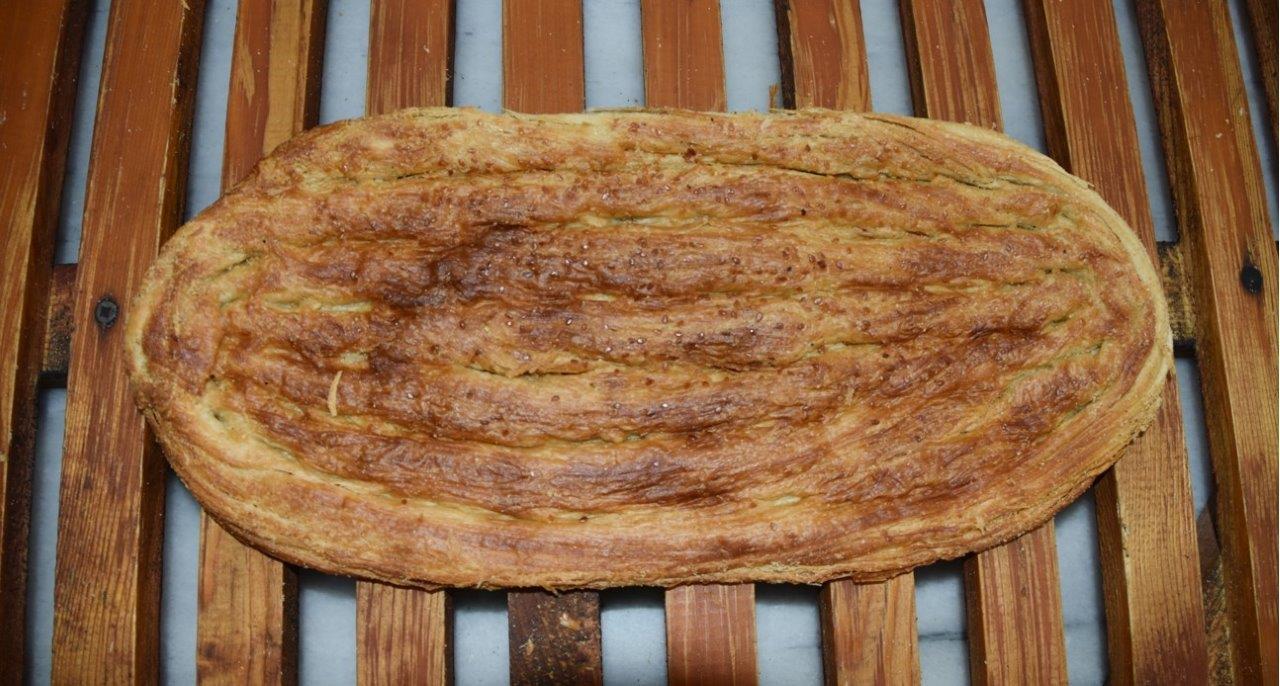
Şereflikoçhisar tahinli pidesi is a traditional bakery product unique to the Şereflikoçhisar district of Ankara. This pide is prepared using special-purpose wheat flour, white sugar, yeast, salt, tahini, and margarine, and is recognized for its distinctive production method and the skill required in its preparation. Registered as a geographical indication under Law No. 6769 on Industrial Property, the application was submitted by the Şereflikoçhisar Municipality on 24 January 2021 and officially registered on 10 December 2021. This geographical indication aims to preserve the historical and cultural ties between the product and the Şereflikoçhisar district.
Şereflikoçhisar tahinli pidesi is produced by spreading a mixture of tahini and margarine onto dough made from special-purpose wheat flour, salt, white sugar, yeast, and water, then rolling it out using fine semolina and baking it after applying a mixture of flour and water on its surface. Sesame may be sprinkled on top optionally. The pide can be shaped either as a boat-like form measuring 30–35 cm in length or as a circular form with a diameter of 15–20 cm. The dough is rolled to a thickness of 1–1.5 cm, and the baked pide weighs approximately 300 grams. This pide can be consumed hot or cold and holds an important place in the culinary culture of Şereflikoçhisar, reflecting a tradition that spans generations.
The following ingredients are required for one Şereflikoçhisar tahinli pide:
Şereflikoçhisar tahinli pidesi has a strong association with the Şereflikoçhisar district due to its production process and the craftsmanship required at each stage. Prepared using traditional methods, this pide is an integral part of the region’s culinary culture and has a historical legacy. Therefore, all production stages must be carried out within the boundaries of the Şereflikoçhisar district.
The production standards for Şereflikoçhisar tahinli pidesi are monitored by a control body established under the coordination of the Şereflikoçhisar Municipality. This body includes one expert each from the Şereflikoçhisar Municipality, the Şereflikoçhisar District Directorate of Agriculture and Forestry, the Şereflikoçhisar Chamber of Agriculture, and the Şereflikoçhisar Chamber of Tradesmen and Craftsmen. Regular inspections are conducted annually, with additional inspections carried out upon complaint or need. Inspections verify the suitability of ingredients, compliance with production methods, the pide’s shape, packaging conditions, and the correct use of the geographical indication logo. The Şereflikoçhisar Municipality, as the registering authority, manages all legal procedures necessary to protect these rights.
The term “Şereflikoçhisar tahinli pidesi” and its geographical indication logo appear on the product itself or its packaging. If this is not feasible, the logo must be displayed in a clearly visible location within the production facility. This logo guarantees the product’s compliance with its geographical indication registration and its authenticity.
Turk Patent and Trademark Office. "Şereflikoçhisar Tahinli Pidesi." Turk Patent and Trademark Office. Accessed August 16, 2025. https://ci.turkpatent.gov.tr/Files/GeographicalSigns/0154a06a-d7c8-4300-85e3-10de2d990fef.pdf
Türk Patent ve Marka Kurumu. “Şereflikoçhisar Tahinli Pidesi.” Türk Patent ve Marka Kurumu. Accessed August 16, 2025. https://ci.turkpatent.gov.tr/cografi-isaretler/detay/3342

Type of Geographical İndication | Mahreç Sign | ||||||||
|---|---|---|---|---|---|---|---|---|---|
Application Date | 24.01.2021 | ||||||||
Registration Number | 971 | ||||||||
Registration Date | 10.12.2021 | ||||||||
Product / Product Group(s) | Bakery and confectionery products sweets dough products | ||||||||
Province(s) | Ankara | ||||||||
Applicant/Registrant(s) | Şereflikoçhisar Municipality | ||||||||
No Discussion Added Yet
Start discussion for "Şereflikoçhisar Tahinli Pidesi" article
Definition and Distinctive Characteristics
Production Method
Ingredients
Dough
Filling
Dough rolling
Top coating
Production Steps
Geographical and Cultural Connection
Monitoring and Registration
Usage and Logo